Categories
International - News

Yayoi Kusama (1929–2026): The Artist Who Made Infinity Her Signature

Yayoi-Kusama

Japanese artist Yayoi Kusama died in Tokyo on 14 August 2026 at the age of 97. From her early Infinity Nets to the immersive installations that captivated audiences around the world, she spent more than eight decades exploring repetition, self-obliteration and infinity. Beyond the polka dots and pumpkins that became iconic, her death raises a broader question: how does an artistic language become so distinctive that an artwork can be recognised before we even see the artist’s name?
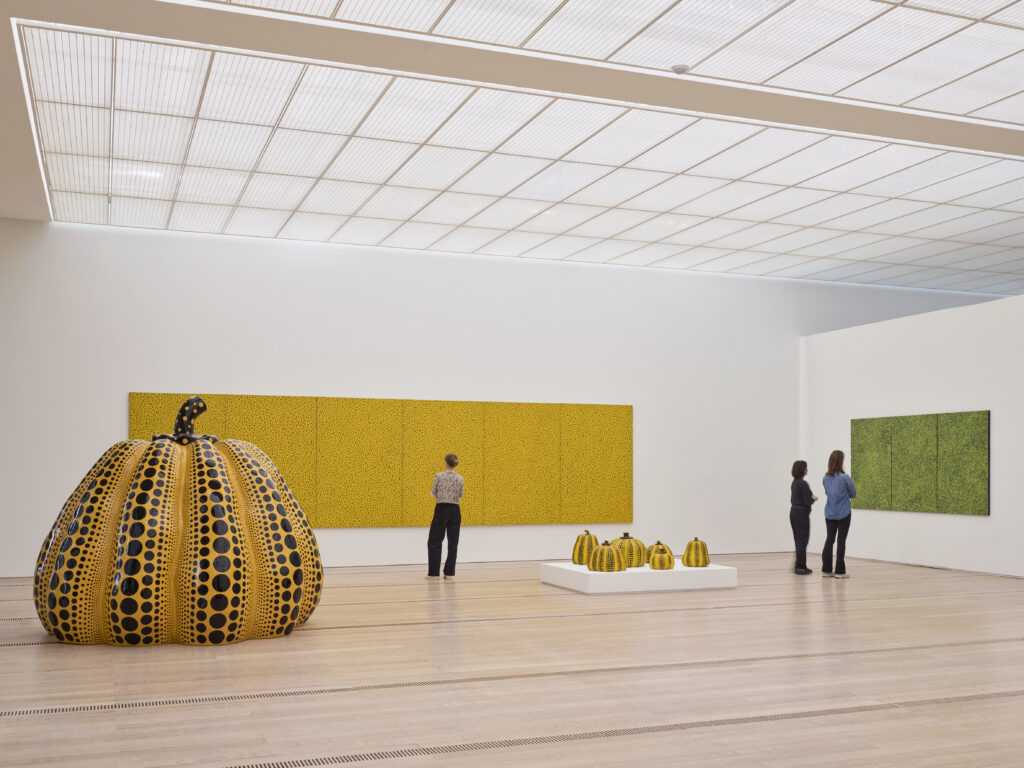
Installation view of Yayoi Kusama at Fondation Beyeler
Installation view of Yayoi Kusama at Fondation Beyeler. © Mark Niedermann

Yayoi Kusama: a loss that goes beyond the icon

The death of Yayoi Kusama, announced on 27 August by her studio and the museum bearing her name in Tokyo, marks the end of one of the most distinctive careers in contemporary art.

Born on 22 March 1929 in Matsumoto, Japan, Kusama leaves behind a body of work spanning more than eight decades, from painting and sculpture to performance and immersive installation.

Yet today, only a few visual signs are needed to evoke her name.

Polka dots proliferating across a surface. A monumental pumpkin. Mirrors in which light appears to repeat endlessly.

Kusama had become recognisable before we even read her signature.

That immediate visual recognition can almost make us forget the depth of her work: behind the images that became iconic lies a persistent investigation into repetition, the dissolution of the self and our relationship with infinity.

When repetition becomes a language

Yayoi Kusama’s polka dots were not conceived simply as a decorative motif.

From childhood, the artist described experiencing perceptions in which forms and patterns seemed to proliferate around her. These experiences gradually fed into a vocabulary of dots, nets and accumulations.

Repetition became more than a visual process: it was a way of thinking about space and the individual’s place within it.

Kusama would develop the concept of “self-obliteration” around this idea. The motif repeats until it invades the surface; the individual, in turn, seems capable of dissolving within it.

This principle would run throughout her work.

The medium changes. The language remains.
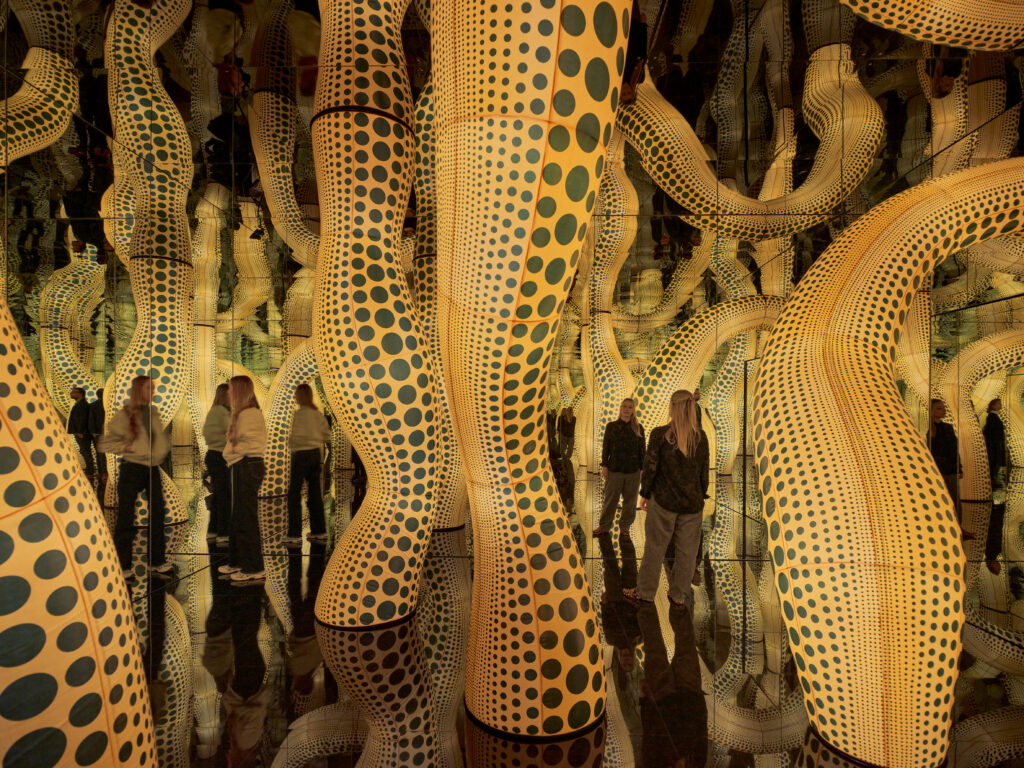
Installation view of Yayoi Kusama at Fondation Beyeler.
Installation view of Yayoi Kusama at Fondation Beyeler. © Mark Niedermann

From Infinity Nets to Infinity Mirror Rooms

When Yayoi Kusama moved to New York in the late 1950s, the American art scene was undergoing profound transformation.

There she developed her Infinity Nets, vast paintings covered with countless small, repeated gestures. No true centre structures the composition. The network appears capable of continuing beyond the edges of the canvas.

Infinity is already present.

A few years later, this investigation gradually moved beyond the painted surface and into physical space.

With the Infinity Mirror Rooms, mirrors, lights and repetition visually dissolve architectural boundaries. The viewer is no longer simply standing in front of an artwork: they enter it.

Their own reflection multiplies until it becomes part of the installation itself.

From the Infinity Nets to the mirrored rooms, Kusama ultimately pursued the same question: how can we give form to something that seems as though it will never end?

The pumpkin: from familiar object to icon

Another motif runs throughout her work: the pumpkin.

Painted, sculpted or installed in public spaces, it gradually became inseparable from the artist.

Covered in polka dots and produced on dramatically different scales, the pumpkin encapsulates part of the Kusama paradox: she takes a familiar form and turns it into something instantly identifiable yet strangely unfamiliar.

Her monumental pumpkins would contribute significantly to the international recognition of her work.

Above all, however, they reveal an essential ability: to transform an extremely limited visual vocabulary into a universe capable of renewing itself over several decades.

Recognition was far from immediate

Yayoi Kusama’s ubiquity today might suggest a career marked by uninterrupted recognition. Her trajectory was far more complex.

In 1960s New York, she participated in the avant-garde, developing paintings, sculptures, installations and performances while remaining difficult to confine within any single artistic movement.

After returning to Japan in 1973, her international visibility diminished for several years.

It was not until the 1990s that her work regained a major position on the international art scene. Her appearance at the 1993 Venice Biennale, where she represented Japan, marked a decisive stage in this rediscovery.

Major international exhibitions followed.

An artist who had long occupied the margins of several dominant narratives of twentieth-century art gradually became one of its most celebrated figures.

Did success eventually overshadow the art?

This may be one of the most interesting paradoxes surrounding Yayoi Kusama.

Her Infinity Mirror Rooms became experiences sought out by millions of visitors. Her monumental pumpkins entered public spaces. Her polka dots moved beyond museums into fashion and popular culture.

In the age of social media, her installations also possess all the qualities of images designed to circulate: immersion, light, repetition and spectacle.

But this extraordinary popularity can also alter the way we look at her work.

When Kusama is so instantly recognisable, do we still truly look at the art?

The media phenomenon can sometimes obscure the fact that her visual vocabulary was established long before Instagram, queues for the Infinity Rooms and international collaborations.

For Kusama, repetition did not originate as an image-making strategy. It was one of the foundational obsessions of her practice.

And it is precisely this continuity that distinguishes an artistic signature from a mere visual identity.

How does an artwork become a signature?

Yayoi Kusama’s death therefore raises a question that extends far beyond her own career: what makes an artist’s work truly recognisable?

In her case, the answer does not lie solely in polka dots, mirrors or pumpkins.

It lies in the consistency with which she explored a small number of fundamental concerns over more than eight decades: repetition, accumulation, infinity, the dissolution of the self and the relationship between the individual and space.

An artistic signature emerges when these elements cease to be merely a style and become the expression of a way of thinking.

Kusama offers a particularly striking example.

Her motifs can be reproduced. Her installations can be photographed endlessly. Her pumpkins can be recognised instantly.

Yet behind these familiar signs remains the same question, pursued from one artwork to the next.

What will remain of Yayoi Kusama?

The death of an artist inevitably changes the way their work is viewed.

In Kusama’s case, this question carries particular resonance. Her entire body of work seems to have sought to transcend boundaries: those of the canvas, the body, space and, ultimately, the individual.

Her studio stated that she continued painting until her final days.

That gesture probably says more about her career than her immense celebrity ever could.

For more than eight decades, Yayoi Kusama returned to a small number of forms, repeating, shifting, enlarging and transforming them.

Until repetition itself became a form of difference.

And infinity became her signature.

FAQ – Yayoi Kusama

When did Yayoi Kusama die?

Yayoi Kusama died in Tokyo on 14 August 2026, at the age of 97. Her death was officially announced on 27 August 2026 by her studio and the Yayoi Kusama Museum.

Why is Yayoi Kusama famous?

The Japanese artist is best known for her polka dots, Infinity Nets, pumpkin sculptures and immersive Infinity Mirror Rooms. Her work explores repetition, infinity, accumulation and the dissolution of the self.

What are the Infinity Mirror Rooms?

The Infinity Mirror Rooms are installations in which Yayoi Kusama uses mirrors, lights and repeated elements to create the impression of space extending infinitely. The viewer becomes an integral part of the artwork.

Why did Yayoi Kusama use polka dots?

Polka dots belong to the artistic vocabulary Kusama developed early in her career around repetition and proliferation. Over time, they became one of the most immediately recognisable elements of her work.

Which art movement is Yayoi Kusama associated with?

Yayoi Kusama participated in the New York avant-garde, and her work has connections with several twentieth-century movements, including Minimalism and Pop Art. However, her highly individual artistic language makes her difficult to confine within any single movement.

What legacy does Yayoi Kusama leave behind?

Yayoi Kusama leaves behind more than eight decades of artistic creation and an instantly recognisable visual language. Beyond the popularity of her installations, her work profoundly explored repetition, infinity and the place of the individual within space.
Categories
International - News

KANAL–Centre Pompidou: The Former Citroën Garage Becomes a Living Museum

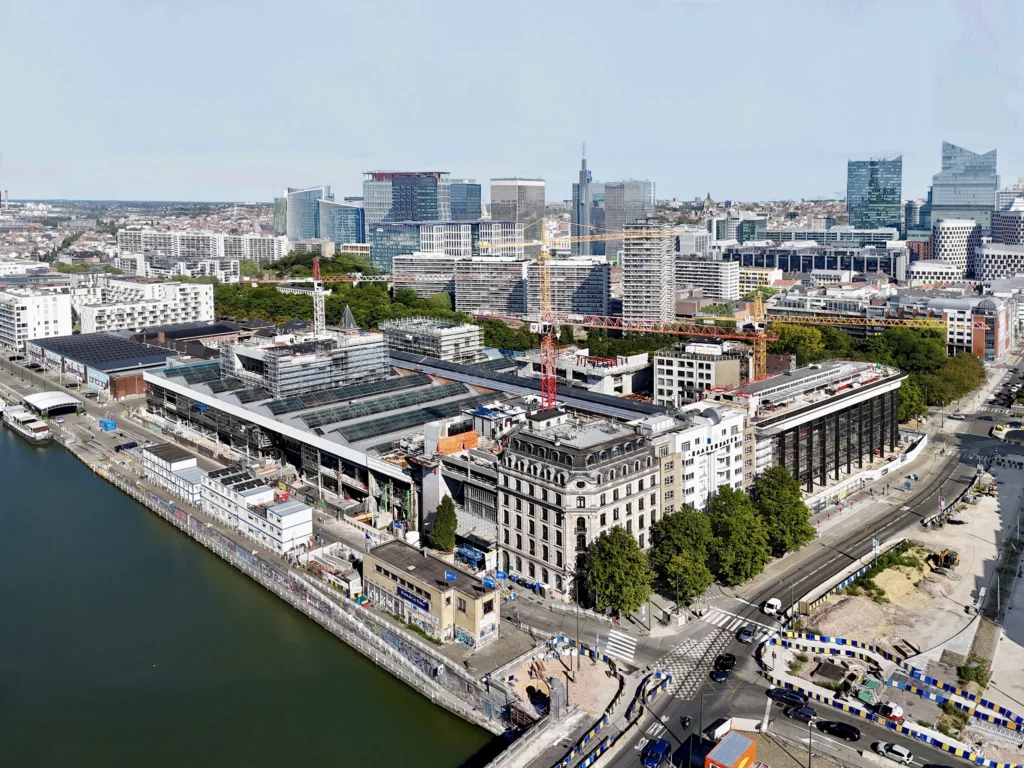
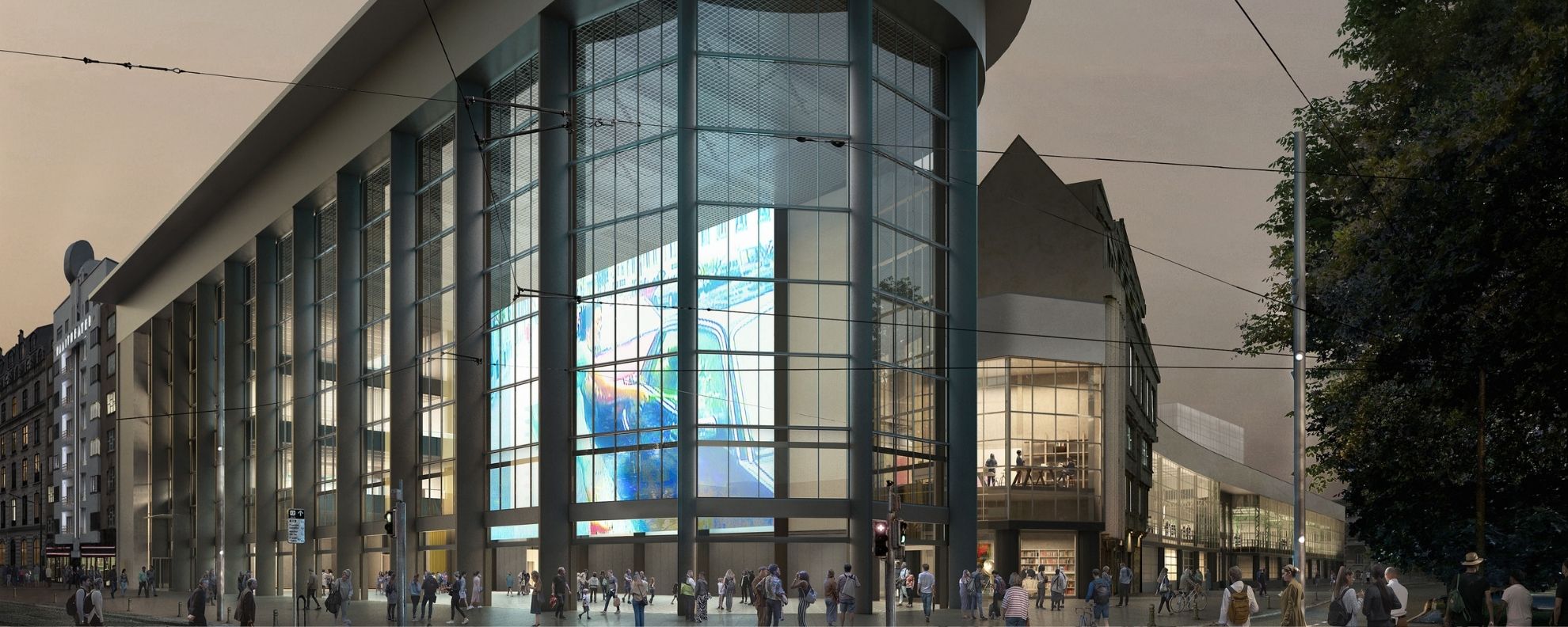
Vue extérieure du futur KANAL–Centre Pompidou à Bruxelles
Atelier Kanal

KANAL–Centre Pompidou will open on 28 November 2026 in Brussels’ former Citroën garage. This 40,000 m² cultural complex will bring together modern and contemporary art, architecture, performance, public spaces and social venues. More than just a new museum, KANAL aims to transform an iconic industrial building into a cultural space open to the city.

KANAL–Centre Pompidou at a Glance

  • Public opening: 28 November 2026
  • Location: former Citroën garage, near the Brussels Canal
  • Surface area: 40,000 m²
  • Opening programme: ten exhibitions
  • Main exhibition: A truly immense journey
  • Works on display: more than 350 in the main exhibition
  • Architects: noAarchitecten, EM2N and Sergison Bates architects
  • Artistic Director: Kasia Redzisz
  • Partner: Centre Pompidou

From a Citroën Garage to a 40,000 m² Museum

In Brussels, the former Citroën garage occupies a distinctive place in the urban landscape. Located near the canal, this modernist building, constructed in the 1930s, was long associated with cars, commerce and movement.

From 28 November 2026, it will become home to KANAL–Centre Pompidou, a new cultural institution dedicated to modern and contemporary art, architecture and live artistic creation.

The change of function is considerable. Yet the project does not seek to erase the site’s industrial history. Instead, it draws on the building’s monumental scale, structure and memory to imagine a new way of inhabiting it.

Where vehicles once circulated, artworks, artists, visitors and local residents will now come together.

Support independent publishing! Subscribe to ART MAG and receive each issue in advance, in both print and digital format
👉 Subcribe 6 issues / 1 year

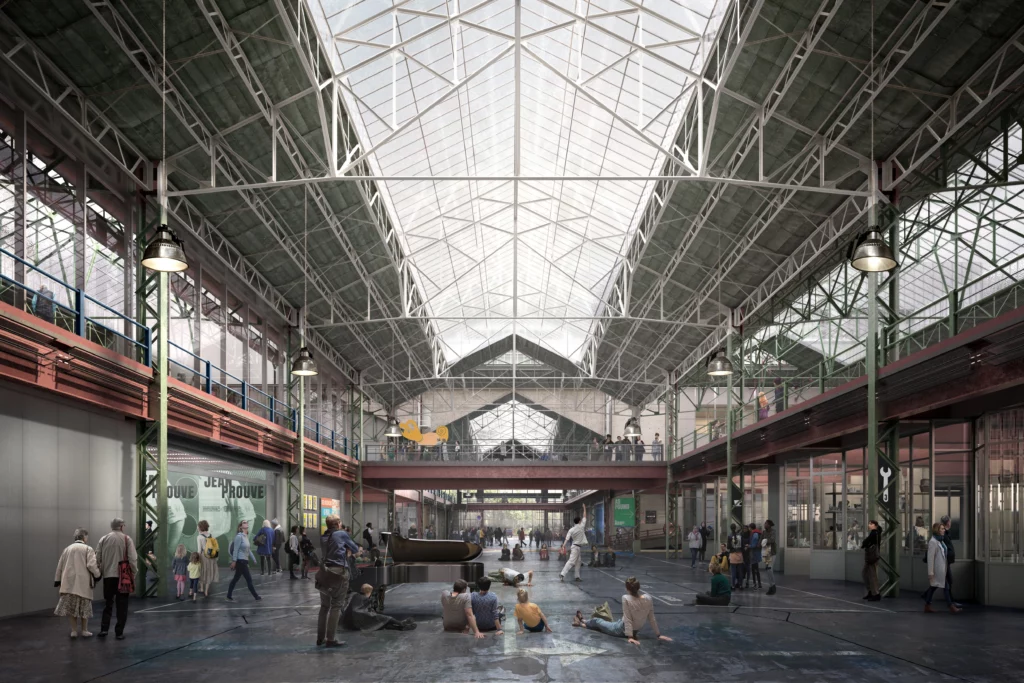
© Atelier Kanal

An Architecture That Preserves Its Industrial Memory

The transformation of the former Citroën garage was entrusted to noAarchitecten, EM2N and Sergison Bates architects, working together as Atelier KANAL.

The architectural project preserves the elements that define the building’s identity: its glass façade, former workshops, vast floor plates, open volumes and industrial circulation routes. These features are not merely decorative. They become the very fabric of the future museum.

Rather than creating an institution entirely detached from its surroundings, the architects chose to work with the existing structure. Visitors will therefore be able to perceive traces of the building’s former automotive activity while discovering the new spaces devoted to artistic creation.

The architecture also creates connections between the exhibition galleries, meeting places and freely accessible public areas. The building will therefore be more than a container for artworks: it will directly shape the visitor experience.

A Museum Brussels Residents Can Walk Through

KANAL–Centre Pompidou will not simply consist of a succession of galleries. A library, research and archive centre, lounge, bookshop, playground, bakery, restaurants, panoramic viewpoint and rooftop will complement the exhibition spaces.

This diversity considerably broadens the ways in which the building can be used. People will be able to come to KANAL to see an exhibition, but also to read, work, have lunch, attend an event or simply walk through the building.

Some of these spaces will remain accessible independently of ticketed exhibitions. In this way, the museum can gradually become part of the neighbourhood’s everyday life and attract people who might not ordinarily visit art institutions.

This dimension is essential. At 40,000 m², KANAL could easily appear as an impressive but distant cultural monument. Instead, the organisation of its spaces seeks to create a sense of proximity and encourage regular visits.

Support independent publishing! Subscribe to ART MAG and receive each issue in advance, in both print and digital format
👉 Subcribe 6 issues / 1 year

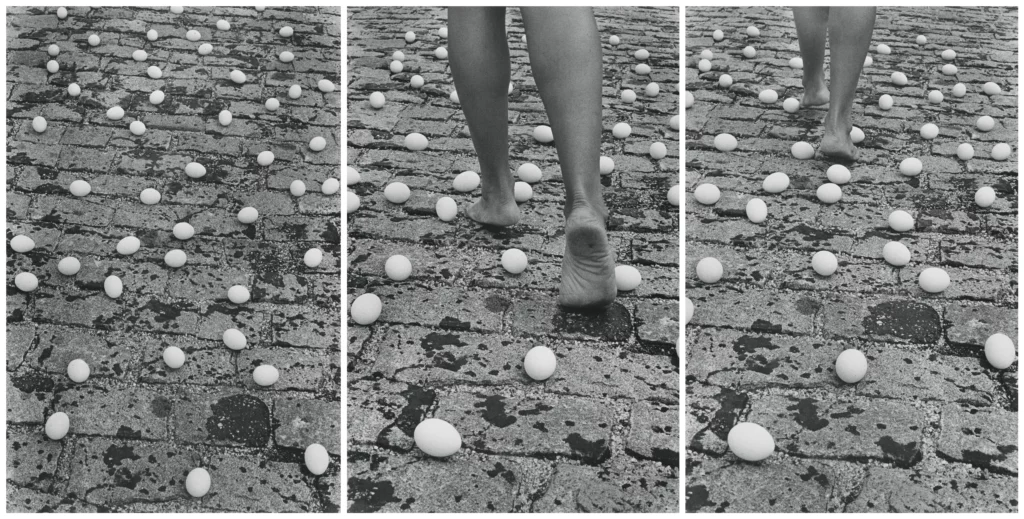
Anna Maria Maiolino — Entrevidas, 1981
Anna Maria Maiolino, Entrevidas, 1981, artwork from the Centre Pompidou collection
Anna Maria Maiolino, Entrevidas, 1981. Collection Centre Pompidou, Paris. Musée National d’Art Moderne – Centre de Création Industrielle. © Centre Pompidou, MNAM-CCI/Laboratoire photographique/Dist. GrandPalaisRmn.

Ten Exhibitions for KANAL’s Opening

For its opening, KANAL–Centre Pompidou will present ten exhibitions bringing together modern art, contemporary creation, architecture, performance and sound practices.

The inaugural programme will not be structured around a single narrative. Instead, it will create dialogues between historical works, contemporary artists, commissions conceived specifically for the building and projects connected to the Brussels art scene.

The objective is therefore not simply to fill the monumental volumes of the former garage. It is to demonstrate how different disciplines and generations of artists can inhabit and activate the space.

In total, more than 250 artists are expected to be represented across the opening programme.

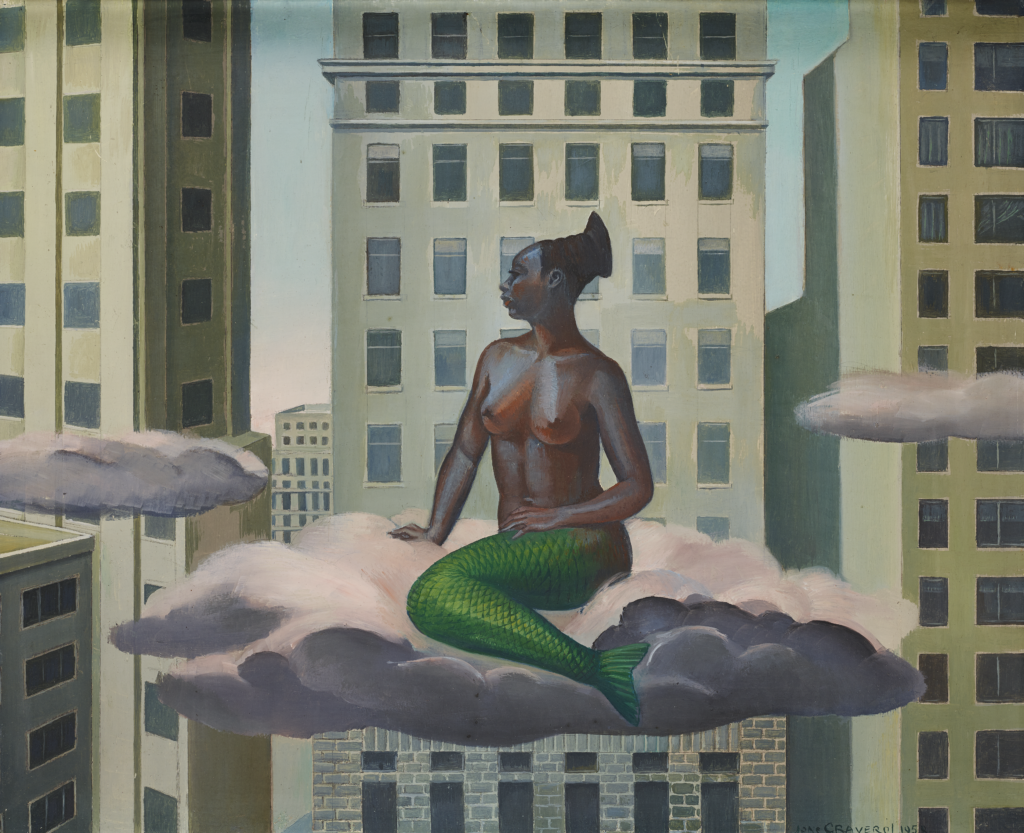
Jane Graverol — L’Afrique inconnue – La mythologie comparée, 1958
Jane Graverol, L’Afrique inconnue – La mythologie comparée, 1958, artwork from the Mu.ZEE collection
Jane Graverol, L’Afrique inconnue – La mythologie comparée, 1958. Collection Mu.ZEE, Ostend – Collection of the Flemish Community. Photo: Steven Decroos.

A truly immense journey: More Than 350 Works in Motion

The main exhibition, entitled A truly immense journey, will bring together more than 350 works. Most will come from the Centre Pompidou collection, complemented by works belonging to KANAL and several Belgian public and private collections.

On view from 28 November 2026 to 10 January 2028, the exhibition will explore the movement of people, ideas and artistic practices from the beginning of the twentieth century to the present day.

This approach directly echoes the museum’s location. Historically, the Brussels Canal was a route for trade, exchange and migration. Here, it becomes the starting point for an artistic journey without a single destination.

The exhibition will bring into dialogue major figures in the history of modern and contemporary art, including Sonia Delaunay, Lygia Clark, Marcel Broodthaers, Kader Attia, Henri Matisse and Alberto Giacometti.

Rather than presenting a strictly chronological history, A truly immense journey will offer an interpretation based on the circulation of forms, narratives and influences.

New Works Conceived for KANAL’s Spaces

The inaugural programme will also give an important place to contemporary artists and projects developed in direct relation to the architecture.

Otobong Nkanga will transform one of the building’s vast open spaces into a more intimate meeting place. Through textiles and the circulation of narratives, the artist will confront the monumentality of the former garage with a more sensitive and collective experience.

Manon de Boer will present the exhibition ** Blindsight **, while Joëlle Tuerlinckx will present ** La première fois **. Joshua Serafin will develop a world in which past, present and identities respond to one another.

With ** NO SHOW **, performance and sound will also play a significant role. The project will bring together around twenty Brussels-based or Brussels-connected artists, reflecting the vitality of the local scene.

These projects demonstrate that KANAL will not rely solely on the prestige of the Centre Pompidou collection. The museum also intends to become a space for production, experimentation and visibility for today’s artists.

Support independent publishing! Subscribe to ART MAG and receive each issue in advance, in both print and digital format
👉 Subcribe 6 issues / 1 year

KANAL Architecture: Imagining the City of Tomorrow

Architecture and landscape will form a second major focus of the institution. KANAL Architecture, incorporating the activities and collections of the former CIVA, will have its own exhibition, research and archive spaces.

The exhibition ** Right to the City – Right to the Future ** will notably examine urban transformations and ways of imagining the city of tomorrow.

This reflection has particular resonance in Brussels. The Belgian capital is shaped by multiple histories, languages and social realities. Its architectural transformations are inseparable from questions of housing, mobility, access to public space and coexistence between different communities.

KANAL will therefore be able not only to exhibit architecture, but also to make it a subject of collective debate.

© Atelier Kanal

A New Cultural Crossroads in Brussels

KANAL’s location near the canal is part of the transformation of an area long considered peripheral despite its proximity to Brussels’ historic centre.

The museum could become a link between different Brussels neighbourhoods. Its ability to fulfil this role will depend in particular on the permeability of the building, the accessibility of its spaces and the collaborations developed with artists, schools, associations and local cultural organisations.

The challenge therefore goes beyond creating a new tourist destination. KANAL will also need to find its place in the everyday life of the city and its residents.

By transforming a former car garage into a space for cultural circulation, KANAL is already creating a symbolic shift. Where vehicles were once serviced, artworks will now be exhibited, projects produced and knowledge shared.

The architectural strength of the site may lie precisely in this continuity: preserving traces of its original function while giving the building a new future. On 28 November 2026, Brussels will therefore discover not simply a museum, but a building returned to new uses.

Support independent publishing! Subscribe to ART MAG and receive each issue in advance, in both print and digital format
👉 Subcribe 6 issues / 1 year

Frequently Asked Questions About KANAL–Centre Pompidou

When will KANAL–Centre Pompidou open in Brussels?

KANAL–Centre Pompidou will open to the public on 28 November 2026 in the former Citroën garage, near the Brussels Canal.

What will visitors be able to see at KANAL–Centre Pompidou?

KANAL will present exhibitions of modern and contemporary art, architectural projects, performances, sound works and creations conceived specifically for the building.

What will be the main opening exhibition?

The main exhibition, A truly immense journey, will bring together more than 350 works, primarily from the Centre Pompidou collection, alongside works from KANAL’s collection and Belgian collections.

Who transformed the former Citroën garage?

The architectural project was designed by noAarchitecten, EM2N and Sergison Bates architects, working together as Atelier KANAL.

How large is KANAL–Centre Pompidou?

The cultural complex occupies a total area of 40,000 m² within Brussels’ former Citroën garage.

Will it be possible to enter KANAL without visiting an exhibition?

Several areas have been designed as public spaces, including the library, lounge, bookshop, playground and dining areas. These will allow visitors to discover and experience KANAL beyond its exhibitions alone.

To continue exploring the subject, discover our analysis in ART MAG International No. 34: “Is Brussels Inventing a New Museum Model?”

For visiting dates and practical information, see the official KANAL–Centre Pompidou programme.

To read more, download ART MAG N°34
Categories
Featured Artist - Sculpture

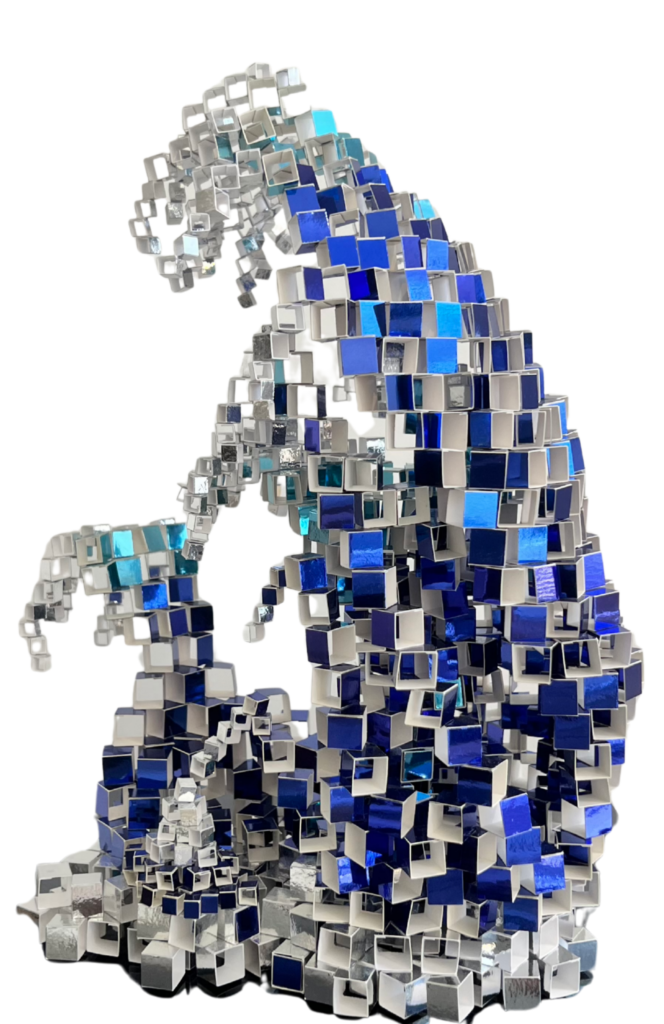
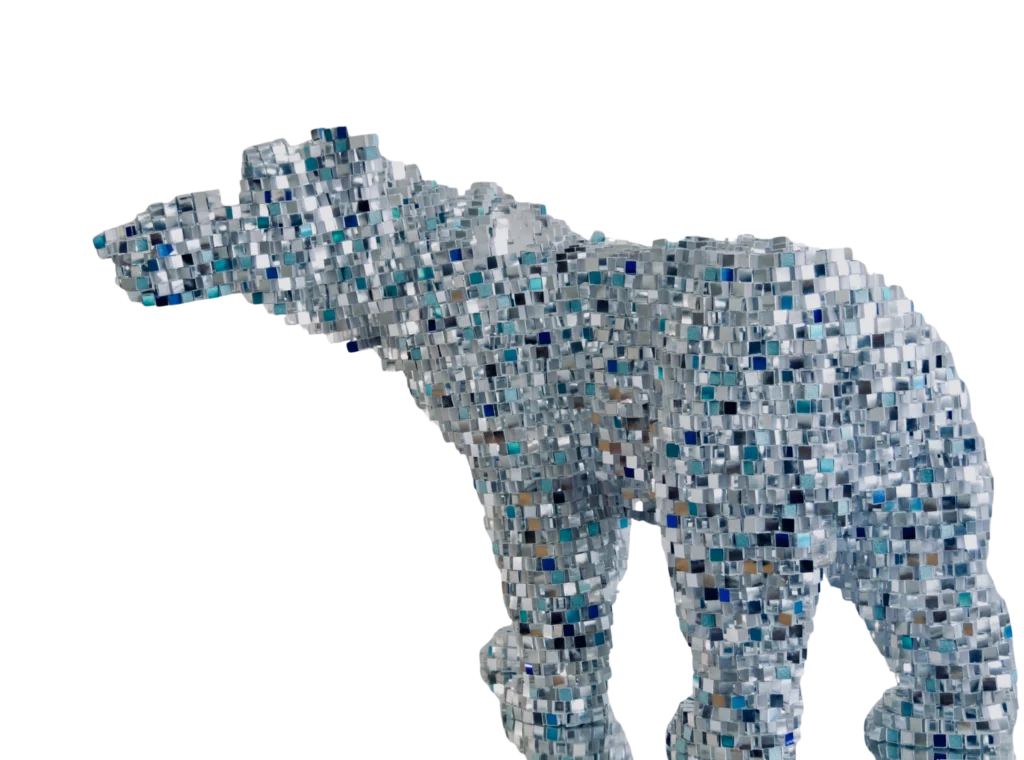
Zan Ho: Sculpting the Void Through Architecture, Paper and Light

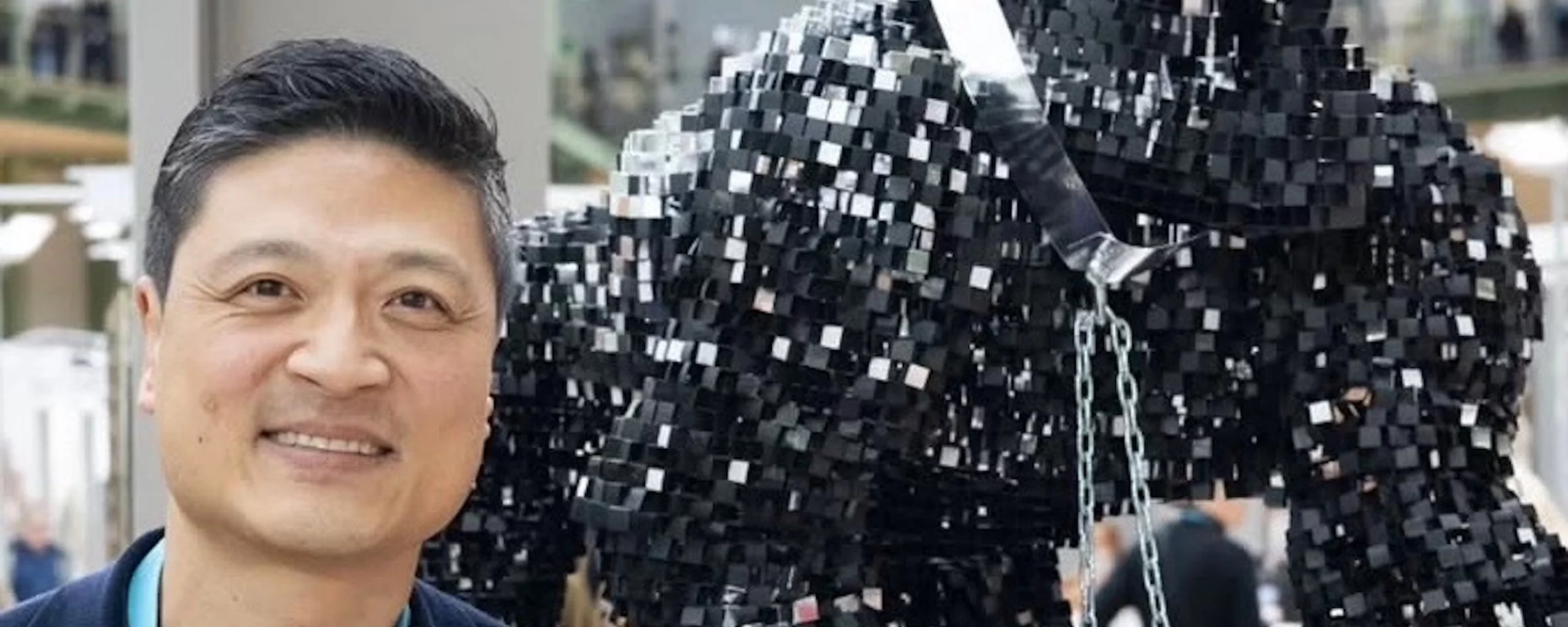
Zan ho sculpteur

A trained architect turned sculptor, Zan Ho has developed a distinctive body of work in which paper, emptiness and light become creative materials in their own right. Composed of thousands of assembled modules, his animal sculptures question both our perception of space and the fragility of living beings.

When standing before a sculpture by Zan Ho, the eye never stops at the surface. A polar bear, an emperor penguin, an octopus or even a wave immediately emerges. Yet behind these recognisable silhouettes lies a far more complex construction, composed of openings, transparencies and shifting perspectives.

The viewer is no longer simply invited to observe the work: their gaze passes through it.

From Architecture to Sculpture

A graduate of the École nationale supérieure d’architecture de Paris-La Villette, Zan Ho worked as an architect for several years before devoting himself to sculpture.

This training continues to shape his practice profoundly. Volume, the movement of the gaze and the relationship between interior and exterior remain central to his artistic approach.

“I see sculpture as architecture.”

Zan Ho does not simply seek to reproduce the external form of an animal or object. He constructs a space for the eye to explore.

Paper: A Fragile Material Made Monumental

To create his sculptures, Zan Ho patiently assembles hundreds, sometimes thousands, of paper modules.

Viewed individually, each element appears light and almost insignificant. Yet their accumulation gives rise to powerful, sometimes monumental works in which matter is in constant dialogue with emptiness.

His choice of paper creates a striking paradox. The sculptures convey an impression of strength and stability, even though they are made from an extremely fragile material. This tension evokes both the vulnerability of living beings and their capacity for transformation.

Depending on the viewing angle, the silhouette may appear dense or dissolve into the light. The work changes as the viewer moves around it and never fully reveals itself at first glance.

When the Animal Becomes a Living Architecture

Animals occupy a central place in Zan Ho’s artistic universe, but they are never merely figurative subjects.

The polar bear, octopus and emperor penguin become metaphors for presence, movement and fragility. Through them, the artist questions the boundaries of form: where does a sculpture begin and where does it end when light and the viewer’s gaze can pass through it?

In his work, emptiness is not an absence. It connects the elements, gives rhythm to the structure and contributes fully to its balance.

Zan Ho Presents His Work on the ART MAG Podcast

In this interview, Zan Ho discusses his journey from architect to sculptor, his choice of paper and the essential role that emptiness and light play in his work.

The artist also shares insights into how he constructs his sculptures and reflects on the fragility of living beings.

Watch the full interview with Zan Ho on the ART MAG podcast:

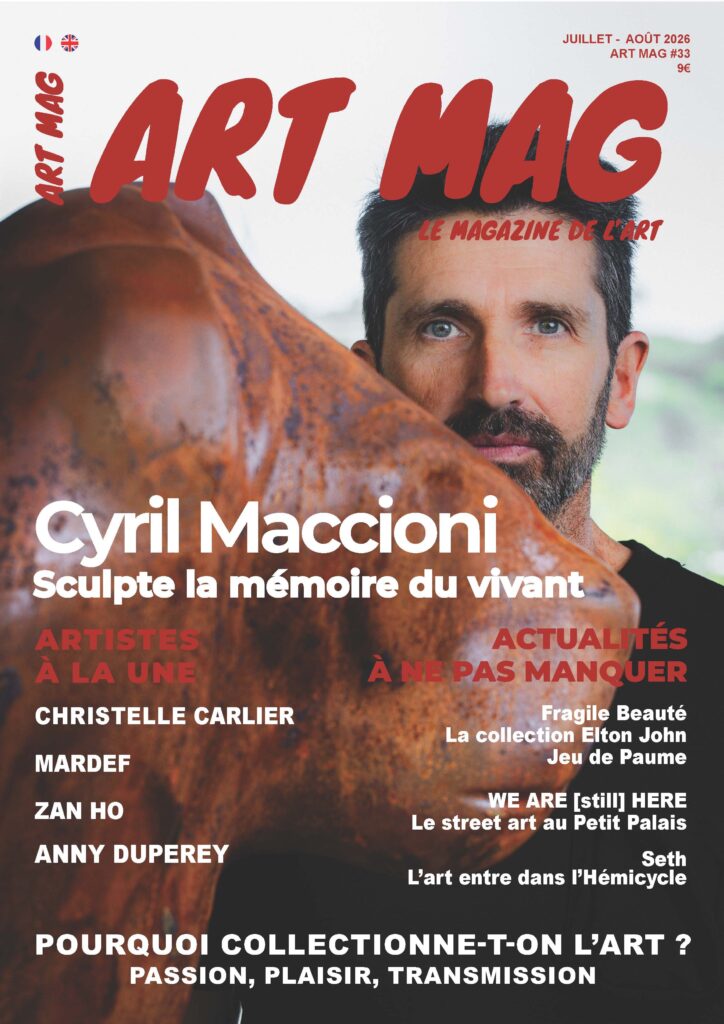
Discover Zan Ho in ART MAG International No. 33

Discover Zan Ho’s journey from architect to sculptor, his artistic approach and a selection of his works. The feature examines how he transforms paper, emptiness and light into creative materials in their own right.

The article provides insights into this distinctive universe, in which animal forms become open architectural structures, traversed by the gaze and conveying a reflection on the fragility of living beings.

📖 Issue No. 33 is available in print and digital editions.

Join the Artists Featured in ART MAG

Are you an artist looking to introduce your work through an editorial feature?

For each issue, ART MAG International selects contemporary artists whose careers and artistic practices are explored in articles published in both French and English.

The magazine is distributed in France and internationally to art enthusiasts, collectors, professionals and institutions.

Find out how to apply

FAQ – Zan Ho

Who is Zan Ho?

Zan Ho is a contemporary artist and sculptor with a background in architecture, whose work explores the relationships between solid and empty space, light, spatial perception and the fragility of living beings. His sculptures are notably created from numerous assembled paper modules, forming animal figures and structures through which the viewer’s gaze can pass.

What makes Zan Ho’s sculptures distinctive?

Zan Ho’s work is distinguished by the construction of open sculptures in which emptiness plays a direct role in shaping the form. The artist uses paper to create light, fragmented structures through which the gaze and light can circulate.

What makes Zan Ho’s sculptures distinctive?

Zan Ho’s work is distinguished by the construction of open sculptures in which emptiness plays a direct role in shaping the form. The artist uses paper to create light, fragmented structures through which the gaze and light can circulate.

Why does Zan Ho depict animals?

In Zan Ho’s work, animals serve as metaphors for living beings. Through the polar bear, octopus and emperor penguin, the artist explores fragility, movement, transformation and the relationship between presence and disappearance.

Categories
Edito - News

The 2026 Art Season: Looking at What Is Emerging

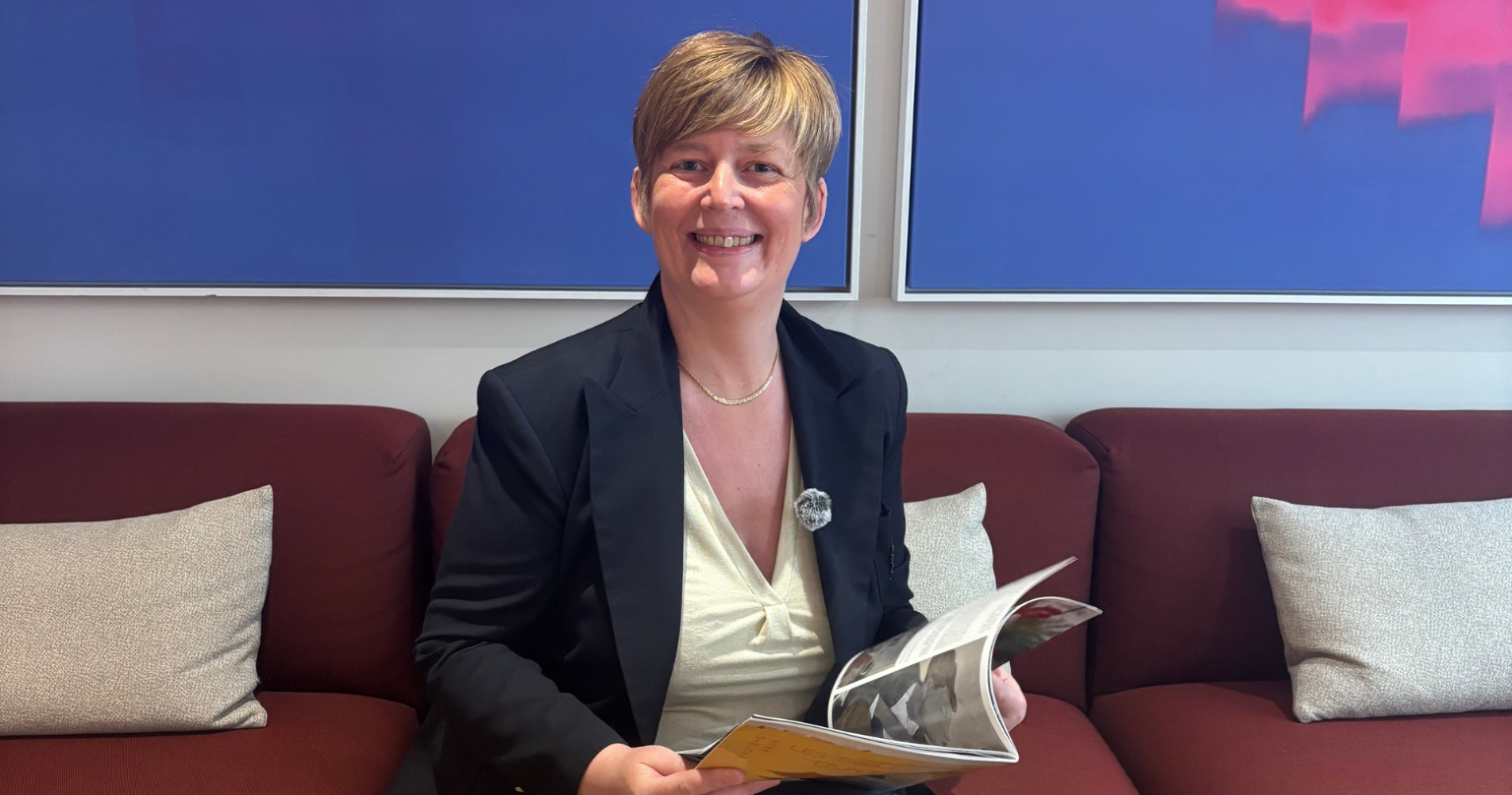
delphine Jonckheere fondatrice du magazine art mag international

The 2026 art season opens a new chapter for contemporary art. Exhibitions, emerging artists, new cultural venues and changing institutions are shaping an artistic landscape in motion. In issue 34, ART MAG turns its attention to the artists and institutions contributing to this evolution today.

The new art season is not simply a succession of exhibitions, fairs and openings. It is also a particular moment when new directions begin to emerge, institutions assert their choices, and some artists gain a level of visibility that can significantly influence their careers.

This is precisely the movement we wanted to explore.

And, as always, our focus begins with the artists.

Emerging artists at the heart of ART MAG

On the cover of this issue, Denis Doistau draws us into a world where light becomes both material and a principle of construction. His work reminds us of something that the accelerating pace of the art world can sometimes make us forget: an artistic practice is built over time. It develops, evolves and asserts itself before, sometimes, achieving recognition.

This attention to artistic trajectories lies at the heart of ART MAG’s editorial approach.

Since its creation, the magazine has chosen to present emerging artists alongside more established practices. Our aim is not simply to follow what has already been recognised, but also to identify the new visual languages, research and individual voices shaping contemporary creation today.

To look at what already exists, but above all at what is now emerging.

Cultural institutions in transformation

The 2026 art season also reveals the profound changes taking place within cultural institutions.

In Amiens, the Maison de la Culture is rethinking the relationship between artistic creation, artists, local communities and audiences. In Brussels, KANAL-Centre Pompidou is questioning what a contemporary museum can become when visual arts encounter live practices. On Île Seguin, Large also reflects the emergence of new cultural spaces where disciplines, cultures and uses intersect.

These projects are different, yet they raise the same question: what place do we want to give contemporary creation today?

It is a question that concerns institutions, but also artists, galleries, collectors and audiences.

Looking beyond what is already visible

This, more than ever, is where ART MAG sees its role.

To report on major projects, exhibitions and transformations within the art world, of course. But also to open our pages to those whose work deserves to be discovered before their names become familiar.

Contemporary art is not shaped solely within major institutions, art fairs or the art market. It begins in artists’ studios, through research and experimentation, and through the need to create that comes before any form of recognition.

To look at art today is also to recognise what may matter tomorrow.

It is with this conviction that ART MAG opens the new art season.

Welcome to ART MAG Issue 34, and to a new season of contemporary art.

Delphine Jonckheere
Founder and Publishing Director — ART MAG

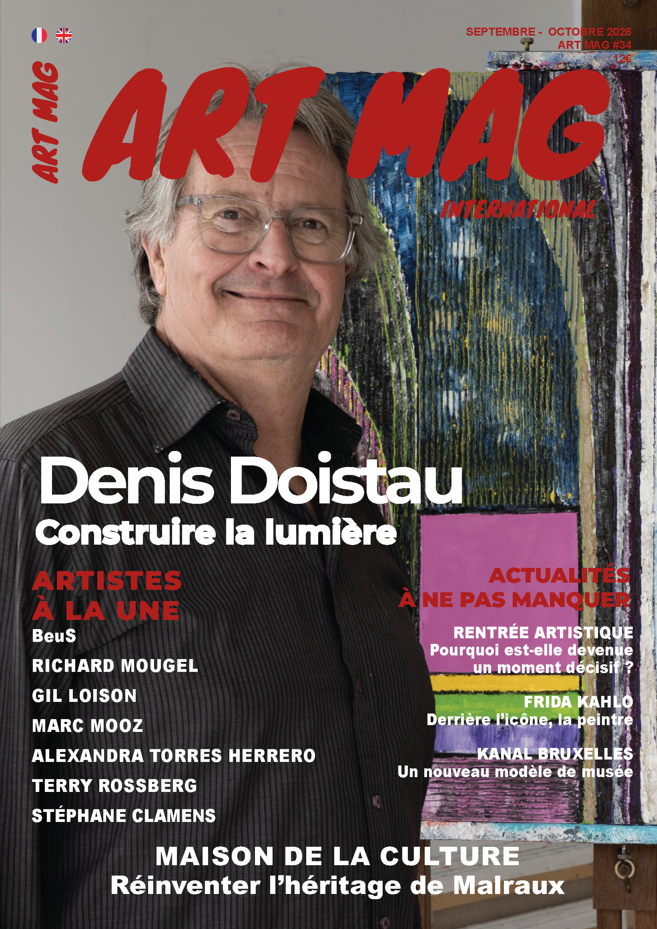
Discover ART MAG Issue 34

If this editorial has sparked your curiosity, continue reading with the new issue of ART MAG, the independent magazine dedicated to contemporary art and today’s artists.

In this issue

Contemporary artists to discover, with Denis Doistau on the cover and his exploration of light, material and construction.

The 2026 art season: why is it such a decisive moment? A special feature exploring the key issues shaping this new season of contemporary art.

How does an artwork enter a public collection? A behind-the-scenes look at a process that plays an essential role in the recognition and preservation of contemporary art.

Reinventing the Maison de la Culture. In Amiens, ART MAG explores a new artistic project that places creation and artists at the heart of the institution.

KANAL-Centre Pompidou in Brussels: what kind of museum for tomorrow? A new cultural venue that challenges traditional boundaries between visual arts, live practices and audiences.

Île Seguin continues its cultural transformation with Large, a new project dedicated to contemporary culture.

Frida Kahlo, The Making of an Icon. In London, Tate Modern explores the making of an icon whose influence extends far beyond art history.

Valencia, a contemporary art scene to discover through its galleries, artists and emerging creative territories.

Artists to discover: Denis Doistau, Stéphane Clamens, Terry Rossberg, Alexandra Torres Herrero, Mezz Zapharelli, Richard Mougel, Gil Loison, BeuS…

Also featured: Frida Kahlo, Boris Charmatz, Rebecca Chaillon, Tatiana Julien, Yuval Rozman, Gurshad Shaheman, Collectif XY, Tiphaine Raffier, Julien Gosselin, Lisaboa Houbrechts, Miroirs Étendus…

Emerging artists, in-depth analysis, institutions, the art market, exhibitions and discoveries: ART MAG takes you to the heart of contemporary art today.

📥 Explore ART MAG Issue 34 and discover the artists, institutions and cultural figures shaping the art of today — and perhaps that of tomorrow.

To read more, download ART MAG N°34
Categories
Inside the Art Market - News

Art Market: Why France Is Returning to the Forefront in Europe

After two years of decline, the French art market has returned to growth. In 2025, sales reached $4.5 billion, up 9%, according to The Art Basel & UBS Global Art Market Report 2026. With an 8% share of the global market, France has consolidated its position as the leading art market in the European Union. This momentum is being driven by Paris and its ecosystem, although it should not obscure the persistent vulnerabilities within the sector.

French growth outpaces the global art market

The figures mark a clear change in direction. After two years of contraction, the French art market recorded $4.5 billion in sales in 2025, an increase of 9% in a single year. It has therefore returned to a level slightly above that of 2019.

This performance is all the more significant given that the recovery of the global art market remains uneven. Worldwide, art and antiques sales increased by 4% in 2025, reaching $59.6 billion.

France now accounts for 8% of the global art market, compared with 7% the previous year. It remains in fourth place behind the United States, the United Kingdom and China, while above all confirming its position as the leading art market in the European Union.

Behind these figures lies an important question: why is France, and Paris in particular, once again attracting so much attention from the international art market?

Support independent publishing! Subscribe to ART MAG and receive each issue in advance, in both print and digital format
👉 Subcribe 6 issues / 1 year

Paris: an ecosystem that has become difficult to ignore

The answer cannot be attributed to a single fair or to the arrival of a handful of major international galleries.

Paris now benefits from an exceptional concentration of players: French and international galleries, auction houses, museums, foundations, fairs, collectors and institutions. Their proximity creates an ecosystem in which the market and culture reinforce one another.

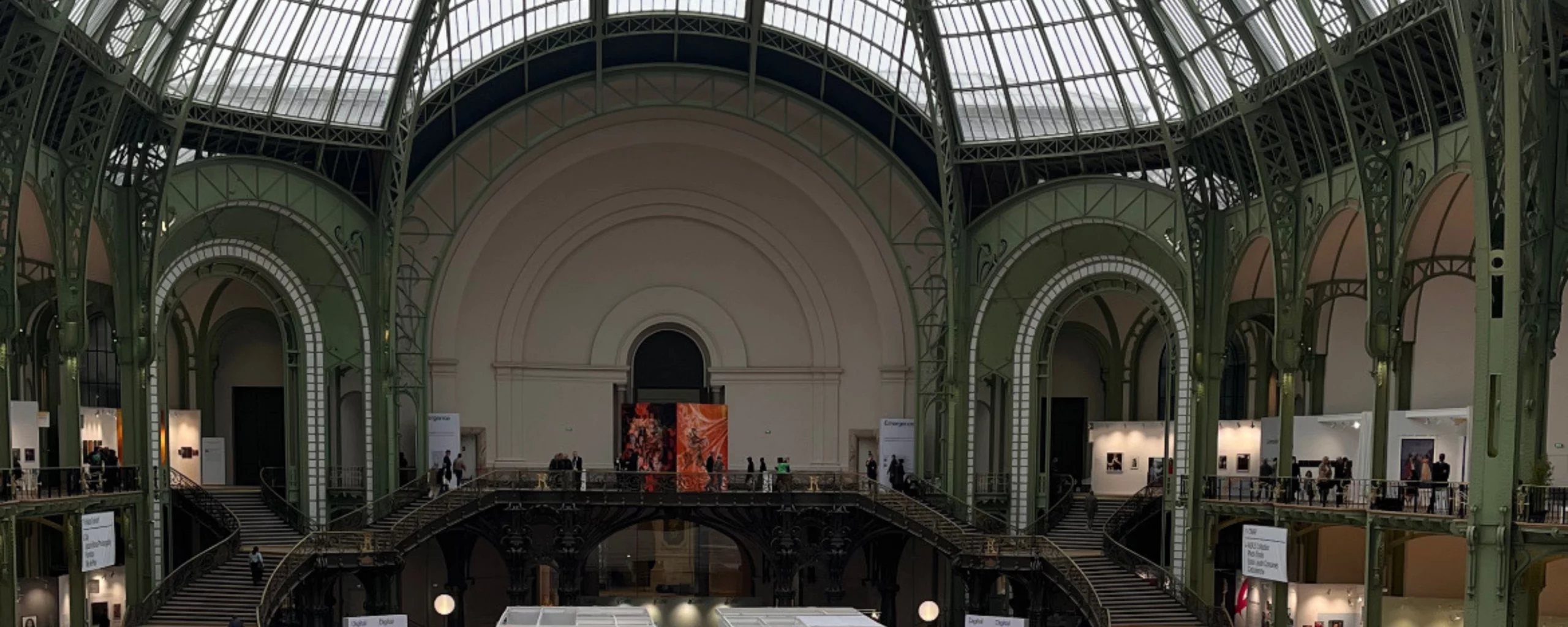
Art Basel Paris is its most visible manifestation. For its 2026 edition, the fair has announced more than 200 exhibitors from 41 countries and territories, including nearly 30 first-time participants. More than 60 participating galleries now have a permanent space in France.

But Paris’s appeal does not depend on Art Basel alone.

Paris Photo, Art Paris, Paris Internationale, Asia NOW, AKAA and several specialist fairs now punctuate the calendar throughout the year. Alongside them are the major auction houses, a dense gallery network and a particularly ambitious institutional programme.

Paris is therefore no longer simply a city that hosts a major art fair. The city has once again become an art-market ecosystem in its own right.

Why are collectors returning to Paris?

This concentration takes on its full significance when considered from the collector’s perspective. Behind the market figures lies another fundamental question: why do we collect works of art?

A trip to Paris now makes it possible, within just a few days, to combine a major fair with gallery exhibitions, auctions, museums and foundations, while also meeting artists, dealers, curators and fellow collectors.

And the market appears to be rediscovering the importance of precisely this kind of physical experience.

Art fairs now account for 35% of dealers’ turnover, four percentage points more than the previous year and their highest level since 2022. At the same time, online-only sales are declining.

Following the rapid digital acceleration of the Covid years, the art market is reaffirming one of its fundamental characteristics: a work of art is not purchased solely through an image and a price.

Seeing the work in person, understanding its context, talking to the dealer or meeting the artist still plays an important role in the decision to acquire.

Cities capable of concentrating these experiences therefore have a considerable advantage. Paris now appears to be benefiting fully from this dynamic.

A recovery that does not benefit everyone equally

It would nevertheless be misleading to conclude that the French art market has returned to uniform growth.

Globally, dealer sales increased by only 2% in 2025, reaching $34.8 billion. Behind this average lie significant differences according to the size of each business.

Dealers with annual turnover below $500,000 recorded double-digit growth. Those generating between $1 million and $10 million experienced a slight decline, while businesses with turnover above $10 million returned to growth of 3%.

At the same time, dealers’ operating costs increased by around 5%, more than the overall increase in their sales.

In other words, selling more does not necessarily mean earning more.

This may be one of the paradoxes of the French art market in 2026: Paris has rarely attracted so many international players, while the business model of many galleries remains under pressure.

Support independent publishing! Subscribe to ART MAG and receive each issue in advance, in both print and digital format
👉 Subcribe 6 issues / 1 year

Art fairs are becoming central once again

This situation also helps explain why fairs are playing an increasingly important role in gallery strategies.

They are expensive: transporting works, renting a booth, insurance, travel and accommodation for staff all represent substantial costs. Yet in just a few days, a fair can bring together what a gallery might otherwise take several months to achieve: collectors, advisers, museum professionals, journalists and new international contacts.

Their growing share of dealers’ turnover demonstrates that fairs are no longer simply showcases.

They have become essential commercial infrastructures within the contemporary art market.

This dependence, however, raises another question: how long can galleries continue to absorb the rising costs of participating in the very events they need in order to remain visible?

The growth of the French art market therefore does not resolve all of its vulnerabilities. It also exposes some of them.

Has Paris overtaken London?

Not yet.

A crucial distinction must be made between the European Union and Europe as a whole. France is indeed the leading art market in the European Union, but the United Kingdom remains well ahead, with approximately $10.5 billion in sales in 2025, representing 18% of the global market.

Declaring Paris the new European capital of the art market would therefore be premature.

Yet market share alone may no longer tell the whole story.

Paris has regained its international appeal. Major galleries are opening spaces in the city or strengthening their presence there, international fairs continue to expand, and collectors now have access to a cultural and commercial offering dense enough to justify several visits throughout the year.

France accounted for 7% of the global market in 2024. It now represents 8%. Sales increased by 9% and have returned to a level above that recorded before the pandemic.

This momentum is not enough to dethrone London.

It does, however, demonstrate that Paris has once again become a market centre that the international art world can no longer regard as secondary.

With the reopening of galleries after the summer and the major autumn season of Parisian art fairs only weeks away, the question may therefore no longer be whether Paris is back.

The real question is whether it can turn this comeback into a lasting position.

Support independent publishing! Subscribe to ART MAG and receive each issue in advance, in both print and digital format
👉 Subcribe 6 issues / 1 year

Categories
Art Fair - Contemporary Art - Inside the Art Market

ART-O-RAMA 2026 in Marseille: A Different Vision of the Contemporary Art Fair

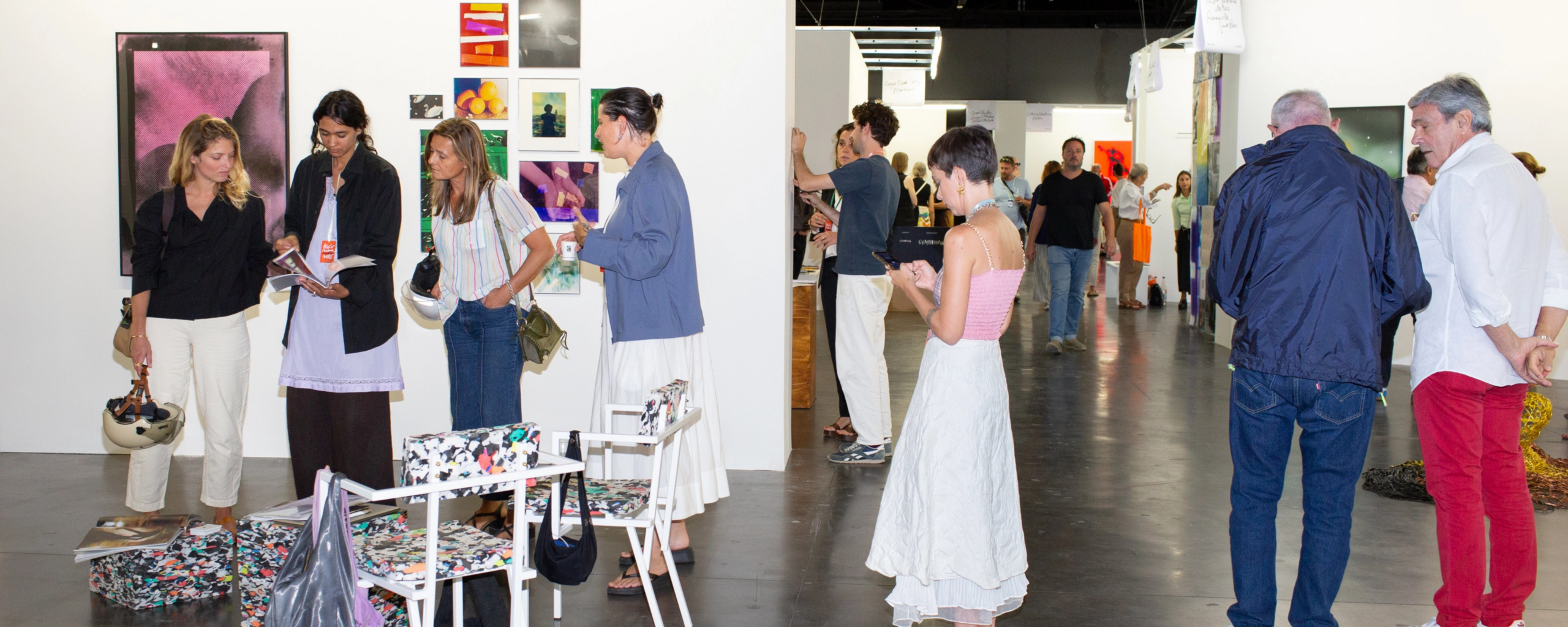
Vue d’ART-O-RAMA à la Friche la Belle de Mai à Marseille
Margot Montigny

From 28 to 30 August 2026, ART-O-RAMA returns to Friche la Belle de Mai in Marseille. For this new edition, the international contemporary art fair brings together 40 galleries from 18 countries across four continents. In contrast to the scale of the major international art fairs, ART-O-RAMA champions a different model: a focused format, young galleries, curatorial projects and a strong commitment to emerging creation.

At a time when a handful of major international fairs concentrate an increasing share of the contemporary art market’s attention, ART-O-RAMA continues to cultivate a different scale from Marseille.

For its 2026 edition, the fair brings together 40 galleries across just 34 stands. Nineteen are participating for the first time and, even more significantly, more than half of the galleries taking part have opened within the past five years.

This last figure says much about the fair’s positioning. ART-O-RAMA does not focus solely on emerging artists: it also gives significant space to young galleries, essential players willing to take risks on new practices and help build the artistic careers of tomorrow.

ART-O-RAMA 2026: 40 Galleries from 18 Countries

From Copenhagen to Barcelona, Sofia to Berlin, London to Lima and Tokyo to Chicago, ART-O-RAMA 2026 presents a distinctly international geography. Paris and Marseille are represented alongside Milan, Vienna, Geneva and Sydney.

Yet the significance of this geographical diversity lies less in the number of countries represented than in the profile of the selected galleries.

For a young gallery, taking part in an international art fair can represent a decisive step. It offers an opportunity to meet new collectors, introduce artists to critics and curators, engage with other art scenes and gradually establish an international presence.

ART-O-RAMA deliberately embraces an intimate format and a rigorous selection process, while keeping galleries at the heart of the fair. Five of the stands in the 2026 edition will bring together two galleries presenting joint projects.

The fair therefore operates as a laboratory not only for artists, but also for those who choose to represent and support them.

Why ART-O-RAMA Focuses on Young Galleries

In an art market largely structured around major international fairs, establishing a presence remains a challenge for recently founded galleries. ART-O-RAMA has turned this reality into a defining choice: in 2026, more than half of the selected galleries have been operating for less than five years.

Jérôme Pantalacci, Director of ART-O-RAMA
Jérôme Pantalacci, Director of ART-O-RAMA. © SayWho / Saymika

This approach reflects a vision long championed by Jérôme Pantalacci, director of ART-O-RAMA. Since its creation in 2007, the fair has grown without abandoning its deliberately focused format. While many events continually seek to increase their size and number of exhibitors, ART-O-RAMA takes a different approach: prioritising the quality of the presentations, supporting galleries and giving particular attention to curatorial projects.

Young galleries play a central role in this strategy. Often more agile, they support artists who are still relatively unknown, take greater risks and experiment with new forms of presentation. They are also an essential part of the artistic ecosystem, helping new scenes and perspectives to emerge.

ART-O-RAMA’s format encourages this dynamic. Here, the stand is conceived not simply as a sales space, but as an artistic proposition in its own right, built around an artist, a line of research or a dialogue between different practices.

This approach contributes directly to the Marseille fair’s distinctive identity: giving visibility to those shaping the art scenes of tomorrow and making the fair a place of discovery before recognition.

Support independent publishing! Subscribe to ART MAG and receive each issue in advance, in both print and digital format
👉 Subcribe 6 issues / 1 year

Artists and Works to Discover at ART-O-RAMA 2026

Several projects announced for the 2026 edition illustrate this ambition to treat the stand as an artistic space in its own right.

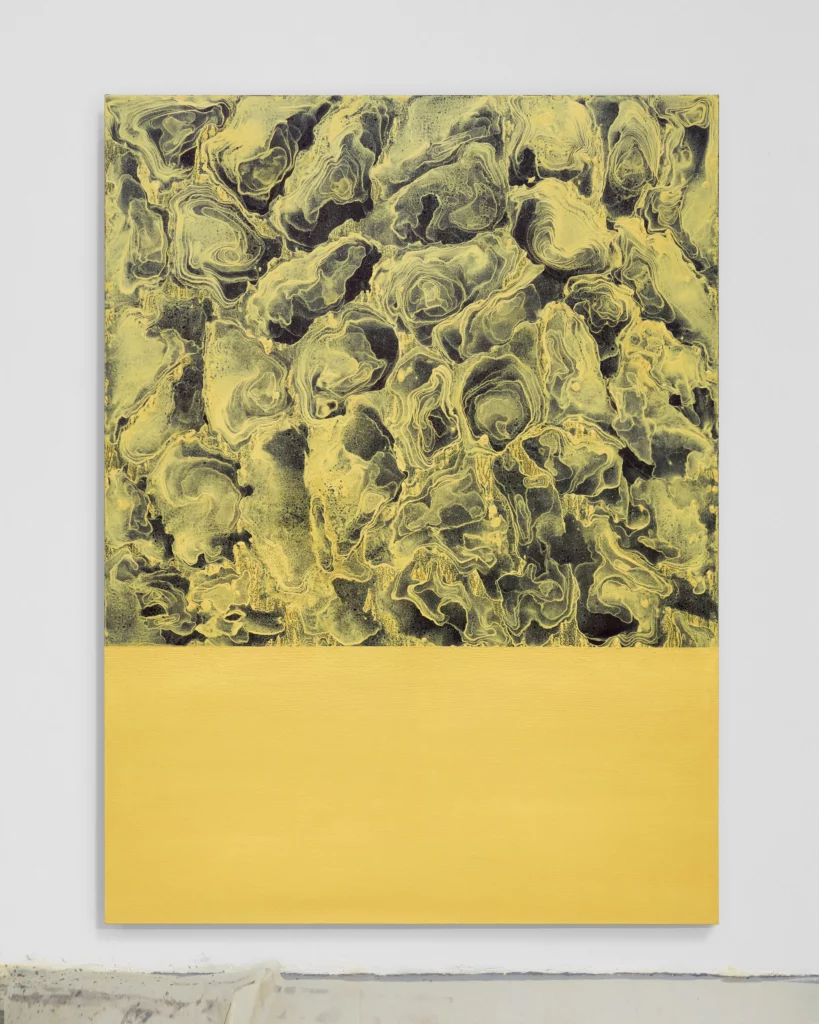
Jonathan Bréchignac, POLLEN DE PIN AVRIL 26, presented by 22,48 m² at ART-O-RAMA 2026
22,48 m2, Romainville, Grand Paris Jonathan Bréchignac POLLEN DE PIN AVRIL 26, 2026 Raw pine pollen, acrylic and medium on canvas 57.5 x 44.9 x 1.2 inches
Courtesy of the artist and the gallery

With 22,48 m², Jonathan Bréchignac continues L’Éclosion du Temps, a body of research initiated during a residency in Beijing. Pollen — particularly pine pollen — becomes pigment, sculptural material, an olfactory experience and even a gustatory one. Working with this microscopic material, which can survive for millions of years, the artist explores life, memory and our perception of time.

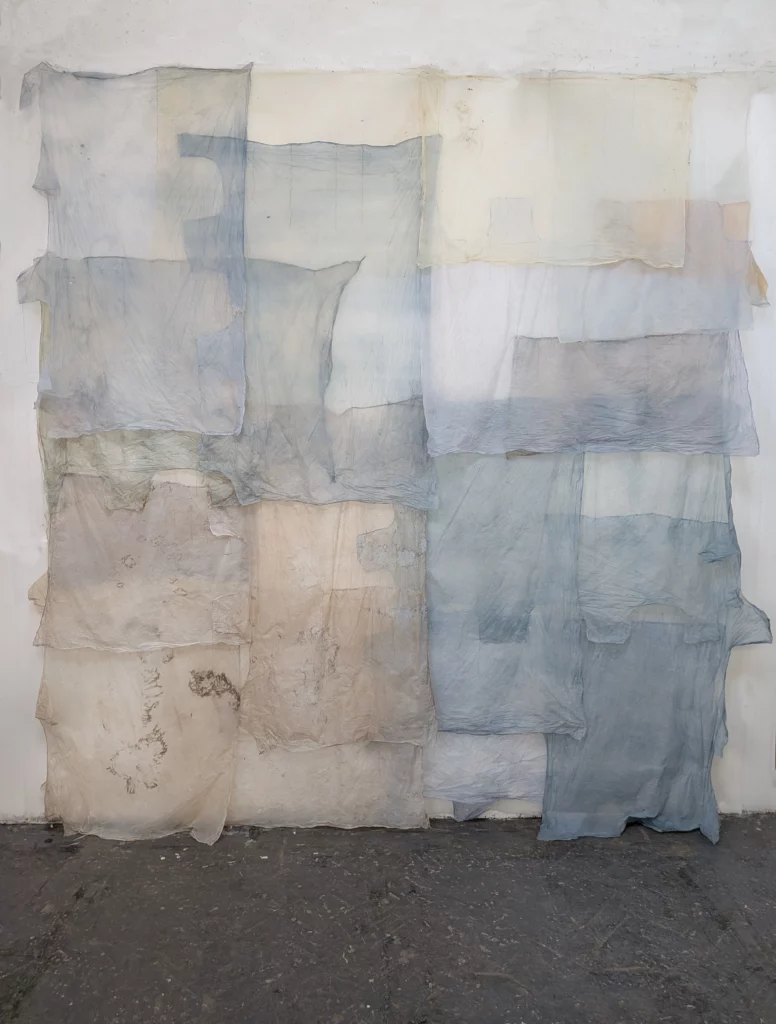
Liz Elton, Black and Blue, 2026, presented by Cable Depot at ART-O-RAMA 2026
Liz Elton Black and Blue, 2026 approx. 260 x 260 cm compostable cornstarch (food waste recycling bags) coloured with vegetable dyes and fruit dyes from kitchen waste saddened with iron, seeds of edible plants with medicinal qualities, silk
Courtesy of the artist and Cable Depot

At Cable Depot, Liz Elton works with compostable bags and pigments derived in part from waste from her own kitchen. Moving between painting and sculpture, her works address food, waste, regeneration and our relationship with the earth.

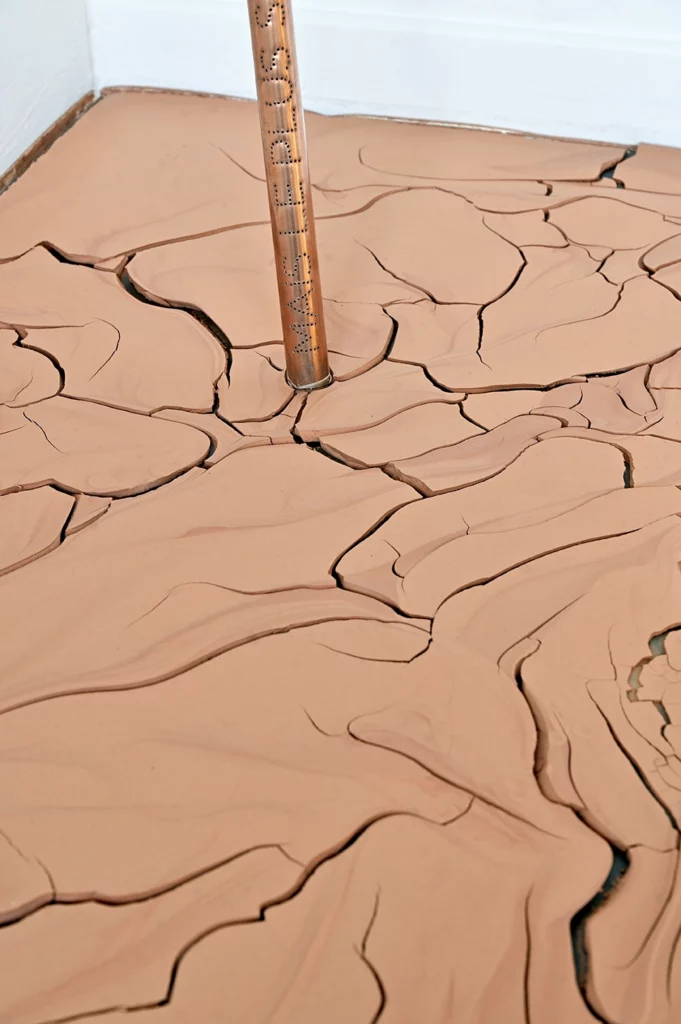
Julia Gault, Vague de chaleur, presented by Clara Darrason at ART-O-RAMA 2026
Julia Gault C’est la manière dont ces vagues pénètrent dans l’immeuble, 2023
Perforated copper tubes Variable dimensions Courtesy Julia Gault ©Béatrice Cafiéri

Clara Darrason brings together Julia Gault and Amandine Guruceaga around a landscape confronted with heat, fire and water scarcity. Earthenware, copper, textiles, brass and processes of oxidation create an environment in which material transformation echoes contemporary ecological tensions.

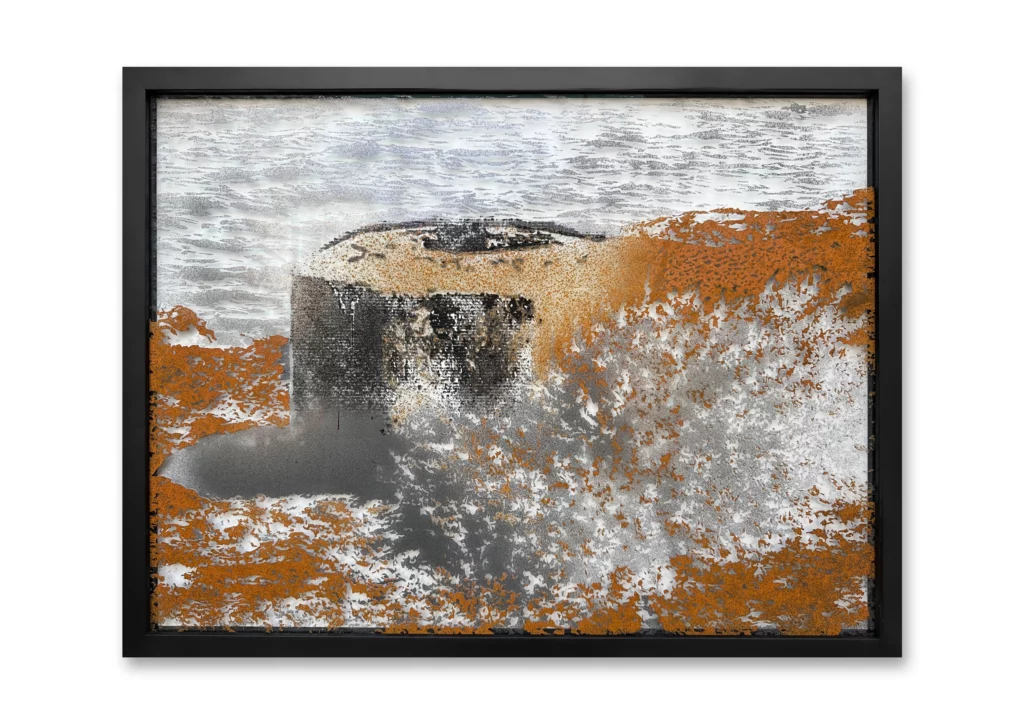
Nicolas Daubanes, Bunker, les calanques, 2023, Galerie Maubert
Nicolas Daubanes Bunker, les calanques, 2023 Magnetized steel powder on paper and iron filings on glass 45 x 60 cm Courtesy of the artist and Galerie Maubert

At Galerie Maubert, Nicolas Daubanes explores architecture, confinement and memory. Among the works announced is a life-size reproduction of a fountain basin from the Villa Medici, made from doors taken from cells at Baumettes Prison in Marseille, with the participation of inmates involved in a reintegration programme. Bunkers in the Calanques, military architecture and traces of resistance extend this reflection.

These projects represent very different practices, yet they share the same ambition: to make the fair stand something more than a succession of works available for sale.

Marseille and the Mediterranean at the Heart of the 2026 Edition

ART-O-RAMA also maintains a close relationship with its geographical and cultural context.

The 2026 edition coincides with the Mediterranean Season in France. Although ART-O-RAMA is not officially part of the programme, the fair welcomes galleries from countries including Spain, Italy and Cyprus, while Mediterranean issues also feature prominently in its programme of conversations and screenings.

At Friche la Belle de Mai, this Mediterranean dimension continues through several solo exhibitions. Zineb Sedira presents at the Panorama a reconfiguration of her pavilion for the 2022 Venice Biennale. Triangle-Astérides invites Mona Benyamin, while FRÆME, the organisation producing ART-O-RAMA, presents the work of Abdessamad El Montassir.

The fair therefore belongs to a cultural ecosystem extending well beyond its own exhibition spaces. Its private tours for guests, collectors and professionals connect institutions and foundations across Avignon, Arles, Marseille, Porquerolles, Saint-Paul-de-Vence and Nice.

Marseille is therefore more than simply the city hosting ART-O-RAMA: its artistic environment contributes directly to the fair’s identity.

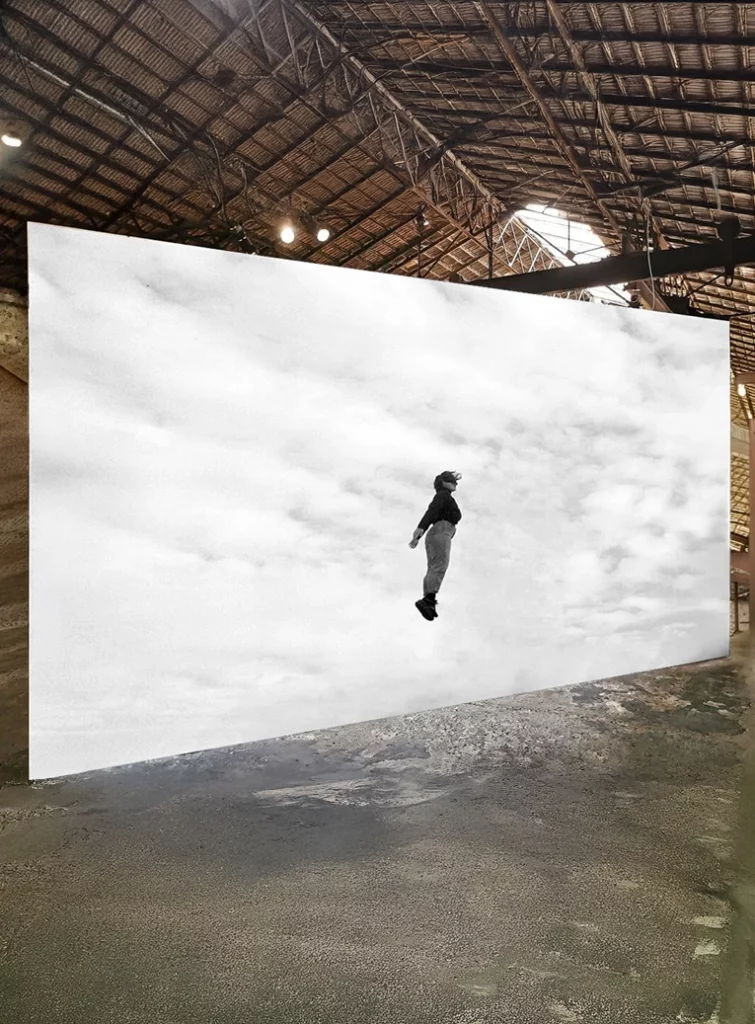
Work by Marine Pistien, artist selected for the Prix Région Sud Art at ART-O-RAMA 2026
Marine Pistien Tentative d’envol (autoportrait), 2023 Dos bleu, tirage jet d’encre sur papier dimensions variables, image : 6 × 7 cm © Marine Pistien Courtesy of the artist
Crédit Portrait : © Robin Plus

The Prix Région Sud: A Bridge Between Art School and the Market

ART-O-RAMA’s commitment to emerging talent extends beyond the participating galleries.

The Prix Région Sud Art gives young artists who graduated within the past five years from an art school in the Provence-Alpes-Côte d’Azur region the opportunity to present their work in ART-O-RAMA’s Showroom.

Four artists are selected and supported by a curator. Their presence at the fair gives them the opportunity to meet gallery owners, critics, collectors and publishers. The winner subsequently receives a two-month residency at Moly-Sabata / Fondation Albert Gleizes, a €2,000 grant, the publication of a catalogue and a presentation at the following edition of the fair.

Since 2022, the Prix Région Sud Design has extended this approach to young designers, once again with an explicit focus on professional development.

These initiatives raise an essential question for a new generation of creators: how does an artist move from art school into professional practice and gain access to galleries and the art market?

By connecting education, exhibitions, residencies, critical discourse and the market, ART-O-RAMA plays a tangible role in creating these pathways.

ART-O-RAMA and the Major Contemporary Art Fairs

ART-O-RAMA has neither the scale nor the ambition of the world’s largest international art fairs. And that is precisely where much of its interest lies.

Its focused format gives greater visibility to individual projects, young galleries and artists who may not yet be among the most familiar names on the market.

In a sector where attention is increasingly concentrated around a limited number of international events, often favouring already established players, ART-O-RAMA chooses another position: one based on discovery, experimentation and emergence.

The objective is not to compete with the major machines of the international art market, but to preserve one of the fundamental purposes of an art fair: bringing artists, galleries, collectors and professionals together around practices that remain to be discovered.

In an increasingly concentrated art market, ART-O-RAMA reminds us that an art fair can still be a place of discovery before becoming a showcase for established certainties.

To discover all the galleries, artists, talks and highlights of this year’s edition, explore the full ART-O-RAMA 2026 programme.

Support independent publishing! Subscribe to ART MAG and receive each issue in advance, in both print and digital format
👉 Subcribe 6 issues / 1 year

ART-O-RAMA 2026: Dates and Practical Information

When is ART-O-RAMA 2026?

ART-O-RAMA takes place from 28 to 30 August 2026.

Where does ART-O-RAMA take place?

The fair is held at Friche la Belle de Mai in Marseille, 41 rue Jobin, in Marseille’s 3rd arrondissement.

How many galleries are taking part in ART-O-RAMA 2026?

The 2026 edition brings together 40 galleries from 18 countries across four continents, presented across 34 stands.

What makes ART-O-RAMA different?

The fair favours a focused format and gives significant space to emerging galleries and artists. In 2026, 19 galleries are participating for the first time, and more than half of the selected galleries were founded within the past five years.

What can visitors discover at ART-O-RAMA 2026?

Alongside contemporary art galleries, ART-O-RAMA features a publishing section, contemporary design, the Prix Région Sud, as well as a programme of conversations and screenings.

Support independent publishing! Subscribe to ART MAG and receive each issue in advance, in both print and digital format
👉 Subcribe 6 issues / 1 year