


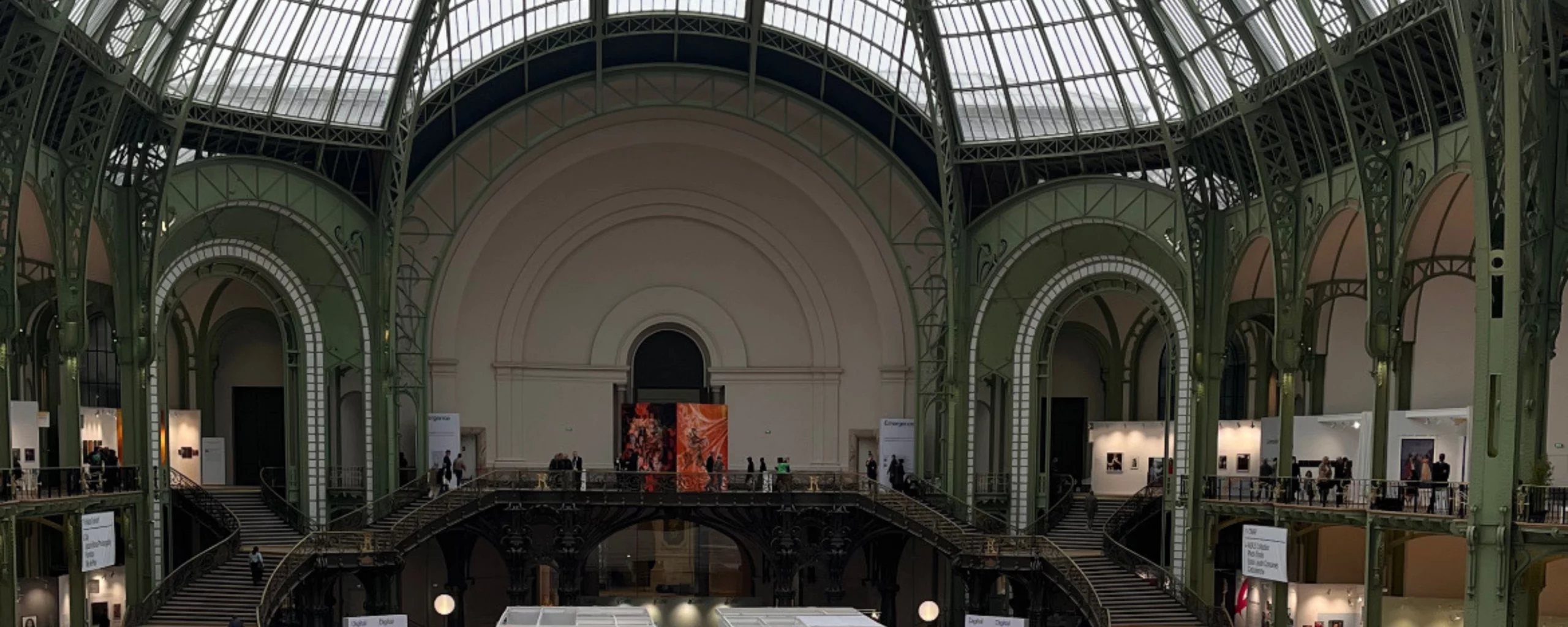
After two years of decline, the French art market has returned to growth. In 2025, sales reached $4.5 billion, up 9%, according to The Art Basel & UBS Global Art Market Report 2026. With an 8% share of the global market, France has consolidated its position as the leading art market in the European Union. This momentum is being driven by Paris and its ecosystem, although it should not obscure the persistent vulnerabilities within the sector.
French growth outpaces the global art market
The figures mark a clear change in direction. After two years of contraction, the French art market recorded $4.5 billion in sales in 2025, an increase of 9% in a single year. It has therefore returned to a level slightly above that of 2019.
This performance is all the more significant given that the recovery of the global art market remains uneven. Worldwide, art and antiques sales increased by 4% in 2025, reaching $59.6 billion.
France now accounts for 8% of the global art market, compared with 7% the previous year. It remains in fourth place behind the United States, the United Kingdom and China, while above all confirming its position as the leading art market in the European Union.
Behind these figures lies an important question: why is France, and Paris in particular, once again attracting so much attention from the international art market?
Support independent publishing! Subscribe to ART MAG and receive each issue in advance, in both print and digital format
👉 Subcribe 6 issues / 1 year
Paris: an ecosystem that has become difficult to ignore
The answer cannot be attributed to a single fair or to the arrival of a handful of major international galleries.
Paris now benefits from an exceptional concentration of players: French and international galleries, auction houses, museums, foundations, fairs, collectors and institutions. Their proximity creates an ecosystem in which the market and culture reinforce one another.
Art Basel Paris is its most visible manifestation. For its 2026 edition, the fair has announced more than 200 exhibitors from 41 countries and territories, including nearly 30 first-time participants. More than 60 participating galleries now have a permanent space in France.
But Paris’s appeal does not depend on Art Basel alone.
Paris Photo, Art Paris, Paris Internationale, Asia NOW, AKAA and several specialist fairs now punctuate the calendar throughout the year. Alongside them are the major auction houses, a dense gallery network and a particularly ambitious institutional programme.
Paris is therefore no longer simply a city that hosts a major art fair. The city has once again become an art-market ecosystem in its own right.
Why are collectors returning to Paris?
This concentration takes on its full significance when considered from the collector’s perspective. Behind the market figures lies another fundamental question: why do we collect works of art?
A trip to Paris now makes it possible, within just a few days, to combine a major fair with gallery exhibitions, auctions, museums and foundations, while also meeting artists, dealers, curators and fellow collectors.
And the market appears to be rediscovering the importance of precisely this kind of physical experience.
Art fairs now account for 35% of dealers’ turnover, four percentage points more than the previous year and their highest level since 2022. At the same time, online-only sales are declining.
Following the rapid digital acceleration of the Covid years, the art market is reaffirming one of its fundamental characteristics: a work of art is not purchased solely through an image and a price.
Seeing the work in person, understanding its context, talking to the dealer or meeting the artist still plays an important role in the decision to acquire.
Cities capable of concentrating these experiences therefore have a considerable advantage. Paris now appears to be benefiting fully from this dynamic.
A recovery that does not benefit everyone equally
It would nevertheless be misleading to conclude that the French art market has returned to uniform growth.
Globally, dealer sales increased by only 2% in 2025, reaching $34.8 billion. Behind this average lie significant differences according to the size of each business.
Dealers with annual turnover below $500,000 recorded double-digit growth. Those generating between $1 million and $10 million experienced a slight decline, while businesses with turnover above $10 million returned to growth of 3%.
At the same time, dealers’ operating costs increased by around 5%, more than the overall increase in their sales.
In other words, selling more does not necessarily mean earning more.
This may be one of the paradoxes of the French art market in 2026: Paris has rarely attracted so many international players, while the business model of many galleries remains under pressure.
Support independent publishing! Subscribe to ART MAG and receive each issue in advance, in both print and digital format
👉 Subcribe 6 issues / 1 year
Art fairs are becoming central once again
This situation also helps explain why fairs are playing an increasingly important role in gallery strategies.
They are expensive: transporting works, renting a booth, insurance, travel and accommodation for staff all represent substantial costs. Yet in just a few days, a fair can bring together what a gallery might otherwise take several months to achieve: collectors, advisers, museum professionals, journalists and new international contacts.
Their growing share of dealers’ turnover demonstrates that fairs are no longer simply showcases.
They have become essential commercial infrastructures within the contemporary art market.
This dependence, however, raises another question: how long can galleries continue to absorb the rising costs of participating in the very events they need in order to remain visible?
The growth of the French art market therefore does not resolve all of its vulnerabilities. It also exposes some of them.
Has Paris overtaken London?
Not yet.
A crucial distinction must be made between the European Union and Europe as a whole. France is indeed the leading art market in the European Union, but the United Kingdom remains well ahead, with approximately $10.5 billion in sales in 2025, representing 18% of the global market.
Declaring Paris the new European capital of the art market would therefore be premature.
Yet market share alone may no longer tell the whole story.
Paris has regained its international appeal. Major galleries are opening spaces in the city or strengthening their presence there, international fairs continue to expand, and collectors now have access to a cultural and commercial offering dense enough to justify several visits throughout the year.
France accounted for 7% of the global market in 2024. It now represents 8%. Sales increased by 9% and have returned to a level above that recorded before the pandemic.
This momentum is not enough to dethrone London.
It does, however, demonstrate that Paris has once again become a market centre that the international art world can no longer regard as secondary.
With the reopening of galleries after the summer and the major autumn season of Parisian art fairs only weeks away, the question may therefore no longer be whether Paris is back.
The real question is whether it can turn this comeback into a lasting position.
Support independent publishing! Subscribe to ART MAG and receive each issue in advance, in both print and digital format
👉 Subcribe 6 issues / 1 year