What do we really see when we look at a work of art? What if the true subject is not the object itself, but the way our perception constructs reality? These questions lie at the heart of Julien Magic’s artistic practice.
Internationally acclaimed as both an illusionist and a contemporary artist, Julien Magic has developed a body of work in which painting, sculpture, installation and illusion coexist without ever merging into a single discipline. Rather than moving from one practice to another, he allows them to engage in an ongoing dialogue. Both explore the same fundamental question: how does perception shape our understanding of the world?
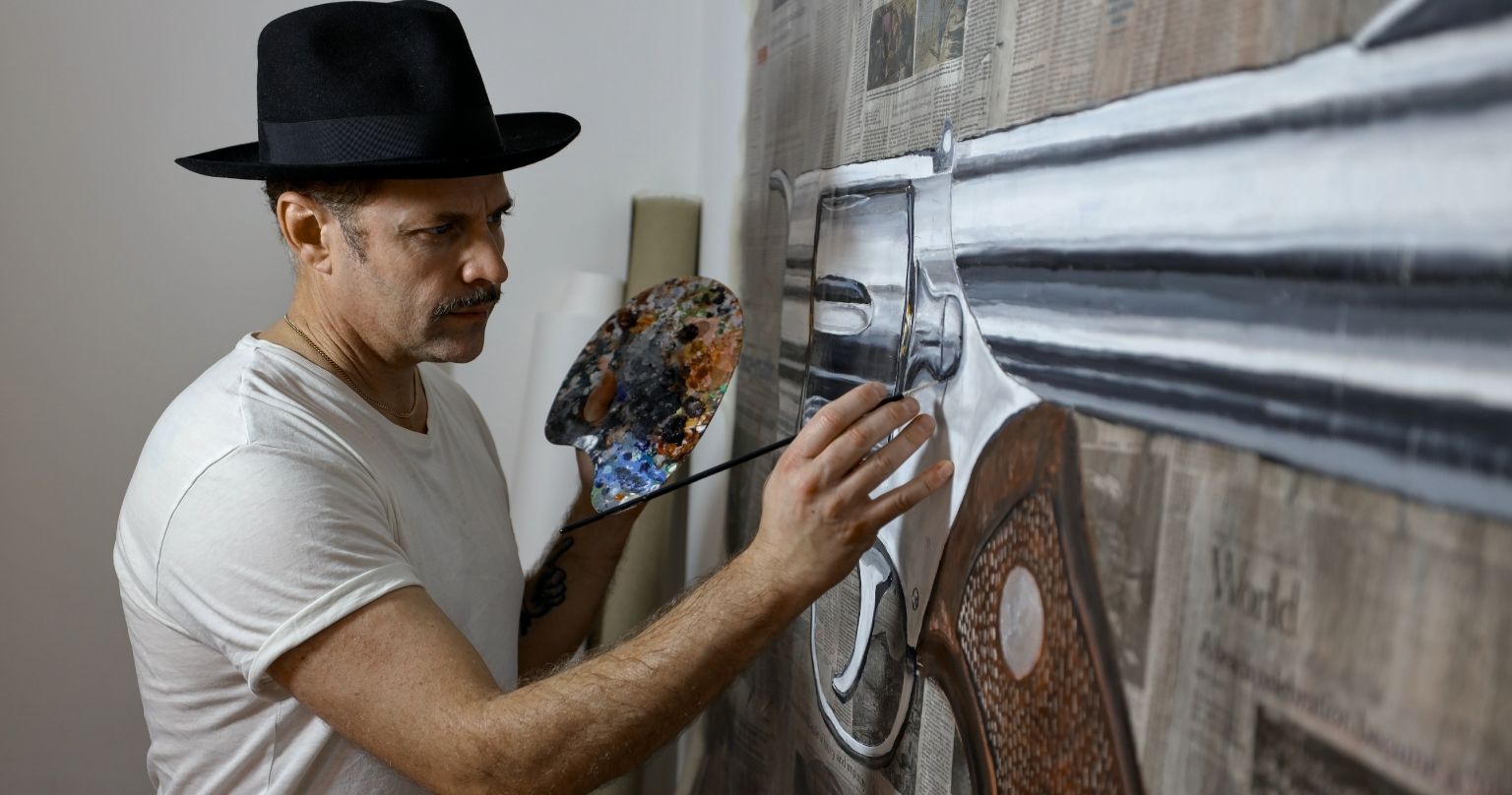
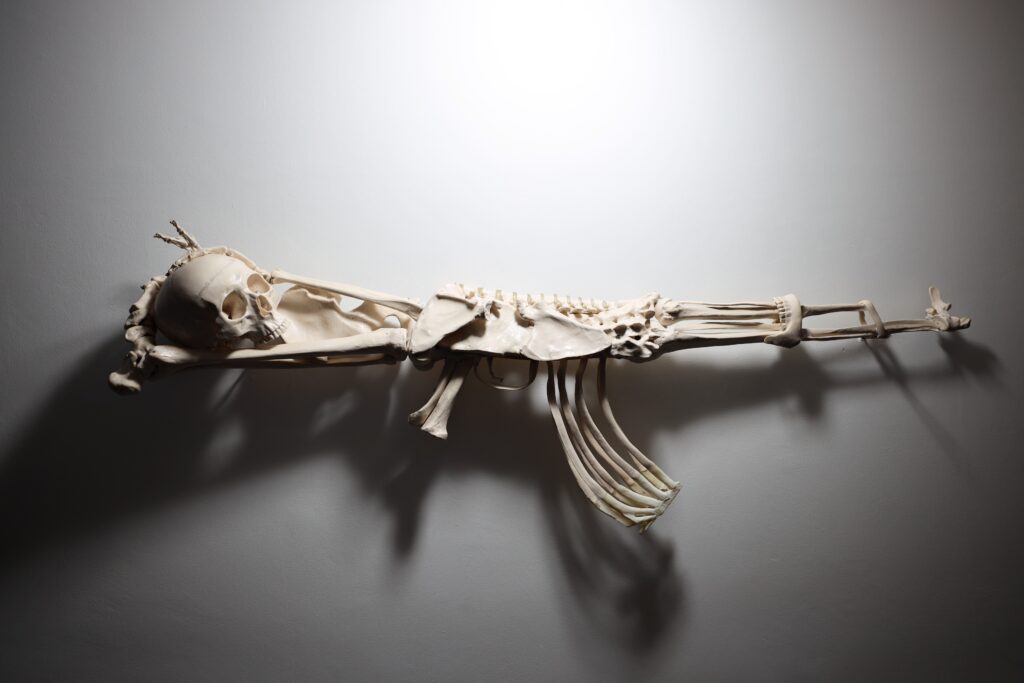
This inquiry runs through every aspect of his work. An assault rifle becomes a point of balance. A human skeleton merges with a weapon until the two appear inseparable. Newspaper pages, originally created to report current events, become the very surface on which paintings are built. Familiar objects remain instantly recognizable, yet their meaning quietly shifts, challenging the viewer’s assumptions.
For Julien Magic, illusion is never an exercise in technical virtuosity alone. It is a conceptual tool. Rather than deceiving the viewer, it reveals how perception interprets reality long before reason begins its analysis.
This approach naturally places his work within some of the central debates of contemporary art. How do images influence our understanding of reality? What happens when symbols of power are removed from their original context? How can an artwork transform the way we see without imposing a single interpretation?
Through paintings created on collaged newspaper pages, sculptures and immersive installations, Julien Magic offers no definitive answers. Instead, he creates situations in which uncertainty becomes productive. Each work invites the viewer to slow down, observe more carefully and accept that perception itself is a construction rather than an absolute truth.
His practice reminds us that art is not simply about representing the world. It can also reveal the invisible mechanisms that shape the way we experience it. In this sense, Julien Magic does not present an alternative reality; he encourages us to look differently at the one we thought we already knew.
Julien Magic is a French contemporary artist and internationally acclaimed illusionist. His work combines painting, sculpture, installation and illusion to explore perception, symbols of power and the way images shape our understanding of reality. His artistic practice invites viewers to question how they see and interpret the world around them.
How are illusion and contemporary art connected in Julien Magic’s work?
For Julien Magic, illusion and contemporary art are not opposing disciplines but complementary forms of expression. While illusion transforms perception during a performance, art extends that experience by encouraging viewers to question what they see and how they construct meaning.
Why does Julien Magic paint on newspapers?
Newspapers form the foundation of many of Julien Magic’s paintings. By using printed news as his canvas, he explores the relationship between information, media and perception. Rather than hiding the newspaper, the painting transforms it, turning current events into a new artistic narrative.
What is the Illusion of Power series about?
In Illusion of Power, Julien Magic examines the many forms of power through sculpture, painting and installation. Weapons, money and everyday objects become symbolic elements that invite reflection on authority, violence and the invisible mechanisms that shape contemporary society.
What does Anatomy of Authority represent?
Anatomy of Authority depicts a human skeleton merging with a weapon to explore the relationship between the body, authority and violence. The artwork encourages viewers to reflect on how systems of power influence both our perception and our behaviour.
Where has Julien Magic exhibited his work?
Julien Magic’s artworks have been presented in several international exhibitions, including at the Moderna Museet in Stockholm. His work is also featured in exhibitions, artistic projects and cultural events across Europe and internationally.
What are the main themes explored in Julien Magic’s work?
Julien Magic’s work explores perception, illusion, power, media, visual culture and the construction of reality. Through painting, sculpture and installation, he encourages viewers to question their certainties and develop a more critical understanding of the contemporary world.
Why is Julien Magic considered a unique contemporary artist?
Julien Magic has developed an original artistic practice that brings together illusion and contemporary art without opposing them. His works transform visual experience into a space for reflection, inviting audiences to reconsider the way they perceive reality and the images that surround them.
Why does Julien Magic use illusion in his artworks?
For Julien Magic, illusion is not an end in itself but a creative language. By subtly altering familiar objects and situations, he encourages viewers to question their own perception. His artworks reveal that seeing is never entirely objective—it is shaped by experience, culture and interpretation.
More than 100 sculptures take over the Domaine du Château Philippe le Hardi from 4 to 11 July 2026
What if contemporary sculpture found its most meaningful setting beyond the walls of a museum? Over the past decade, an increasing number of artists have embraced gardens, historic estates and cultural landscapes as exhibition spaces, offering visitors a more immersive way to experience sculpture. In Santenay, Burgundy, Au Domaine des Sens perfectly illustrates this evolution. From 4 to 11 July 2026, around twenty sculptors will present more than one hundred artworks at the Domaine du Château Philippe le Hardi, where the vineyard itself becomes part of the artistic experience.
Organised by the Biennale de Sculpture Contemporaine en Bourgogne, with the support of the Municipality of Nolay and thanks to the generous collaboration of the Domaine du Château Philippe le Hardi, the exhibition highlights a simple yet powerful idea: sculpture takes on a new dimension when it engages directly with its environment.
When the landscape reshapes the way we look at sculpture
Here, the landscape is far more than a backdrop.
The geometry of the vineyards, the historic architecture of the estate, the mineral textures and the ever-changing natural light all influence the way each sculpture is perceived. As visitors move through the grounds, perspectives shift, shadows evolve and materials reveal new qualities.
Rather than being isolated objects, the sculptures become part of a living environment where nature, architecture and artistic creation continually interact.
Support independent publishing! Subscribe to ART MAG and receive each issue in advance, in both print and digital format 👉 Subcribe 6 issues / 1 year 👉 Offer ART MAG
A panorama of contemporary sculpture
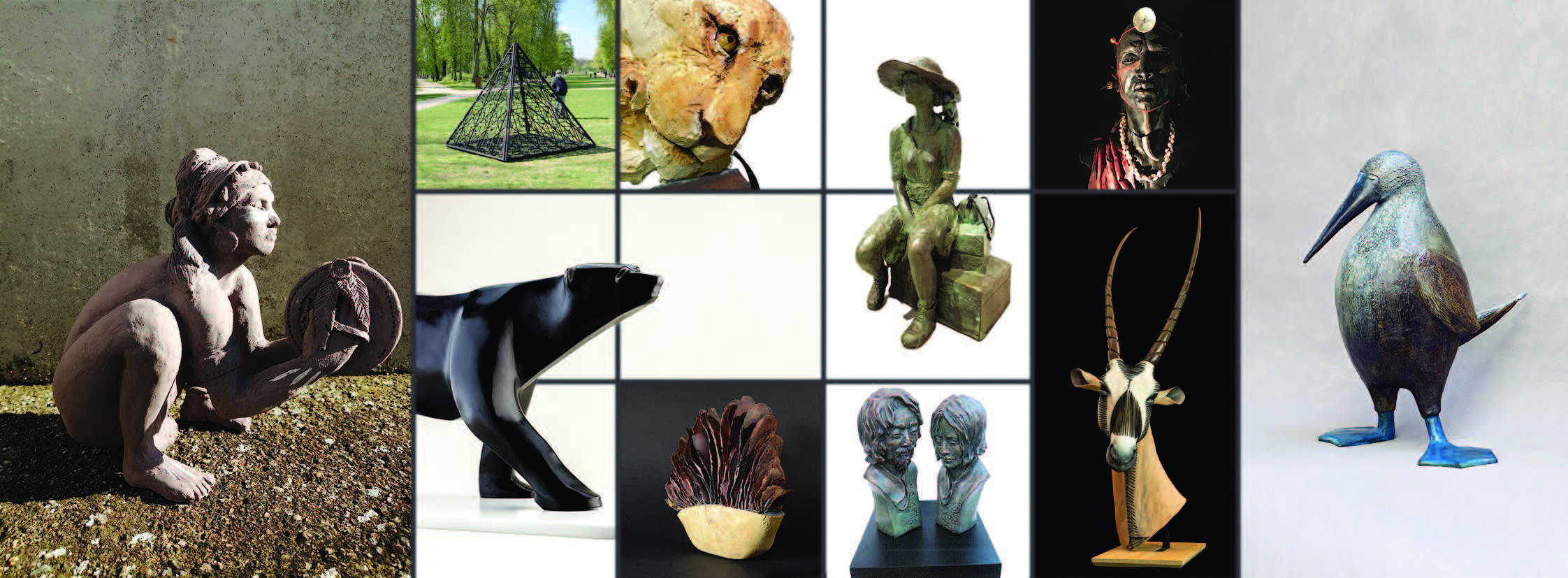
The exhibition brings together a diverse selection of sculptors whose practices reflect the richness of contemporary sculpture today.
Clay retains its organic character in the works of Sylvie Arfelli, Carole Auriac and Xavier Embise, where each surface preserves the memory of the artist’s gesture.
Bronze, one of sculpture’s most enduring materials, is explored through the distinctive approaches of Pascale Beneteau, Anita Bonici and Éric Vanel. Vanel’s figurative sculptures combine technical mastery with emotional depth and narrative sensitivity—a body of work previously explored by ART MAG in its feature “Éric Vanel: The Art of Sculpting the Soul.”
The corten steel structures created by Julien Clar and Éric Vialla-Tweak resonate with the colours of the Burgundian landscape, while Éric Chambon investigates the dialogue between sandstone and bronze. Using Carrara marble, Christelle Meunier reinterprets one of sculpture’s most iconic materials through a contemporary lens.
Exploring new materials and sculptural languages
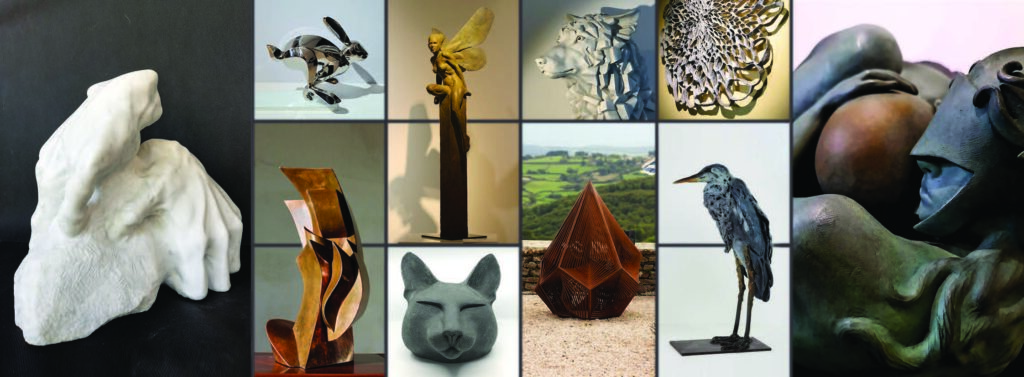
Several artists push the boundaries of traditional sculpture by combining multiple materials and techniques.
Sophie Mattei brings together bronze, clay and mineral resin in hybrid compositions, while Anne Moreau Vagnon incorporates textile into sculptural practice, expanding the vocabulary of the medium.
For David Benoit, the legacy of François Pompon becomes the starting point for a contemporary reinterpretation rather than a simple tribute.
The exhibition is further enriched by works from Sylvie Gaudissart, Marc Antoine Lion, Laëtitia-May Le Guélaff, Gilles Pugin, Katty Verstraeten and Annick Dumarchey, whose practices range from ceramics to experimental sculptural forms.
Visitors will also discover a work by Sofía Táboas, presented by FRAC Bourgogne, a collaborative installation created by students from the Beaune School of Fine Arts, and an exceptional contribution from renowned British sculptor Paul Day.
A milestone on the road to the 2028 Biennale
More than a summer exhibition, Au Domaine des Sens represents an important step towards the next Biennale de Sculpture Contemporaine en Bourgogne, scheduled to take place in Nolay in 2028.
The project reflects a growing commitment to bringing contemporary sculpture closer to local communities by creating meaningful encounters between artworks, heritage sites and landscapes. It also demonstrates how outdoor exhibitions can broaden access to contemporary art while offering visitors a richer and more immersive experience.
Practical Information
Exhibition:Au Domaine des Sens
Venue: Domaine du Château Philippe le Hardi, Santenay, Burgundy, France
Dates: 4–11 July 2026
Admission: Free
Why visit Au Domaine des Sens?
At Santenay, sculpture leaves the traditional gallery space to engage directly with one of Burgundy’s most remarkable wine landscapes. Blending heritage, nature and contemporary creation, Au Domaine des Sens offers visitors a unique opportunity to experience sculpture as part of a living environment—where light, space and the passing of time continually reshape the encounter between artwork and viewer.
Support independent publishing! Subscribe to ART MAG and receive each issue in advance, in both print and digital format 👉 Subcribe 6 issues / 1 year 👉 Offer ART MAG
FAQ – Au Domaine des Sens Sculpture Exhibition in Santenay
Where is the Au Domaine des Sens exhibition held?
The exhibition takes place at Domaine du Château Philippe le Hardi in Santenay, Burgundy (Côte-d’Or, France). The sculptures are displayed outdoors throughout the estate’s park, around the château, and among the surrounding vineyards, creating a unique open-air artistic experience.
When is the exhibition open?
Au Domaine des Sens runs from 4 to 11 July 2026. Over eight days, visitors can explore an open-air sculpture trail set within one of Burgundy’s most renowned wine estates.
Is admission free?
Yes. The exhibition is free and open to the public, welcoming contemporary art enthusiasts, collectors, wine tourists, and visitors wishing to discover sculpture in an exceptional heritage setting.
How many artists are taking part?
Around twenty contemporary sculptors are featured in this edition, presenting more than 100 artworks, including several monumental installations. The exhibition showcases a wide range of materials such as bronze, clay, marble, sandstone, corten steel, and mineral resin.
Which artists are exhibiting in Santenay?
The exhibition includes works by Éric Vanel, Sylvie Arfelli, Carole Auriac, Xavier Embise, Pascale Beneteau, Anita Bonici, Julien Clar, Éric Chambon, Christelle Meunier, Sophie Mattei, Anne Moreau Vagnon, David Benoit, Paul Day, and several other contemporary sculptors. The programme also features a work by Sofía Táboas, presented by FRAC Bourgogne, as well as a collaborative installation created by students from the Beaune School of Fine Arts.
Why organise a sculpture exhibition in a vineyard?
Displaying sculpture outdoors allows artworks to interact directly with their surroundings. Natural light, changing weather, vineyard landscapes, and the estate’s historic architecture continually transform the way visitors experience each sculpture, creating a dialogue between art, nature, and heritage.
Who organises Au Domaine des Sens?
The exhibition is organised by the Biennale de Sculpture Contemporaine en Bourgogne, with the support of the Municipality of Nolay. The Domaine du Château Philippe le Hardi generously provides its grounds to host this cultural event in the heart of Burgundy’s vineyards.
Why should you visit this contemporary sculpture exhibition?
Au Domaine des Sens offers a rare opportunity to experience contemporary sculpture beyond the traditional museum setting. By bringing together more than one hundred artworks in an exceptional wine-growing landscape, the exhibition invites visitors to discover how sculpture can engage with history, architecture, and nature while anticipating the next Biennale de Sculpture Contemporaine en Bourgogne, scheduled for 2028 in Nolay
Support independent publishing! Subscribe to ART MAG and receive each issue in advance, in both print and digital format 👉 Subcribe 6 issues / 1 year 👉 Offer ART MAG
Banksy is one of the most famous contemporary artists in the world. Yet his identity has never been officially confirmed. How can an anonymous artist, whose earliest works appeared illegally on city walls, become one of the most influential figures in the global art market? The answer goes far beyond street art. Banksy has transformed the way we create, experience and, above all, assign value to works of art.
Who Is Banksy?
Banksy is a British street artist who emerged in the early 1990s, mainly in Bristol. His identity has never been officially confirmed, although several investigations have suggested that he could be Robin Gunningham. This hypothesis has been widely reported by the media but has never been verified by the artist himself.
If his identity continues to fascinate the public, it represents only one aspect of the Banksy phenomenon.
His influence goes far beyond the mystery surrounding his name. It lies above all in instantly recognisable imagery, a sharp social critique and a unique ability to transform every intervention into an international event.
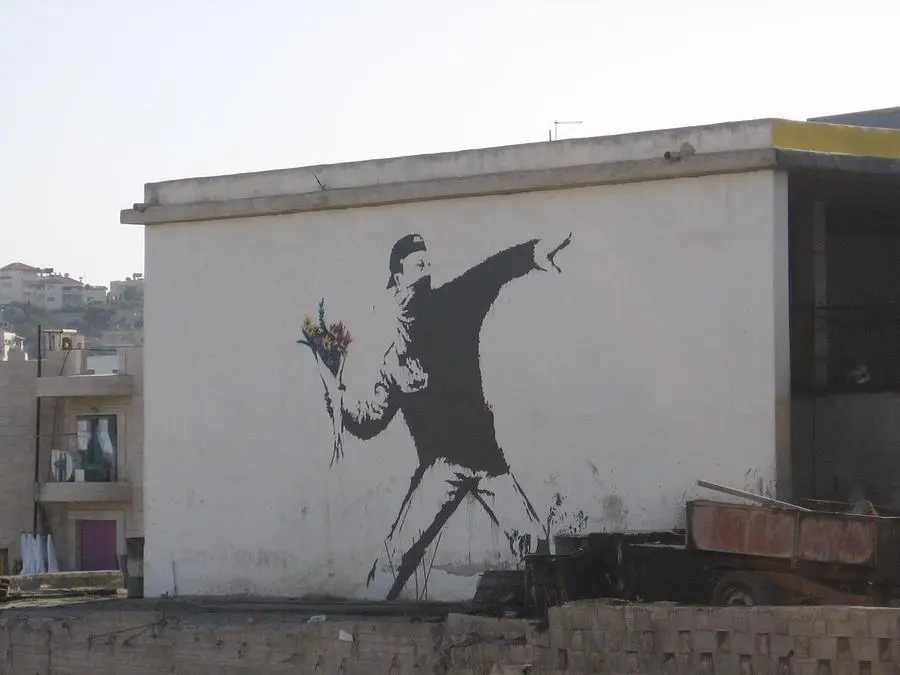
With Flower Thrower, Banksy transforms an act of violence into a gesture of peace, creating one of the defining images of contemporary street art
Why Did Banksy Become World Famous?
Banksy’s success is the result of several factors that have profoundly transformed the contemporary art world.
An Instantly Recognisable Visual Language
Very few contemporary artists possess such an immediately identifiable visual style.
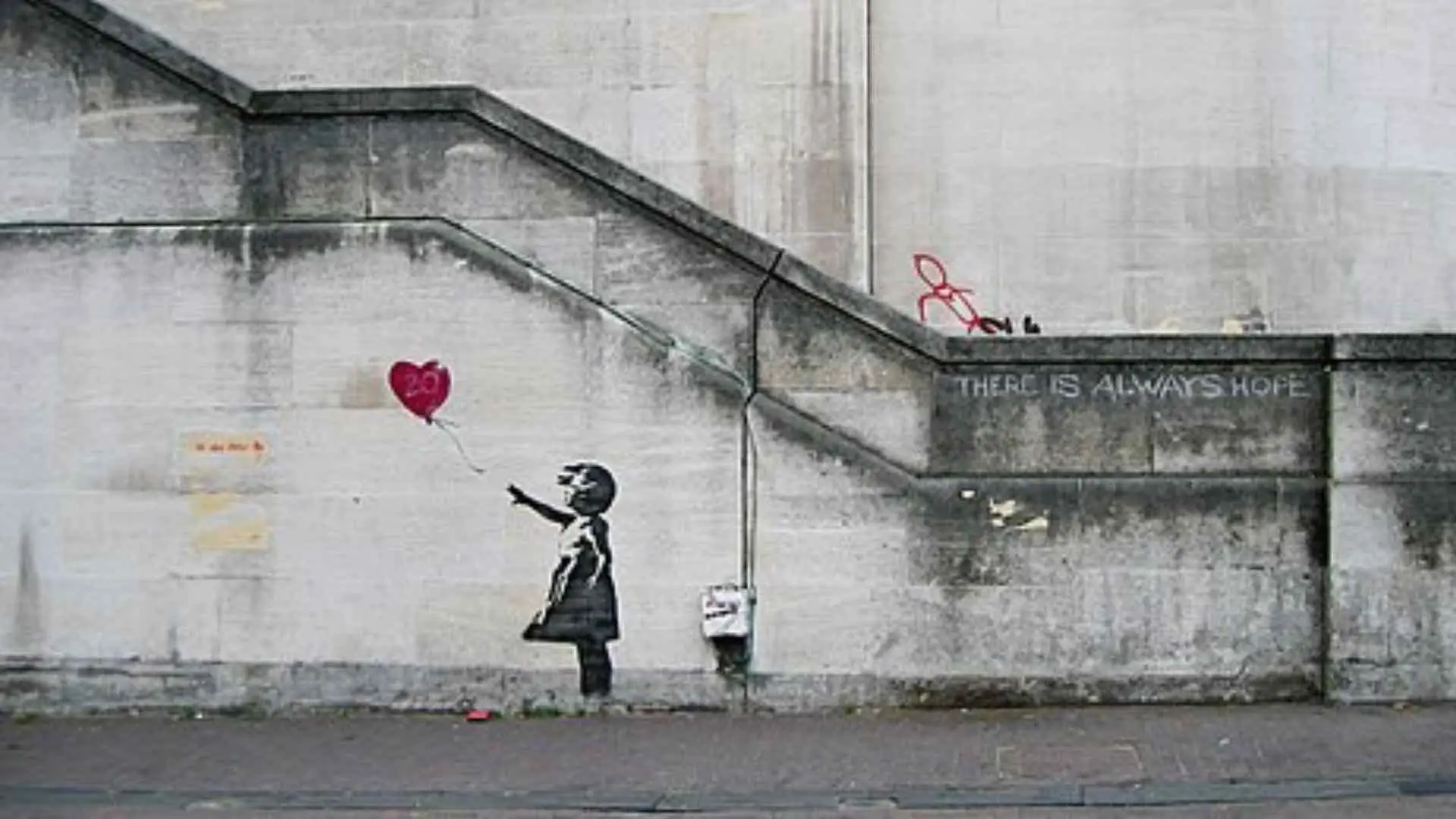
A girl holding a balloon, a protester throwing flowers, smiling policemen or mischievous rats instantly evoke Banksy, even without a signature.
This instant recognition has become a value in itself.
Universal Themes
Banksy’s works address issues that extend far beyond the art world.
War, consumerism, surveillance, migration, environmental concerns and political power are all recurring themes.
His ability to translate complex social issues into powerful visual metaphors explains why his images resonate with audiences worldwide.
A Master of Communication
Long before social media became central to our daily lives, Banksy understood that an artwork no longer existed solely on its physical support.
When a new mural appears, it is photographed, shared online, discussed in the media and analysed around the world.
The artwork continues to live long after its creation.
Banksy does not simply create images.
He creates events.
Why Are Banksy’s Works Worth Millions?
This is one of the most frequently asked questions by collectors and art lovers alike.
The answer goes far beyond artistic quality.
The value of a Banksy artwork is built upon several interconnected factors.
Scarcity
Despite the global circulation of his images, original Banksy works remain relatively rare on the market.
Demand consistently exceeds supply.
Authenticity
Since 2008, Pest Control has been the only organisation officially authorised to authenticate Banksy’s works intended for the art market.
For collectors, this certificate is essential.
Without it, an artwork can lose a significant part of its market value.
Context
With Banksy, where an artwork appears is often as important as the artwork itself.
A mural painted on the separation wall in Bethlehem or in war-torn Ukraine carries a completely different meaning from one displayed inside a gallery.
Context creates value.
Storytelling
Perhaps the most important factor of all.
A Banksy artwork is never just an image.
It also tells the story of where it appeared, why it was created, how the public reacted and what eventually happened to it.
Every artwork carries its own narrative.
The 7 Factors That Explain the Value of a Banksy Artwork
Factor
Why It Matters
Recognisable visual style
Banksy’s instantly identifiable imagery makes his work immediately recognisable around the world.
Rarity
Only a limited number of original works are available on the art market.
Authenticity
Official certification by Pest Control is essential to establish an artwork’s market value.
Message
His works address universal social and political issues that resonate with audiences worldwide.
Media exposure
Every new artwork generates extensive international media coverage.
Provenance
The history, location and ownership of a work significantly influence its value.
Global demand
Collectors, museums and institutions actively seek Banksy’s works, sustaining high market demand.
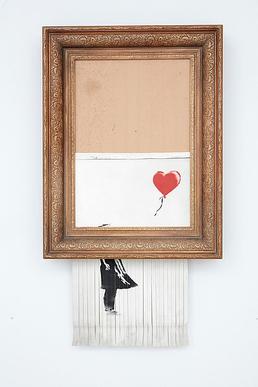
In 2018, Love Is in the Bin entered art history after Banksy’s self-shredding performance at a Sotheby’s auction, redefining the relationship between artistic creation and the art market.
The Day Banksy Changed Auction History
On 5 October 2018, a framed version of Girl with Balloon was sold at Sotheby’s in London.
Seconds after the auctioneer’s hammer came down, a hidden shredding mechanism built into the frame was activated. Before the stunned audience, the artwork began to destroy itself.
The scene immediately made headlines around the world.
What appeared to be the destruction of an artwork soon became the birth of a new one.
Renamed Love Is in the Bin, the piece entered art history as one of the most extraordinary moments ever witnessed at an auction. In 2021, it was resold for £18.58 million, setting a new auction record for Banksy.
The event demonstrated something remarkable.
In contemporary art, a performance can become just as valuable as the artwork itself.
Support independent publishing! Subscribe to ART MAG and receive each issue in advance, in both print and digital format 👉 Subcribe 6 issues / 1 year 👉 Offer ART MAG
Has Banksy Changed the Art Market?
The answer is yes—but perhaps not in the way many people imagine.
Banksy did not invent speculation.
He did not invent street art.
What he transformed was the way value is created.
For decades, the value of an artwork depended primarily on technical mastery, rarity and institutional recognition.
Today, other factors play an equally important role:
the strength of the message;
authenticity;
the story behind the artwork;
media exposure;
cultural impact;
public engagement.
In other words, an artwork is no longer valued solely for what it depicts.
It is also valued for what it inspires.
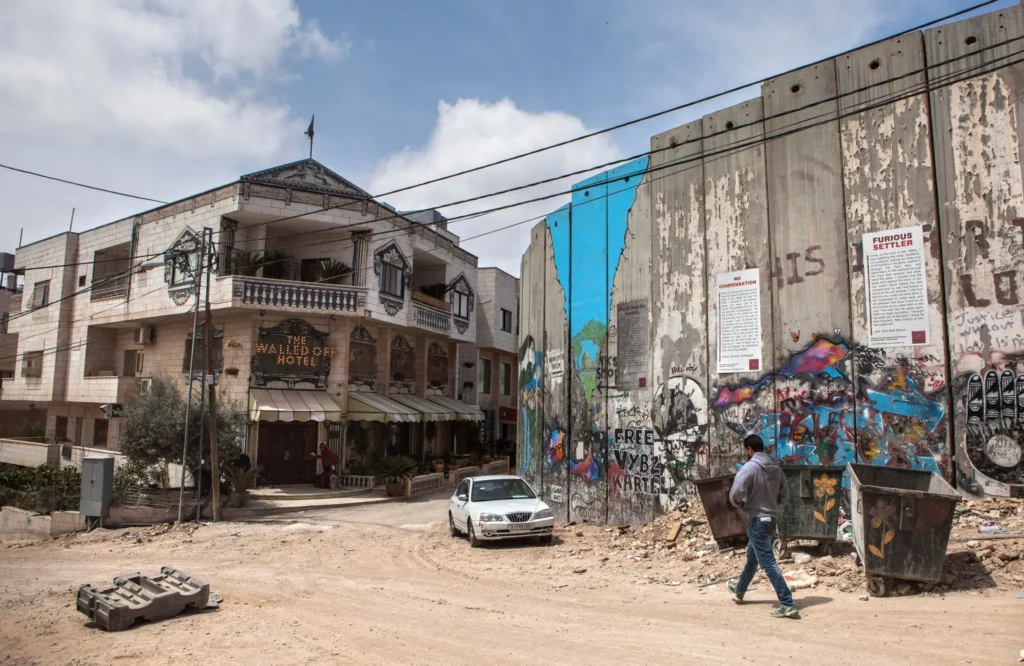
Opened in Bethlehem in 2017, The Walled Off Hotel extends Banksy’s artistic practice beyond street art, transforming a hotel into a place of reflection on borders, conflict and freedom.
Banksy: Art, Storytelling and the Market
This is perhaps where Banksy’s greatest influence lies.
He understood earlier than most artists that a work of art could become a global cultural phenomenon.
Every new Banksy follows almost the same sequence:
a new artwork appears;
photographs spread across the internet;
media outlets report the discovery;
specialists analyse the work;
collectors begin discussing its future;
eventually, the artwork may enter the art market.
The artwork does not end when the paint dries.
It continues to evolve through the conversations, images and stories that surround it.
Banksy has demonstrated that, in the digital age, storytelling has become an essential component of artistic value.
Support independent publishing! Subscribe to ART MAG and receive each issue in advance, in both print and digital format 👉 Subcribe 6 issues / 1 year 👉 Offer ART MAG
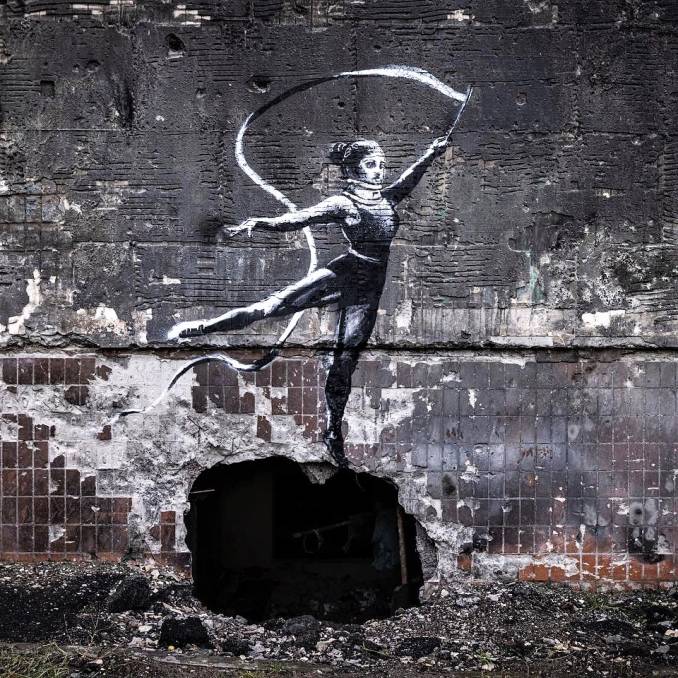
Banksy’s murals in Ukraine demonstrate how his work continues to engage with major global events while reaffirming the power of public art.
What Banksy Reveals About Contemporary Art
The Banksy phenomenon goes far beyond street art.
It reflects a profound transformation in the contemporary art world.
Collectors no longer acquire only objects.
They acquire provenance.
They acquire authenticity.
They acquire cultural significance.
Above all, they acquire stories.
Banksy’s career illustrates how artistic creation, communication and the art market have become increasingly interconnected.
His works continue to challenge viewers, stimulate debate and generate worldwide attention long after they first appear.
Key Milestones in Banksy’s CareerKey Milestones in Banksy’s Career
Year
Event
Early 1990s
Banksy begins his career on Bristol’s graffiti scene and gradually adopts the stencil technique that will become his trademark.
2002
Creation of Girl with Balloon, which would become one of the most iconic works of contemporary art.
2003
First major solo exhibition, Turf War, held in London.
2005
Banksy creates a series of murals on the Israeli West Bank barrier, bringing international attention to his politically engaged work.
2009
The exhibition Banksy vs Bristol Museum attracts nearly 300,000 visitors, marking a turning point in his institutional recognition.
2010
Release of the documentary Exit Through the Gift Shop, nominated for an Academy Award.
2013
Better Out Than In, a month-long artistic residency in New York City, transforms the city itself into an open-air exhibition.
2015
Opening of Dismaland, a satirical theme park that becomes a global cultural phenomenon.
2017
Launch of The Walled Off Hotel in Bethlehem, combining art, political engagement and an immersive visitor experience.
2018
Girl with Balloon partially self-destructs during a Sotheby’s auction and is reborn as Love Is in the Bin, creating one of the defining moments in contemporary art market history.
2022
Banksy paints several murals in Ukraine, including the now-famous works in Borodyanka, reaffirming his engagement with current global events.
2024
The London animal series—including a goat, elephants, monkeys, a wolf, pelicans and a rhinoceros—demonstrates the continuing evolution of Banksy’s artistic language and public influence.
More Than an Artist, a Mirror of Our Time
Banksy’s legacy is not limited to his anonymity or to the record-breaking prices achieved by his works.
His greatest contribution may be the way he has changed our understanding of artistic value.
An artwork no longer lives exclusively on a wall or inside a museum.
It lives through the people who photograph it.
Through the conversations it sparks.
Through the articles that analyse it.
Through the stories that continue to circulate long after its creation.
Banksy has not merely transformed street art.
He has helped redefine the relationship between art, communication and the market in the twenty-first century.
An artwork is no longer valued only for what it shows. It is also valued for what it inspires.
Eplore More on ART MAG International
Would you like to explore Banksy’s work in greater depth? Discover our other analyses dedicated to the artist and his influence on contemporary art.
Support independent publishing! Subscribe to ART MAG and receive each issue in advance, in both print and digital format 👉 Subcribe 6 issues / 1 year 👉 Offer ART MAG
FAQ
Who is Banksy?
Banksy is a British street artist who emerged in the early 1990s, mainly in Bristol. Although his identity has never been officially confirmed, he is internationally recognised for his politically engaged stencil artworks addressing issues such as war, consumerism, migration, inequality and freedom.
Why does Banksy remain anonymous?
Anonymity is an essential part of Banksy’s artistic identity. It allows him to keep the focus on his work rather than on his personal life, while reinforcing the mystery that surrounds each new intervention. It also reflects the rebellious spirit of street art, where the artwork often matters more than the artist.
Why are Banksy’s artworks worth millions?
The value of a Banksy artwork is based on several factors: rarity, authenticity, artistic significance, historical context, media attention and strong international demand. Each work also carries a unique story that contributes significantly to its market value.
What is Pest Control?
Among Banksy’s best-known works are Girl with Balloon, Flower Thrower (Love Is in the Air), There Is Always Hope and Kissing Coppers. These images have become icons of both street art and contemporary art.
What is Banksy’s most expensive artwork?
Love Is in the Bin, created after the partial shredding of Girl with Balloon during a Sotheby’s auction in 2018, was resold in 2021 for £18.58 million, setting a record for the artist at auction.
Is Banksy still active?
Both. Banksy emerged from the street art movement, but his influence now extends far beyond it. His works are studied within the history of contemporary art, exhibited by major institutions and sought after by leading collectors worldwide.
Why is Banksy considered one of the most influential artists of the 21st century?
Banksy has transformed the way artworks are created, communicated and valued. By combining powerful visual imagery, social engagement and an exceptional understanding of media and public attention, he has profoundly influenced both contemporary art and the global art market.
What does Banksy reveal about today’s art market?
Banksy’s career illustrates how the value of an artwork now depends on far more than technical skill. Authenticity, storytelling, provenance, media visibility and cultural impact have become essential elements in determining artistic value in the contemporary art world.
Because it is beautiful. Because we like it. Because it moves us.
Yet over time, I have come to realize that we never collect just an artwork.
We never collect only an artwork. We collect an encounter.
A feeling experienced in front of a painting. A conversation with an artist. A story that resonates with our own. Every artwork becomes the witness of a moment in our lives.
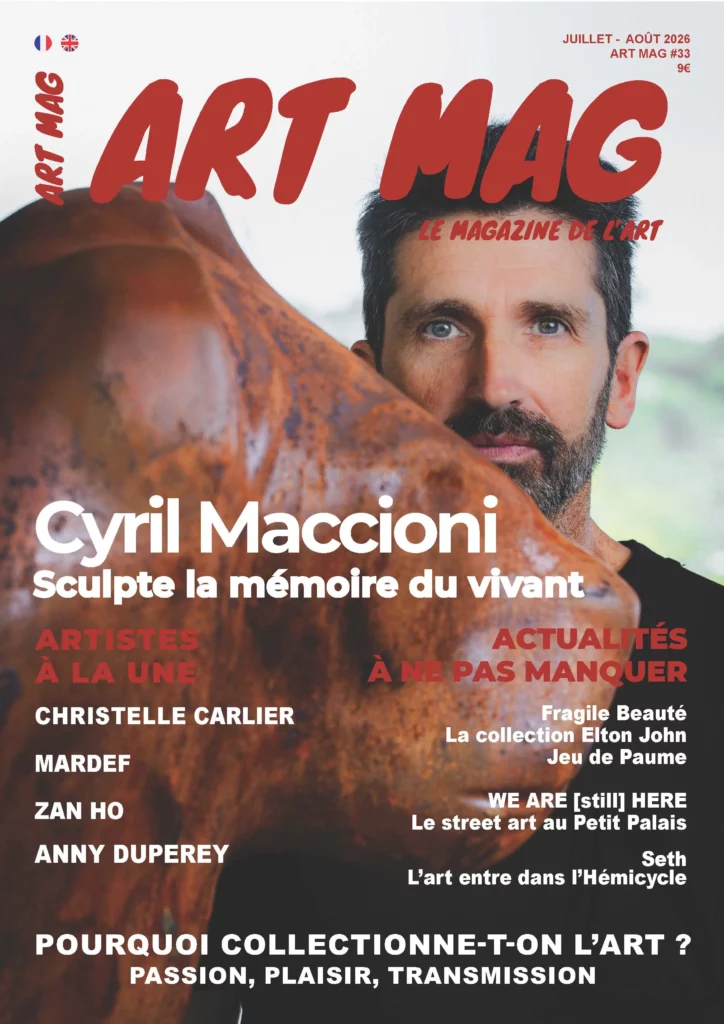
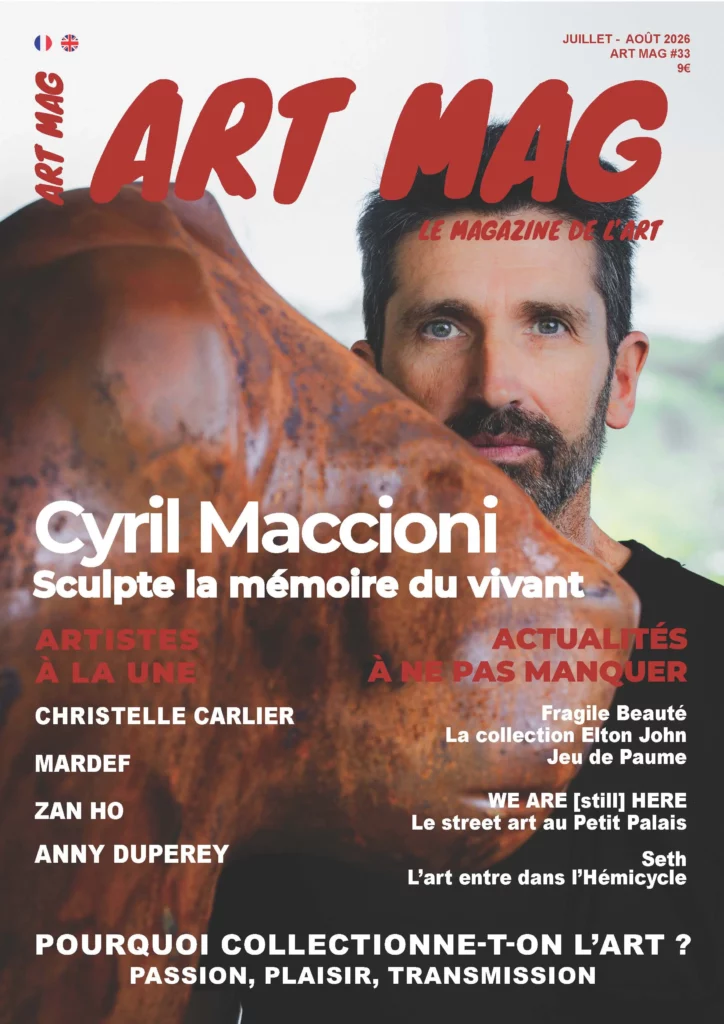
This is the question we have chosen to explore in this new issue of ART MAG. Beyond heritage, investment, or passion, collecting ultimately reveals the way we choose to see the world.
Through our conversations with artists, gallery owners, and collectors, one conviction has become clear: the art world is undergoing profound change. Habits are evolving, economic models are being reinvented, and new technologies are opening fresh perspectives. Yet one thing remains unchanged. We continue to seek works of art that move us, challenge us, and stay with us.
At ART MAG, our mission is not simply to present artworks. It is, above all, to listen to the artists who create them. Behind every painting, sculpture, or photograph lies a human story that no artificial intelligence, algorithm, or market valuation will ever be able to fully capture.
For thirty-three issues, we have pursued the same ambition: to tell the story of contemporary art through the people who bring it to life, while giving our readers the insights they need to better understand the major transformations shaping today’s art world.
Because, ultimately, collecting a work of art may simply be a way of preserving an emotion. And understanding art often begins by learning to look more closely at the world around us.
If this reflection resonates with your own perspective on art, I invite you to continue reading ART MAG Issue #33. Inside, you will discover artists, collectors, gallery owners, and exhibitions that all explore one essential question:
Why do we collect works of art?
Discover ART MAG Issue #33
If this editorial has sparked your curiosity, continue your journey with the latest issue of ART MAG, the independent magazine dedicated to contemporary art.
In this issue
✔ Five contemporary artists to discover
✔ Why do we collect works of art? The main feature of this issue.
✔ How Elton John and David Furnish became two of the world’s greatest photography collectors.
✔ Art Riviera Tour 2026: exploring creativity, place, and artistic encounters.
✔ The must-see exhibitions of Summer 2026 in Paris and across Europe.
✔ Venice: the essential highlights of La Serenissima.
Featuring, among others: Anny Duperey, Wendy Lauwers, Seth, Hilma af Klint, Henri Matisse, Yves Saint Laurent, and many leading contemporary artists.
Analysis, interviews, the art market, exhibitions, and discoveries—ART MAG takes you to the heart of today’s contemporary art scene.
📥 Browse the latest issue and immerse yourself in 60 pages of reports, expert analysis, and inspiring encounters with the people shaping contemporary creation.
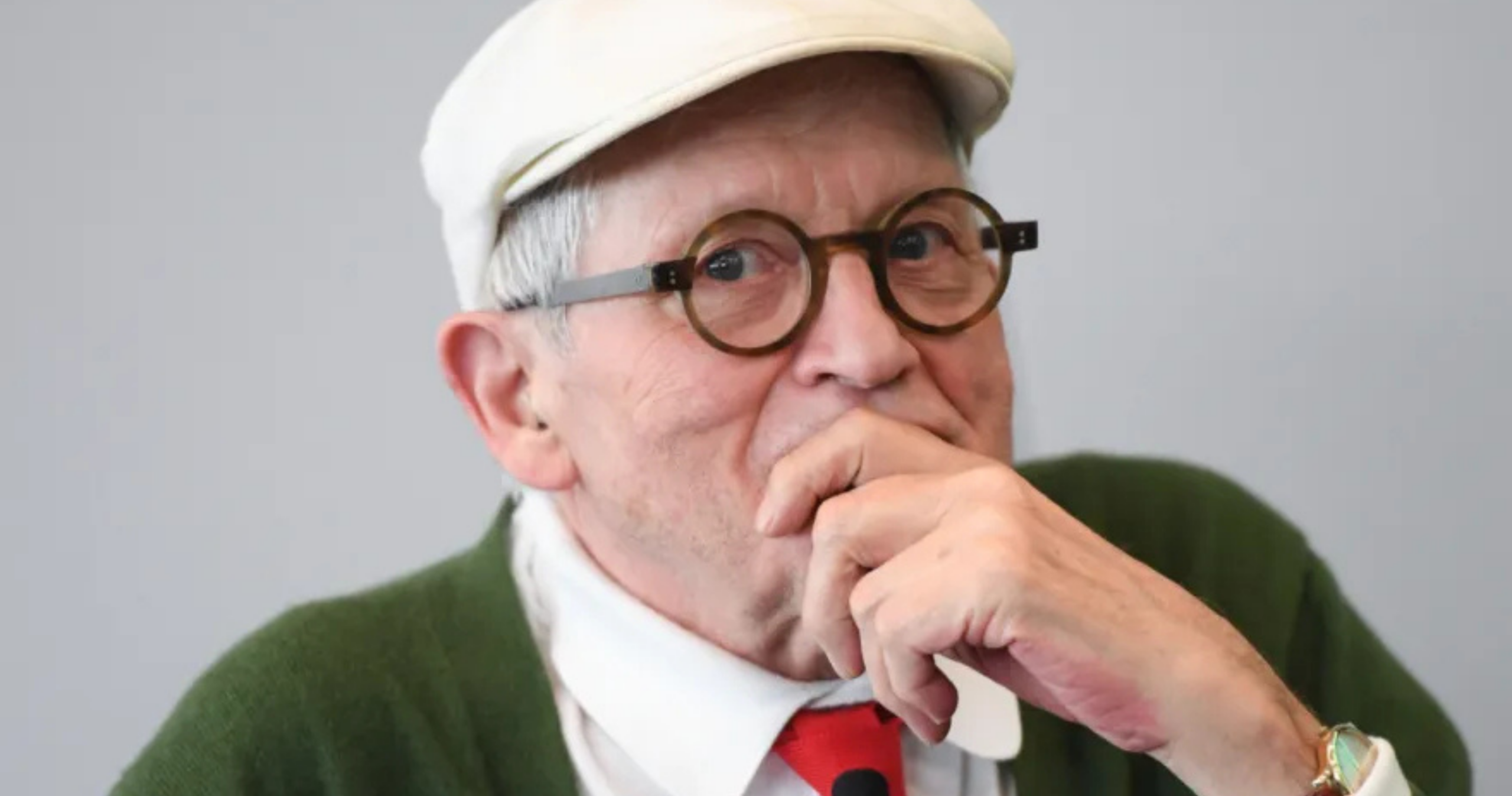
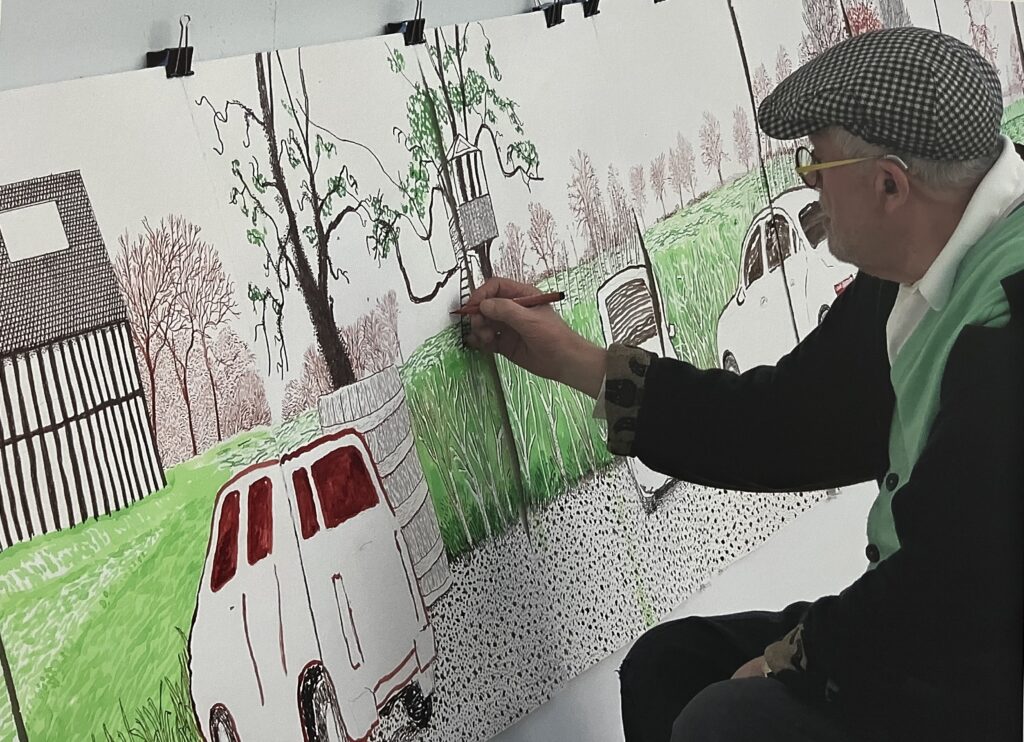
David Hockney passed away on June 11, 2026, at the age of 88. A major figure in British contemporary art, the artist leaves behind more than six decades of creation and some of the most iconic images in modern art history. Known for his Californian swimming pools, luminous landscapes, and striking portraits, he profoundly influenced contemporary painting while also exploring photography and digital media.
Yet reducing David Hockney to his most famous works would mean missing what truly mattered.
For if his work feels remarkably relevant today, it is neither because of his colours nor because of his early adoption of the iPad.
It is because he devoted his life to defending an idea that has become increasingly rare: looking at the world remains an adventure.
David Hockney and the Defence of the Visible
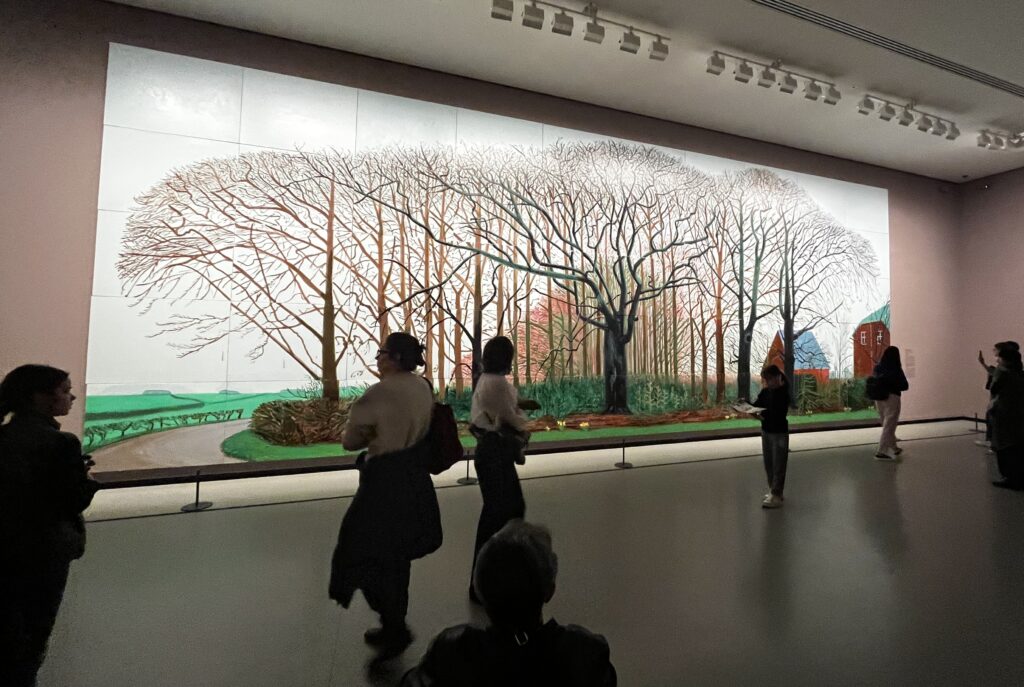
Hockney is often remembered as the painter of California. The swimming pools of Los Angeles, the dazzling light of the American West Coast, and the vast landscapes of Yorkshire all contributed to his international reputation.
Yet these subjects were never the true heart of his work.
For more than sixty years, David Hockney pursued a single question: how do we see the world?
This inquiry runs throughout his entire career. His paintings, photocollages, studies of the Old Masters, and digital experiments all form part of an ongoing reflection on perception.
From an early stage, Hockney understood that human vision does not function like a camera. We never observe a scene from a single fixed viewpoint. Our eyes move, compare, select, and constantly reconstruct what they perceive.
His celebrated photographic collages of the 1980s embody this intuition. They do not simply depict a place or a face; they attempt to recreate the very experience of looking.
Support independent publishing! Subscribe to ART MAG and receive each issue in advance, in both print and digital format 👉 Subcribe 6 issues / 1 year 👉 Offer ART MAG
An Artist Against the Current
The importance of David Hockney may lie in this unwavering commitment to direct visual experience.
While contemporary art explored new conceptual, performative, and technological directions, Hockney continued to investigate the visible. Not out of nostalgia. Not out of resistance to modernity.
Quite the opposite.
Few artists of his generation embraced new tools with such curiosity. Photography, fax machines, video, digital drawing, and the iPad all became part of his creative vocabulary.
Yet he used these technologies to address an enduring question.
How can the human experience of seeing be translated into an image?
This consistency explains why his work escapes easy categorisation. Too experimental to be considered merely figurative. Too deeply rooted in observation to be reduced to conceptual art.
Hockney occupied a singular position.
Why His Work Still Speaks to Us Today
David Hockney’s passing comes at a time when images have never been more abundant.
Yet his legacy is not primarily about technology.
It is about attention.
Faced with a flowering tree, a landscape, or a portrait, Hockney reminds us that seeing is never automatic.
Looking requires time.
Availability.
Curiosity.
This proposition may seem modest.
It is, in fact, profoundly radical.
In a world driven by speed, constant commentary, and immediacy, devoting one’s life to observing light on a wall, the colours of a landscape, or the features of a face can almost be seen as a form of resistance.
That is perhaps why his work feels so relevant today.
Support independent publishing! Subscribe to ART MAG and receive each issue in advance, in both print and digital format 👉 Subcribe 6 issues / 1 year 👉 Offer ART MAG
What Legacy Does David Hockney Leave Behind?
David Hockney leaves behind an immense body of work that has influenced generations of artists.
Yet his legacy extends far beyond museums, auction records, or major retrospectives.
For more than sixty years, he demonstrated that there is always something left to see.
Through his paintings, photographs, and digital drawings, he reminds us that art is not only about producing images.
It is also about learning how to look.
With David Hockney’s passing, we may have lost one of the last artists for whom observing the world remained an adventure.
Support independent publishing! Subscribe to ART MAG and receive each issue in advance, in both print and digital format 👉 Subcribe 6 issues / 1 year 👉 Offer ART MAG
David Hockney passed away on June 11, 2026, at the age of 88.
Why is David Hockney famous?
David Hockney is regarded as one of the most influential British artists of the twentieth and twenty-first centuries. He is known for his paintings, portraits, landscapes, and groundbreaking explorations of perception.
What are David Hockney’s most famous works?
Among his best-known works are A Bigger Splash (1967), Portrait of an Artist (Pool with Two Figures) (1972), Mr and Mrs Clark and Percy (1971), and his monumental Yorkshire landscapes.
Was David Hockney part of the Pop Art movement?
Yes. David Hockney is often associated with British Pop Art of the 1960s. However, his work extends far beyond the movement and developed into a broader exploration of vision and representation.
Why did David Hockney use the iPad?
Hockney viewed the iPad as a creative tool rather than a technological statement. He used it extensively to create digital drawings while continuing his lifelong exploration of colour, light, and perception.
What is David Hockney’s legacy?
David Hockney leaves behind a body of work that transformed the way we think about perception, representation, and visual experience. His influence can be seen in both contemporary painting and digital artistic practices.
Where can you see David Hockney’s works?
David Hockney’s works are held in major museums and collections worldwide, including institutions in London, Paris, Los Angeles, and New York.
Manage consent
We use cookies to understand how visitors use Art Mag International and to display external content, including YouTube videos.
You can accept, reject, or customize their use. You can change your preferences at any time.
Functional
Always active
These cookies are essential for the website to function properly and cannot be disabled.
Préférences
L’accès ou le stockage technique est nécessaire dans la finalité d’intérêt légitime de stocker des préférences qui ne sont pas demandées par l’abonné ou l’internaute.
Statistics
These cookies help us to understand how visitors use the magazine so that we can improve its content.Le stockage ou l’accès technique qui est utilisé exclusivement dans des finalités statistiques anonymes. En l’absence d’une assignation à comparaître, d’une conformité volontaire de la part de votre fournisseur d’accès à internet ou d’enregistrements supplémentaires provenant d’une tierce partie, les informations stockées ou extraites à cette seule fin ne peuvent généralement pas être utilisées pour vous identifier.
Marketing
Technical access or storage is required to create user profiles for the purpose of sending adverts, or to track the user across a website or across several websites with similar marketing purposes.