Categories
Art Riviera Tour - International - News - Sculpture - Women artists

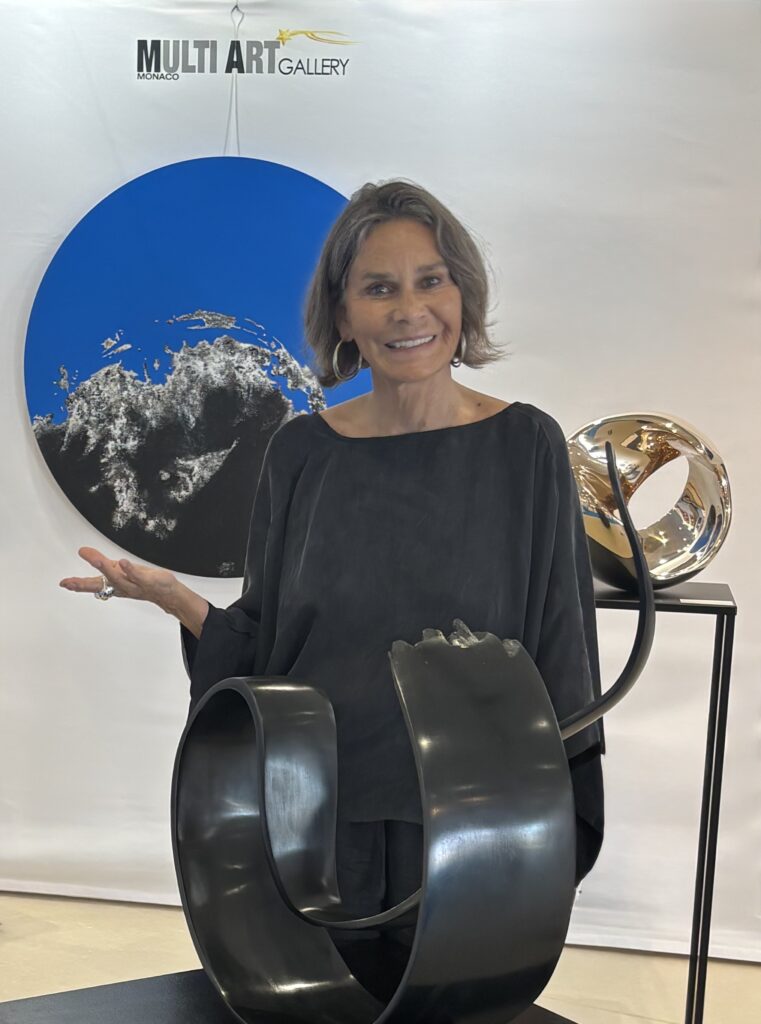
Mireille Louviot-Kilanowski: Bringing Life Out of Driftwood

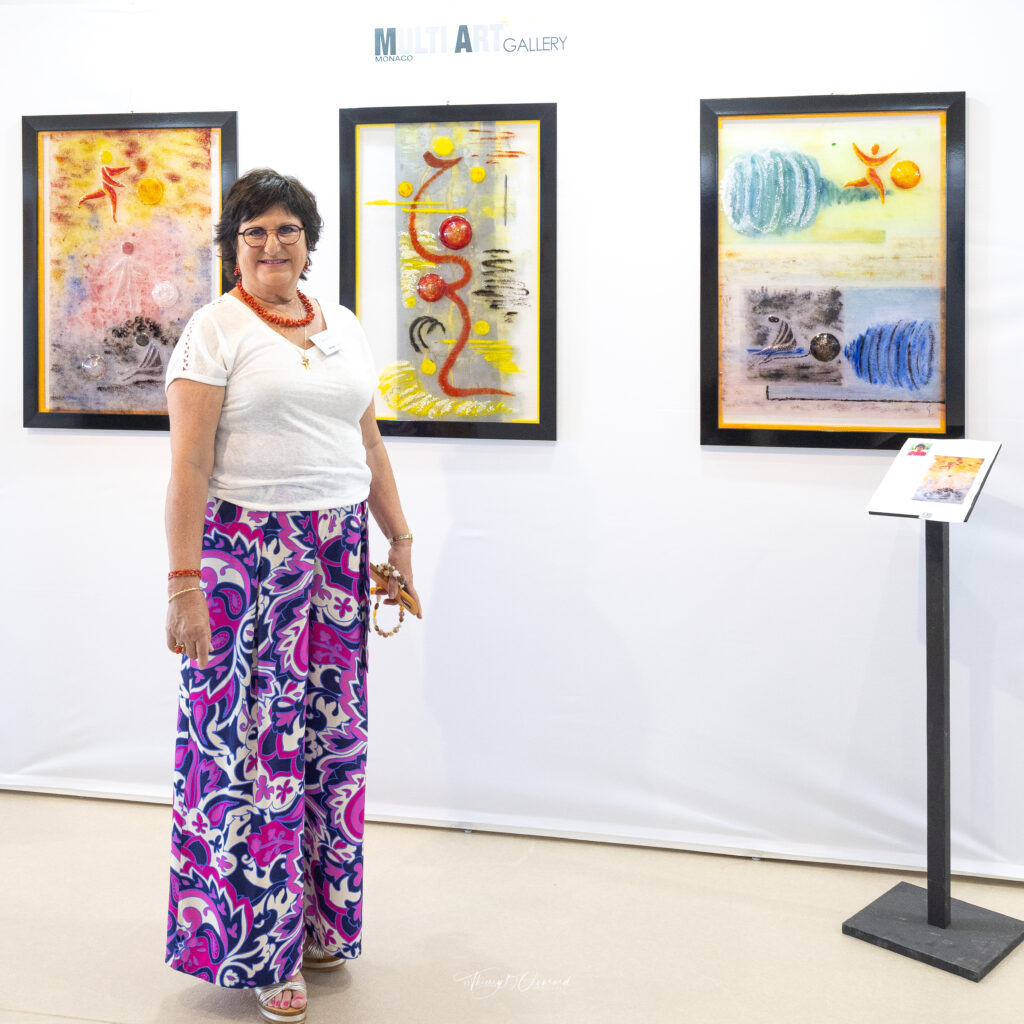
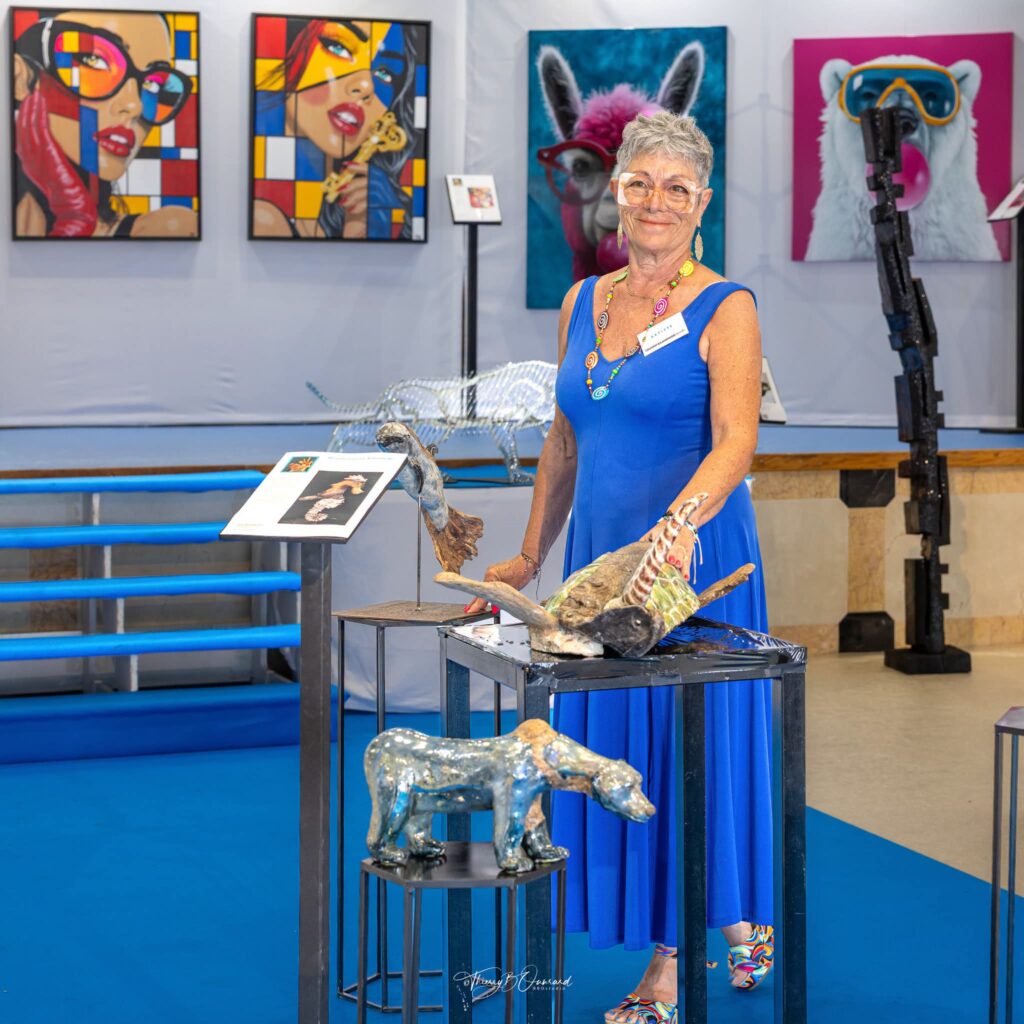
mireille louviot art riviera tour 2026

A piece of driftwood is never just a piece of driftwood for Mireille Louviot-Kilanowski. Shaped by currents, wind and time, it already carries a story within it. Where others might see a branch washed ashore, she perceives a line, a movement, sometimes even the presence of an animal waiting to emerge.

Presented at Art Riviera Tour 2026, her work reflects a deep respect for nature. Rather than transforming the material, she extends what it already suggests.

Mireille Louviot-Kilanowski Art Riviera Tour 2026

Letting the Wood Lead the Way

Each sculpture begins with a piece of driftwood collected during one of the artist’s walks along rivers, lakes or the seashore. She observes it carefully before gradually revealing the form that seems to be hidden within.

A seahorse emerges from a root polished by water. The natural curves of a branch become the tentacles of an octopus. Nothing is forced. Every gesture follows the movement of the wood instead of imposing a new one.

This approach gives her sculptures a remarkable sense of authenticity. They appear less created than discovered.

When Driftwood Meets Ceramics

For more than twenty-five years, Mireille Louviot-Kilanowski has combined driftwood with ceramics. The ceramic elements do not conceal the original material; instead, they extend its story.

Using the raku firing technique, she brings light, depth and contrast to each sculpture. The crackled glazes, deep reds and luminous whites interact with the grain of the wood, enhancing its history rather than erasing it.

The result is a subtle dialogue between two materials, balancing the strength of wood with the delicacy of ceramics.

An Invitation to See Nature Differently

Mireille Louviot-Kilanowski’s work reminds us that nature already contains extraordinary forms. Her sculptures encourage viewers to slow down, observe more closely and rediscover a sense of wonder in the smallest details.

Her artistic philosophy is perfectly summed up in one sentence:

“I do not create the form; I reveal it. The wood shows me the way.”

These few words capture the essence of her approach to sculpture.

Discover Mireille Louviot-Kilanowski in ART MAG Issue 33

For Art Riviera Tour 2026, ART MAG has dedicated a special feature to eleven artists invited by Multi Art Gallery to exhibit in Saint-Jean-Cap-Ferrat. Through exclusive articles, the magazine explores their artistic journeys, inspirations and creative approaches.

Mireille Louviot-Kilanowski holds a distinctive place within this selection. Her sculptures remind us that art is not always about invention; sometimes it is about revealing what time, nature and a sensitive eye have already begun to shape.

📖ART MAG 33

Read also : Art Riviera Tour: The 11 Artists Honoured by ART MAG

FAQ

Who is Mireille Louviot-Kilanowski?

Mireille Louviot-Kilanowski is a French sculptor who has spent more than twenty-five years creating works that combine driftwood and ceramics. Inspired by nature, she develops a poetic bestiary featuring seahorses, octopuses and other living creatures.


What is Mireille Louviot-Kilanowski’s artistic approach?

Rather than imposing a shape on the material, the artist follows the natural lines, curves and textures of driftwood to reveal the animal she believes is already present within it. As she explains: “I do not create the form; I reveal it. The wood shows me the way.”


Which materials does Mireille Louviot-Kilanowski use?

Her sculptures primarily combine driftwood and ceramics. The ceramic elements, created using the traditional raku technique, add colour, texture and relief while preserving the natural character of the wood.


Why do animals play such an important role in her work?

Animals naturally emerge from the shapes already found in the driftwood. Seahorses, octopuses and birds are not reproduced realistically; they gradually reveal themselves from the material, inviting viewers to see nature through a different perspective.


Where can you discover Mireille Louviot-Kilanowski’s work?

Her sculptures are presented at Art Riviera Tour 2026, organised by Multi Art Gallery in Saint-Jean-Cap-Ferrat. She is also featured in ART MAG Issue 33, which highlights eleven contemporary artists taking part in the event.


Why is ART MAG featuring Mireille Louviot-Kilanowski?

Through this series of articles, ART MAG shines a light on the artists of Art Riviera Tour 2026 by exploring their artistic vision, inspirations and creative journeys. Mireille Louviot-Kilanowski’s work embodies a unique approach to sculpture in which nature itself becomes the starting point for creation, perfectly reflecting the editorial spirit of the magazine.

To read more, download ART MAG N°33
Categories
Art Riviera Tour - International - News - Painting - Women artists

Christine Nilly-Vaeckenstedt: When Painting Becomes a Path to Transformation

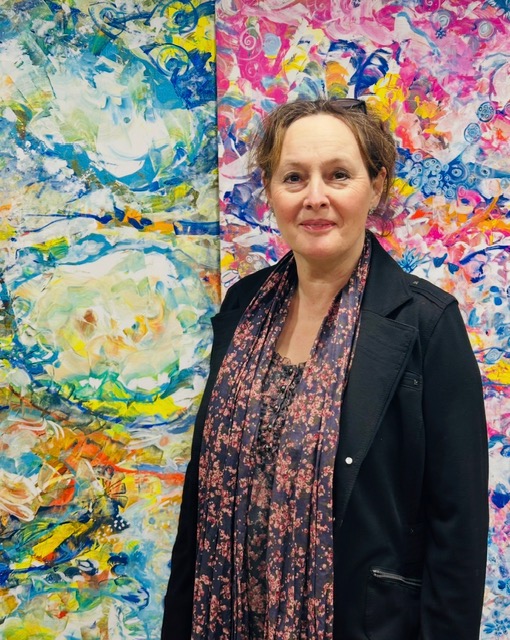
Christine Nilly art riviera tour devant son tableau

“I deeply believe that life is beautiful. Even when it hurts us. Even when it forces us to begin again.”

This conviction runs through the entire body of work created by Christine Nilly-Vaeckenstedt.

Her paintings do not seek to narrate an event or illustrate a specific emotion. Instead, they invite viewers into an experience where colour, movement and light become the language of inner transformation.

For Art Riviera Tour 2026, ART MAG has chosen to highlight Christine Nilly-Vaeckenstedt in Issue 33. Her work reminds us that art can also be a space for healing, renewal and hope.

Transforming Emotions into Colour

For Christine Nilly-Vaeckenstedt, colour never serves merely to fill a form.

It is the very starting point of creation.

Deep blues, luminous reds, vibrant purples and intense greens interact across the canvas, giving rise to inner landscapes in which every viewer can recognise something of their own personal journey.

Rather than imposing a single meaning, her paintings leave space for emotion, reflection and individual interpretation.

Paintings That Reveal Themselves Over Time

Christine Nilly-Vaeckenstedt’s compositions gradually unveil their many layers of meaning.

At first, colour dominates the experience.

Then silhouettes emerge, along with plants, pathways and fragments of landscapes that seem to appear before quietly dissolving again.

This deliberate ambiguity gives each painting remarkable openness, encouraging viewers to return repeatedly and discover new resonances.

Nature as a Source of Inspiration

Trees, flowers, grasses, water and light occupy a central place within her artistic universe.

Yet nature is never represented literally. Instead, it becomes a visual language—a quiet presence accompanying a reflection on life, the passing of time and our capacity for transformation.

Through these subtle references, Christine Nilly-Vaeckenstedt creates a body of work deeply rooted in the observation of the natural world while remaining open to imagination.

Chrisitine Nilly-Vaeckenstedt at Art Riviera Tour 2026

Christine Nilly-Vaeckenstedt at Art Riviera Tour 2026

Presented in Saint-Jean-Cap-Ferrat as part of Art Riviera Tour 2026, Christine Nilly-Vaeckenstedt exhibits alongside around thirty contemporary artists brought together by Wendy Lauwers and Multi Art Gallery.

Her work naturally finds its place within an event that celebrates the diversity of contemporary artistic practices, where each artist expresses a distinctive vision of creation.

Why ART MAG Is Highlighting Christine Nilly-Vaeckenstedt

Since its creation, ART MAG has championed artists whose work reflects genuine artistic commitment and continuous personal exploration.

What particularly drew our attention to Christine Nilly-Vaeckenstedt is her remarkable ability to transform life’s fragilities into creative energy. Her paintings do not erase suffering; they suggest that even our deepest wounds can become the starting point of renewal and harmony.

This profoundly human approach perfectly reflects ART MAG’s editorial mission: to shine a light on artists whose work gives meaning to contemporary creation.

Discover More in ART MAG Issue 33

In ART MAG Issue 33, we devote several pages to Christine Nilly-Vaeckenstedt.

The magazine explores her artistic journey, examines the relationship between colour, emotion and transformation, and offers an in-depth analysis of a body of work in which painting becomes a genuine path toward harmony.

📖 ART MAG 33

Read also : Art Riviera Tour: The 11 Artists Honoured by ART MAG

FAQ – Christine Nilly-Vaeckenstedt

Who is Christine Nilly-Vaeckenstedt?

Christine Nilly-Vaeckenstedt is a contemporary artist whose paintings explore the relationship between colour, emotion and inner transformation through a visual language that moves between abstraction and suggestion.


Why is ART MAG featuring Christine Nilly-Vaeckenstedt?

ART MAG highlights Christine Nilly-Vaeckenstedt in its Art Riviera Tour 2026 special feature because of the originality of her artistic vision and her ability to transform emotions into a deeply expressive visual language.


What is Christine Nilly-Vaeckenstedt’s artistic approach?

Her work combines colour, movement and inspiration from nature to create paintings that invite viewers to experience emotion rather than seek a literal representation of reality.


Where can I see Christine Nilly-Vaeckenstedt’s work in 2026?

Christine Nilly-Vaeckenstedt’s works are presented at Art Riviera Tour 2026 in Saint-Jean-Cap-Ferrat, where she is one of the eleven artists featured by ART MAG in Issue 33.


Why is nature so important in her work?

Nature is a constant source of inspiration. Trees, flowers, light and landscapes become poetic elements that support a reflection on life, time and personal transformation


Why do Christine Nilly-Vaeckenstedt’s paintings change as you look at them?

Her compositions are built through successive layers of colour, texture and form. As the viewer spends more time with the work, new details and meanings gradually emerge, making every encounter unique.

To read more, download ART MAG N°33
Categories
Art Riviera Tour - International - News - Painting - Women artists

Cassius: Learning to See Beauty Differently

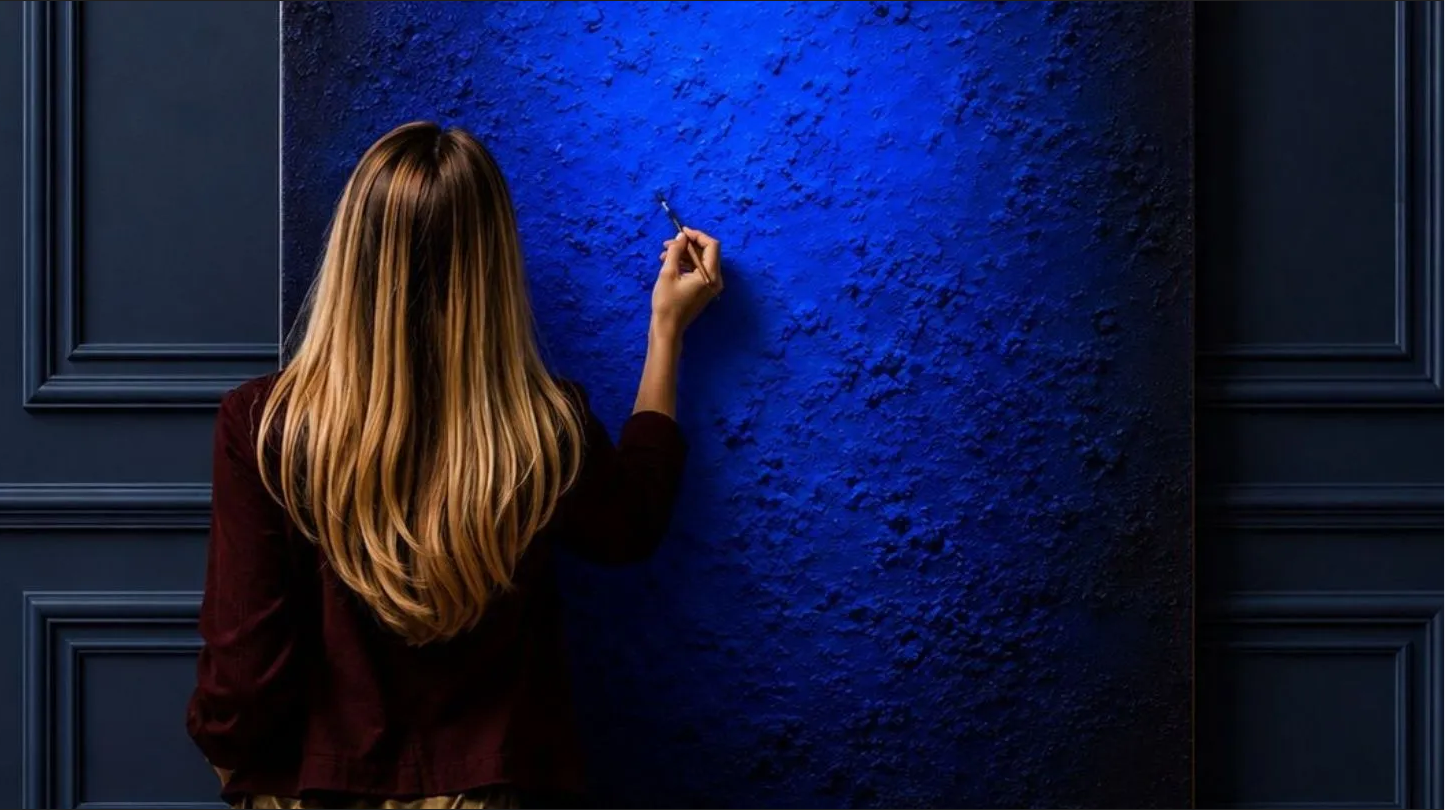
Cassius art mag

“Beauty is everywhere for those who know how to see it.”

This simple statement perfectly captures Cassius’ artistic philosophy. More than a personal motto, it reflects a way of engaging with the world through art.

At first glance, her works captivate through the intensity of a deep, almost magnetic blue. Yet the longer one looks, the more the surface begins to reveal itself. Textures emerge, light uncovers subtle nuances, and the material seems to come alive. Nothing is spectacular, yet everything invites close attention.

For Art Riviera Tour 2026, ART MAG has chosen to highlight Cassius in Issue 33. Her work reminds us that beauty is not found only in extraordinary places, but also in the quiet details of everyday life.

Looking Before Creating

Cassius often finds inspiration in elements that most people barely notice: a reflection on a surface, changing light, a texture shaped by time, or a fragment of nature discovered during her travels.

Through her artistic vision, these seemingly ordinary details become the starting point for a creative process in which every texture acquires a new presence. Rather than simplifying reality, her monochromes reveal its hidden subtleties and encourage viewers to look more closely.

Instead of telling a story, each work opens a contemplative space where every viewer is free to build a personal interpretation.

A Colour That Became a Language

Over the years, blue has naturally become the visual language of Cassius.

Far more than an aesthetic choice, it has become a means of expressing depth, silence, memory and light.

As the angle of view changes and light moves across the surface, the works subtly transform. The material catches reflections, reveals unexpected textures and offers a different visual experience each time they are observed.

Between Memory, Travel and Matter

Travel occupies a central place in Cassius’ artistic journey.

Throughout her travels, she collects materials, natural fragments and textures that later nourish her creative process. These elements are never reproduced literally. Instead, they become a silent memory embedded within each work, bringing together time, nature and emotion.

Every composition reflects an encounter between lived experience and the viewer’s own perception.

Cassius at Art Riviera Tour 2026

Presented in Saint-Jean-Cap-Ferrat as part of Art Riviera Tour 2026, Cassius exhibits alongside around thirty contemporary artists brought together by Wendy Lauwers and Multi Art Gallery.

Her work naturally finds its place within an event celebrating the diversity of contemporary artistic practices. While each artist develops a distinctive visual language, Cassius invites visitors to slow down and rediscover the beauty hidden beneath the surface of everyday life.

Why ART MAG Is Highlighting Cassius

Since its creation, ART MAG has championed artists whose work reflects a genuine and lasting artistic commitment.

What particularly impressed us about Cassius is her ability to transform ordinary elements into deeply sensitive experiences. Rather than imposing a fixed interpretation, her work encourages viewers to observe, to feel and to discover beauty through a renewed way of seeing.

This philosophy perfectly echoes ART MAG’s own editorial vision: giving time to artworks, to artists and to the act of looking itself.

Discover More in ART MAG Issue 33

In ART MAG Issue 33, we devote several pages to Cassius.

The magazine offers an in-depth exploration of her artistic universe, examining her work with monochrome, material and light, while revealing the influences that shape her creative practice. A complementary perspective that invites readers to discover an artist whose work teaches us to see the world differently.

📖 ART MAG 33

Read also : Art Riviera Tour: The 11 Artists Honoured by ART MAG

FAQ – Cassius

Who is Cassius?

Cassius is a Belgian contemporary artist whose work explores colour, material and light through monochrome paintings that invite quiet contemplation and sensory experience.

Why is ART MAG featuring Cassius?

ART MAG highlights Cassius in its special feature on Art Riviera Tour 2026 because of the originality of her artistic vision and her ability to reveal the beauty of everyday life through material, colour and light.


Why does blue play such an important role in Cassius’ work?

Over the years, blue has become Cassius’ visual language. Through its many nuances, the colour allows her to explore light, depth and emotion while leaving viewers free to create their own interpretation.


Where can I see Cassius’ work in 2026?

Cassius’ works are presented at Art Riviera Tour 2026 in Saint-Jean-Cap-Ferrat, where she is one of the eleven artists featured by ART MAG in Issue 33.


What is Cassius’ artistic approach?

Her work is rooted in observing the natural world, exploring the memory of materials and studying the effects of light. Through her compositions, Cassius encourages viewers to slow down and discover a renewed way of seeing the world.


Why do Cassius’ artworks change with the light?

The textures, reliefs and materials integrated into her compositions interact constantly with light. As illumination changes and viewers move around the work, new nuances emerge, making every encounter with the artwork unique.

To read more, download ART MAG N°33
Categories
Art Riviera Tour - News - Painting - Sculpture - Women artists

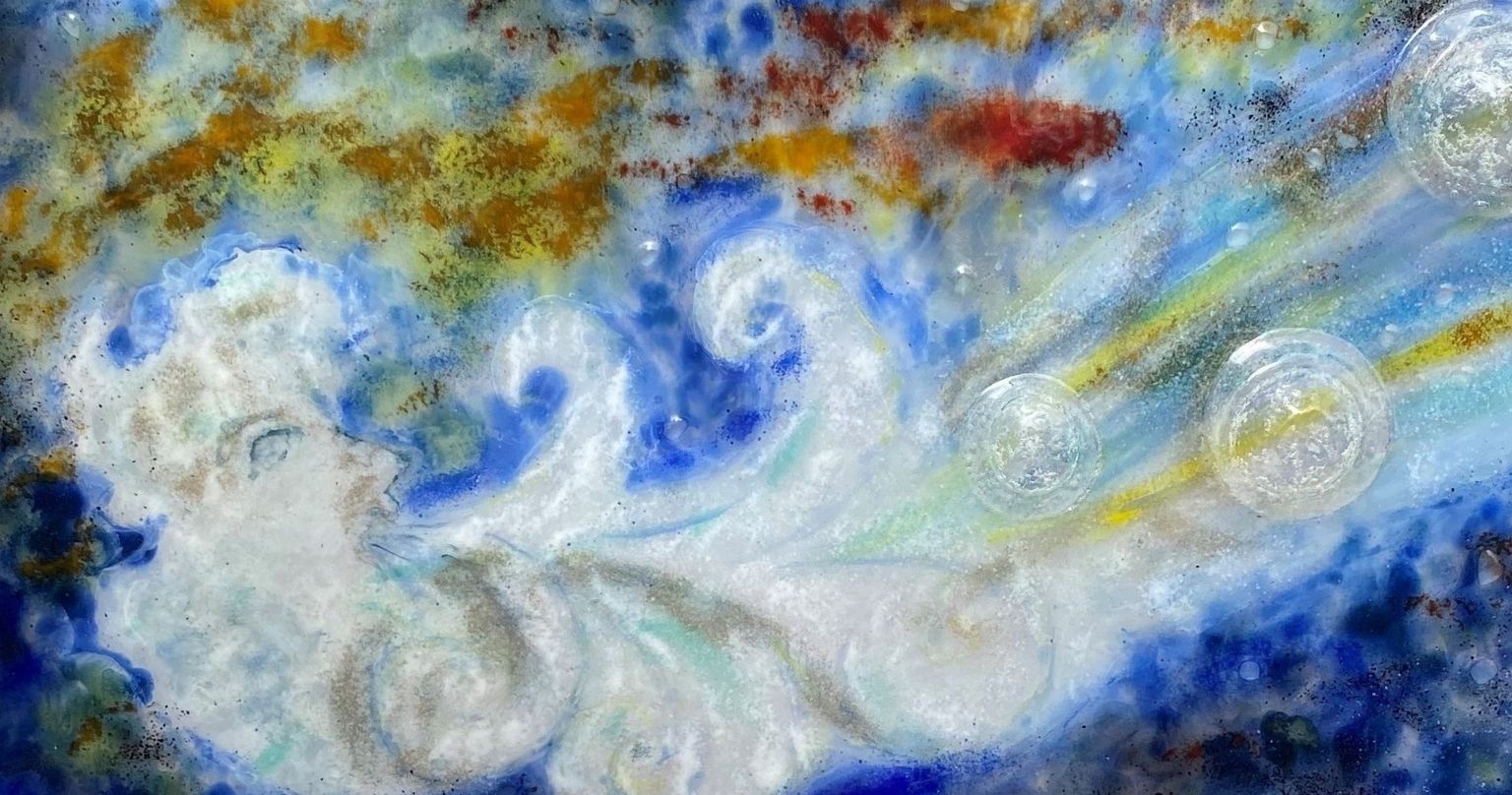
Fabienne Fol: Revealing What Cannot Be Seen

Fabienne Fol art riviera tour 2026

How do you paint what has neither shape nor outline?

How do you give form to movement, vibration, or light that escapes the eye?

For several years, Fabienne Fol has been developing a body of work that seeks to answer these questions. Her paintings and sculptures emerge from simple observations—a wave, a seashell, light reflected on a surface—but never attempt to reproduce them. Instead, they become the starting point for a deeper exploration, where matter expresses less what the eye sees than what the world quietly suggests.

For Art Riviera Tour 2026, ART MAG has chosen to highlight Fabienne Fol in Issue 33, dedicated to eleven contemporary artists whose practices reflect the richness and diversity of today’s artistic creation.

Fabienne Fol

A Body of Work Rooted in Observation

For Fabienne Fol, everything begins with the real world.

A shape discovered on a beach.

The movement of water.

The curve of a shell.

Light gliding across a surface.

These observations nourish her work without ever becoming its subject. They gradually evolve into open forms, where recognition gives way to interpretation.

The viewer is not invited to identify an object, but to experience a presence.

Between Painting and Sculpture

Painting and sculpture occupy complementary roles in Fabienne Fol’s artistic practice.
The two mediums are in constant dialogue.

In her paintings, colour, transparency and texture create spaces where the image deliberately remains open.

In her sculptures, bronze captures light, plays with reflections and transforms the perception of volume as the viewer moves around it.

From one medium to the other, the same artistic pursuit continues: to evoke a sensation rather than represent an image.

An Invitation to Slow Down

Fabienne Fol’s works never reveal all their meaning at first glance.

Instead, they invite viewers to slow down, to look differently and to allow forms to gradually evolve in their perception. Nothing is imposed, nothing is definitively fixed. Each work remains open, offering everyone the freedom to construct a personal interpretation.

This openness to the viewer’s gaze is one of the defining characteristics of her artistic practice.
fabienne fol art riviera tour 2026
Fabienne Fol at Art Riviera Tour 2026

Fabienne Fol at Art Riviera Tour 2026

Presented in Saint-Jean-Cap-Ferrat as part of Art Riviera Tour 2026, Fabienne Fol exhibits alongside around thirty contemporary artists brought together by Wendy Lauwers and Multi Art Gallery.

Her artistic universe naturally finds its place within an event where diverse visual languages engage in dialogue, each expressing a unique vision of contemporary creation.

Why ART MAG Is Highlighting Fabienne Fol

Since its creation, ART MAG has supported artists whose work reflects a genuine commitment to artistic research.

What particularly drew our attention to Fabienne Fol is her ability to transform familiar elements into spaces of interpretation. Where others describe the visible world, she reveals its rhythms, tensions and invisible balances.

This commitment to a deeply sensitive artistic inquiry gives her work a coherence that continues to grow stronger over time.

Discover More in ART MAG Issue 33

In ART MAG Issue 33, we devote several pages to Fabienne Fol.

The magazine explores her artistic journey, examines the dialogue between painting and sculpture, and offers an in-depth analysis of a practice that transforms the visible world into a profoundly sensory experience.

📖 ART MAG 33

Read also : Art Riviera Tour: The 11 Artists Honoured by ART MAG

To read more, download ART MAG N°33
Categories
Art Riviera Tour - News - Painting

Jean-Claude Bertrand: Painting Not a Landscape, but an Experience

“I do not paint subjects; I paint experiences, using colour and material to evoke a lived sensation.”

This statement by Jean-Claude Bertrand probably captures his artistic approach better than any critical analysis.

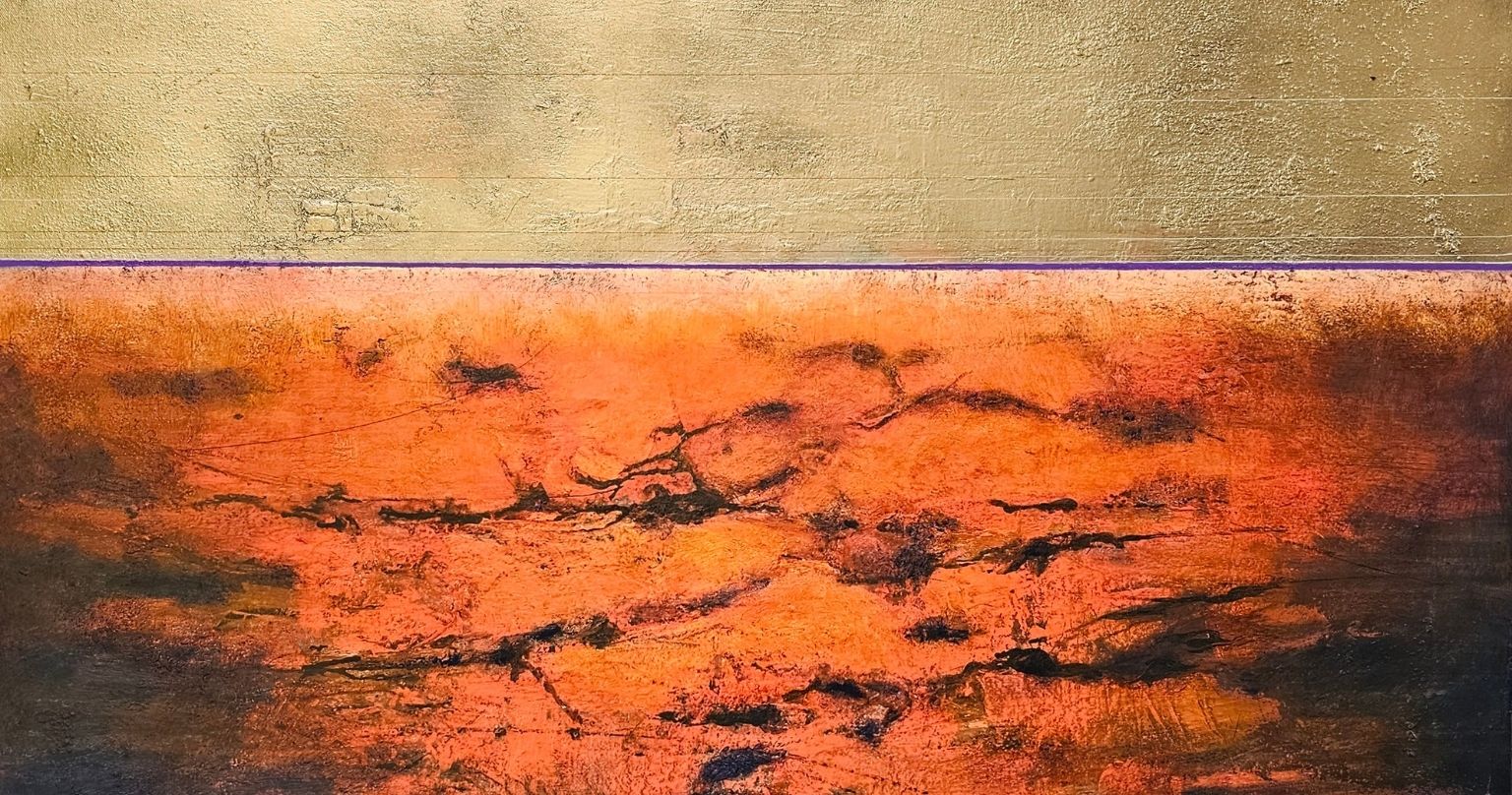
When standing before his paintings, the viewer first believes they are looking at a landscape. A horizon line, light, stretches of sea or land seem to emerge from the canvas. Yet these familiar references gradually dissolve. Bertrand is not interested in depicting the visible world. Instead, he creates sensory experiences in which colour, texture and light become the true subjects.

It is this singular approach that led ART MAG to feature the artist in its special issue dedicated to Art Riviera Tour 2026.

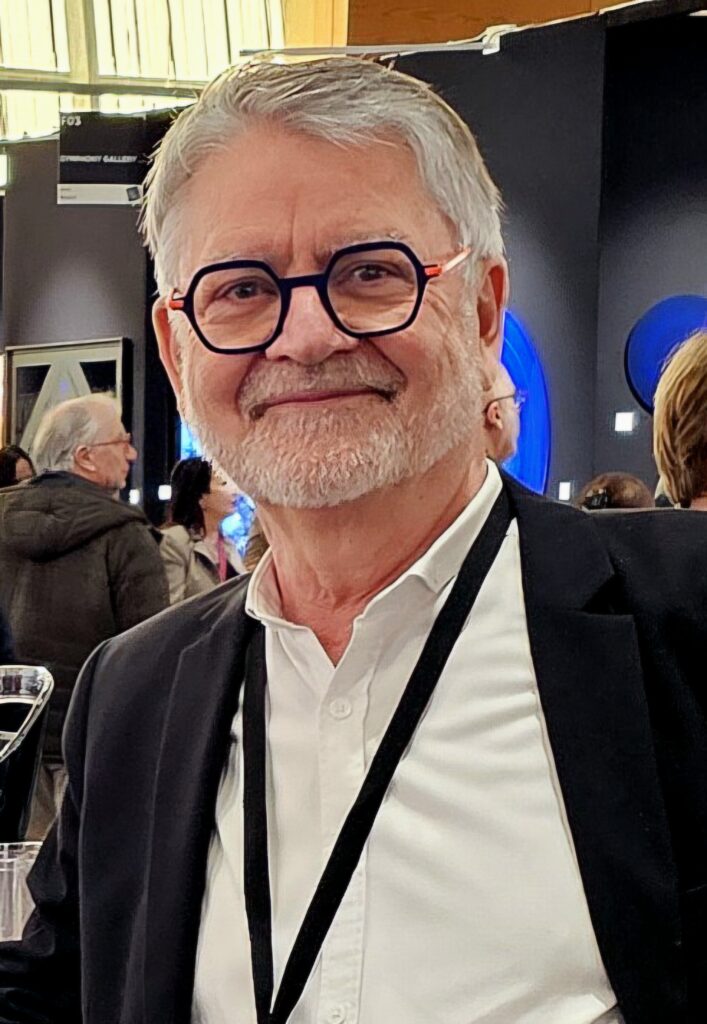
photo portrait jean claude Bertrand
Jean-Claude Bertrand

Painting as a Sensory Experience

For more than twenty-five years, Jean-Claude Bertrand has developed a body of work that resists easy classification.

His paintings may evoke horizons, skies or seas, yet they never attempt to describe them. Rather, they invite viewers to slow down, allow colour to unfold before them and embrace the emotions it awakens.

His intuitive painting does not tell a story. It opens a contemplative space in which every viewer is free to construct a personal interpretation.

The Horizon as a Starting Point

In his New Horizons series, the horizon becomes a recurring motif.

It is not simply the boundary of a landscape. It represents a threshold, a pause, a line of tension between two worlds.

This subtle presence structures each composition while leaving ample room for imagination. Bertrand’s paintings never impose meaning; instead, they suggest, inviting contemplation rather than explanation.

This openness lies at the heart of his artistic practice.
A Body of Work Built Over Time

Jean-Claude Bertrand’s career reflects a long-term artistic commitment.

Exhibited in France and internationally—including St-Art Strasbourg, Art Montpellier, Lille Art Up, St-Art Rennes, and World Art Dubai—the artist has remained faithful to his own visual language, without following artistic trends.

Each new painting enriches a practice built over decades, where material, light and colour interact with remarkable freedom and subtlety.

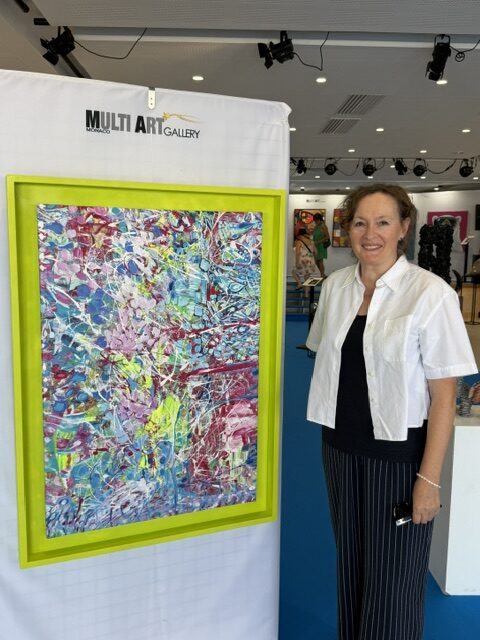
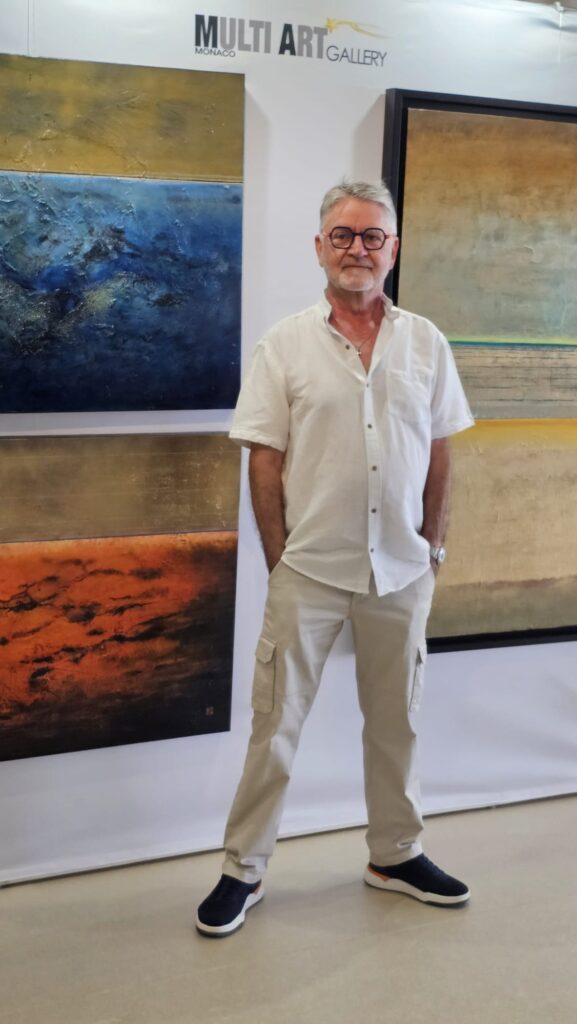
Jean Claude Bertrand with his painting at Art Riviera Tour 2026

Why ART MAG Is Highlighting Jean-Claude Bertrand

While preparing its special feature on Art Riviera Tour 2026, the editorial team at ART MAG encountered around thirty contemporary artists.

Jean-Claude Bertrand is one of the eleven artists featured in Issue 33.

What captured our attention was not only the quality of his paintings, but the remarkable coherence of a body of work that has explored sensation, memory and inner experience with unwavering consistency for more than twenty-five years.

Discover More in ART MAG Issue 33

In ART MAG Issue 33, we take a closer look at Jean-Claude Bertrand’s artistic universe.

The magazine offers an in-depth analysis of his New Horizons series and explores how his paintings transform the landscape into an intimate, sensory experience.

📖 ART MAG 33

Read also :

FAQ

Who is Jean-Claude Bertrand?

Jean-Claude Bertrand is a French contemporary painter whose work lies between lyrical abstraction and a sensory approach to painting. For more than twenty-five years, he has developed a visual language centred on light, texture and inner experience.


Why is ART MAG featuring Jean-Claude Bertrand?

ART MAG chose to highlight Jean-Claude Bertrand in its Art Riviera Tour 2026 special feature because of the coherence of his artistic journey and the singularity of his creative vision.


What is the New Horizons series?

New Horizons is a series of paintings in which the horizon becomes a recurring visual motif. More than a landscape, it represents a space of transition, balance and openness to the imagination.


Where can I see Jean-Claude Bertrand’s work in 2026?

Jean-Claude Bertrand’s works are presented at Art Riviera Tour 2026 in Saint-Jean-Cap-Ferrat. The artist is also featured in ART MAG Issue 33.

To read more, download ART MAG N°33
Categories
Art Riviera Tour - News - Painting - Sculpture - Women artists

Flo Muliardo: When Art Becomes a Meeting with the Other

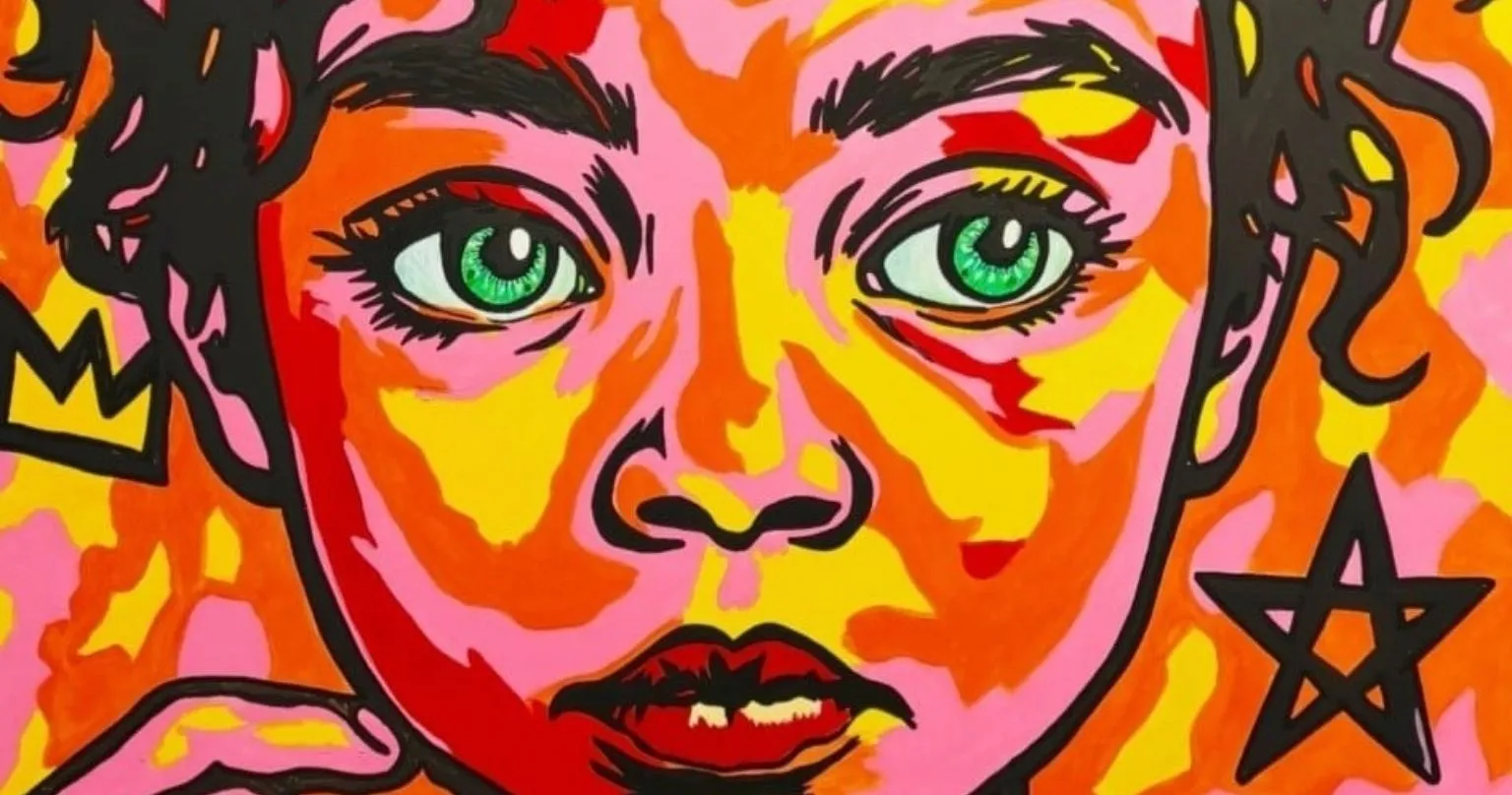
Trinité, peinture contemporaine de Flo Muliardo représentant le portrait coloré d'un enfant, exposée à Art Riviera Tour 2026 à Saint-Jean-Cap-Ferrat.

Some works of art catch the eye. Others hold it.

The works of Flo Muliardo belong to the latter. At first glance, they captivate through their vibrant colours, expressive faces and powerful sculptures. But gradually, something deeper emerges: an emotion, a story, a human encounter.

While preparing its special feature on Art Riviera Tour 2026, the editorial team at ART MAG discovered around thirty contemporary artists. Eleven of them are featured in Issue 33 of the magazine. Flo Muliardo naturally stood out—not because her work seeks to impress, but because, over the years, she has developed a remarkably coherent artistic reflection on the human condition.

Flo Muliardo

An Artist Who Never Stops Exploring

Flo Muliardo’s work is never static. It evolves, transforms and continually explores new directions.

Although widely recognised for her sculpture, she is now developing an increasingly significant body of portrait painting. Yet this is not a change of direction. Her subjects evolve, her techniques diversify, but her artistic intention remains unchanged.

From her earliest creations, Flo Muliardo has been interested in what shapes identity, what connects people, and what invisible truths art can sometimes reveal.

This fidelity to a consistent artistic vision gives her career a remarkable sense of coherence.

Encounters That Shape Creation

Flo Muliardo’s works are never born from abstract concepts.

They emerge from encounters, lived experiences and personal stories. Each new series reflects not only her perception of the world but also the people who inhabit it.

This deeply human dimension gives her work a particular resonance. Rather than speaking on behalf of others, the artist creates works that invite viewers to look differently, to move beyond appearances and rediscover what connects us all.

It is undoubtedly this sincerity that explains why her work resonates with such a wide audience.

Flo muliardo ©Thierry Beauvillain Ouvrard BBostudio

A Highlight of Art Riviera Tour 2026

At Art Riviera Tour 2026, held in Saint-Jean-Cap-Ferrat, Flo Muliardo presents this new chapter of her artistic journey alongside around thirty contemporary artists brought together by Wendy Lauwers and Multi Art Gallery.

Her work naturally enters into dialogue with that of the other participating artists while maintaining a distinctive artistic identity. It is an oeuvre that does not follow trends but develops patiently over time.

Why ART MAG Chose to Feature Flo Muliardo

Since its creation, ART MAG has followed a simple editorial philosophy: to meet artists, understand their creative process and provide readers with meaningful insights into contemporary art.

Flo Muliardo perfectly embodies this vision.

What captured our attention was not only the aesthetic quality of her work, but also the consistency of a career in which each new body of work extends the previous one without ever losing sight of its essential concerns: humanity, encounter and the act of seeing.

It is this continuity that inspired us to dedicate several pages to her in our special issue devoted to Art Riviera Tour.

Discover More in ART MAG Issue 33

In ART MAG Issue 33, we continue this exploration with an in-depth analysis of Flo Muliardo’s work, its artistic evolution and the references that shape her visual language.

This critical perspective complements this introduction and invites readers to discover an artist whose practice continues to evolve with remarkable consistency.

📖 ART MAG 33

Read also

Art Riviera Tour: The 11 Artists Honoured by ART MAG

To read more, download ART MAG N°33
Categories
Inside the Art Market - Paris - Photography

Elton John’s Collection: What Fragile Beauty Reveals About the Art of Collecting

collection photographies présentée au jeu de paume

More than 300 photographs, over 90 artists, and a collection built over three decades. Presented at the Jeu de Paume, Fragile Beauty could simply be seen as a spectacular exhibition devoted to one of the world’s most significant private photography collections. Yet behind the works of Richard Avedon, Nan Goldin, Irving Penn and Robert Mapplethorpe lies another story: the story of a way of seeing, patiently shaped over time.

Great collections often impress because of their scale.

Seven thousand photographs.

Hundreds of iconic prints.

Some of the most celebrated names in modern and contemporary photography brought together in a single exhibition.

But after a few galleries, those numbers begin to fade into the background. The photographs start to converse with one another. Themes echo across the exhibition. Individual choices gradually reveal a deeper coherence.

The visitor is no longer simply looking at a collection.

Instead, they begin to discover the personalities of those who built it.

Every Collection Tells a Story—But Rarely the One We Expect

It is tempting to view a major collection as a symbol of success or exceptional wealth.

Fragile Beauty invites a very different reading.

Fashion photography stands alongside photojournalism. Portraits of celebrities are displayed next to images exploring identity, social struggles and life on the margins. Nothing appears to have been selected simply to illustrate an official history of photography.

Instead, every photograph seems to have been chosen because, at a particular moment, it meant something to Elton John and David Furnish.

The collection stops being an inventory.

It becomes a narrative.

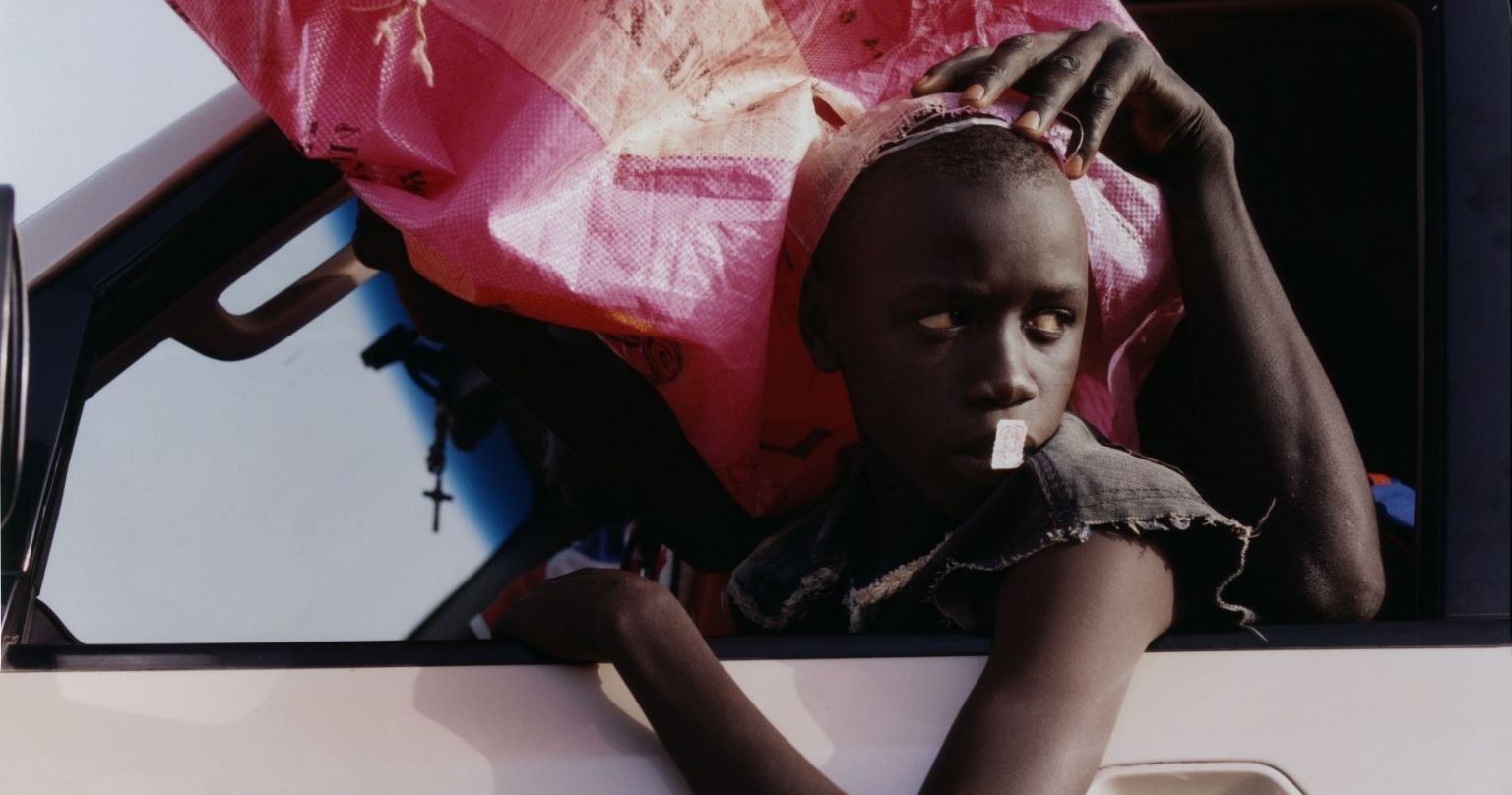
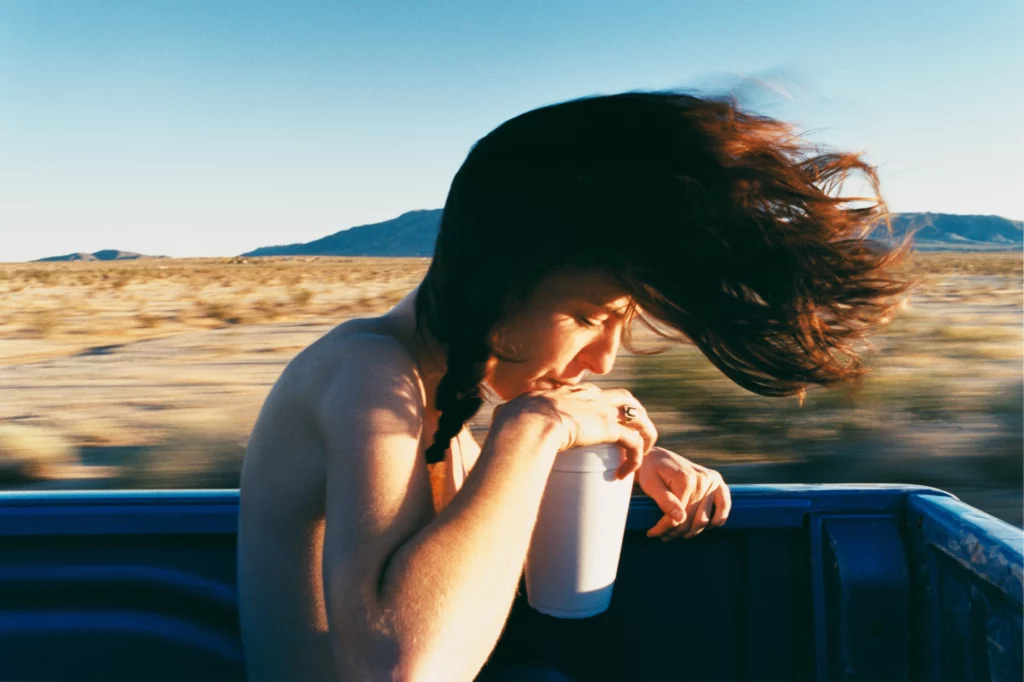
Ryan McGinley, Dakota Hair, 2004. Photograph presented in Fragile Beauty, from the photography collection of Sir Elton John and David Furnish. © Ryan McGinley.

A Collector Does Not Begin by Buying Art. They Begin by Learning to See.

Perhaps this is the exhibition’s most valuable lesson.

In the exhibition catalogue, Elton John explains that before acquiring photographs by Irving Penn or Man Ray, he simply lived surrounded by posters. Gradually, he learned how to recognise the quality of a print, understand its provenance and history, and sometimes wait years before finding the work he was looking for.

One sentence perfectly sums up this philosophy:

“A picture doesn’t have to cost a million dollars to make you happy. It can be anything—even a photograph torn from a newspaper.”

These words remind us of something the art market occasionally allows us to forget.

Money allows you to acquire artworks. Vision allows you to build a collection.

The distinction is fundamental.

An artwork can be purchased in minutes.

A collector’s eye takes a lifetime to develop.

What Photographs Reveal About Their Collectors

As visitors move through Fragile Beauty, it becomes increasingly clear that the selected works speak as much about those who collected them as about those who created them.

The exhibition explores themes of freedom, identity, desire, social engagement, memory and celebrity. Together, these photographs form a sensitive map of the emotions, convictions and questions that have accompanied Elton John and David Furnish for more than three decades.

A great collection is therefore never simply an accumulation of artworks.

It reflects a particular way of seeing the world.

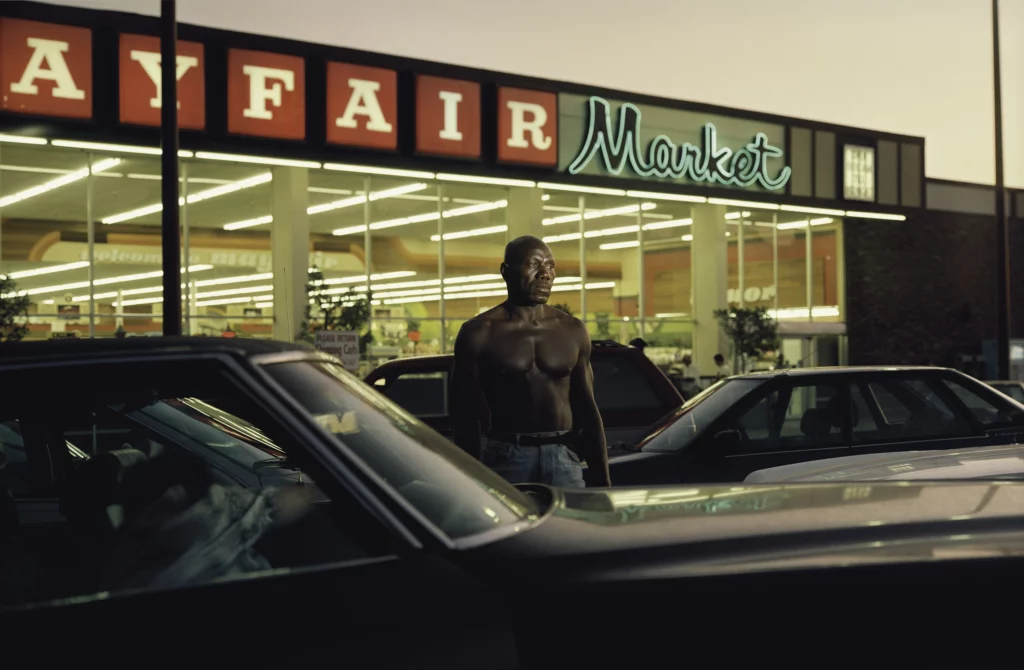
Philip-Lorca diCorcia, Ike Cole, 38 Years Old; Los Angeles, California: $25. Photograph presented in Fragile Beauty, dedicated to the collection of Sir Elton John and David Furnish. © Philip-Lorca diCorcia. Courtesy of the artist and David Zwirner

Why This Exhibition Goes Beyond Photography

This is undoubtedly what makes Fragile Beauty so compelling.

The exhibition is not intended solely for photography enthusiasts.

It speaks to all of us.

Why does one image move us so deeply?

Why do certain artworks remain with us throughout our lives while others quietly fade from memory?

At what point does buying artworks become collecting?

These questions extend far beyond the art market.

They touch upon our relationship with time, memory and transmission.

A Reflection Continued in ART MAG No. 33

While preparing our feature on collecting, we deliberately chose not to produce another exhibition review.

Instead, we began with a more fundamental question:

What truly makes a collector?

📖 ART MAG No. 33 is available in both print and digital editions.

Using Elton John and David Furnish’s collection as a starting point, ART MAG No. 33 explores how a collection takes shape, how taste develops over time, and what artworks ultimately reveal about the people who choose to live with them.

Because a collection never tells only the story of art.

Quietly, it also tells the story of a way of seeing.

FAQ – Elton John’s Collection and the Fragile Beauty Exhibition

Why does Elton John collect photography?

Sir Elton John began collecting photography in the early 1990s. Together with David Furnish, he has assembled a collection of more than 7,000 prints, guided primarily by passion and personal vision rather than investment. The collection includes both masters of photography and contemporary artists whose work reflects social and cultural issues.


Where can Elton John’s photography collection be seen in France?

A selection of more than 300 photographs is presented in Fragile Beauty at the Jeu de Paume in Paris from 12 June to 27 September 2026. The exhibition brings together major works from Elton John and David Furnish’s renowned photography collection


How many works are included in Elton John’s collection?

Elton John and David Furnish’s photography collection now comprises more than 7,000 photographs and is considered one of the world’s leading private collections dedicated to twentieth- and twenty-first-century photography.


Which photographers are featured in Fragile Beauty?

The exhibition includes works by internationally acclaimed photographers such as Irving Penn, Richard Avedon, Nan Goldin, Robert Mapplethorpe, Diane Arbus, Herb Ritts, Ryan McGinley and Philip-Lorca diCorcia, among many others.


Is collecting art an investment or a passion?

Elton John’s collection demonstrates that great collections are not built solely on financial value. They emerge from curiosity, a trained eye and lasting commitment to artists and subjects that resonate personally. While artworks may appreciate over time, Fragile Beauty reminds us that collecting is, above all, a deeply personal journey

To read more, download ART MAG N°33
Categories
Art Riviera Tour - News - Painting - Sculpture

Art Riviera Tour 2026: ART MAG Highlights Eleven Contemporary Artists

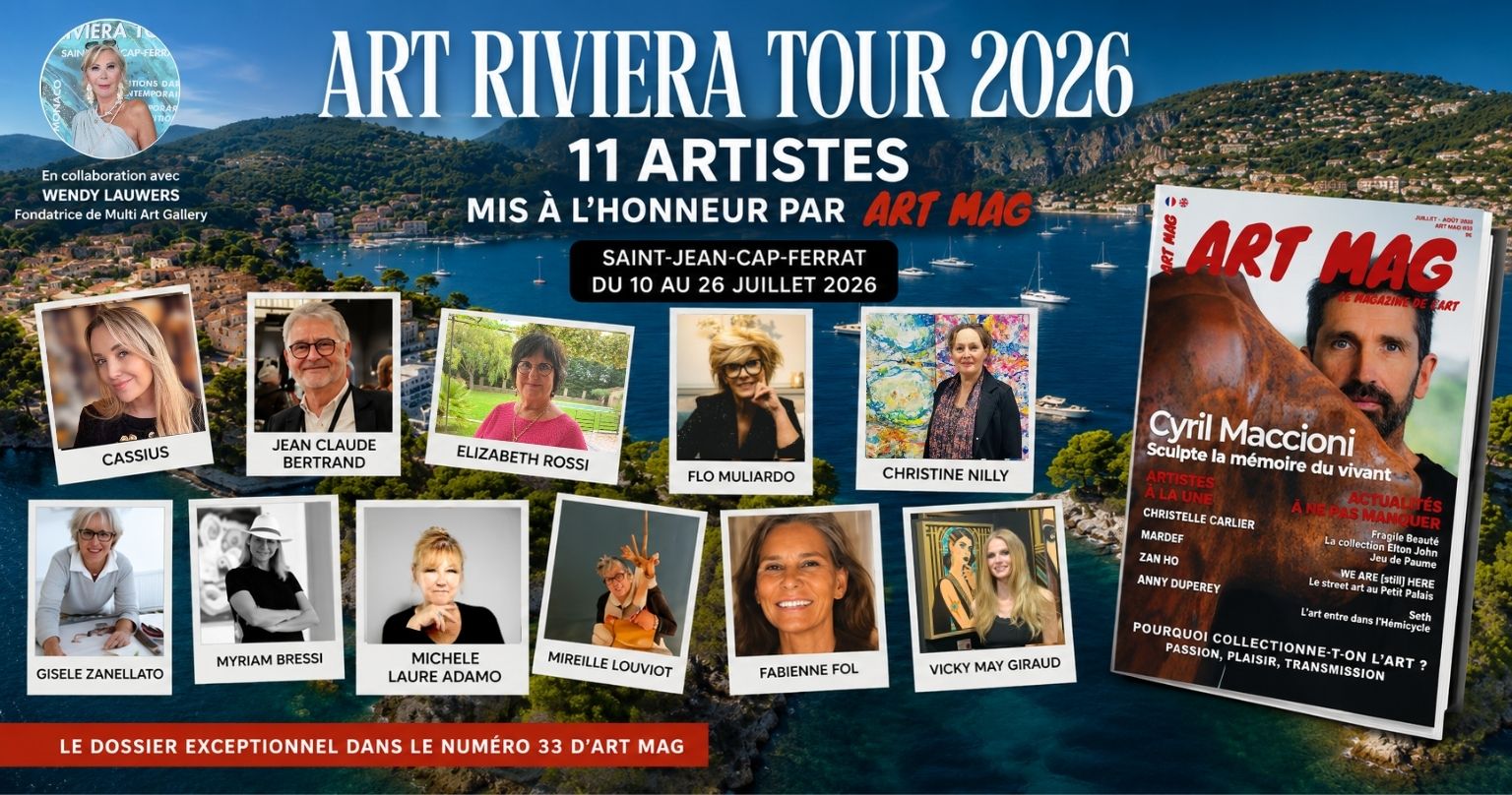
On the occasion of Art Riviera Tour 2026, held in Saint-Jean-Cap-Ferrat, ART MAG is dedicating an exceptional feature to eleven contemporary artists in its Issue 33. This editorial project was born from a collaboration with Wendy Lauwers, founder of Multi Art Gallery, and from a shared ambition: to give artists the time and space they deserve.

Wendy Lauwers art riviera tour 2026
Wendy Lauwers

Art Riviera Tour 2026: Bringing Artists and the Public Together

From 10 to 26 July 2026, Art Riviera Tour brings together around thirty contemporary artists from diverse backgrounds in Saint-Jean-Cap-Ferrat. Organized by Multi Art Gallery under the direction of Wendy Lauwers, the exhibition invites visitors to discover a wide range of artistic practices in one of the French Riviera’s most remarkable settings.

For ART MAG, this invitation represented far more than a media partnership.

It offered an opportunity to pursue the mission that has guided the magazine since its creation: meeting artists, exploring their creative journeys, and sharing the stories behind their work.

Why ART MAG Dedicated a Feature to Eleven Artists

An exhibition allows visitors to discover works of art.

A magazine allows readers to understand the artists who create them.

Faced with the richness and diversity of Art Riviera Tour, it was impossible to devote several pages to every participating artist. We therefore made an editorial choice: to produce an in-depth feature focusing on eleven artists, giving each of them the space needed to present their career, artistic approach, and vision of contemporary creation.

Over several weeks, our editorial team met with the artists, studied their work, and developed a feature spanning more than twenty pages, published in Issue 33 of ART MAG.

The Eleven Artists Featured in Issue 33 of ART MAG

The feature highlights:

Eleven artists, eleven unique sensibilities, and eleven distinct perspectives on contemporary art.

The Printed Magazine Followed by a Summer Series Online

Issue 33 of ART MAG marks the beginning of this editorial journey.

Throughout the summer, each of these artists will also be featured in a dedicated article published on our website. These portraits will expand upon the magazine feature by offering new insights into their work, inspirations, and artistic paths.

The printed magazine and the online publication complement one another, creating a reading experience that accompanies visitors before, during, and after the exhibition.

Giving Artists the Time They Deserve

At a time when images circulate faster than ever, ART MAG has chosen a different path: slowing down.

Taking the time to listen to artists, understand their work, and share their vision of contemporary creation.

This commitment guided the production of our feature dedicated to Art Riviera Tour 2026.

The complete feature can be discovered in Issue 33 of ART MAG, available in both print and digital editions.

The complete feature can be discovered in Issue 33 of ART MAG, available in both print and digital editions.

📖 ART MAG 33

FAQ

Where is Art Riviera Tour 2026 taking place?

Art Riviera Tour 2026 is held in Saint-Jean-Cap-Ferrat, on the French Riviera, and brings together around thirty contemporary artists from various artistic backgrounds.


Which artists are featured in ART MAG Issue 33?

Issue 33 of ART MAG features an exclusive editorial dossier dedicated to eleven contemporary artists:
Jean-Claude Bertrand
Cassius (Laetitia Pireaux)
Christine Nilly
Elizabeth Rossi
Fabienne Fol
Flo Muliardo
Gisele Zanellato
Michèle Laure Adamo
Mireille Louviot
Myriam Besri
Vicky-May Giraud

Who organizes Art Riviera Tour?

Art Riviera Tour is organized by Wendy Lauwers, founder of Multi Art Gallery, with the ambition of promoting contemporary artists through an international exhibition on the French Riviera.


Where can I buy ART MAG Issue 33?

ART MAG Issue 33 is available in both print and digital editions through the official ART MAG website.

To read more, download ART MAG N°33
Categories
Featured Artist - Painting - Women artists

Anny Duperey, Painter: The Hidden Artistic Life Finally Revealed

Anny Duperey peintre devant ses tableaux lors d'une exposition, une œuvre où la couleur et la lumière occupent une place centrale.

For more than sixty years, Anny Duperey painted away from the spotlight. Known to the public as an actress and writer, she nevertheless developed a remarkably coherent body of work in the privacy of her studio. Today, this long-confidential painting is finally coming to light, inviting us to rediscover an artist for whom colour has always been the true language of expression.

Before the Actress, There Was the Painter

Although Anny Duperey is best known for her career in theatre, film and literature, painting has been part of her life since childhood.

She studied at the Rouen School of Fine Arts, where her talent was quickly recognised by painter Robert Savary, who became her mentor. He immediately identified in the young artist a rare gift: an instinctive understanding of colour.

One sentence he told her would stay with her throughout her life:

“You have nothing to be proud of—it’s a gift.”

Rather than encouraging ambition, these words instilled a lasting sense of humility that would shape her relationship with artistic creation.

When she was admitted to the National Conservatory of Dramatic Arts in Paris, her acting career naturally took centre stage. Yet painting never disappeared. It remained an intimate and personal practice, pursued between film shoots and theatre productions, far from public attention.

Why Did Anny Duperey Wait So Long to Exhibit Her Paintings?

For decades, Anny Duperey deliberately chose not to exhibit her work.

Her explanation is remarkably simple.

“Out of respect for the ‘real’ painters, those who devote their lives to this art, I forbade myself from exhibiting my paintings. Only now, rather late in life, do I allow myself to do so… modestly.” Anny Duperey

This humility explains why her arrival on the art scene is unlike any other.

Rather than a celebrity discovering a new passion, her paintings reveal a body of work that had already existed for more than half a century before being shared with the public.

Her participation in the Salon des Artistes Indépendants at the Grand Palais therefore represents less a beginning than the long-awaited recognition of a lifelong artistic journey.

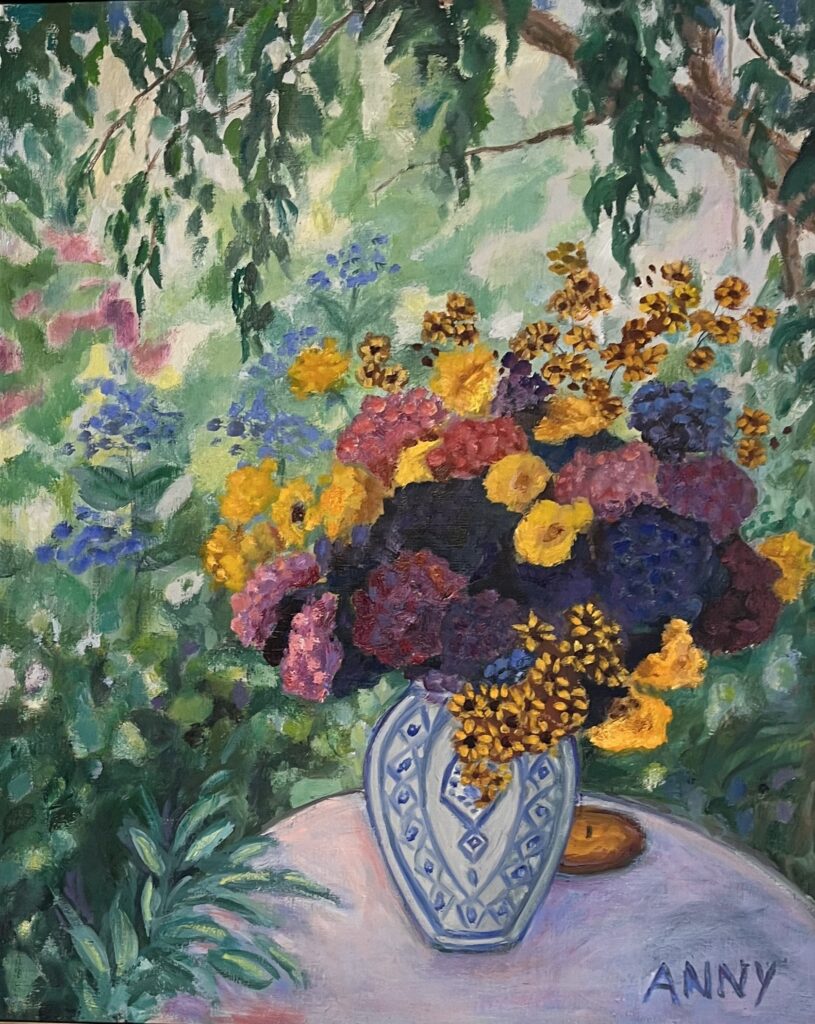
Bouquet Champêtre, painting by Anny Duperey depicting a vase of luminous flowers, where light and rich colour harmonies recall the legacy of Bonnard, Matisse and Dufy.

When Colour Becomes the True Subject

At first glance, Anny Duperey’s paintings depict bouquets, landscapes and portraits.

Yet their true subject lies elsewhere.

Like Pierre Bonnard, Henri Matisse and Raoul Dufy—artists she deeply admires—colour does not merely accompany the composition; it creates it.

Flowers become harmonies of yellow, blue and violet.

Landscapes are built around light rather than drawing.

Even her portraits seem to emerge from a vibrant chromatic material that gives them their remarkable presence.

Anny Duperey never seeks dramatic effect. Her painting unfolds gently, favouring balance, luminous vibrations and quiet emotion.

Her affinity with the great French colourists is never an imitation but rather an acknowledged artistic heritage, gradually absorbed through decades of daily practice.

A Painting of Contemplation

Anny Duperey’s work invites the viewer to slow down.

Her landscapes are not intended to tell spectacular stories. A few trees, a solitary house or a distant horizon are enough to create a suspended atmosphere.

Within her floral compositions, light appears to circulate freely between blossoms.

Every painting conveys the impression of having been patiently observed before being painted.

This relationship with time places her work within a contemplative tradition, where emotion arises less from the subject itself than from the way light transforms our perception.

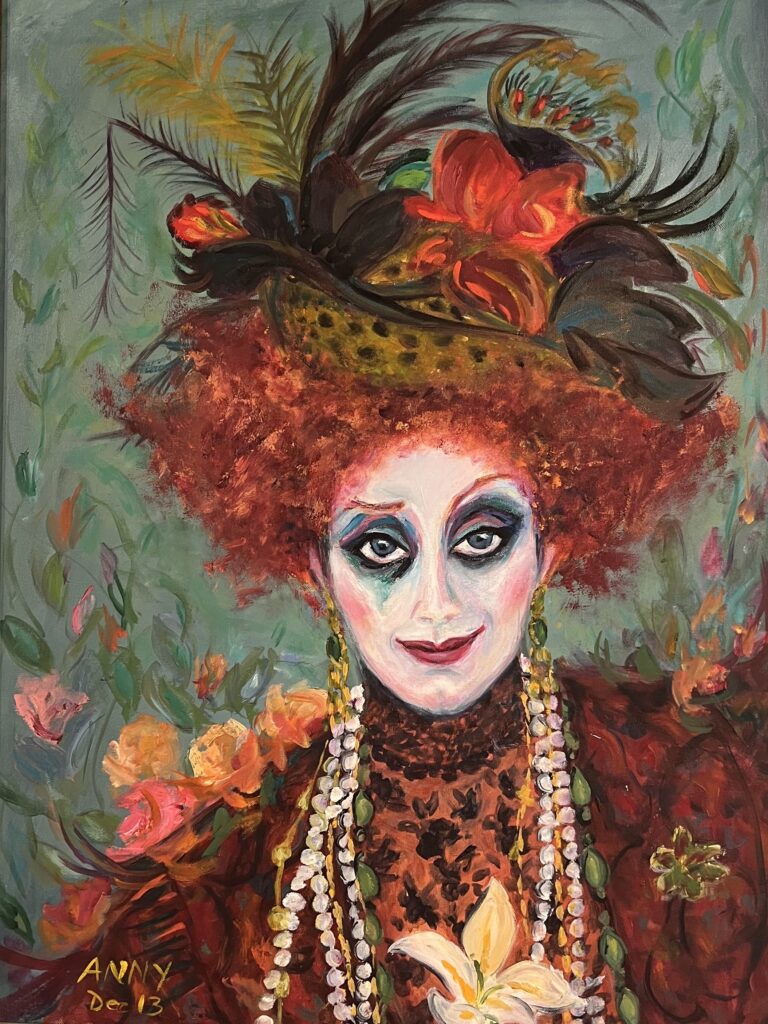
The Madwoman of Chaillot, portrait by Anny Duperey depicting a female figure with an intense gaze and an extravagant floral hat, painted in vibrant colours inspired by the great French colourists.
The Madwoman of Chaillot

Portraits Filled with Presence

Among the works on display, The Madwoman of Chaillot immediately captures the viewer’s attention.

With its intense gaze, luminous face and extravagant floral hat, the figure possesses undeniable presence.

Here, the influence of the actress naturally becomes apparent.

Anny Duperey does not simply paint a face; she creates a character.

Expression, posture and psychological depth become as important as colour itself.

Her experience on stage enriches her painting without ever overshadowing it.

A Body of Work Built Beyond Fashion

Perhaps the most striking aspect of Anny Duperey’s painting is its independence.

For more than sixty years, she continued painting without seeking recognition from the art market, without following trends and without adapting her work to public expectations.

This freedom gives her work an exceptional coherence.

Each painting belongs to the same artistic quest: a deeper understanding of light, composition and colour relationships.

There is no desire to shock or to follow contemporary fashions.

Only a constant fidelity to painting itself.

ART MAG’s Perspective

What moves us in Anny Duperey’s paintings is not only their artistic quality.

It is also their relationship with time.

In an era when visibility often comes before the work itself, her journey reminds us that an artistic practice can mature quietly for decades before finding its audience.

Her paintings do not seek to extend a public career or build a new reputation.

Instead, they bear witness to more than sixty years of unwavering dedication to painting, developed in the silence of the studio with remarkable consistency.

Perhaps this is what makes her work so distinctive: that of an artist who never painted to be seen, but simply because painting was an essential part of her life.

This article is adapted from Issue #33 of ART MAG International.
Each edition brings together in-depth analyses, critical perspectives, exclusive interviews and inspiring discoveries, offering readers a deeper understanding of contemporary artists, their works and the evolving landscape of contemporary art.

📖Issue #33 is available in both print and digital editions.

FAQ

Is Anny Duperey also a painter?

Yes. Long before becoming a celebrated actress, Anny Duperey studied at the Rouen School of Fine Arts. She has been painting for more than sixty years, although her work remained largely private until recently.

What characterises Anny Duperey’s painting?

Her work belongs to a figurative tradition in which colour plays the central role. Inspired by Pierre Bonnard, Henri Matisse and Raoul Dufy, she explores light, chromatic harmony and contemplation.

Why did Anny Duperey wait so long before exhibiting?

She has explained that, out of respect for painters who devoted their entire lives to art, she hesitated for decades before showing her work publicly. Only recently did she decide to share it.

Where can you discover Anny Duperey’s paintings?

Her paintings have notably been presented at the Salon des Artistes Indépendants at the Grand Palais. They are also featured in ART MAG #33, which devotes a special feature to her work as a painter.

To read more, download ART MAG N°33
Categories
Sculpture

Cyril Maccioni: When Contemporary Sculpture Becomes a Memory of the Living World

Portrait de Cyril Maccioni, sculpteur contemporain français, devant ses sculptures animalières monumentales de l'exposition Les Oubliés à Terra di Gaya.
Maxime Flori

When Contemporary Sculpture Becomes an Act of Memory

What can animal sculpture still tell us in the twenty-first century?

For Cyril Maccioni, the answer goes far beyond representing wildlife. His sculptures are not simply tributes to the beauty of animals; they invite us to reflect on our responsibility to preserve what is quietly disappearing before our eyes. With The Forgotten, presented at Terra di Gaya in Corsica, the French contemporary sculptor creates an exhibition in which every sculpture becomes a silent witness to a changing world.

Lions, gorillas, bears and sheep appear suspended in time.

Their eyes are missing.

This absence—now the artist’s unmistakable signature—encourages visitors to ask a simple yet profound question: what do we still choose to see?

More than an exhibition, The Forgotten offers a deeply emotional encounter where sculpture becomes an act of remembrance.

Cyril Maccioni: A Contemporary Sculptor Dedicated to the Living World

Over the years, Cyril Maccioni has developed an artistic language that is instantly recognisable. Working with resin, fiberglass and oxidised metal, he creates monumental sculptures in which strength and vulnerability coexist.

Rather than depicting animals as naturalistic subjects, Maccioni transforms them into universal symbols of a living world in transition. The lion embodies strength made vulnerable, while the gorilla seems to carry the weight of collective memory. The bear, meanwhile, stands as the silent guardian of a fragile world.

By deliberately moving away from realism, the sculptor invites viewers to look beyond the animal itself and reflect on humanity’s relationship with nature. Each sculpture becomes a quiet meditation on memory, loss and the responsibility we share towards the living world.

Gorilla by Cyril Maccioni, contemporary sculpture from The Forgotten series, symbolising the memory of the living world and the fragility of species.
Gorilla © Maxime Flori

The Forgotten: An Exhibition That Challenges the Way We Look

Presented at Terra di Gaya, a site deeply committed to biodiversity in Corsica, The Forgotten finds its natural setting within the landscape itself.

Visitors gradually encounter monumental animals that seem both rooted in and detached from their surroundings.

Then comes the revelation.

The eyes are gone.

This deliberate artistic choice fundamentally transforms the relationship between the artwork and its audience.

“Animals sacrificed their gaze so that we might finally open our own.” Cyril Maccioni

By removing the eyes, the sculptor reverses the traditional relationship between viewer and artwork.

The animals no longer observe us.

Instead, we become responsible for the way we choose to see them.

Few artistic absences have ever carried such emotional power.

Between Strength and Vulnerability

One of the defining qualities of Cyril Maccioni’s work is its refusal of spectacle.

Although monumental in scale, his sculptures never rely on technical virtuosity alone.

Their forms remain deliberately simplified.

The lines are clean.

The oxidised surfaces evoke both stone and the passage of time.

This visual restraint gives each sculpture a timeless presence.

Emotion arises not from realism but from the quiet intensity of the work itself.

Every sculpture seems to hold an untold story, leaving space for the viewer’s own interpretation.

Reimagining the Tradition of Animal Sculpture

Animal sculpture has a long artistic history, from François Pompon to Rembrandt Bugatti.

Like these masters, Cyril Maccioni seeks to capture the essential nature of the animal rather than its outward appearance.

Yet he introduces a contemporary dimension.

His sculptures are shaped not only by beauty and strength but also by memory.

These animals feel both present and already part of history.

It is precisely this ambiguity that gives his work its remarkable emotional depth.

A Contemporary Vision of Environmental Art

At a time when environmental concerns increasingly shape artistic practice, Cyril Maccioni follows a singular path.

His sculptures never become manifestos.

They avoid moralising.

They reject sensationalism.

Instead, they embrace silence.

Within that silence lies reflection.

Without imposing answers, his work gently reminds us of the extraordinary fragility of the living world.

Lion monumental de Cyril Monumental lion by Cyril Maccioni, contemporary sculpture in fiberglass, resin and oxidised metal from The Forgotten series, exhibited at Terra di Gaya in Corsica.
© Maxime Flori

Terra di Gaya: Where Art Meets Biodiversity

The Forgotten finds its most meaningful setting at Terra di Gaya, a place dedicated to preserving biodiversity.

Here, the surrounding landscape becomes an extension of the sculptures themselves.

Nature is no longer merely the backdrop.

It becomes an essential part of the artistic experience.

The exhibition also carries a tangible environmental commitment, with part of the proceeds supporting the WWF and its conservation initiatives.

ART MAG’s Perspective

What truly distinguishes Cyril Maccioni’s work is its ability to move the viewer without ever resorting to spectacle.

At a time when socially engaged art often relies on explicit statements, the sculptor chooses a far subtler language—that of silence.

His sculptures neither accuse nor seek to persuade.

Instead, they bear quiet witness to the fragility of the living world, inviting each visitor to reconsider the way they look at nature.

This restraint gives his work remarkable strength. It reminds us that contemporary sculpture still possesses a rare power: the ability to slow our gaze, suspend time and leave a lasting emotional imprint long after the exhibition has ended.

This article is adapted from Issue #33 of ART MAG International.
Each edition brings together in-depth analyses, critical perspectives, exclusive interviews and inspiring discoveries, offering readers a deeper understanding of contemporary artists, their works and the evolving landscape of contemporary art.

📖Issue #33 is available in both print and digital editions.

FAQ

Who is Cyril Maccioni?

Cyril Maccioni is a French contemporary sculptor whose work focuses on the animal world. His sculptures explore themes of memory, biodiversity and humanity’s relationship with nature.


Why do Cyril Maccioni’s sculptures have no eyes?

The absence of eyes is the artist’s signature. It symbolises a reversal of perspective: rather than being watched by the animals, viewers are invited to examine their own relationship with the living world.


Where is The Forgotten exhibition presented?

The Forgotten is exhibited at Terra di Gaya, in Corsica, a site dedicated to biodiversity and environmental preservation.


What materials does Cyril Maccioni use?

He primarily works with resin, fiberglass and oxidised metal to create monumental sculptures whose textured surfaces evoke the passage of time.


Why is Cyril Maccioni’s work significant?

His sculptures move beyond traditional animal representation to offer a thoughtful reflection on memory, biodiversity and the fragile balance between humanity and nature.

To read more, download ART MAG N°33