Categories
Interview - Painting

Nicole Azoulay : Painting as an Act of Freedom and Resilience

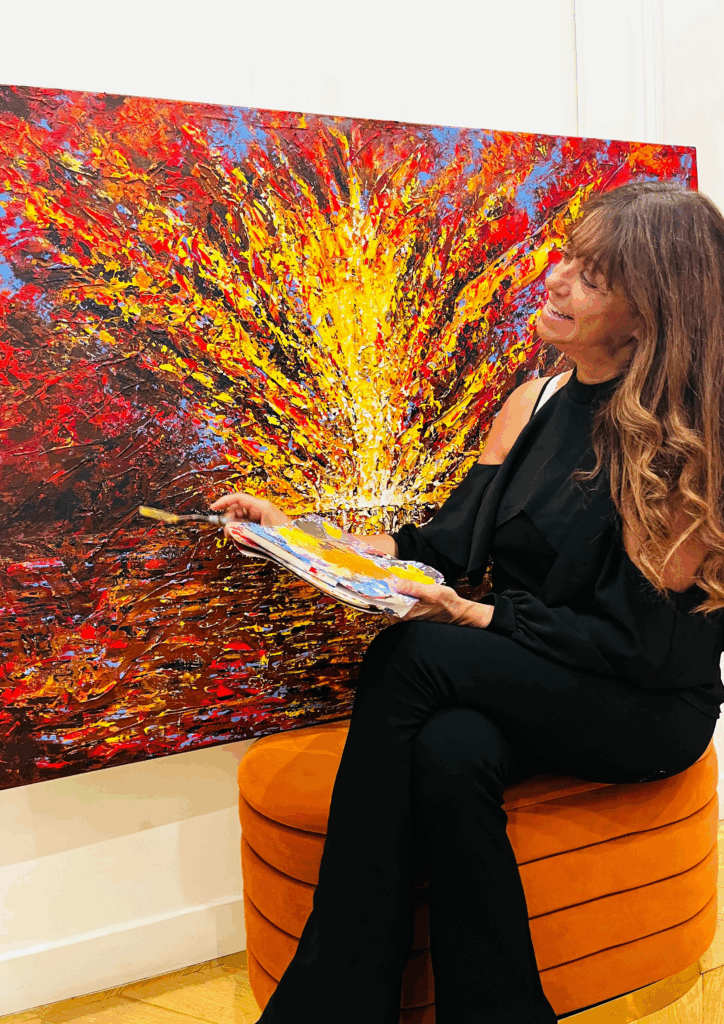
Nicole Azoulay devant son tableau

A self-taught artist revealed by ART MAG

In recent years, the name Nicole Azoulay has been making its way into the world of contemporary art. A self-taught painter, she works with acrylics and a palette knife on large canvases where color takes on a luminous, almost incandescent power. Her works, balancing between abstraction and raw emotion, captivate viewers with their intensity and authenticity.

First introduced by ART MAG in September 2024, Nicole Azoulay moves audiences with a singular life story marked by silence and hardship. Painting has become her vital language: a space of freedom where the urgency to create meets the necessity to exist.
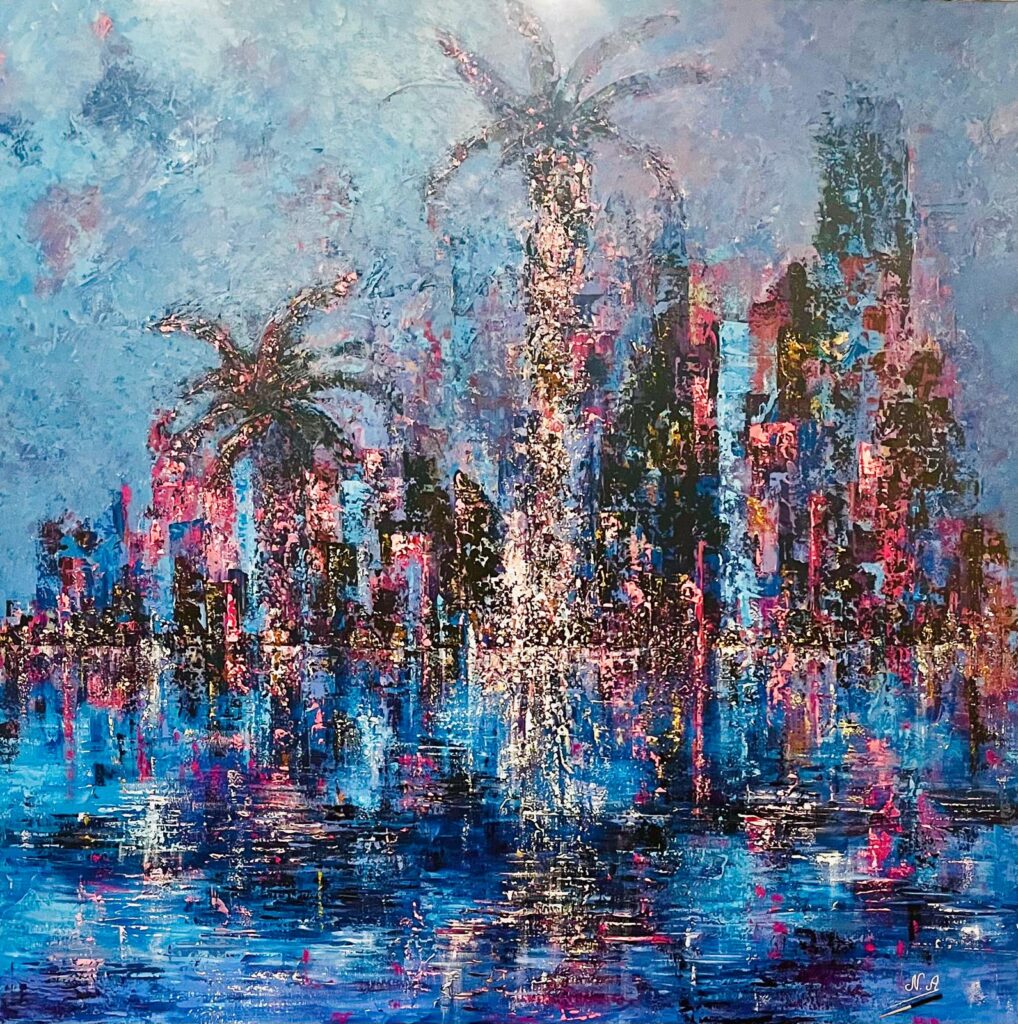
Painting by Nicole Azoulay titled Tropical Bursts, acrylic with palette knife on canvas, featuring vivid and contrasting colors inspired by tropical atmosphere
Tropical Bursts, acrylic with palette knife on canvas

A vibrant and instinctive palette

Her paintings are not meant to depict the visible world but to convey an inner vibration. Deep blues, symbols of calm and horizon, collide with bright reds and bursts of light. Each canvas is a cry, a revenge against absence and invisibility—an invitation to feel rather than to analyze.
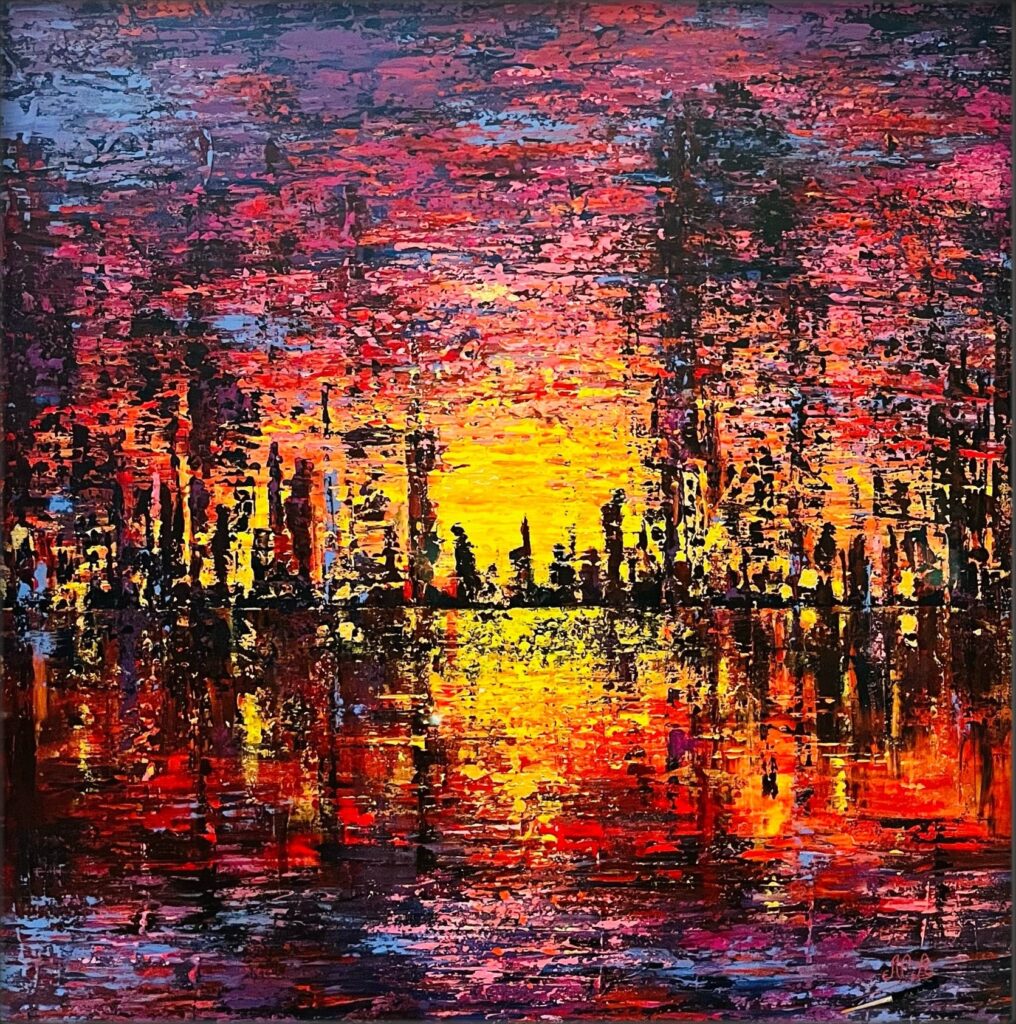
Painting by Nicole Azoulay titled Summer Glow, acrylic with palette knife on canvas, 80 x 80 cm, featuring vibrant and luminous colors.
Summer Glow, acrylic with palette knife on canvas, 80 x 80 cm

Nicole Azoulay does not build her works as images to simply contemplate; she lives them, releases them, and lets color speak. This raw sincerity is perhaps what touches the viewer most, beyond artistic codes and trends.

An exclusive interview in ART MAG

In an exclusive interview with ART MAG, Nicole Azoulay opens up for the very first time about her journey, her struggles, and her way of painting “to exist.” She shares her relationship with color, her quest for freedom, and the way each canvas becomes an act of resilience.

👉 To discover her full testimony and immerse yourself in her artistic universe, don’t miss the latest issue of ART MAG.

To read more, download ART MAG N°28
Categories
News

Blanche Hoschedé-Monet: The Painter Who Made Giverny Bloom Again

Blanche Hoschede monet Giverny

A newly revealed painting at the Vernon museum

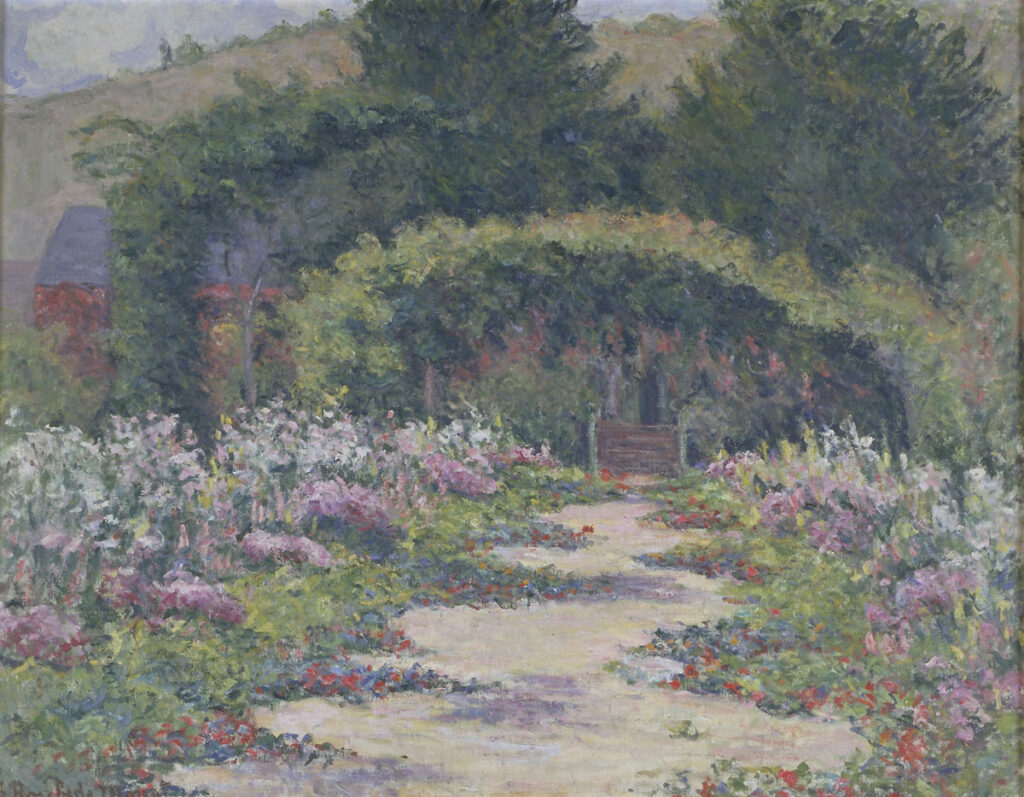
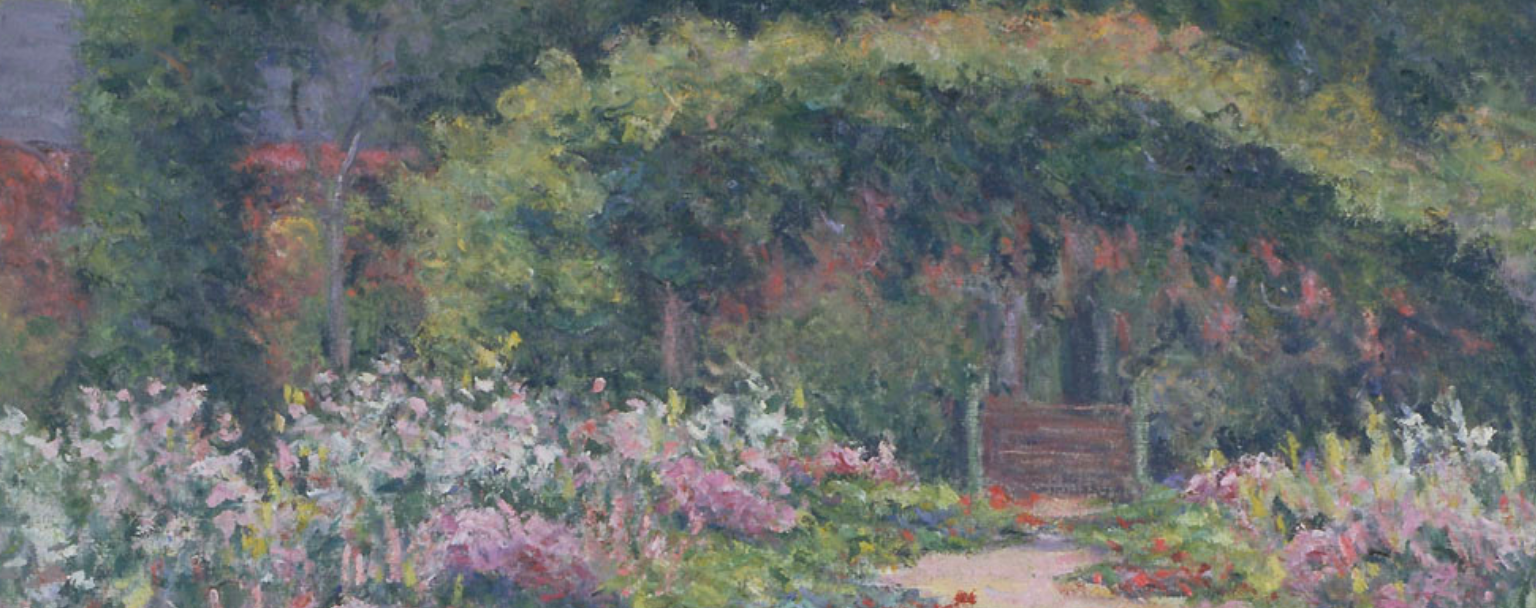
She had put down her brushes for more than ten years. Too many losses, too much silence. But in 1926, at the age of sixty, Blanche Hoschedé-Monet picked them up again. A year later, she painted The Rose Walk, Claude Monet’s Garden at Giverny, a delicate canvas filled with light and memory. This rare masterpiece is now on view at the Blanche Hoschedé-Monet Museum in Vernon, thanks to an exceptional loan from the Musée des Augustins in Toulouse.

Impressionist painting by Blanche Hoschedé-Monet depicting the rose walk at Claude Monet’s garden in Giverny, with arches, flowers, and the family home.
Blanche and her guests in the garden

A woman in Monet’s shadow… who became the living memory of Giverny

Blanche was not only Monet’s stepdaughter. She was his closest pupil, his artistic confidante, and more importantly: the only one to carry on his legacy after his death. Long overlooked, her work deserves to be seen, contemplated, and felt.

In The Rose Walk, she does not seek innovation. She seeks preservation. She paints to keep the garden alive. To ensure the house remains inhabited. To let Claude Monet’s memory — her father-in-law, her master, her world — continue to breathe through every flower, every arch, every glimmer of light.

Impressionist painting by Blanche Hoschedé-Monet depicting the rose walk at Claude Monet’s garden in Giverny, with arches, flowers, and the family home.
L’allée des Rosiers

A painting of memory and consolation

Painted after 1926, the work captures the garden in its real state: the trees cut down, the rose arches overgrown, the lush flowerbeds invading the central path. Nothing is fixed; it is life continuing despite absence.

The canvas conveys tenderness and resilience. A painting of grief and survival, where colors become a way to stand tall. As Georges Clemenceau movingly wrote to Blanche in 1927:

“Hold firmly to your brushes. They have, and will always have, the power to make you forget the void.”

Blanche Hoschedé-Monet Museum: A place of memory and heritage

In Vernon, just a stone’s throw from Giverny, the museum that bears her name is today the guardian of this feminine memory. The second museum in France to be dedicated to a female artist, it highlights both Impressionist works and contemporary women creators.

This 1927 canvas enriches a unique collection, celebrating not just art, but also the legacy of a courageous woman who chose to live through painting.

📅 Don’t miss the Journées du Matrimoine

On September 20 and 21, 2025, the museum will host free guided tours focusing on Blanche and other women artists on display. A perfect opportunity to discover the painting in its context, understand Blanche’s vision, and explore the gardens that still live on through her brushstrokes.

💬 Why visit this painting?

  • To feel the emotion of a place painted with love and fidelity.
  • To discover the moving, little-known work of a female Impressionist.
  • To visit one of Normandy’s finest museums, just minutes from Giverny.
  • To celebrate women’s contributions to art history.

📍 Practical information

Blanche Hoschedé-Monet Museum
12 rue du Pont – 27200 Vernon, France
📧 musee@vernon27.fr | 📞 +33 (0)2 32 64 79 05
🌐 vernon27.fr
🕒 Open daily except Mondays

Categories
Painting

Laurence Simon : the Art of Ruins and Memory

portrait de Laurence Simon Peintre Paris

A painter who reveals traces and the invisible

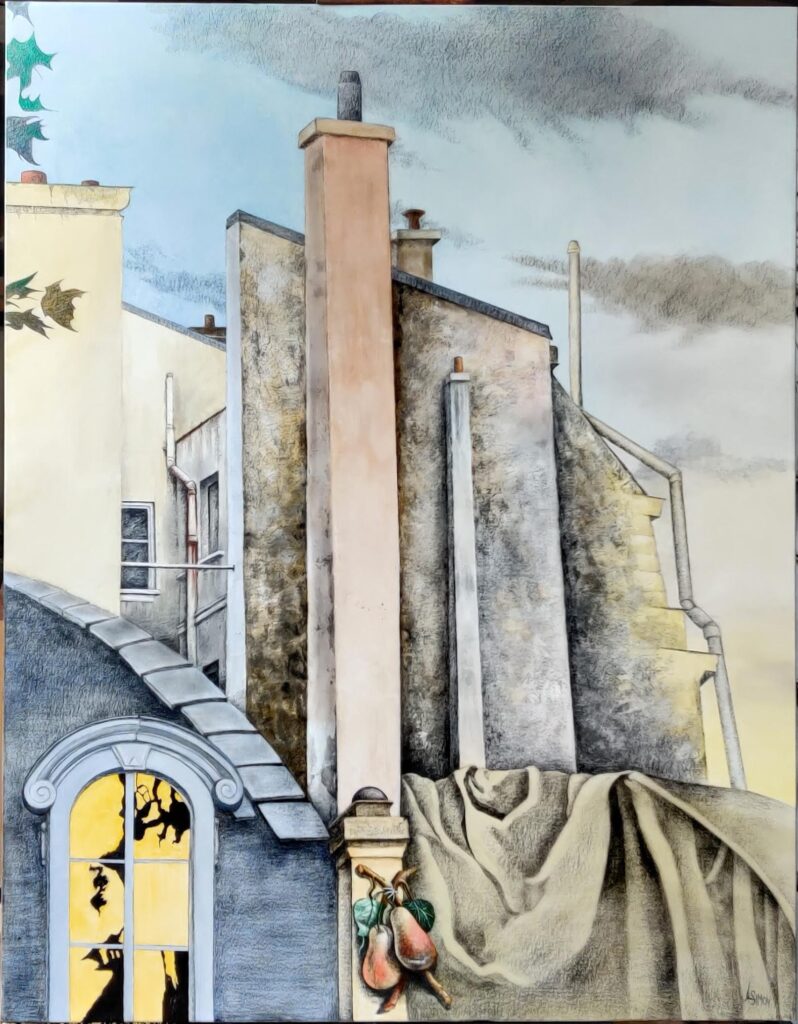
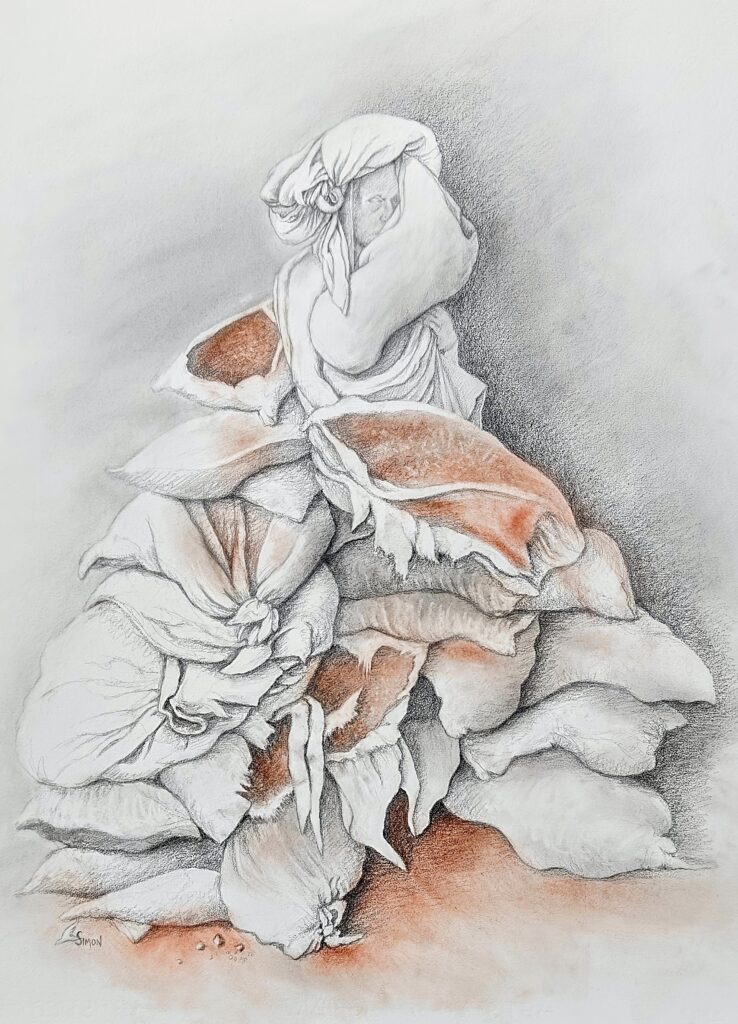
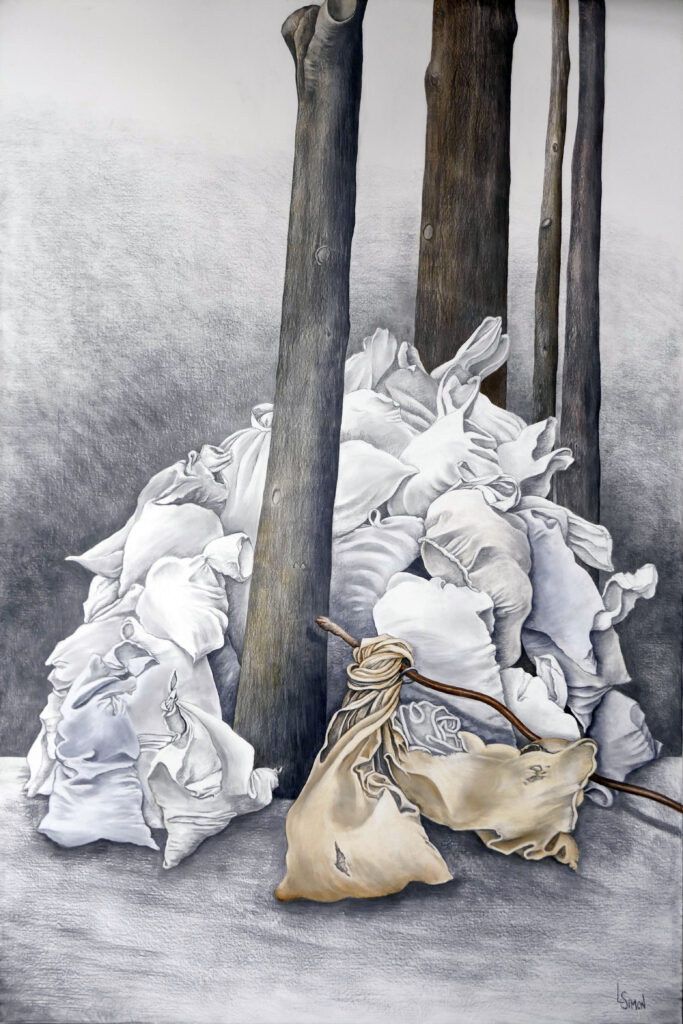
For Laurence Simon, it is not flamboyant subjects that capture the eye, but forgotten traces: knotted bags, worn scaffolding drapes, bunkers, haystacks, or rusty drums.
Her patient, sensual painting embodies a form of resistance, transforming fragments of everyday life into timeless poetry—always without depicting the human figure.

Empreinte 146 x 114 cm

A vocation born very early

“I said I wanted to be a painter when I was five years old.”
This childhood confession illustrates Laurence Simon’s determination. Coming from a lineage of artists dating back to the 17th century, her vision was shaped by the Fine Arts, by Rome, the former Yugoslavia, Normandy, and more recently Mexico.
A painter against the grain, she rejects spectacle in favor of detail and fragments.

Dante à Kyiv 65 x 50 cm

The beauty of the discarded

Laurence Simon’s universe often begins with fascination:

  • the shine of metal,
  • the strange mechanism of garbage wheels,
  • the straw of hay bales,
  • forgotten bags and walls eroded by time.

These discarded, ordinary objects become universal archetypes in her work: a drum turns into a still life, a drape into an allegory, a haystack into an installation.
She does not reproduce—she reveals.

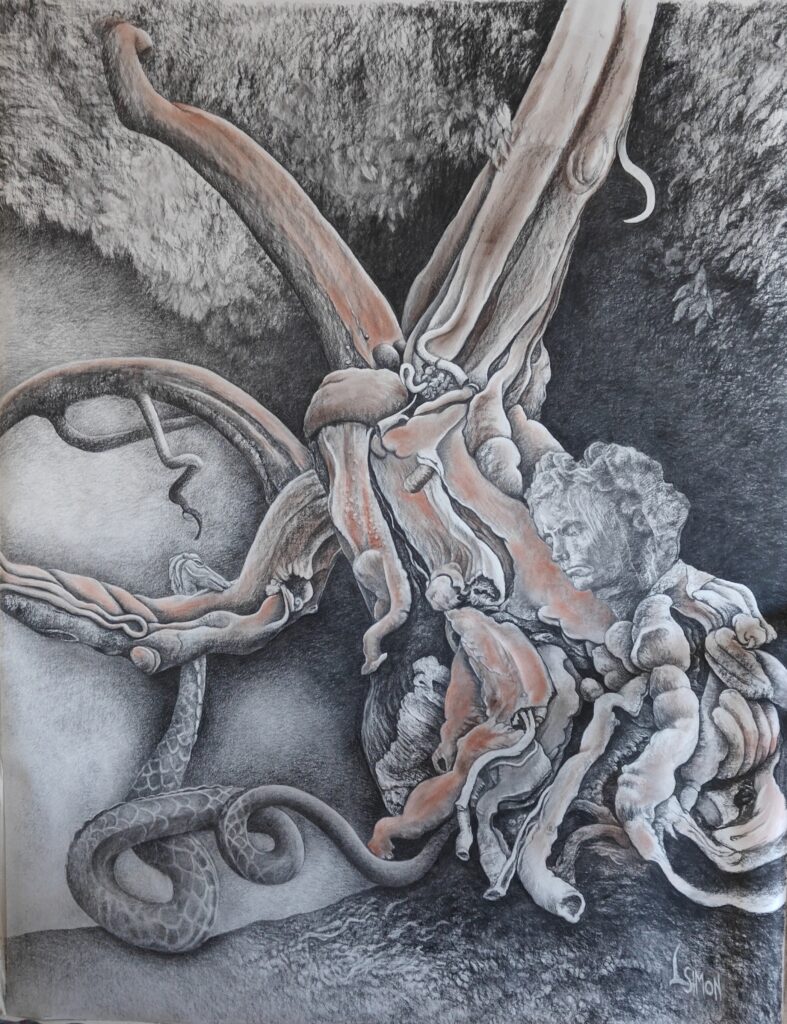
Beethoven & bourdelle au Luco 200 x 150 cm

An art infused with ruins and memory

Her work draws from the ancient ruins of Rome, the war-scarred villages of Montenegro, Norman silos, centenary olive trees, and dreamlike Mexican landscapes.
Abandoned objects turn into pictorial poetry, while landscapes devastated by war carry a universal memory.

Laurence Simon openly claims the legacy of Dürer (for the drapery), of Patinir (for discreet details in his Virgins), and pays tribute to Bourdelle and Beethoven in her monumental charcoal works.

Offrande

A painting of resistance and slowness

Now working between Paris and the French coast, she continues her solitary, humble yet powerful journey. Her monumental black charcoal drawings—almost musical in their depth—gather fragments of past and present.
In a world driven by speed, Laurence Simon takes the time to look. And teaches us to see.

📖 Read more in the next issue of ART MAG (print or digital)

To read more, download ART MAG N°28
Categories
News

New Art 2025 – Lourmarin, crossroads of contemporary expressions

New Art Lourmarin 2025

A festival that makes Provence vibrate

On the last weekend of September, Lourmarin will transform into an ephemeral capital of contemporary art. On September 27 & 28, 2025, the Fruitière Numérique will host the 4th edition of the New Art Festival, an unmissable event for art lovers and collectors eager for discovery.

In this unique setting, blending industrial heritage with Provençal light, 30 established and emerging artists will present a rich panorama of today’s visual languages: painting, sculpture, street art, photography, digital art, and immersive installations. More than an exhibition, New Art offers a true immersion into the heart of contemporary creation.

Four universes to explore

Among the invited talents, four artists embody the diversity and strength of the 2025 edition :

Kty Kiecken
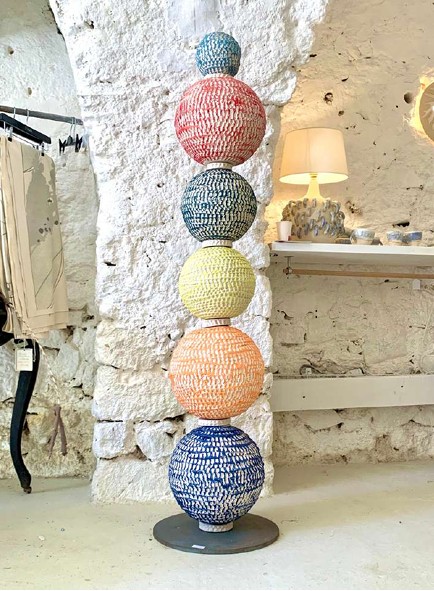
  • Kty Kiecken: ceramics inspired by her travels, where nature and matter intertwine to create sensitive inner landscapes.
Sees
  • SeeS (Thomas Allemand): chromatic abstractions where geometric rigor meets the energy of graffiti.
Marina Arena
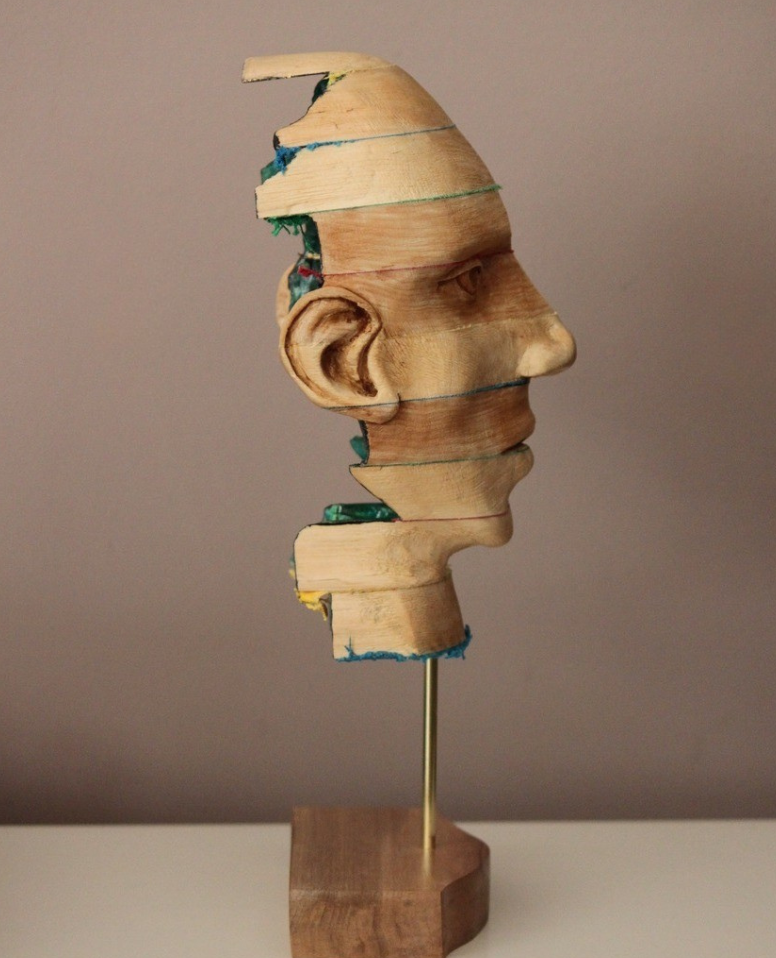
  • Marina Arena: textile and wooden sculptures that sublimate physical and psychological scars, oscillating between pain and resilience.
Dedall
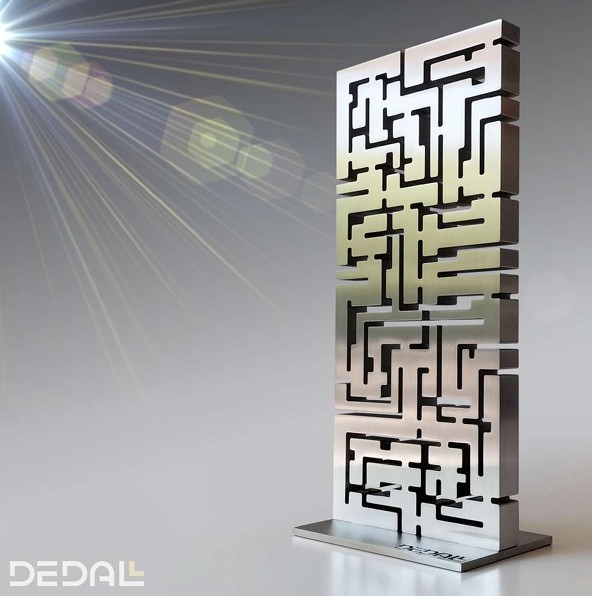
  • Dedall: stainless steel labyrinths, massive yet airy, inviting meditation on our inner journeys.

An immersive and participatory experience

What sets New Art apart is its immersive and accessible approach. Live frescoes, participatory workshops, exchanges with artists: here, art is not kept at a distance — it is lived, experienced, and shared.

A manifesto for accessible art

Organized by the Créalub association, the festival embraces a strong commitment: free admission, universal accessibility, environmental responsibility, and active support for independent creators.

Leaving Lourmarin, visitors take with them the feeling of having traveled through a mosaic of universes — each carrying an emotion, a vision, a fragment of the world. New Art 2025 is not just a festival: it is a living manifesto of creative diversity.

📅 September 27 & 28, 2025 – 10am to 7pm
📍 Fruitière Numérique, Lourmarin (Vaucluse, France)
🎟️ Free entry

To read more, download ART MAG N°28
Categories
Edito

ART MAG Issue 28 : Memory, Resilience, and Global Perspectives

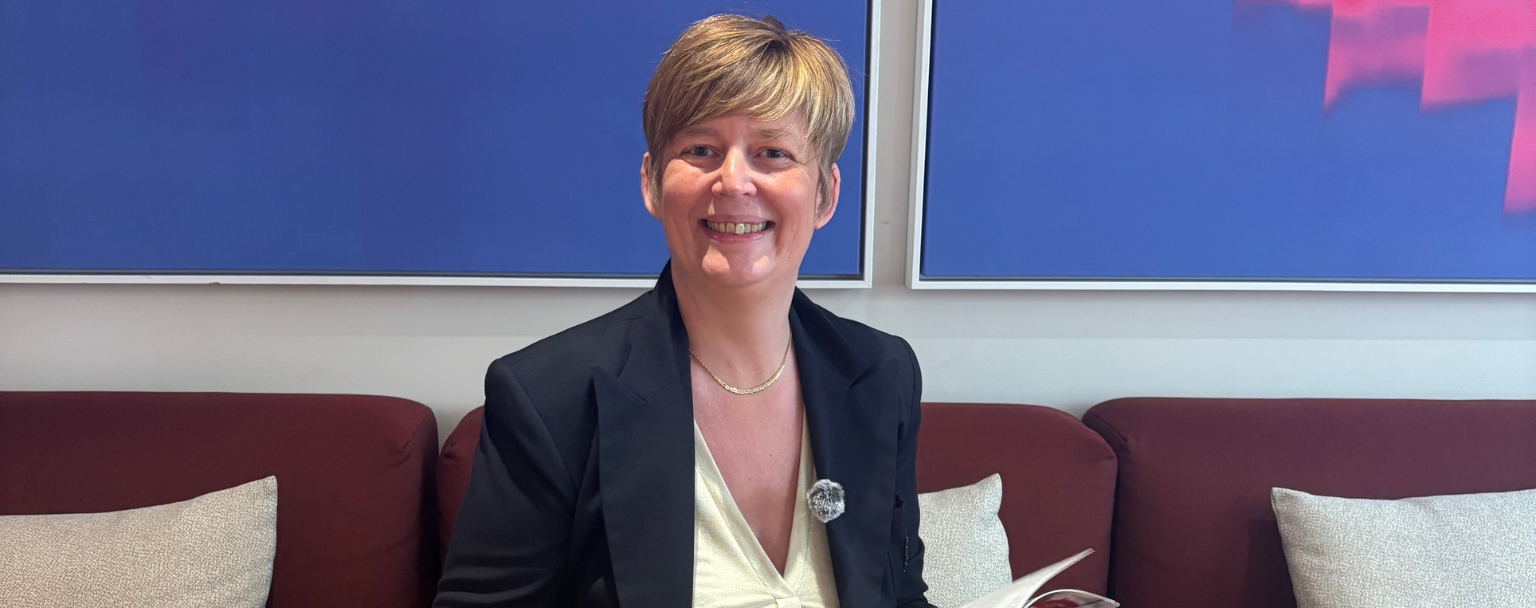
Delphine Jonckheere _ art mag EDITO

This new issue of ART MAG opens under the sign of memory and resilience. Emerging and established artists question our relationship to time, legacy, and transmission. Laurence Simon, Nathalie Jarsaillon, Patrick Causse & Lord Prosser, and Régis Sinoquet present powerful works where emotion transforms into a universal language. On the cover, painter Nicole Azoulay shares an intimate story where color becomes freedom, truth, and an act of resilience.

Nicole Azoulay

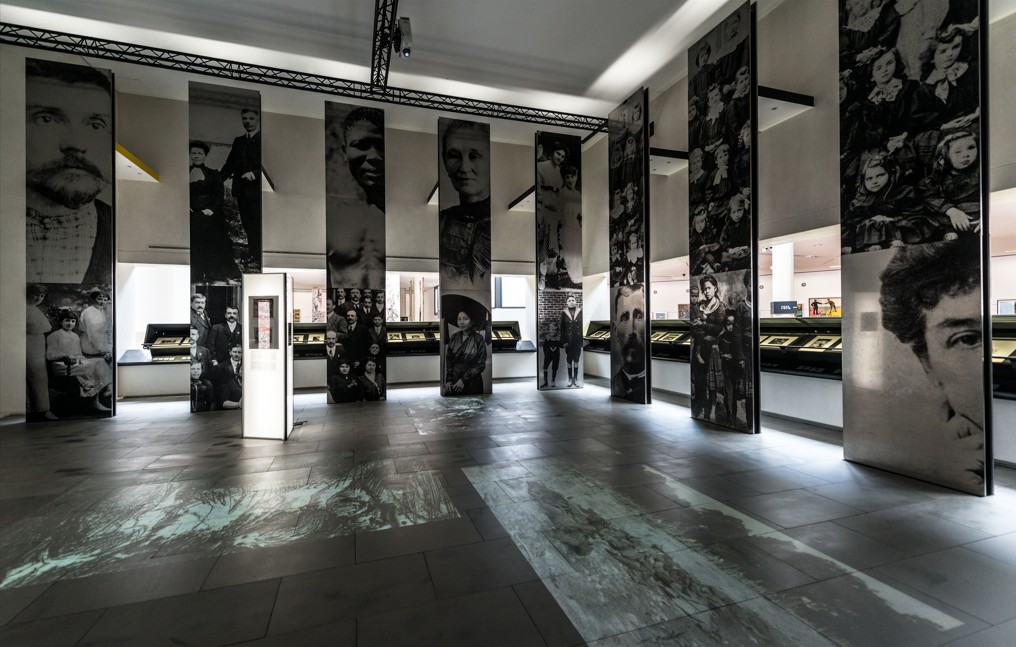
Our news features take us to the Musée de Picardie with the rediscovery of Albert Maignan and Lise Terdjman’s sensitive tribute to Louise Maignan-Larivière. At the Louvre-Lens, Ukrainian icons highlight the strength of heritage in exile, while the Historial de la Grande Guerre resonates with the engraved work of Otto Dix. Our special report, “Protecting Art in the Storms of History”, reflects on the fragility of artworks in times of war.

Otto Dix Room, Historial de la Grande Guerre ©Aurélien ROGER

But ART MAG also expands its horizon with new sections :

  • ART DESIGN – inaugurated by the duo EP2B, who transform furniture into unique and poetic creations.
  • INTERNATIONAL NOTEBOOK – taking our readers through the major artistic scenes of the world. In this issue: Lisbon, between tradition and avant-garde, a European capital buzzing with creative energy.
  • ART & TAX ADVICE – a practical section for collectors and patrons. We decode tax mechanisms linked to art, with a clear guide: “Art and Tax Benefits: Opportunity or Illusion?”

👉 With Issue 28, ART MAG reaffirms its role as an international contemporary art magazine, standing at the crossroads of memory, commitment, and cultural openness.

To read more, download ART MAG N°28
Categories
Drawing

Weber Zhang : The Chinese Artist Redefining Our Relationship with Time in Contemporary Art

WEBER ZHANG artiste chinois art contemporain

Between Introspection, Abstract Coolness and Deliberate Slowness

Chinese artist Weber Zhang stands out as a singular figure in the international contemporary art scene. A graduate of the Tsinghua Academy of Arts and Design, he has developed a rare and demanding body of work built on layers, erasure, and suspended emotions.
At the crossroads of contemporary drawing, philosophy, and calligraphy, his art questions our perception of time in a society dominated by instant gratification.

Mountain Brook  and  Traveler 70cmx50cm Crayon_papier 
weber zhang
Mountain Brook and Traveler 70×50 cm

The Praise of Slowness : a unique creative process

In contrast to today’s fast-paced world, Weber Zhang embraces a slow and meditative creation process.
His artistic method unfolds in several stages:

  • initial sketches,
  • digital revisions,
  • meticulous and detailed printing.

Each piece is the result of extreme patience, where detail and silence fuel contemplation. By rejecting immediacy, Zhang creates works that resonate deeply and invite reflection.

Sound of silence , 50 x 70 cm 
weber zhang artiste chinois
Sound of silence , 50 x 70 cm

Inspirations : from video games to calligraphy and philosophy

Weber Zhang draws inspiration from multiple and unexpected sources:

  • Strategic video games
  • Philosophical texts
  • Traditional Chinese calligraphy
  • Childhood memories

This eclecticism fuels a rich body of work, blending cultural heritage with personal experiences. The result is a powerful artistic singularity and a visual identity that defies categorization.

La naissance de la tragédie - Nietzsche
La naissance de la tragédie – Nietzsche

Abstraction Infused with Humanity

Although his compositions sometimes evoke a cold abstraction or minimalist conceptualism, they remain profoundly human.
For Zhang, each work is an act of attachment: holding onto a thought, preserving a feeling, capturing the fleeting before it vanishes.

Art is something I must learn to detach from,” says the artist. Far from spectacle, his work becomes a passage, an invitation to contemplation.

Artiste Chinois Weber Zhang 
Jojo Réinvention
Jojo Réinvention

Weber Zhang on the International Stage

In 2025, Weber Zhang will present two new works at the Fangcunshan Art Center in Shanghai (April 26 – July 27, 2025). He will also participate in ACG HK 2025 in Hong Kong, confirming his rising recognition in the international art world.

To read more, download ART MAG N°27

The Living Archives : When Art becomes a space of echoes

LES ARCHIVES VIVANTES

A new voice in the Paris contemporary art scene, The Living Archives has quickly established itself as a singular and inspiring curatorial initiative. Founded by Meng-Fei Liu, curator and researcher, the project proposes an approach that goes beyond the usual codes of the gallery or the art center. Here, every exhibition is conceived as a narrative experience, weaving together collective memory, intimate perception, and poetic resonance.

A unique curatorial project in Paris

Unlike traditional art spaces, The Living Archives does not define itself as a gallery. Its ambition lies elsewhere: to transform the exhibition into a story, a text to be read with the eyes and felt through the body.
Under the vision of Meng-Fei Liu, trained in French literature and 19th-century art, scenography becomes an inner stage. Works embody presences, silences, and tensions, resonating deeply with the viewer.

This approach, at the crossroads of contemporary curation, writing, and sensibility, asserts itself as a radical and poetic voice within the Parisian art landscape.

MAXIM: Crossroads of worlds – the first exhibition

The first exhibition of The Living Archives, MAXIM : Crossroads of Worlds, takes inspiration from Feydeau’s play La Dame de chez Maxim. Rather than a literal reinterpretation, it explores the in-betweens: troubled identities, the fertile error, and the ambiguity of gazes.

Two artists engage in dialogue throughout the exhibition :

  • Francesca Quey, an intuitive painter whose fragmented abstraction questions perception.
  • Wen Lin Wang, a Taiwanese artist who combines collage, engraving, and painting in a reflection on memory, exile, and the materiality of language.

The exhibition resists the spectacular. It unfolds like a whisper. Each artwork is a suspended enigma; each room, a pause of resonance. The viewer is invited to linger, drift, and embrace uncertainty, discovering truth within fragility.

A new voice in contemporary art

With The Living Archives, Meng-Fei Liu proposes an audacious alternative to mainstream curatorial practices—one rooted in listening, resonance, and care. In a time when many exhibitions are saturated with spectacle and formatted messaging, this project brings a rare, demanding freshness.

By embracing subtlety and fragility as strengths, The Living Archives reminds us that art is not only about visibility or discourse, but can also be born from a breath, a silence, or a tremor—where sometimes, in almost nothing, everything is contained.

To read more, download ART MAG N°27
Categories
Sculpture

Jean-Pierre Jurisic Has’ Art Creation second life forgotten objects

Jean Pierre Jurisic

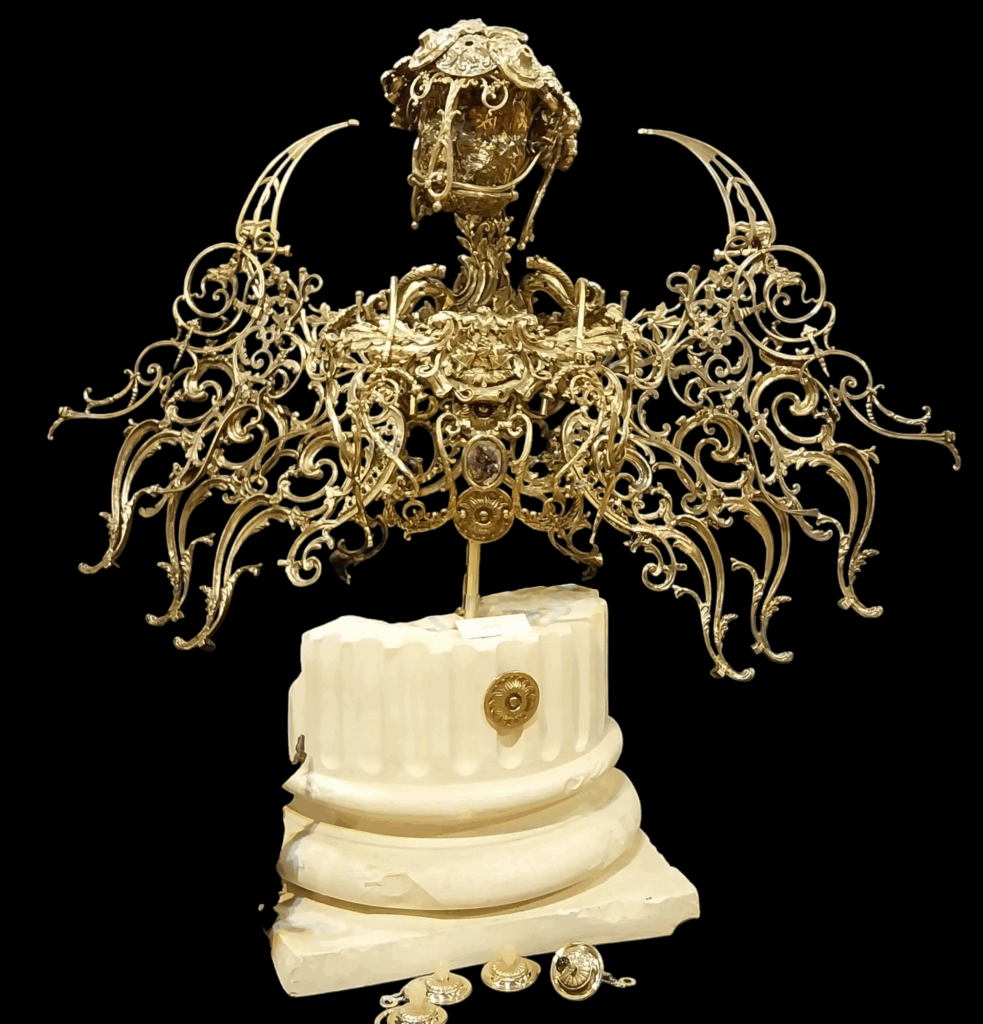
Jean-Pierre Jurisic Has’ Art Creation second life forgotten objects perfectly describes the journey of this self-taught artist, a former antiques dealer turned sculptor. From his workshop in Haute-Saône, he transforms chandelier fragments and brass furniture ornaments into elegant animal sculptures, giving a second life to materials long forgotten.

Philibert – 2025 – Height 80 cm

A unique path from antiques to creation

Born in Reims in 1977, Jean-Pierre Jurisic left his native region in 2002 to settle in the countryside. For years, he honed his eye in the world of antiques before devoting himself entirely to art in July 2024, under the evocative name Has’ Art Creation. Each piece he creates tells a story of transmission, resilience, and rebirth.

Bargheera 2025 l1,20 cm

Jean-Pierre Jurisic and the elegance of the living

His favorite material is brass, which he salvages, assembles, and transforms. Inspired by the animal kingdom—birds in flight, felines in motion—he captures the exact gesture and suspended instant. His assembly technique, without bending or welding, recalls the Meccano constructions of his childhood, giving his sculptures an almost organic lightness.

Niephel – 2024 – Wingspan 1,30 m

An art that reincarnates rather than stylizes

While his forms evoke the purity of François Pompon, a major figure in Art Deco animal sculpture, Jean-Pierre Jurisic follows his own path: not simply stylizing, but reincarnating. Each creation bridges past and present, anchoring itself in memory while opening a door to the imagination.

Has’ Art Creation, a sensitive dialogue

Calling himself a “re-creator of emotions,” he seeks to create a bond between object and viewer. His sculptures don’t overwhelm with volume—they invite contemplation. They whisper rather than shout, and in that restraint lies their evocative power.

Sharky – 2025- l1,20 m

A future to build

Still rarely exhibited but already the recipient of an artists’ award in the Vosges, Jean-Pierre Jurisic now hopes to expand his audience, collaborate with galleries, connect with fellow creators like Patrick Villas, and perhaps see his work enter a major art house.

📖 Read more in the next issue of ART MAG (print or digital)

🌐ART MAG#9 Portrait of the artist Patrick Villas, sculptor

To read more, download ART MAG N°27
Categories
Painting

Frédérique Samama : The Power of the Face in Black Stone.

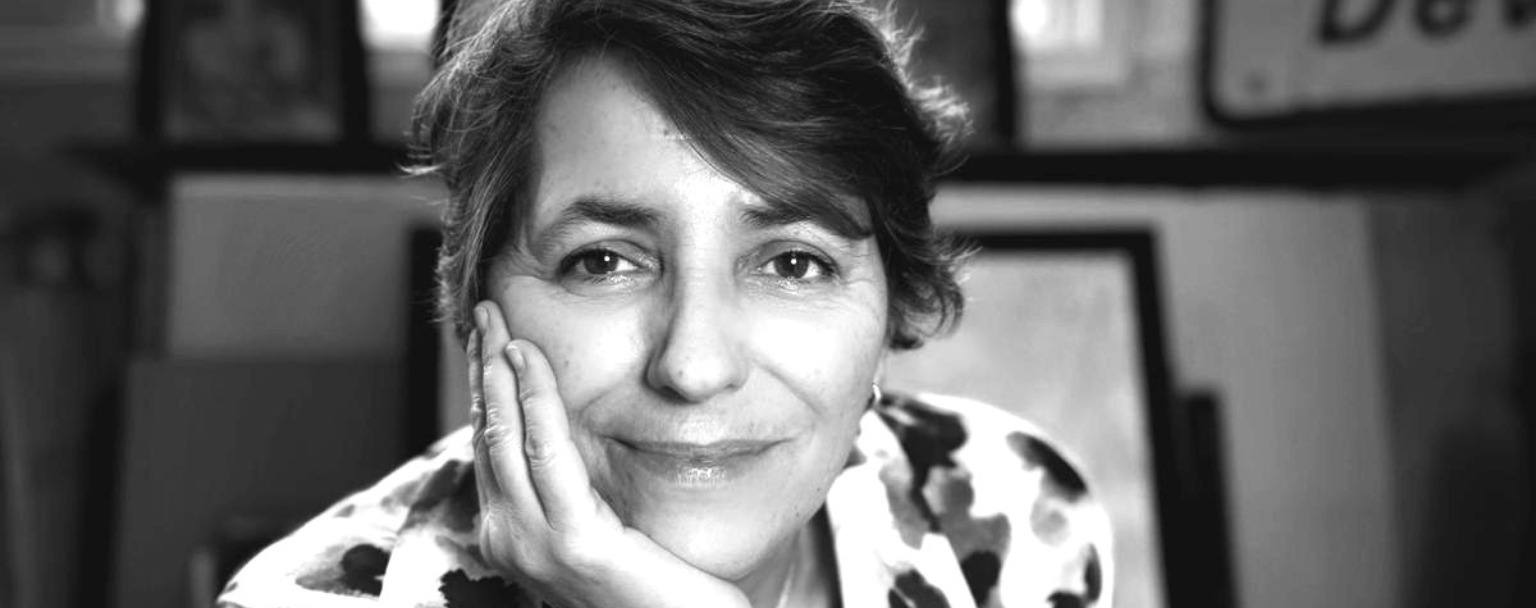
Frédérique Samama

Frédérique Samama black stone art emotion perfectly sums up the work of this artist, who explores the body and emotion through intense, silent compositions. Using black stone and tight framing, she opens a path to the intimate—where words fail and images become pure vibration.

Between abstraction and figuration

Trained at the Auguste Renoir School of Applied Arts, Frédérique Samama first honed her eye in auction houses, working as an auctioneer’s clerk. This daily contact with artworks shaped her refined, cultured approach. In 2018, during her first solo exhibition, her artistic voice emerged with clarity. She deepened her research at the Beaux-Arts de Paris, in Philippe Jourdain’s life model sculpting workshop.

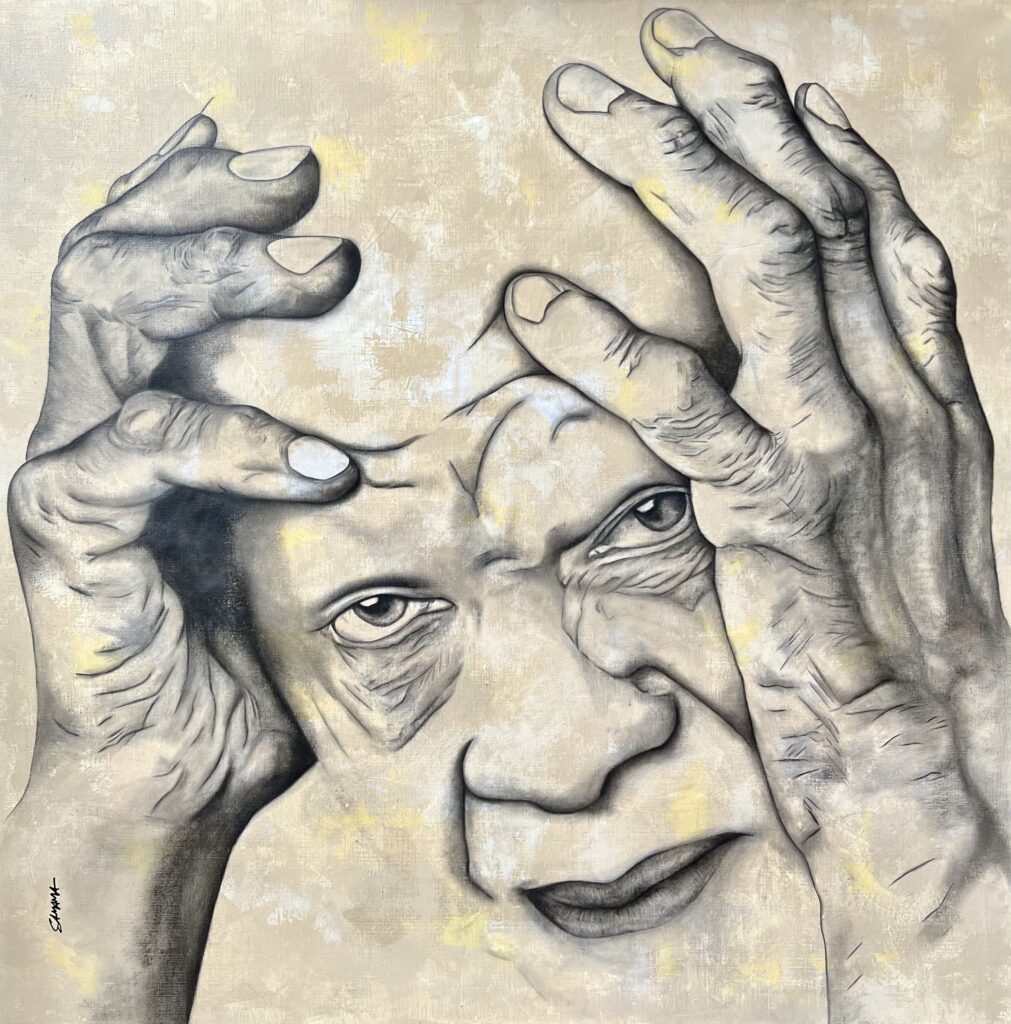
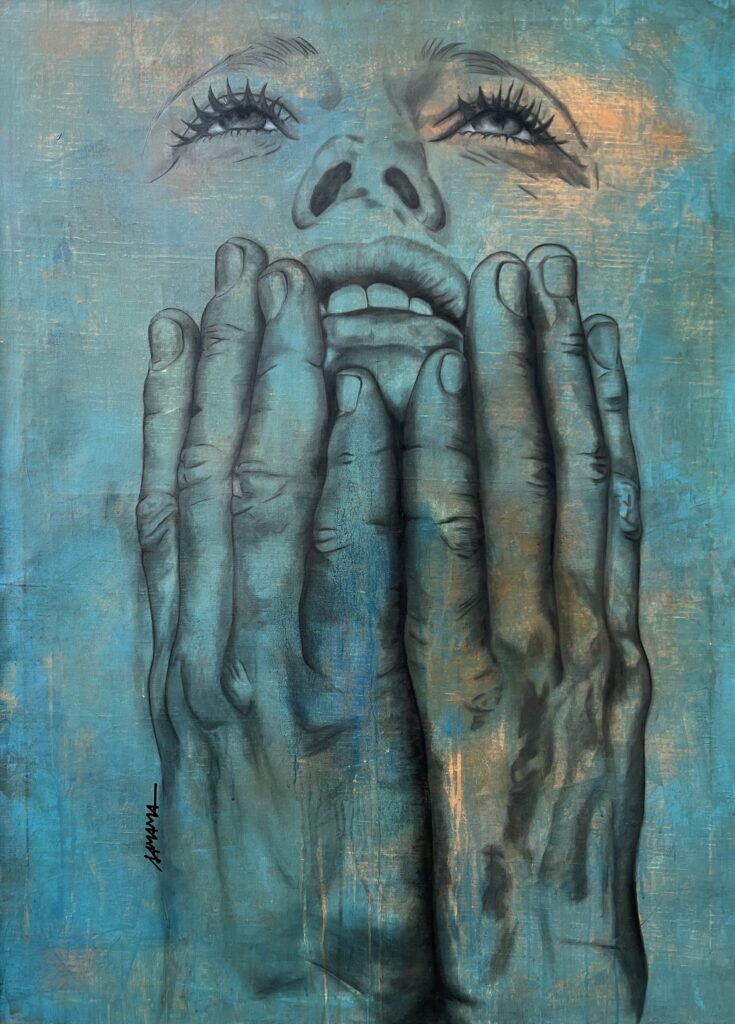
The Thought and the Hands (Oil, acrylic, black stone) – 120 x 120 cm – Frédérique SAMAMA
The Thought and the Hands 120 x 120 cm

Frédérique Samama and art

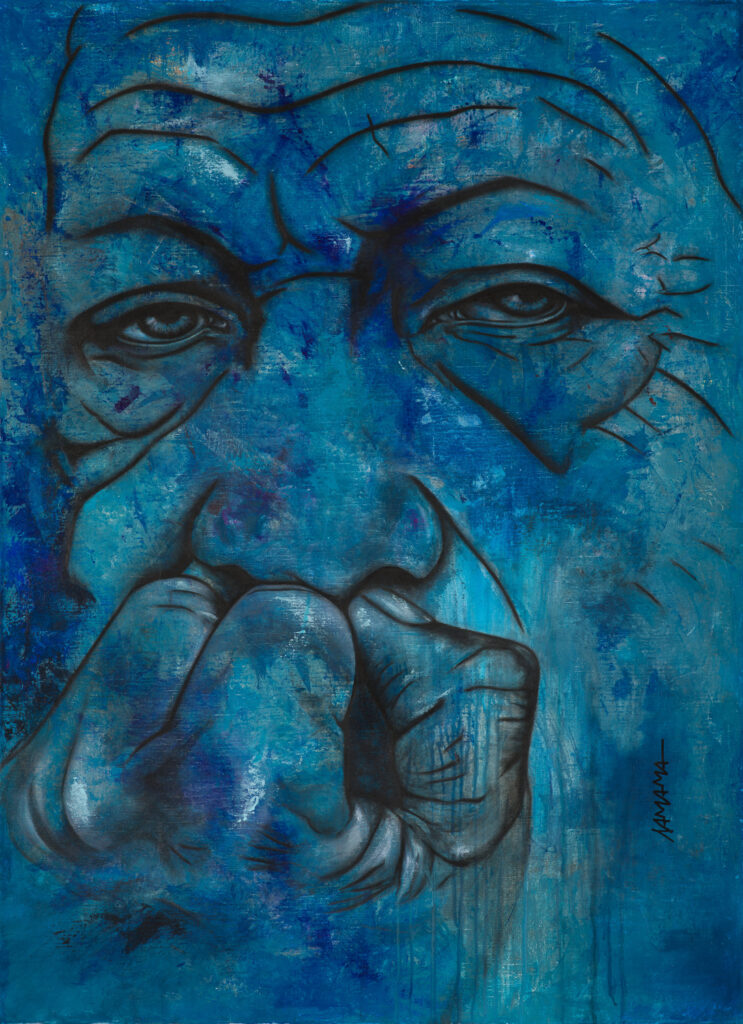
Since then, she has tirelessly explored the human form through pared-down, frontal compositions in which faces and hands take center stage. Black stone has become her tool of choice, for the depth of its blacks, their vibrating intensity, and their evocative power. She draws, rubs, erases. Her lines are deliberately open and unfinished, inviting the viewer to step into the image, extend the gesture, and project their own silences onto the work.

Bosco – Mixed media (Oil, acrylic, black stone) – 100 x 73 cm – Frédérique SAMAMA
Bosco 100 x 73 cm

A tension between strength and fragility

Her works are not only visual—they are sensory experiences. The backgrounds, textured with materials and chance marks, contribute to the tension of the whole. Each canvas becomes a space of resonance, where subject and environment engage in dialogue. Frédérique Samama paints a fragile truth, an inner vibration that escapes fixed narratives.

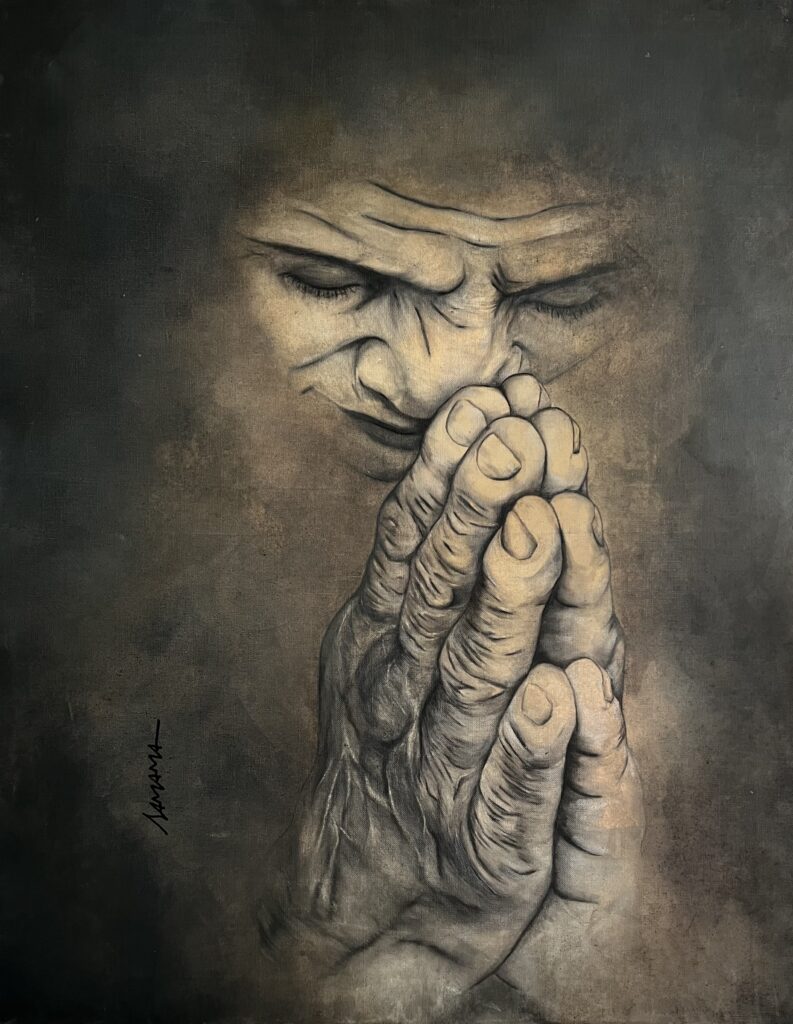
The Prayer – Mixed media (Oil, acrylic, black stone) – 92 x 73 cm – Frédérique SAMAMA
The Prayer 92 x 73 cm

Presence on the art scene

A member of the Taylor Foundation and the Maison des Artistes, Frédérique Samama exhibits at major French salons—Salon d’Automne, Salon des Artistes Français, Salon des Beaux-Arts—as well as internationally, from Tokyo to Bonn, Remagen, and the Netherlands. Her awards, such as the Expressionism Prize at the Salon d’Automne and the Creativity Prize in Palermo, confirm the strength and uniqueness of her artistic voice.

An inhabited and open work

The canvases of Frédérique Samama black stone art emotion do not tell a story—they open a space. A suspended, essential encounter in which one does not simply look, but truly feel.

Blue Words – Mixed media (Oil, acrylic, black stone) – 100 x 73 cm – Frédérique SAMAMA
Blue Words 100 x 73 cm

📖 Read more in the next issue of ART MAG (print or digital)

To read more, download ART MAG N°27
Categories
Painting

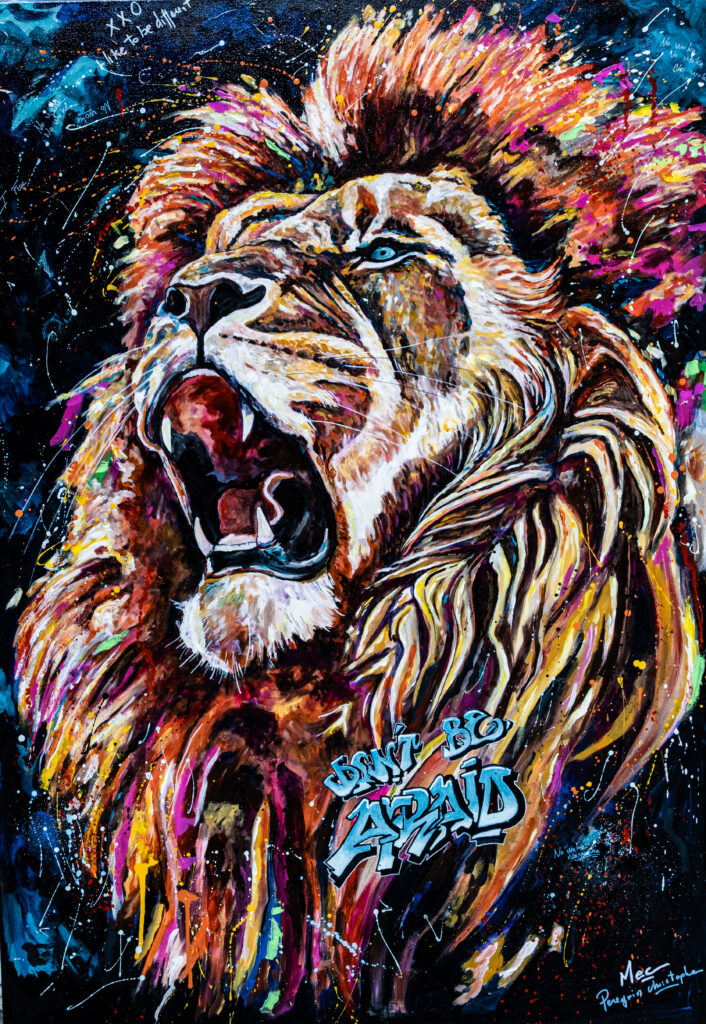
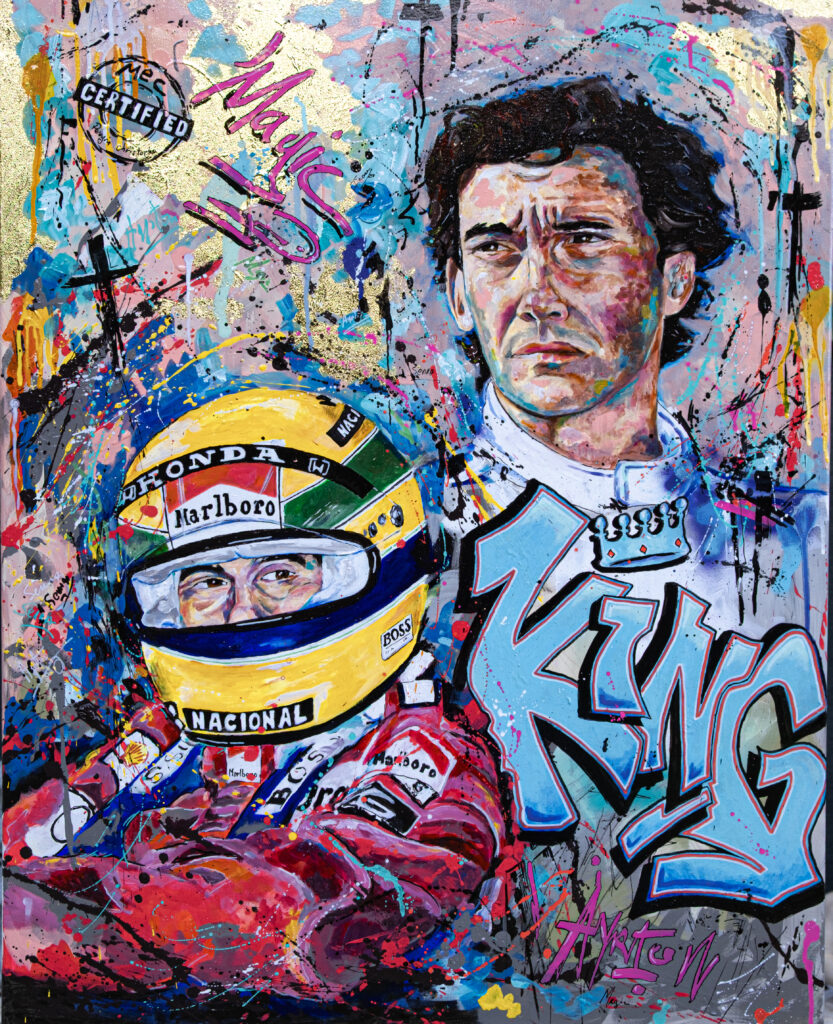
Christophe Peregrin art fight colors

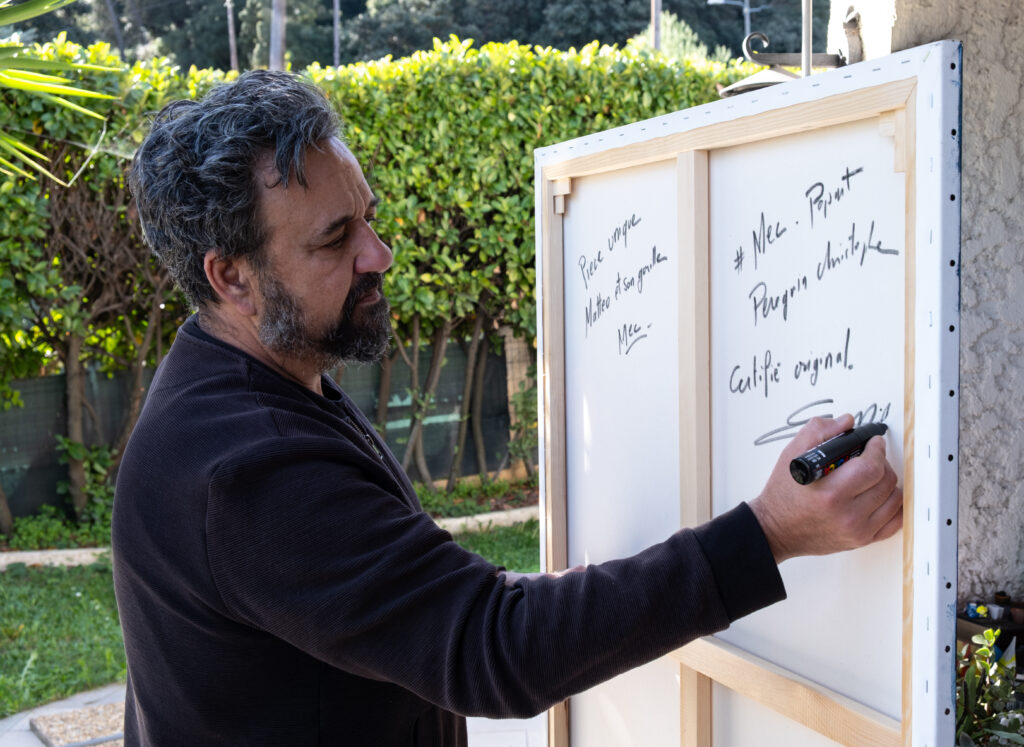
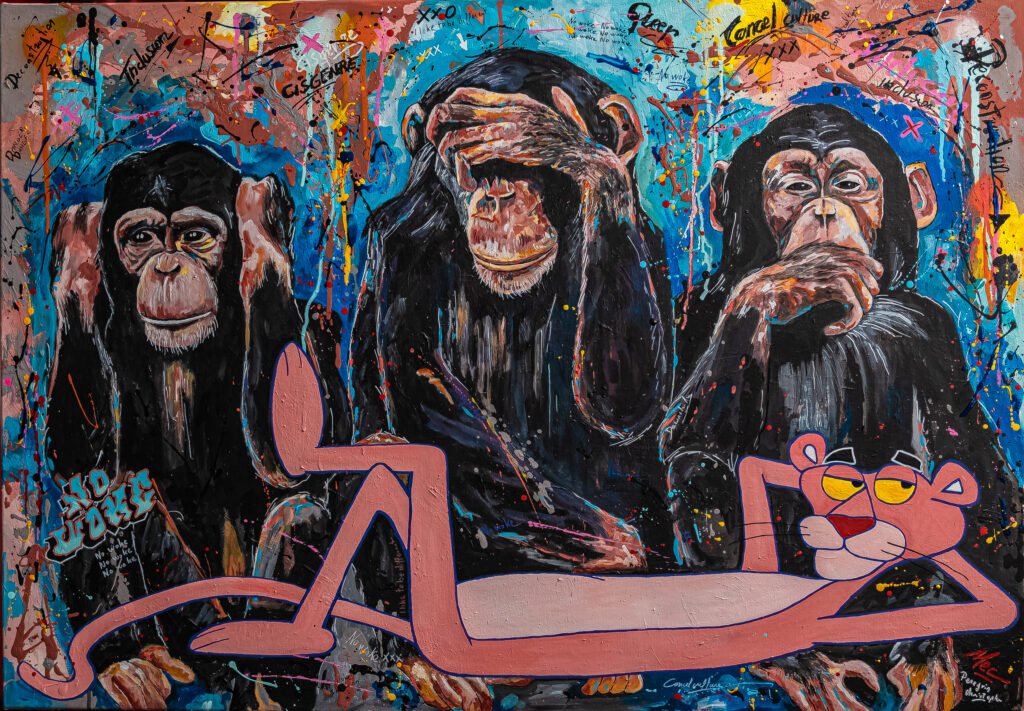
oeuvre de Christophe Peregrin
Joel Combe

Christophe Peregrin art fight colors: behind these words lies a French artist from Nice who transforms painting into an act of poetic resistance. In each canvas, Christophe Peregrin channels overflowing energy, a fierce desire to speak out and denounce—in bursts of light and vibrant color.

A calling born from the heart

Born in Nice, Christophe Peregrin grew up in a loving family where his grandparents encouraged his early creative impulses. The spark truly ignited in middle school, when an art teacher recognized his talent and encouraged him towards the Beaux-Arts. Although his academic path took a different turn, the call of painting never left him.

Christophe Peregrin and the art fight colors

A self-taught artist, he has forged his own path. Initially inspired by Impressionism, he later embraced the codes of Pop Art: bold blocks of bright colors, direct compositions, and the influence of comic books. These elements have become the tools of a committed visual language that speaks directly to the public.

Art as an engaged language

For Christophe Peregrin, painting is taking a stand. Inspired by current events or by figures he admires, he delivers strong messages on violence, injustice, and social divides—while wrapping his works in radiant pigments. This tension between serious subject matter and joyful visuals gives his work a unique strength.

Influences and singularity

His references range from the liveliness of Toulouse-Lautrec to the raw energy of Basquiat and the sensitivity of Pissarro. Yet Christophe Peregrin art fight colors is never imitation: he blends these influences to create a universe rooted in his time, accessible yet impactful.

A free and luminous path

His works have been exhibited in emblematic venues on the French Riviera—Forum Nice Nord, Château de Crémât, and the town hall of Saint-Laurent-du-Var. Today, the artist dreams of showing his paintings in Saint-Paul-de-Vence and Paris, not for fame but to broaden the conversation with the public and amplify his message.

An art that soothes and awakens

His paintings are moments of respite—chromatic shocks that awaken consciousness while warming the heart. “I want to awaken emotion, to shake without darkening,” he says. In a world often clouded by grey, Christophe Peregrin reminds us that art can still be a sincere cry—a cry that heals.

📖 Read more in the next issue of ART MAG (print or digital)

To read more, download ART MAG N°27