Categories
Edito - News

ART MAG #30 Editorial : Contemporary Art, the Art Market & Artwork Transmission

Delphine Jonckheere _ art mag EDITO

Looking at Art Today: Between Gaze, Trust, and Transmission

Looking at a contemporary artwork is never a purely aesthetic act. It means entering a story, understanding a gesture, and placing trust in an artist, a perspective, and an entire ecosystem. At a time when the contemporary art market is undergoing profound transformation—driven by new technologies, globalization, and questions of traceability—the way we look at art has become a central issue.

With this 30th issue, ART MAG, an independent contemporary art magazine, explores a fundamental question:
how do we look at, collect, and pass on art today?
👉 Order ART MAG #30

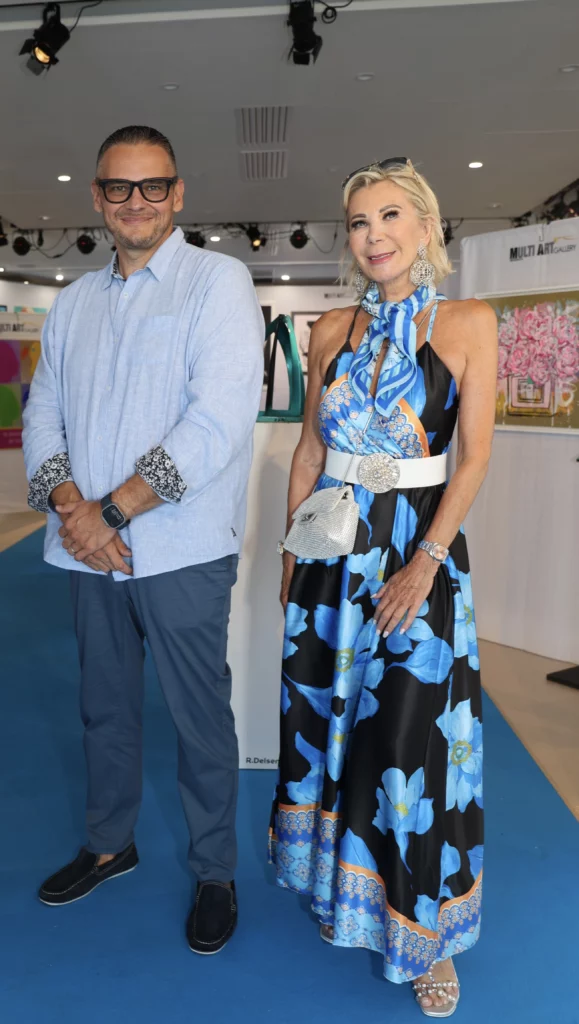
Chris The Art Agent and Wendy Lauwers – photo by Patrick Deguine

Contemporary Art and New Players in the Art Market

The cover of this issue highlights Chris The Art Agent and Wendy Lauwers, an emblematic duo embodying the new dynamics of the contemporary art market.

Chris The Art Agent acts as a trusted intermediary between artists and collectors. A specialist in artwork certification through blockchain technology, he supports artists in protecting, ensuring the traceability, and enhancing the value of their works in the digital age—without ever betraying their soul.

Alongside him, Wendy Lauwers, founder of Multi Art Gallery Monaco, develops a deeply human vision of the role of the contemporary art gallery. Through exhibition curation, artist support, and a sensitive relationship with collectors, she builds coherent, demanding, and international artistic scenes—from Monaco to Dubai, from Miami to the French Riviera.

Together, they are redefining the contours of a more transparent, secure, and human-centered art market.
👉 Order ART MAG #30

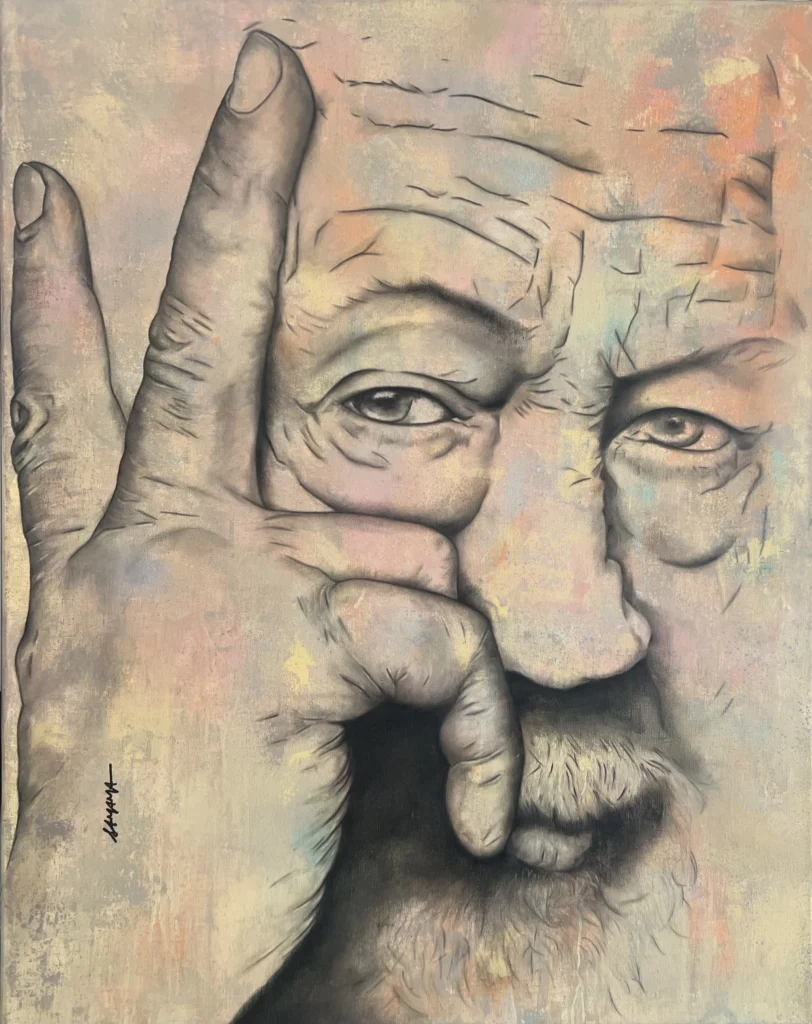
Contemporary figurative painting by Frédérique Samama, close-up male portrait with a hand partially covering the face, expressing contemplation, mixed media technique using oil, acrylic, and black stone, original artwork.
Artist: Frédérique Samama – ContemplationOil, acrylic and black stone – 92 × 73 cm

Contemporary Artists: Creating, Exhibiting, Transmitting

Around this duo revolves a generation of contemporary artists whose works question perception and memory: Willfreed, Frédérique Samama, Julien Magic, Flo Muliardo, Angélique Patte, Dominique Gautier, Sonia Souissi, and Dannie Launay.

Painting, photography, textile art, installation, visual illusion, digital art—these diverse practices all share the same ambition: to make art a living language, rooted in its time.
👉 Order ART MAG #30

© TommL / Canva

Artwork Transmission and Artistic Legacy

The central feature, “Inheriting the Gaze: Art and What Comes After?”, extends this reflection by addressing a key issue for art collectors: the transmission of artworks and private collections.

Inheritance, taxation, donations, private foundations, museum dations, as well as family conflicts or ethical choices—passing on an artwork means transmitting far more than an object. It means passing on a vision, a perspective, and a responsibility.

In this context, artwork certification, traceability, and collector support have become major challenges within the contemporary art market—issues that lie at the very heart of Chris The Art Agent’s work.

👉 Order ART MAG #30

ART MAG: A Committed Contemporary Art Magazine

Through its editorials, artist portraits, market investigations, and exhibition agenda, ART MAG asserts a clear editorial stance:

contemporary art exists only when it circulates, is protected, and is transmitted.

Whether exhibited in a gallery, presented at an international fair, certified through new technologies, or entrusted to a future generation, art remains above all a human, sensitive, and living language.

Looking at Art Is Already a Form of Transmission

This issue of ART MAG invites artists, collectors, and art lovers to rethink their relationship with artworks, the market, and the notion of transmission.

Enjoy reading.

👉 Order ART MAG #30

Read more : Julien Magic: When Magic Becomes Contemporary Art

❓ Frequently Asked Questions – Art Mag

What is Art Mag?

Art Mag is an independent magazine dedicated to contemporary art, the art market, and its key players: artists, collectors, gallerists, and cultural institutions.


Who is Art Mag for?

Art Mag is aimed at art lovers, collectors, art professionals, and anyone wishing to discover or deepen their understanding of contemporary art.


How often is Art Mag published?

Art Mag is a bimonthly magazine, featuring themed issues with in-depth features, interviews, and art news.


What topics does the magazine cover?

The magazine explores in particular:
– contemporary and modern art
– the art market and collecting
– featured artists
– exhibitions and cultural institutions
– the transmission and inheritance of art collections


Is Art Mag suitable for beginners in art?

Yes. Art Mag offers an accessible and educational approach while also providing in-depth content for more experienced readers.


Can artists submit their work to Art Mag?

Yes. Artists may submit their work via the Contact section of the website. Each submission is reviewed by the editorial team.


How can I follow Art Mag’s news?

You can follow Art Mag through the official website, the newsletter, and social media to stay informed about new issues and updates.
To read more, download ART MAG N°30
Categories
Heritage - News - Regional areas

Cathedrals Under the Scanner’s Eye

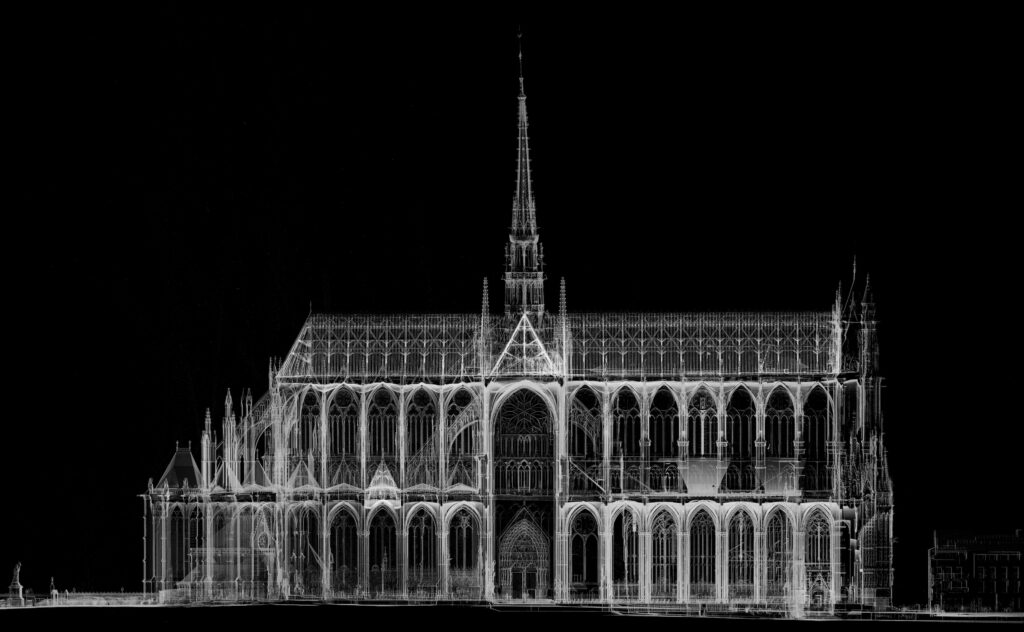
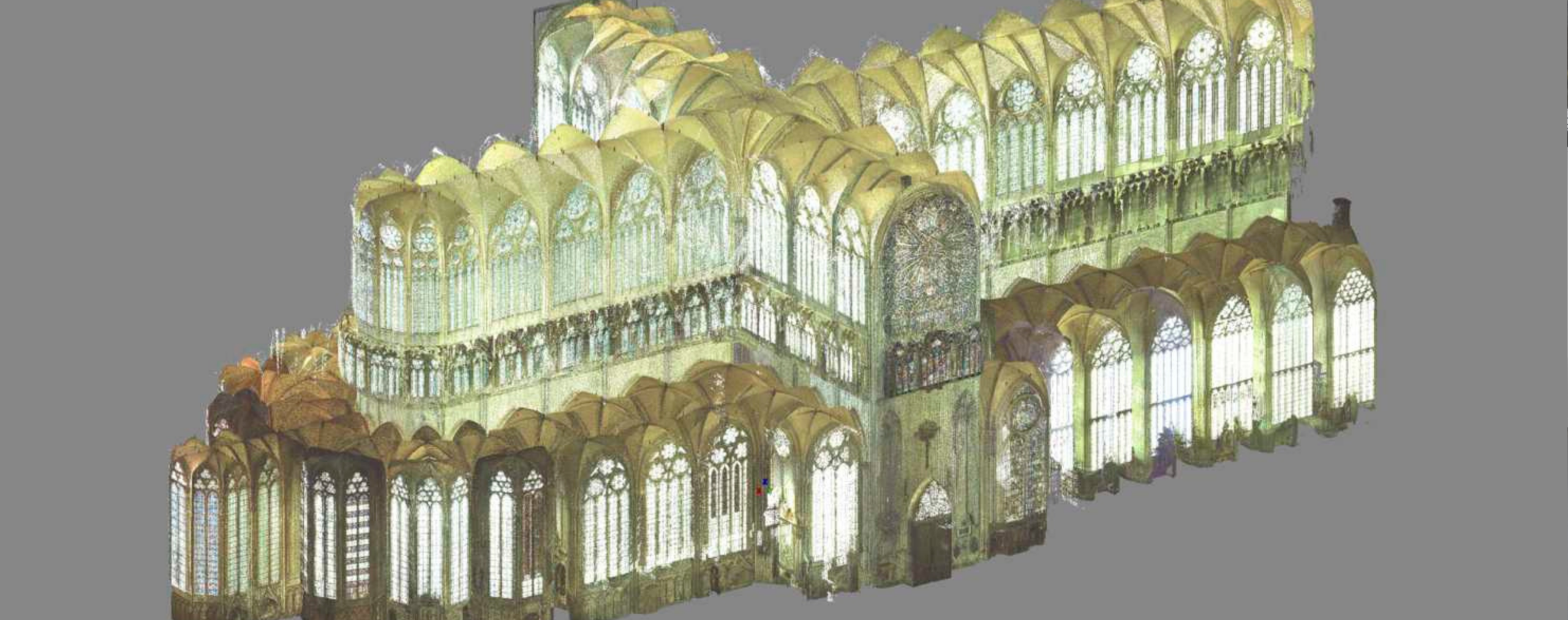
Vue numérique en transparence de la cathédrale d’Amiens révélant la structure gothique et la lumière des verrières, issue du projet e-cathédrale (Université de Picardie Jules Verne).

Cathedrals Under the Scanner’s EyeHow 3D Digitization Is Transforming the Way We See Gothic Architecture

Thanks to 3D digitization, French cathedrals are now revealing information invisible to the naked eye. From Amiens to Notre-Dame de Paris, these technologies are reshaping our understanding of heritage and uncovering an architecture that is more fragile, more dynamic—and more human—than previously imagined.

Monuments Less Immutable Than They Appear

They embody permanence, verticality, and the long span of time. Yet Gothic cathedrals are far from static. For some fifteen years, 3D digitization of heritage sites has profoundly renewed the way they are observed. Laser scanning and photogrammetry now make it possible to measure these buildings with millimetric precision, revealing their structural reality: thrusts, deformations, and gradual imbalances.

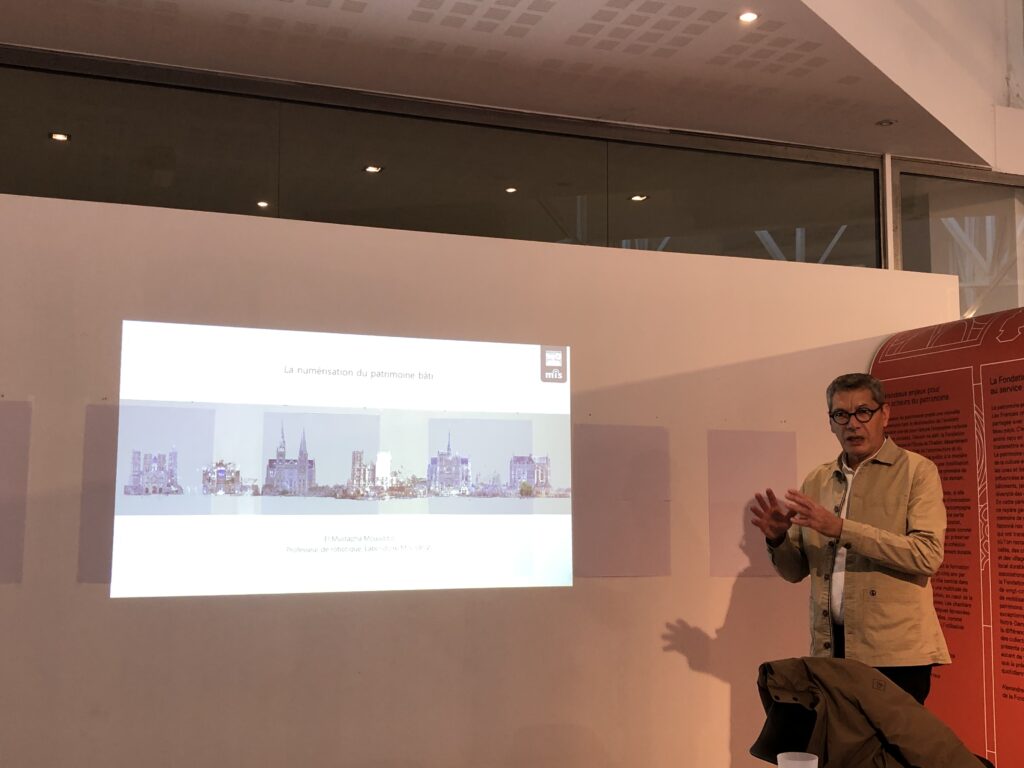
El Mustapha Mouaddib, lecture at the Maison de l’Architecture des Hauts-de-France – Pauline Creusat

It was from this observation that the e-Cathedral program was born, led by Professor El Mustapha Mouaddib, lecturer and researcher at the University of Picardie Jules Verne, within the MIS laboratory (Modelling, Information and Systems). Launched in 2010, this long-term research project has resulted in the complete digitization of several major French cathedrals and other monuments abroad.

Support independent publishing! Subscribe to ART MAG and receive each issue in advance, in both print and digital format
👉 Subcribe 6 issues / 1 year
👉 Offer ART MAG

Seeing What the Visitor Cannot See

Unlike virtual reconstructions, 3D digitization is based on exact measurement of reality. The monument is captured in the form of billions of points, creating a faithful digital twin of the building at a given moment in time. Facades, interiors, attics, stairways hidden within the masonry, inaccessible roof structures—everything is recorded.

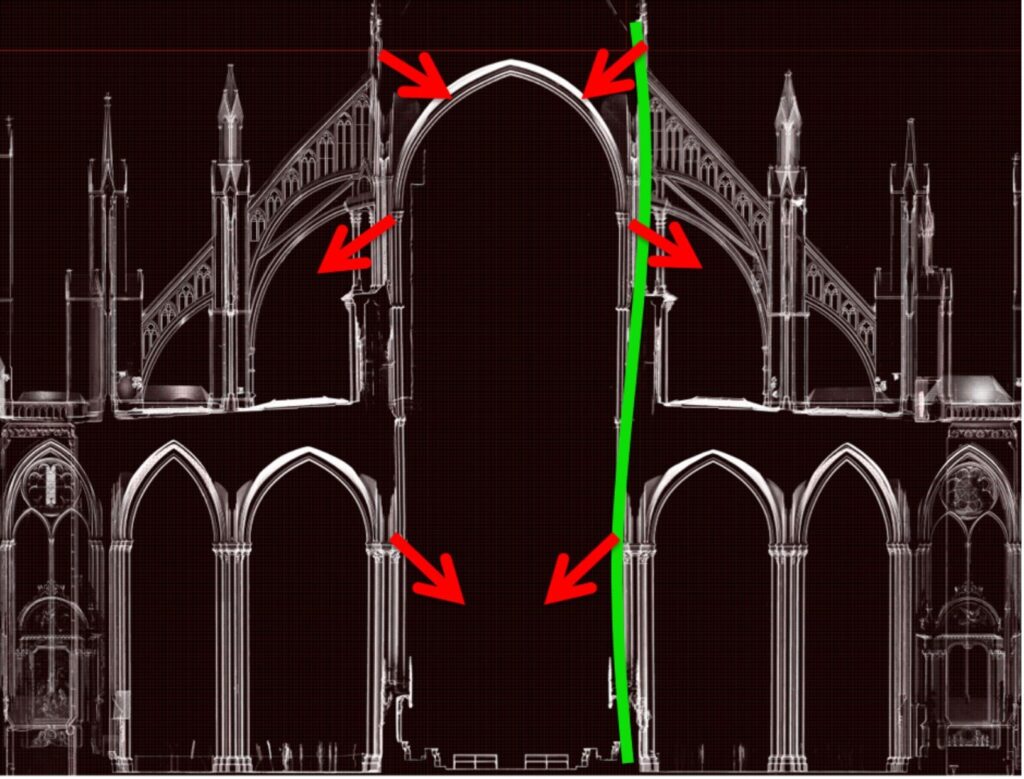
3D laser scanning analysis of Amiens Cathedral showing deformation of Gothic choir pillars, structural imbalance, and measured deviation revealed by digital heritage documentation.
Amiens Cathedral – deformation of the choir pillars – El Mustapha Mouaddib, MIS, UPJV

These data reveal phenomena invisible during a visit. In Amiens, certain pillars deviate by more than 20 centimetres from the vertical. Nothing exceptional for a Gothic cathedral, but an essential piece of information for understanding its structural behaviour and construction history.

When Geometry Becomes a Historical Narrative

The contribution of 3D goes far beyond conservation. The digital models produced within the e-Cathedral project make it possible to scientifically verify hypotheses long debated by architectural historians: regulating lines, proportions, medieval units of measurement.

Amiens Cathedral stands out for its remarkable geometric regularity, a sign of a rigorously applied master plan. At Notre-Dame de Paris, by contrast, variations in dimensions and misalignments tell the story of a longer, more fragmented construction process, shaped by urban and political constraints. Digital data do not freeze history; they reveal its successive adjustments.

Notre-Dame de Paris: Memory Before and After the Fire

The 2019 fire gave these surveys decisive importance. The 3D models created before the disaster became an irreplaceable scientific archive. Those produced afterward made it possible to precisely measure the deformations caused by the fire and the collapse of the roof structure.

Overlaying the “before” and “after” surveys guided restoration choices, particularly in assessing the condition of the vaults and weakened structures. The 3D digitization of Notre-Dame de Paris thus emerged as a major conservation tool—and as a safeguard memory in the face of the possible loss of the built fabric.

From Raw Data to Cultural Mediation

One essential challenge remains: making these data intelligible to the public. A point cloud, however precise, can seem abstract. The e-Cathedral project therefore included extensive mediation work: virtual tours, urban exhibitions, and interactive interfaces.

These tools offer unprecedented viewpoints—passing through a facade, observing the interior of a pillar, understanding the logic of flying buttresses—without ever replacing the physical experience of the monument. 3D does not substitute for stone; it offers a complementary, analytical, and deeply contemporary perspective.

Black-and-white 3D scan showing a cross-section of Amiens Cathedral with visible nave, side aisles, vaults, and roof structure.
Transverse section of Amiens Cathedral – El Mustapha Mouaddib, MIS, UPJV

Heritage Projected into the Future

In the face of aging materials, climate risks, and disasters, the digital preservation of heritage now appears as a necessity. It does not replace architecture, but extends its existence in other forms: scientific, educational, and cultural.

Having entered the era of the scanner, cathedrals lose none of their symbolic power. They gain a new depth: that of a heritage made legible in all its complexity, at the intersection of art, science, and collective memory.

Support independent publishing! Subscribe to ART MAG and receive each issue in advance, in both print and digital format
👉 
Subcribe 6 issues / 1 year
👉 Offer ART MAG

Categories
Featured Artist - News - Painting - Women artists

Mezz Zapharelli: Revealing the Icon, Redefining the Portrait, Rethinking the Image

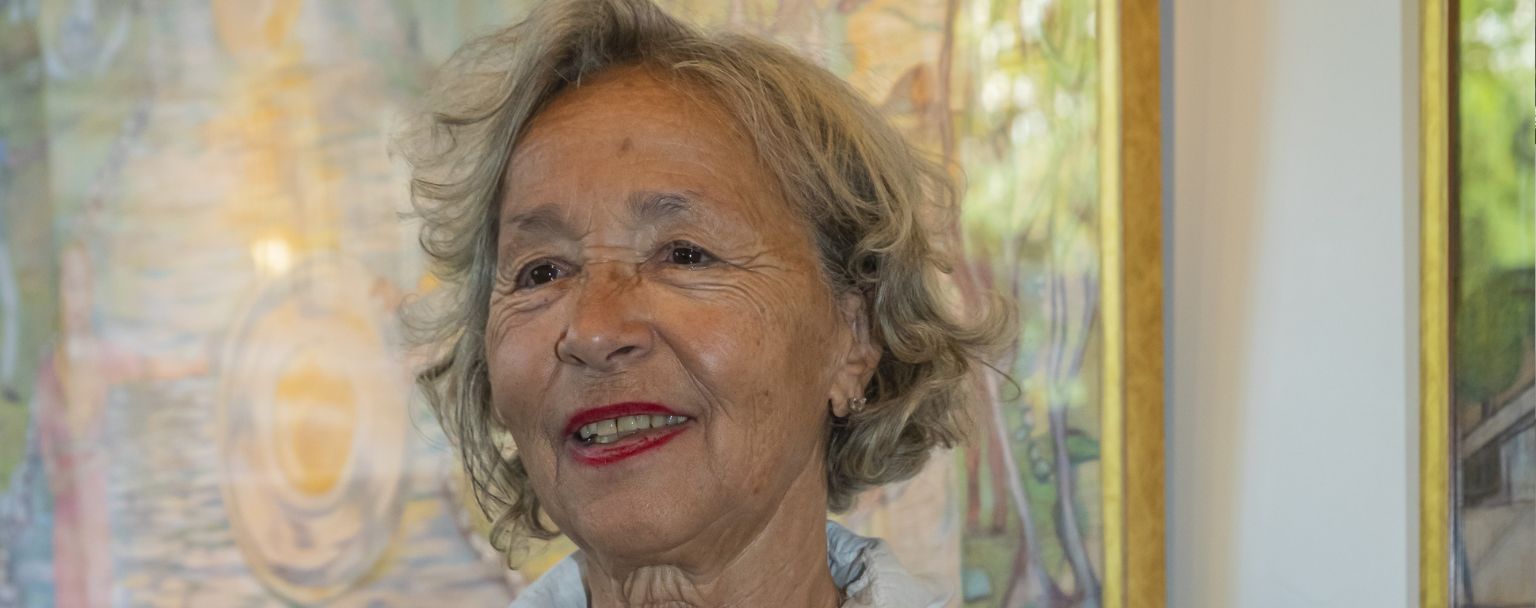
photo portrait mezz zapharelli artiste peintre

From the Image Factory to the Studio: An Art That Slows the World Down

In a landscape saturated with accelerated visual production, Mezz Zapharelli stands apart. Her work resists immediacy, opting instead for a painting practice built on precision, duration, and presence. Coming from applied image industries—fashion, television, film sets—she learned early how quickly figures are manufactured. Since the 1980s, Zapharelli has developed an ethic of slowness, where portraiture becomes a site of recalibration, alignment, and renewed attention.

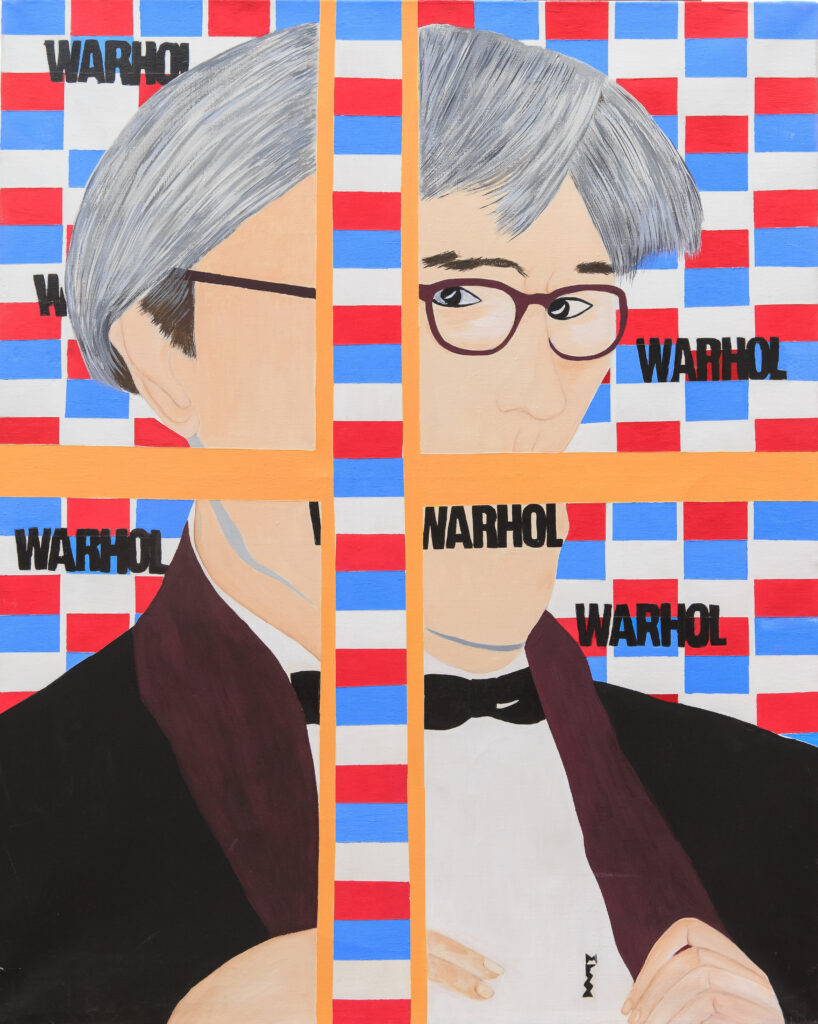
Contemporary painting by Mezz Zapharelli featuring a stylized portrait fragmented into four panels, set against a red, blue, and white geometric background with the repeated word ‘WARHOL
Stylized four-panel portrait by Mezz Zapharelli, set against a geometric background featuring the repeated ‘WARHOL’ motif

From Image-Making Industries to the Studio

Zapharelli’s path to painting begins far from traditional fine arts. A research trip to Australia opens five years of hands-on experience: television costumes, music-industry garments, film sets. Each environment teaches speed, efficiency, and the necessity of immediate visual impact.

New York intensifies this training. Invited by Andy Warhol’s office to celebrate the artist’s birthday at Studio 54, she encounters a full-scale icon-making machine—an ecosystem built on repetition, visibility, and velocity.

London and Central Saint Martins bring a turning point: the gesture must carry responsibility, the form must hold. After a decade inside the high-pressure world of image production, Zapharelli chooses a new direction: painting.

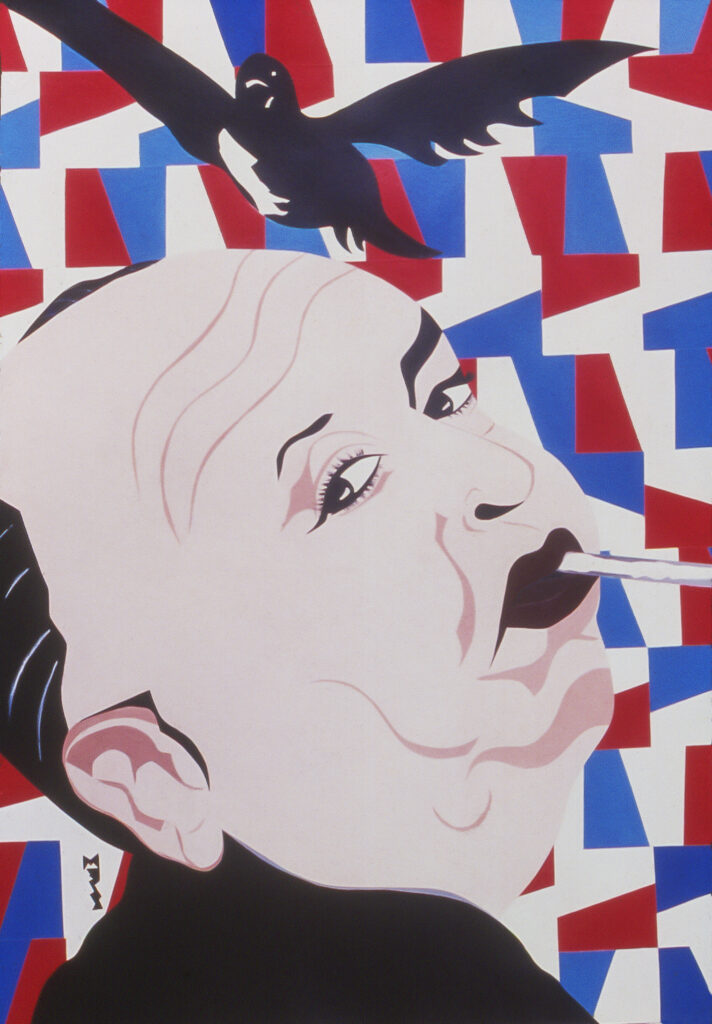
Stylized portrait of Alfred Hitchcock in vivid colors, depicting a man with a round face and a black bird flying above him, set against a red, blue, and white geometric background, contemporary painting by Mezz Zapharelli
Stylized Alfred Hitchcock portrait by Mezz Zapharelli, with bold colors and geometric form

The 1980s: Portraiture as a Passage

Her first portrait series marks a deliberate exit from the visual flux. Leaving clothing—understood as a social surface—she turns toward the face, a surface of being. The formats are frontal, restrained. Execution time expands. The hand slows. The eye abandons easy effects in favor of subtle presence.

This transition is not just aesthetic; it is ethical. Painting becomes a way to unlearn speed and allow figures to emerge with depth and steadiness.

Testing the Icon: Marilyn, Hitchcock, Chanel

When Zapharelli engages hyper-mediated figures, she avoids both homage and parody. The icon is treated as resistant material. Painting exposes its seams, its silences, the pressure of light against form. Her work does not embellish; it desaturates.
These images carry the memory of her proximity to the image factory. After years of acceleration, the painting becomes a braking device—a resonant chamber where the icon can breathe again.

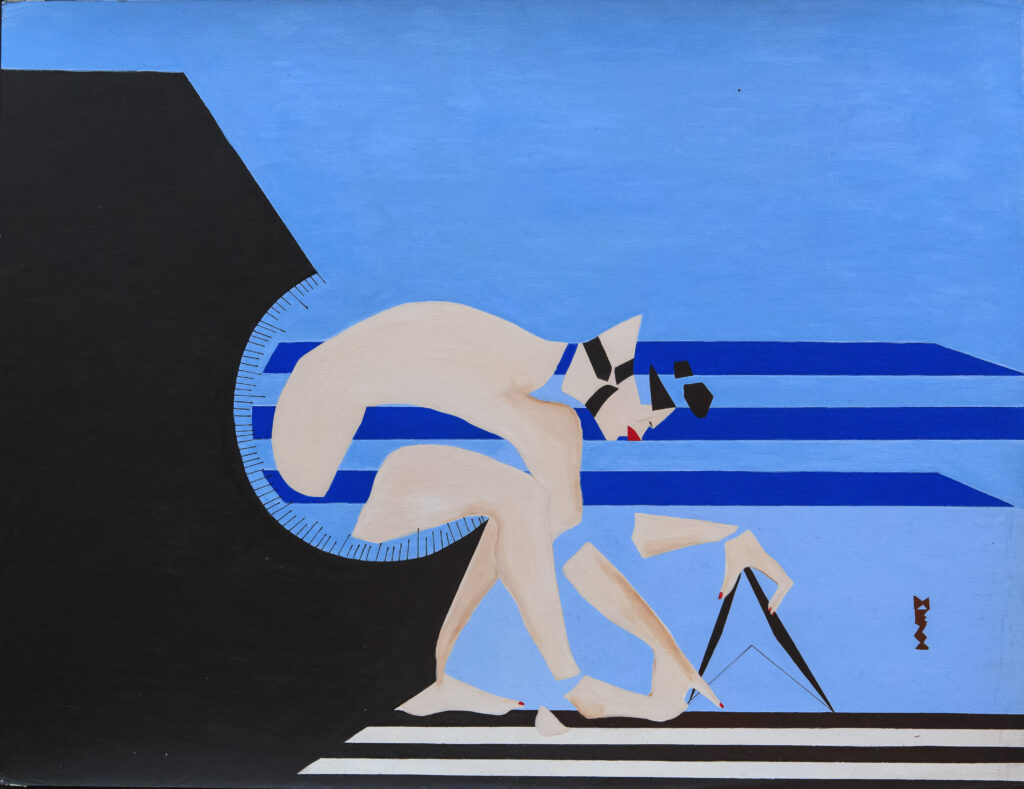
Contemporary painting by Mezz Zapharelli depicting a stylized figure using a compass, set against a blue background with geometric lines and black-blue contrasts
Contemporary Art by Mezz Zapharelli: The Compass and the Human Figur

The Compass: A Politics of the Axis

A recurring, tool-like motif appears: the compass. For Zapharelli, it symbolizes the act of realigning the human figure. Far from decorative metaphor, it articulates the studio’s core ambition: to measure, orient, and restore balance to a figure worn down by media circulation.

The painting is no longer a showcase; it becomes an instrument. What matters is not stylistic signature (which shifts), but the axis—the sustained line of force that holds the work.

Lines of Force: A Coherent Artistic Trajectory

Zapharelli’s path is not a biographical romance but a coherent artistic logic born from the tension between two regimes of images:

  • The image factory: costume workshops, sets, runways, repetition, speed, industrial reproduction
  • Painting: slow, risky, irreversible, where each decision carries weight

One regime shapes her speed and cut; the other grants her the right to duration. It is this shift of regime—from production to contemplation—that defines the strength and integrity of her work.

Support independent publishing! Subscribe to ART MAG and receive each issue in advance, in both print and digital format
👉 Subcribe 6 issues / 1 year
👉 Offer ART MAG

To read more, download ART MAG N°29
Categories
Art Fair - International - News

TEFAF Maastricht 2026: 276 galleries, 26 new entrants and a major event in the art market

Recognised as the world’s largest art fair, TEFAF Maastricht 2026 will return from 14 to 19 March 2026, with VIP access on 12 and 13 March. The event will bring together 276 international galleries at the Maastricht Exhibition & Conference Centre.

The fair will cover 7,000 years of art history, from antiquity to contemporary art. It remains a central venue for museum acquisitions, investment in premium art and the circulation of rare works.

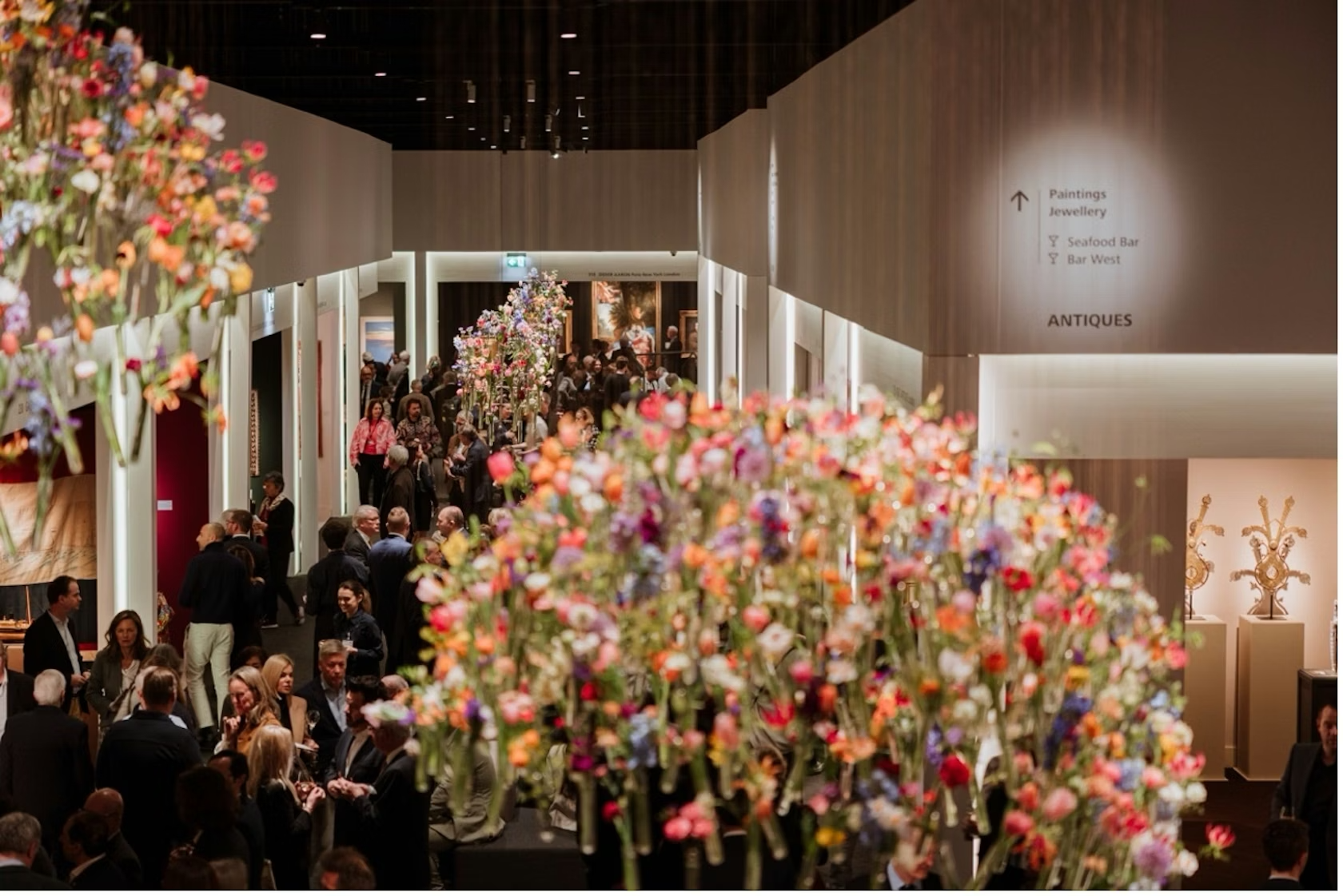
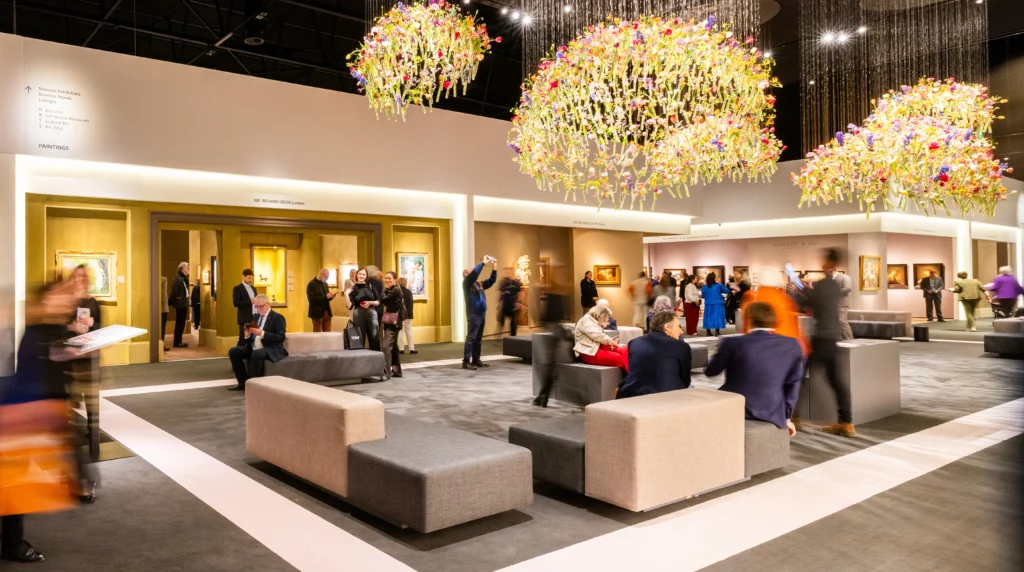
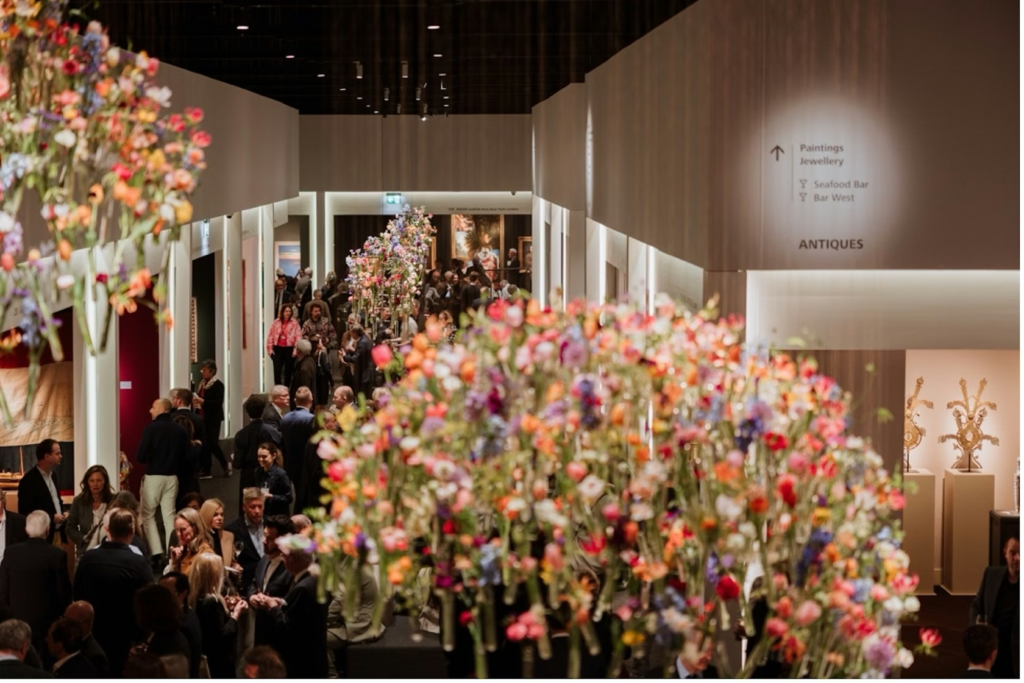
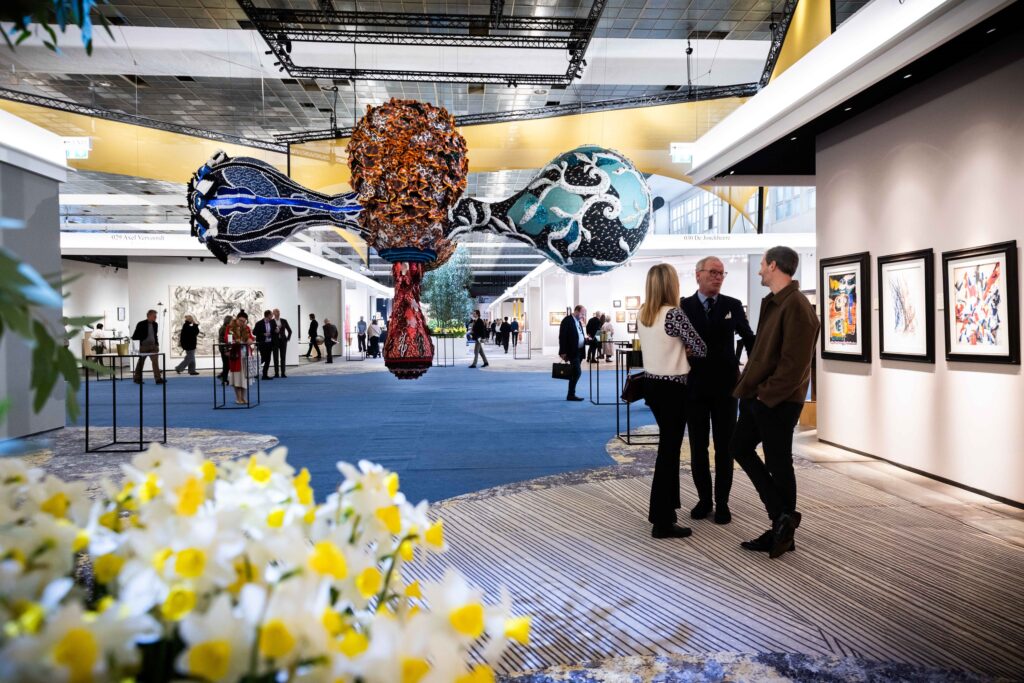
Hallway at TEFAF Maastricht 2026 with visitors, international gallery booths, and the fair’s signature hanging floral installations. Magazine Art Mag
 ©Lorraine Bodewes

26 New Galleries Join the Main Fair: A Milestone Expansion for 2026

The 2026 edition introduces 26 new galleries, marking one of the most significant expansions in TEFAF’s recent history. These new participants will strengthen core sections including:

  • Paintings & Old Masters
  • Works on Paper
  • Modern & Contemporary Art
  • 20th- and 21st-Century Design
  • African, Oceanic & Tribal Arts

This growth underscores a rising global demand for curated, museum-quality works, while reflecting TEFAF’s commitment to excellence, diversity, and academic rigor

Central lounge area at TEFAF Maastricht 2026, with visitors moving between art galleries, floral installations, and exhibited works. Magazine ART MAG
 ©Lorraine Bodewes

TEFAF Focus 2026: 7 Curated Presentations Highlighting Iconic Artists and Rediscovered Legacies

In 2026, TEFAF Focus—the fair’s curated section introduced in 2024—will deepen its exploration of cross-disciplinary dialogues between art mediums and historical periods. Featured presentations include:

  • Galerie Thomas Schulte showcasing photography by Robert Mapplethorpe
  • TAFETA (UK) presenting the influential work of Ladi Kwali, a defining figure of Nigerian modernism, currently spotlighted at the Tate Modern
  • Demisch Danant highlighting the furniture and design innovations of Gerrit Rietveld

Focus 2026 will also explore themes such as minimalism, French realist traditions, and Scandinavian textile expertise, offering collectors new perspectives and curatorial insights.

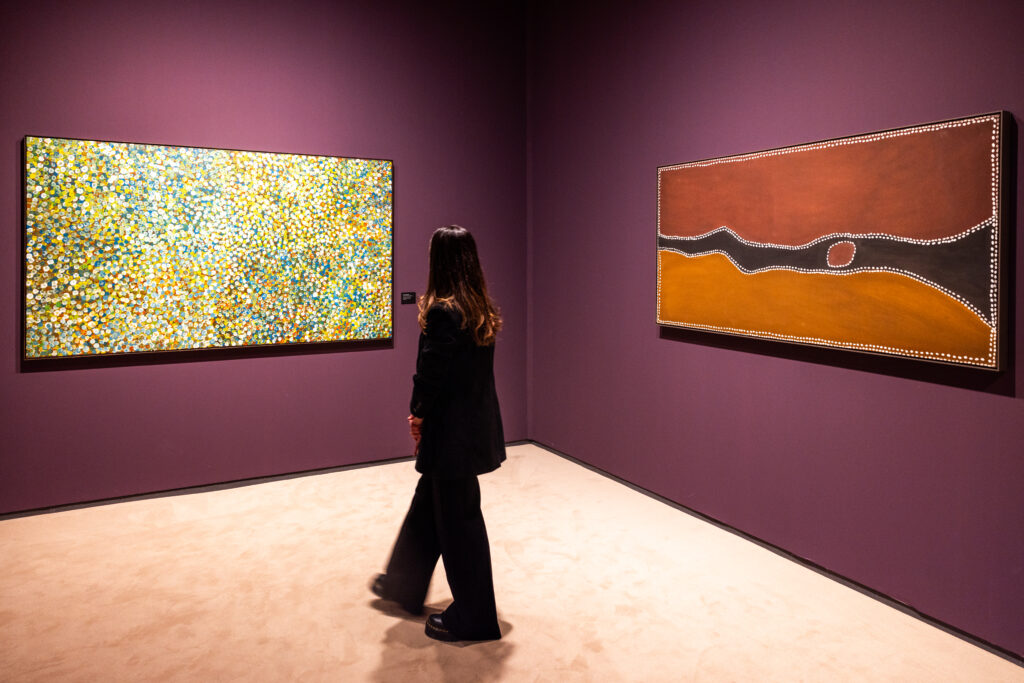
Visitor viewing two contemporary abstract paintings in a gallery at TEFAF Maastricht 2026, featuring modern and Aboriginal art. published by Art Mag
D’Lan Contemporary Gallery ©Lorraine Bodewes

TEFAF Showcase 2026: Nine Emerging Galleries Shaping the Future of the Global Art Market

Since 2008, TEFAF Showcase has been the leading platform for emerging galleries poised to enter the high end of the market. In 2026, nine galleries with strong curatorial identities and international ambitions will participate:

  • AGO Projects ( Mexico)
  • Erik Bijzet Sculpture and Works of Art (Netherlands)
  • Galerie Boquet (France)
  • Dries Criel (Belgium)
  • DEVALS (France)
  • Van Herck – Eykelberg ( Belgium)
  • Roberti Fine Art ( UK)
  • Torres Nieto Fine Arts (Germany)
  • Trias Art Experts (Germany)

Their offerings span collectible 21st-century design, specialized sculpture, rediscovered Dutch Masters, Renaissance artworks, and modern minimalist dialogues—reinforcing Showcase as a predictor of future market leaders.

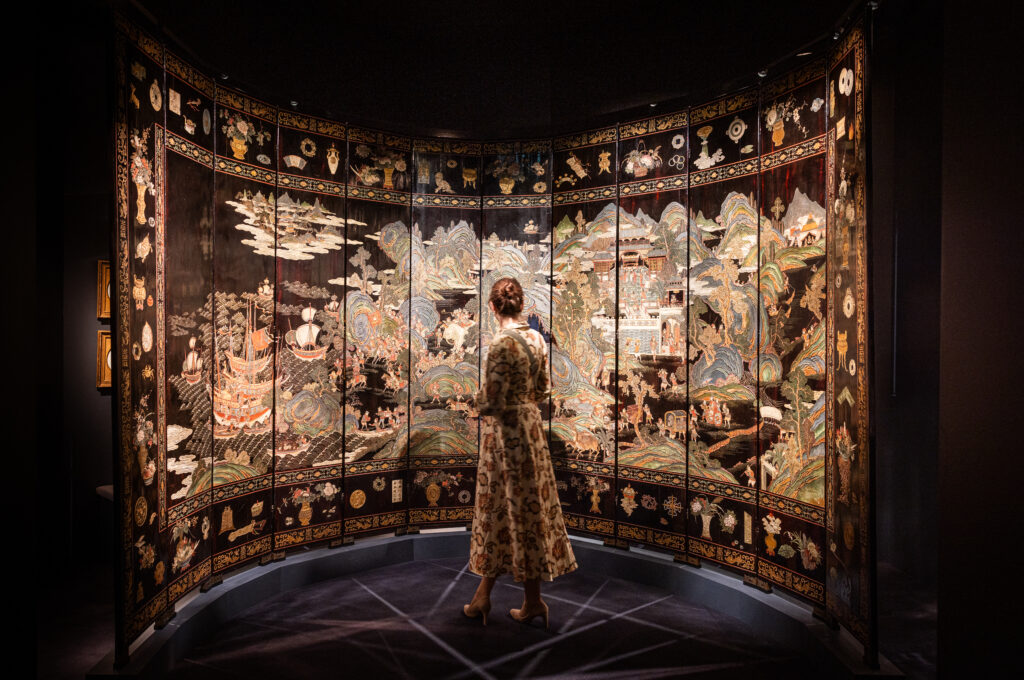
Visitor observing a large, intricately decorated antique Asian screen at TEFAF Maastricht 2026, the international fine art and antiques fair
Jorge Welsh Gallery  ©Lorraine Bodewes

Showcase Prize 2026 Powered by J.P. Morgan: A Key Indicator for Collectors and Institutions

For the third consecutive year, the J.P. Morgan Private Bank Showcase Prize will honor one outstanding participant whose vision, expertise, and impact elevate the global art ecosystem. Widely regarded as an indicator of future success, the prize strengthens the section’s role as a strategic platform within TEFAF.

TEFAF Summit 2026: A Global Forum on Culture, Policy, and the Future of Heritage

On March 16, 2026, TEFAF will host its third Annual Summit at the MECC in partnership with the Netherlands National Commission for UNESCO. This major international event will examine the theme:

“Beyond Economic Impact: Rethinking Culture in Public Policy.”

More than 30 international experts, cultural policymakers, institutional leaders, economists, and art-world decision-makers will participate in high-level roundtables and exchanges.
Support independent publishing! Subscribe to ART MAG and receive each issue in advance, in both print and digital format
👉 Subcribe 6 issues / 1 year
👉 Offer ART MAG

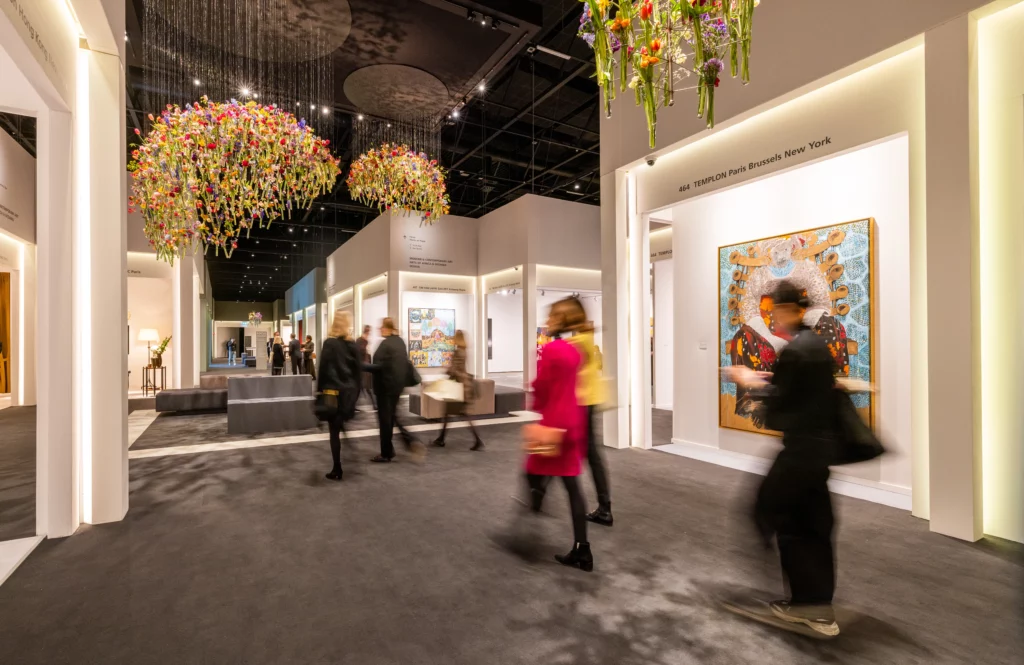
Overview of TEFAF Maastricht 2026 with colorful hanging floral installations, visitors, and international art galleries Magazine Art Mag
 ©Lorraine Bodewes

Key topics include :

  • the strategic value of culture beyond economic indicators
  • integrating art and culture into public policy frameworks
  • the evolving societal role of museums and cultural institutions
  • innovative models for cultural governance in a changing global context

Protecting Global Heritage: Innovation and Actionable Solutions

The Summit aims to deliver concrete, collaborative solutions for:

  • global cultural heritage preservation
  • protection of historically significant objects
  • innovation in public cultural policy

The discussions are supported by AXA XL Insurance, a global leader in fine art and high-value object insurance across more than 200 countries, reinforcing TEFAF’s commitment to safeguarding cultural assets worldwide.

A lire aussi :

Support independent publishing! Subscribe to ART MAG and receive each issue in advance, in both print and digital format
👉 Subcribe 6 issues / 1 year
👉 Offer ART MAG

Why is TEFAF Maastricht 2026 considered the world’s leading art fair?

Because it brings together the most prestigious galleries globally, offering museum-quality works spanning 7,000 years of art history.

Where will TEFAF Maastricht 2026 take place?

At the MECC Maastricht, one of Europe’s top venues for major art and cultural events.

Which sections are expanding in 2026?

Paintings, Works on Paper, Old Masters, Modern & Contemporary Art, 20th/21st-century Design, and African & Oceanic Arts.
What is the purpose of TEFAF Showcase?

To support the next generation of influential art dealers and offer them a global platform.

Who supports the TEFAF Summit 2026?

The Summit is backed by AXA XL Insurance and organized with the Netherlands National Commission for UNESCO, both leaders in cultural protection and heritage policy.

Categories
News

Endless Sunday: Maurizio Cattelan Transforms the Centre Pompidou-Metz with a Landmark Exhibition

Zeno Zotti

From 8 May 2025 to 1 February 2027, the Centre Pompidou-Metz celebrates its 15th anniversary with one of its most ambitious exhibitions: Endless Sunday. Nearly 400 works from the Centre Pompidou enter into dialogue with 40 iconic creations by Maurizio Cattelan. A total, immersive, and unsettling journey that transforms the museum into a sensory and political labyrinth.

A major exhibition that redefines Cattelan’s place in contemporary art

With Endless Sunday, Maurizio Cattelan becomes not only one of the featured artists but also co-curator alongside Chiara Parisi, Director of the Centre Pompidou-Metz. He casts a sharp, incisive gaze on the Centre Pompidou’s collections, revealing, through unprecedented juxtapositions, the zones of tension that run through the history of modern and contemporary art.

From the entrance, visitors come face-to-face with L.O.V.E., his provocative anti-monument: a monumental raised middle finger, a symbol of defiance and anti-authority. A statement of intent. A promise: nothing here will be comfortable.

Support independent publishing! Subscribe to ART MAG and receive each issue in advance, in both print and digital format
👉 Subcribe 6 issues / 1 year
👉 Offer ART MAG

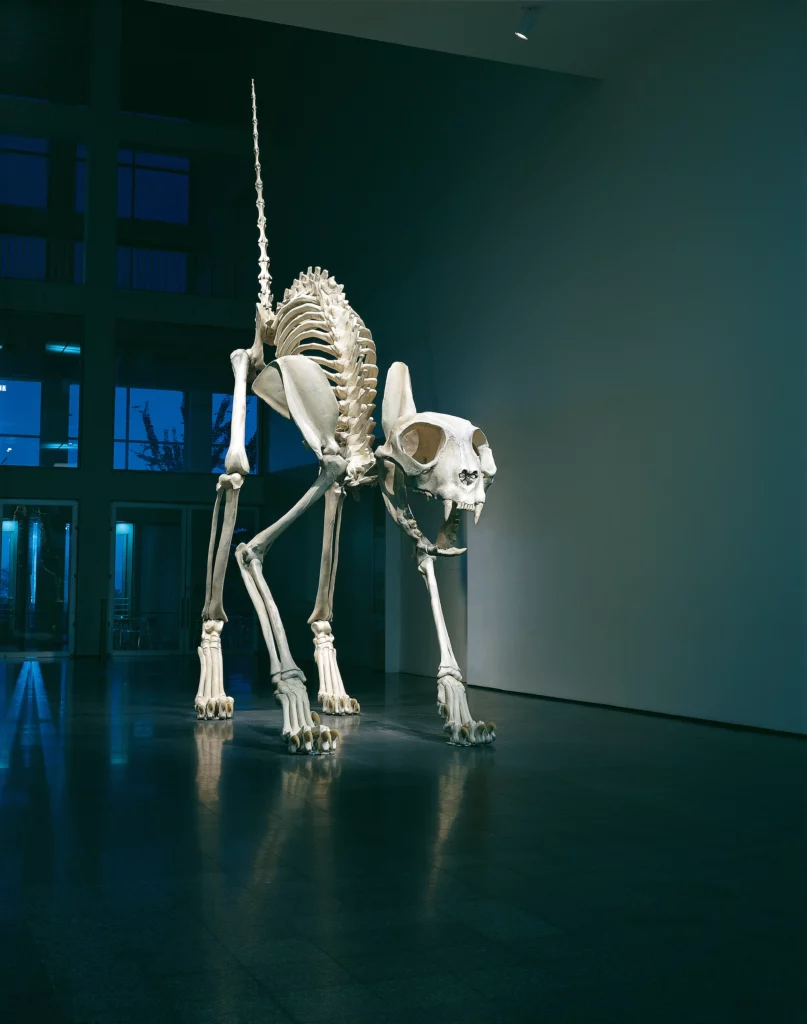
Monumental sculpture Felix by Maurizio Cattelan depicting a giant cat skeleton displayed in a modern museum space, contemporary art installation at the Centre Pompidou-Metz, with dramatic lighting emphasizing the imposing structure of the artwork. Art mag
Maurizio Cattelan, Felix, 2001 Oil on polyvinyl resin, fiberglass and steel, 792 × 182 × 610 cm Courtesy Maurizio Cattelan’s Archive Photo

A journey shaped like an alphabet primer: total immersion in contemporary mythologies

The exhibition adopts the form of an abecedarium, a nod to Gilles Deleuze, which allows visitors to revisit the great themes of modernity through historical works and installations by Cattelan.

Highlights include:

D – The Beginning of the War Will Remain Secret
Around Chen Zhen’s monumental Round Table and Cattelan’s spectacular Sunday, the exhibition reveals the political fractures of the contemporary world: inaccessible diplomacy, violence beneath a golden veneer, the memory of European conflicts.

H – Hatred, Friendship, Seduction, Love, Marriage
A section dedicated to the game of chess, featuring an exceptional loan: Marcel Duchamp’s chess table, presented to the public for the first time. Cattelan responds with Good Versus Evil, a board populated by porcelain figurines tinged with political satire.

N – We the Animals
The famous Felix — a giant cat skeleton — enters into dialogue with Julie Curtiss, Gloria Friedmann, and Francis Bacon, offering a powerful reflection on animality, vulnerability, and the metamorphosis of the body.

An immersive scenography that transforms the museum

Designed by Berger&Berger, the scenography transforms the Grande Nef into a circular space inspired by the museum’s hexagonal architecture. The serpent Uroboros, symbol of the infinite cycle, structures the itinerary and reinforces the theme of Sunday as a suspended, cyclical, unending moment.

Exhibitions within the exhibition — cinema entrances, a miniature gallery (Wrong Gallery) — blur the boundaries between the real, the museal, and the fictional worlds.

The exceptional return of André Breton’s Studio Wall

For the first time, André Breton’s Studio Wall leaves its Paris home to be presented in Metz. Composed of 255 objects — masks, fossils, sculptures, and personal mementos — it embodies the spirit of Surrealism and the notion of objective chance dear to Breton.

Its presence in Endless Sunday acts as a key for interpretation: a museum envisioned as a free, intuitive space, traversed by intersecting and colliding narratives.

A landmark exhibition celebrating the Centre Pompidou-Metz’s 15th anniversary

Performances, concerts, film, workshops, and talks: the museum offers four uninterrupted days of festivities from 8 to 11 May 2025. Highlights include:

LaBOLA performances by La Ribot,
• Re-enactment of RSVP by Senga Nengudi,
Pink & Silver Anniversary Ball orchestrated by Vinii Revlon
• Urban mini-battles, DJ sets, outdoor screenings
• A series of talks centered on the exhibition’s works

Together, these events reaffirm the Centre Pompidou-Metz’s direction: a living museum, open to transdisciplinary practices, where contemporary creation meets the public in all its forms.

A Sunday that never ends: why this exhibition is unmissable

Endless Sunday does not merely juxtapose works. It reveals what our rituals, our rest, our beliefs, and our revolts say about us.

The exhibition’s strength lies in:

• its museographic ambition: 400 works, 40 pieces by Cattelan, a total occupation of the building
• its visual power: monumental installations, immersive scenography
• its transhistorical dialogue: from Derain to Bacon, from Duchamp to Vieira da Silva
• its political depth: power, violence, cycles of time, fragility of the body
• its singular dimension: the presence of Breton’s Wall, the mise en abyme of the Wrong Gallery, curatorship entrusted to a major artist.

It is an exhibition that unsettles, disorients, amuses, and disturbs.
It is a museum reinventing itself for its 15th anniversary.

A major cultural event for 2025–2027.

See also:
Centre Pompidou-Metz 2026: the must-see exhibitions that will shape the year

Support independent publishing! Subscribe to ART MAG and receive each issue in advance, in both print and digital format
👉 Subcribe 6 issues / 1 year
👉 Offer ART MAG

Categories
News

Centre Pompidou-Metz 2026: The Unmissable Exhibitions Set to Define the Cultural Year

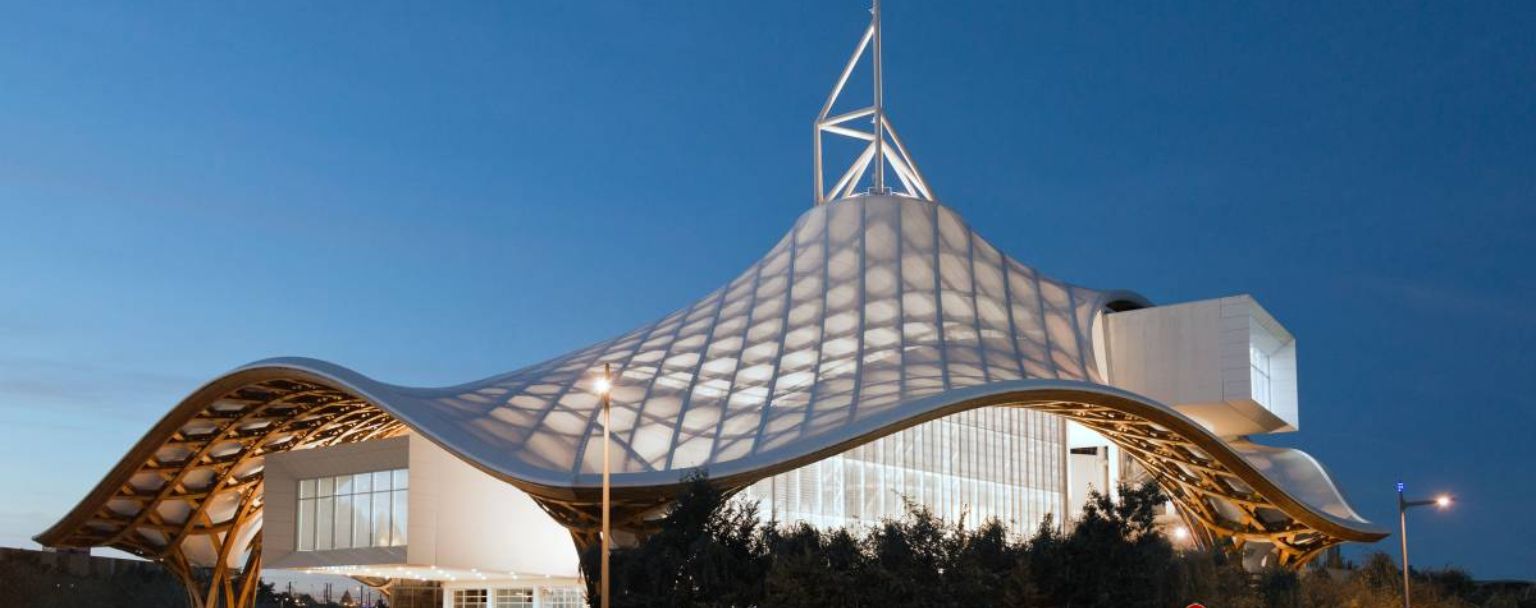
vue du centre pompidoe Metz
Jacqueline Trichard

The Centre Pompidou-Metz unveils an exceptionally ambitious programme for 2026, positioning itself as one of Europe’s most compelling cultural destinations. Four major exhibitions — Louise Nevelson, François Morellet, Séraphine de Senlis, and Shigeru Ban — form a coherent and thoughtfully curated journey through modern and contemporary creation. For visitors from the UK and beyond, the season offers a rare opportunity to encounter artists who shaped, questioned, and expanded the artistic language of their time.

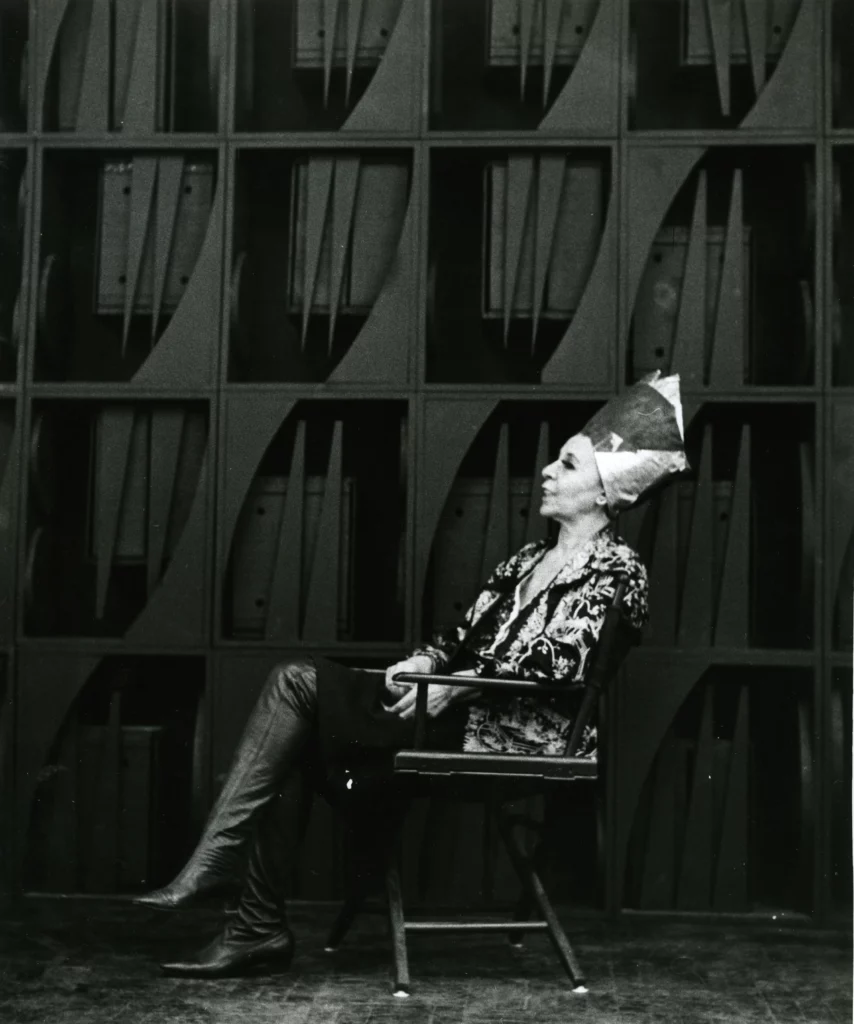
Figure seated in front of a monumental wooden wall sculpture, composed of geometric modules and vertical elements, photographed in black and white, illustrating the immersive and architectural sculptural universe associated with the exhibition ‘Mrs. N's Palace’ and the aesthetics of 20th-century environmental sculpture.
Portrait of Louise Nevelson, circa 1969, in front of Night-Focus-Dawn Copyright: © Estate of Louise Nevelson. Licensed by Artist Rights Society (ARS), NY/ADAGP, Paris / Photo: © Courtesy Jeanne Bucher Jaeger, Paris-Lisbon/All rights reserved

Louise Nevelson: A Sculptural Landmark for 2026

From 24 January to 31 August, the retrospective Mrs. N’s Palace immerses visitors in the shadow-filled, monochromatic assemblages of Louise Nevelson. Her iconic black wall sculptures, constructed from discarded urban materials, transform the gallery into a meditative architectural landscape.
Striking in scale and atmosphere, this exhibition is one of 2026’s defining sculptural events — and an overdue celebration of an artist who remains insufficiently recognised on this side of the Channel.

See also : Louise Neverlon: fragmented architectures and landscapes of memory

Support independent publishing! Subscribe to ART MAG and receive each issue in advance, in both print and digital format
👉 Subcribe 6 issues / 1 year
👉 Offer ART MAG

François Morellet: A Centenary Celebrated in Spectacular Form

Opening on 3 April, 100 pour cent is the most extensive survey ever devoted to François Morellet, a key figure in geometric abstraction and a founder of GRAV (Groupe de Recherche d’Art Visuel).
Bringing together one hundred works across more than seven decades, the exhibition captures the wit, precision and optical play that characterise Morellet’s practice. Far from austere, his work reveals a mischievous mind delighting in order, chance, and the unpredictable behaviour of light.

See also : François Morellet – 100 Percent: A Landmark Retrospective

Support independent publishing! Subscribe to ART MAG and receive each issue in advance, in both print and digital format
👉 Subcribe 6 issues / 1 year
👉 Offer ART MAG

Séraphine de Senlis: A Visionary Painter Reappraised

From 31 October, a major monographic show revisits the extraordinary oeuvre of Séraphine de Senlis, whose fervent floral compositions have recently been reinterpreted through ecological and spiritual perspectives.
Vibrant, dense and otherworldly, her paintings transcend the naïve label traditionally attached to her work. Instead, the exhibition presents Séraphine as a visionary whose intuitive relationship with the natural world speaks strongly to contemporary sensibilities.

See also : Séraphine de Senlis, a visionary of life at the Centre Pompidou-Metz

Support independent publishing! Subscribe to ART MAG and receive each issue in advance, in both print and digital format
👉 Subcribe 6 issues / 1 year
👉 Offer ART MAG

Shigeru Ban: Architecture with a Human Touch

In December, the Centre Pompidou-Metz turns to its own architect. Shigeru Ban, winner of the Pritzker Prize, curates an exhibition reflecting on his distinctive approach to building — one rooted in humanitarian responsibility, material innovation and elegant simplicity.
Models, prototypes and experimental structures reveal how Ban’s work marries aesthetic refinement with social purpose, offering an illuminating perspective on sustainable architecture.

See also : Shigeru Ban: An Immersive Tribute at Centre Pompidou-Metz

Support independent publishing! Subscribe to ART MAG and receive each issue in advance, in both print and digital format
👉 Subcribe 6 issues / 1 year
👉 Offer ART MAG

A Museum Alive with Movement and Experimentation

Throughout the year, Maurizio Cattelan’s evolving exhibition Dimanche sans fin brings humour, subversion and unpredictability to the galleries. Participatory projects by Marina Abramović and Elizabeth Peyton further position the Centre Pompidou-Metz as a dynamic institution where the visitor is invited not merely to observe but to take part.

A Season of Remarkable Coherence and Ambition

With its blend of major retrospectives, visionary installations and contemporary reflections on ecology, spirituality and social engagement, the Centre Pompidou-Metz delivers one of its most accomplished seasons to date.
For British visitors, 2026 offers an ideal moment to rediscover the museum and explore a programme that is as intellectually rich as it is visually compelling.

Support independent publishing! Subscribe to ART MAG and receive each issue in advance, in both print and digital format
👉 Subcribe 6 issues / 1 year
👉 Offer ART MAG

What are the main exhibitions at the Centre Pompidou-Metz in 2026?

The 2026 season features four major exhibitions: Louise Nevelson, François Morellet, Séraphine de Senlis, and Shigeru Ban. Each offers a distinctive perspective on modern and contemporary art, alongside the ongoing exhibition Dimanche sans fin by Maurizio Cattelan.

When does the Louise Nevelson exhibition open?

The exhibition Mrs. N’s Palace opens on 24 January 2026 and runs until 31 August 2026. It is one of the most significant European presentations of Nevelson’s sculptural work in recent years.

What can visitors expect from the François Morellet centenary exhibition?

Opening on 3 April 2026, 100 pour cent brings together one hundred works across seven decades, offering the largest retrospective ever dedicated to François Morellet. The show highlights his playful approach to geometry, light, and optical perception.

Is there an exhibition dedicated to Séraphine de Senlis?

Yes. A major exhibition devoted to Séraphine de Senlis runs from 31 October 2026 to 12 April 2027. It revisits her visionary floral compositions through contemporary ecological and spiritual perspectives.

Is Maurizio Cattelan’s exhibition still open in 2026?

Yes. Maurizio Cattelan’s evolving exhibition Dimanche sans fin remains open throughout 2026 and continues until 1 February 2027. New works are regularly added, making each visit unique.

Categories
International - News

Art Geneva 2026: What You Absolutely Must Not Miss This Year

Art Genève 2026 à Palexpo : visiteurs dans les allées du salon d’art contemporain, stands de galeries internationales, peintures, sculptures et installations modernes.

From 29 January to 1 February 2026, Art Genève returns to Palexpo for a highly anticipated 14th edition. After bringing together 80 international galleries in 2025, the Swiss fair confirms its status as a key event for collectors, curators and contemporary art professionals.

Art Genève 2026: A Fair That Combines Excellence and Intimacy

Over the past thirteen editions, Art Genève has achieved something rare: establishing itself on the international art-fair calendar while preserving an intimate, elegant and accessible atmosphere. A place where quality prevails over scale, where artworks breathe, and where visitors can truly take the time to look.

In 2025, the fair gathered 80 leading galleries, each presenting a distinct artistic approach across a wide range of mediums: painting, photography, drawing, sculpture, video, installations. A diversity grounded in the fair’s founding principle:

Building bridges, cultivating authenticity, and encouraging meaningful dialogue between galleries, institutions, and audiences.

Support independent publishing! Subscribe to ART MAG and receive each issue in advance, in both print and digital format
👉 Subcribe 6 issues / 1 year
👉 Offer ART MAG

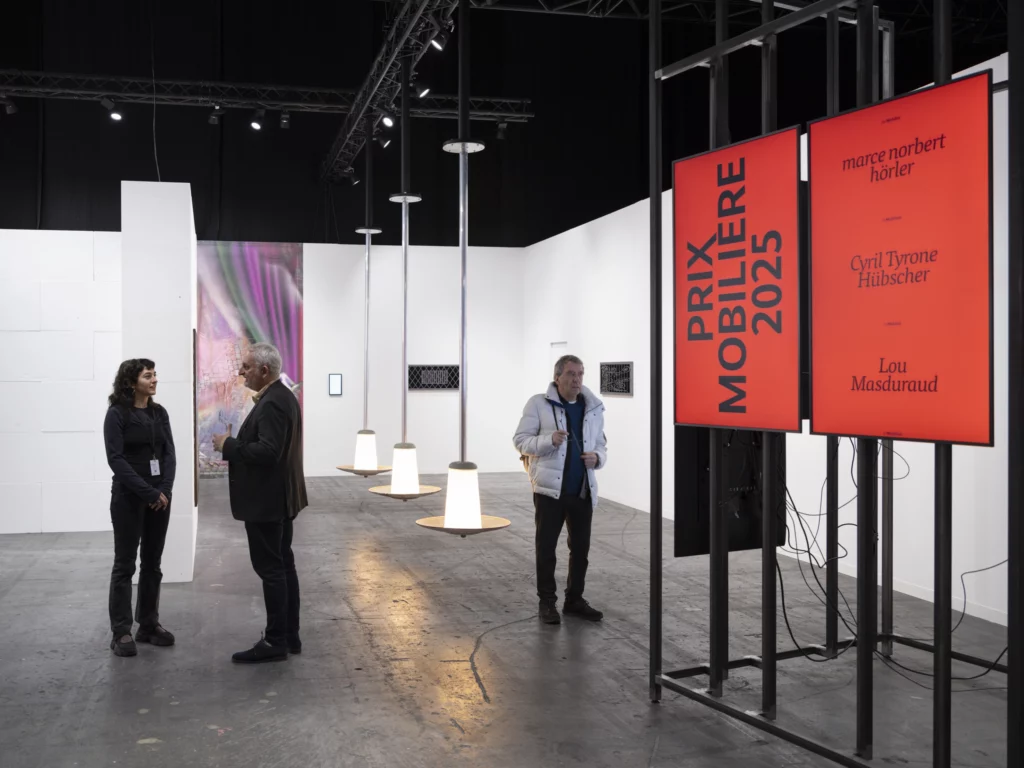
Installation of the 2025 Prix Mobilière at Art Geneva: visitors standing before red screens announcing the nominated artists, inside a contemporary exhibition space at Palexpo.
Geneva Art Fair 2025 – Julien Gremaud

A Look Back at 2025: A Strong Foundation for the 2026 Edition

A Stronger Swiss Presence

The Prix Mobilière, awarded each year to an emerging Swiss artist, honoured Alfatih in 2025, reinforcing the fair’s commitment to the national art scene.

A Rich Institutional Landscape

Museums, foundations, art centres and private collections — from Switzerland and abroad — contributed special projects designed specifically for Art Genève.
This confirms once again that the fair is not just a marketplace, but also a genuine curatorial platform.

Innovative Sections

  • Sur-Mesure section (introduced in 2024): monumental works that challenge the traditional booth format;
  • Music section: sound installations and performances, some extending beyond the fair walls;
  • Art publishers’ district: art books, catalogues, independent publishers and special editions;
  • Conference program: discussions and analyses on contemporary art and current market dynamics.

Together, these elements strengthen the fair’s identity: a space where the market, artistic experimentation and cultural mediation coexist.

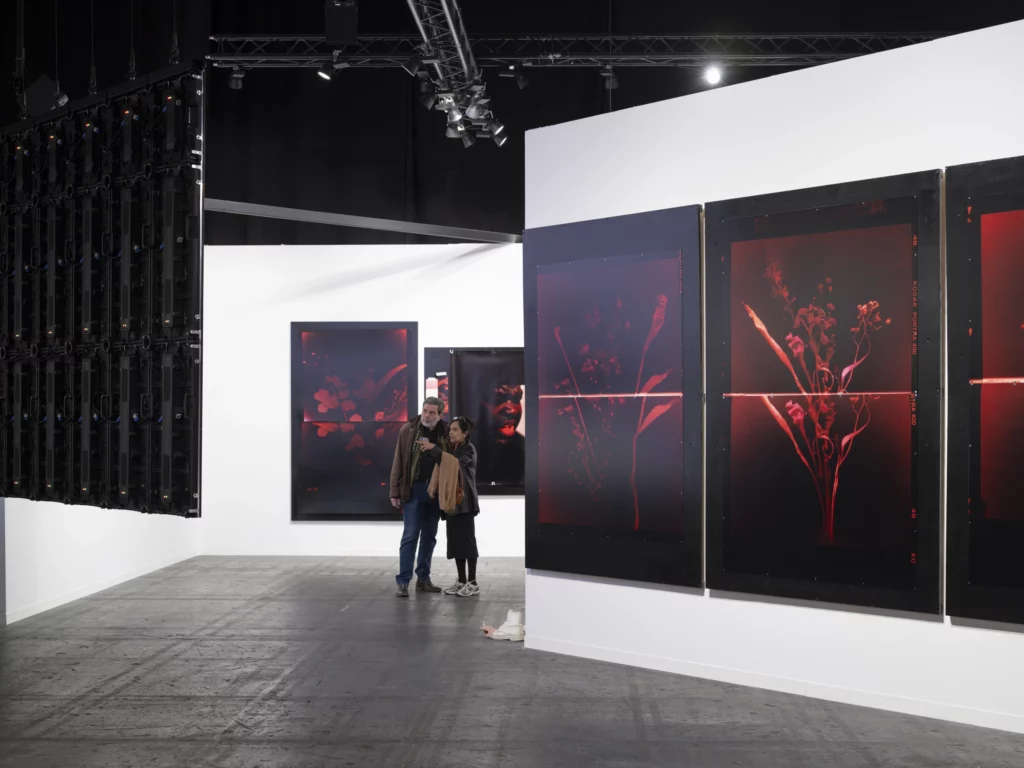
Art Geneva 2025 exhibition: visitors viewing large red photographic works in a contemporary art booth at the heart of the fair in Palexpo Geneva.
Geneva Art Fair 2025 – Julien Gremaud

Art Genève & Art Monte-Carlo: A Complementary Duo

Art Genève is part of a broader ecosystem alongside Art Monte-Carlo, its sister fair on the French Riviera.
Together, they shape a cultural axis between Geneva and Monaco, combining curatorial excellence, international reach and distinctive atmospheres — Geneva’s quiet precision versus Monaco’s Mediterranean openness.

The ambition is clear: to strengthen the fair’s position as a major early-season event, while staying true to its refined and intimate identity.

📍 Practical Information

  • Dates: 29 January → 1 February 2026
  • Location: Palexpo, Geneva
  • Edition: 14th
  • Focus: Modern & contemporary art
  • Official Website: artgeneve.ch

Support independent publishing! Subscribe to ART MAG and receive each issue in advance, in both print and digital format
👉 Subcribe 6 issues / 1 year
👉 Offer ART MAG

Read more : Art Fairs 2026: The Ultimate Guide to the Major International Art Events of the Year

Categories
Featured Artist - News - Women artists

Rosine Le Noane: the Art of Capturing Light (Exclusive Preview)

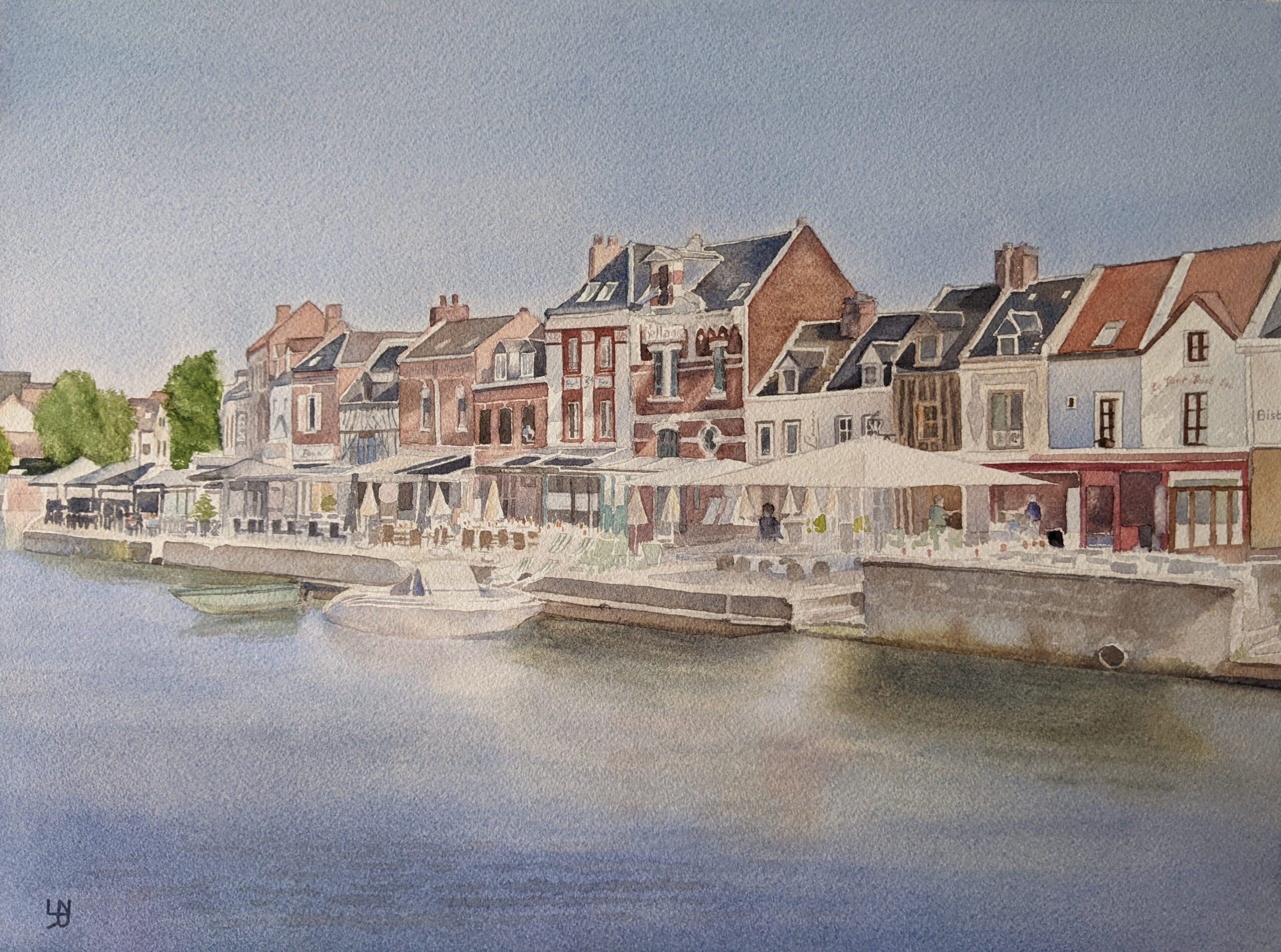
aquarelle de rosine le noane Quai Bélu Amiens

Some artworks cannot be explained—they must be experienced. Rosine Le Noane’s creations belong to this category. With a rare mastery of watercolor, the artist transforms a glimmer of light, a reflection, or a breath of air into pure emotion.

An artist who lets light speak for itself

Rosine Le Noane approaches watercolor as a sensitive language. No spectacular effects, no demonstrative gestures—only a patient search for the essential. A transparency, a vibration, a nearly imperceptible nuance… and suddenly, the image comes alive.

What strikes the viewer first is her ability to capture the moment—not exactly a landscape, nor a scene, but a suspended instant: fragile, intimate, almost interior.

And this is something only the image can truly express—which is why her universe unfolds fully only in the printed magazine.

Want to see more ?
👉 Order ART MAG N°29
👉 Subscribe to 6 issues / 1 year
👉 Give ART MAG as a gift

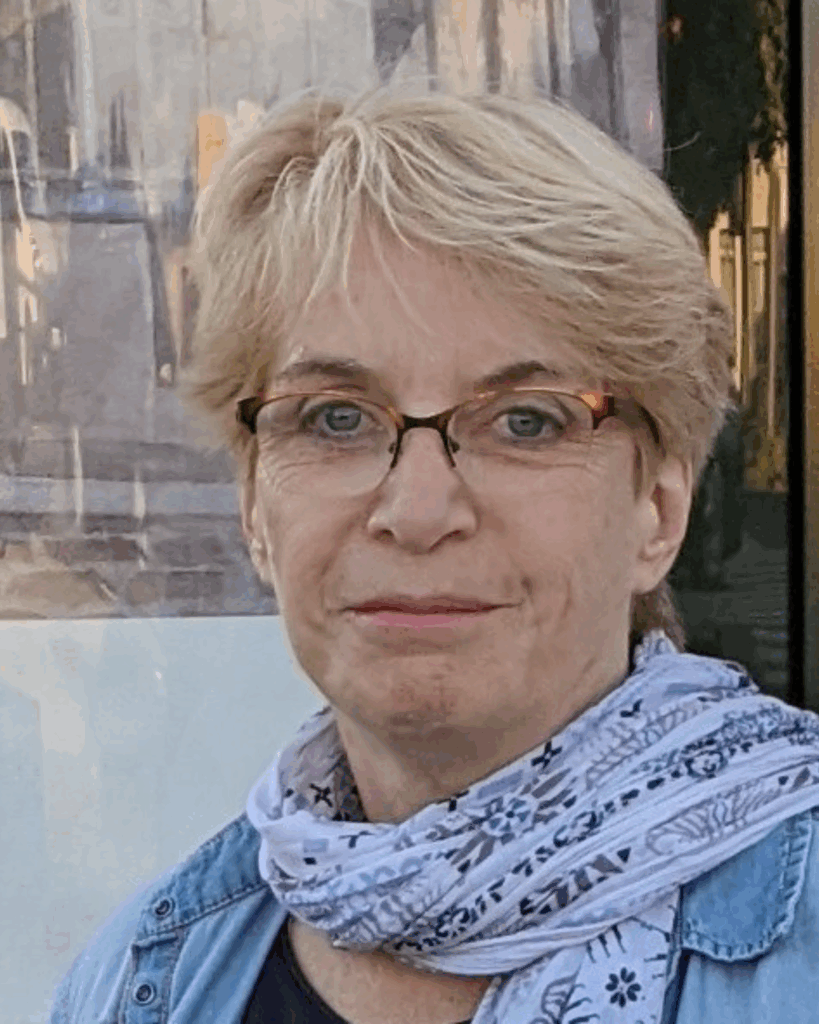
Portrait de Rosine Le Noane
Rosine Le Noane

Rooted in reality, open to emotion

Rosine draws inspiration from the atmospheres she encounters: the landscapes of Picardy, the lights of Paris, and horizons further away, such as Venice.
Never documentary, never literal, her work does not attempt to represent—it seeks to reveal.

To the naked eye, it is watercolor.
In truth, it is a sensation.

To understand this subtlety, nothing replaces paper: texture, grain, the finesse of the washes—elements that the printed edition of ART MAG captures with unmatched fidelity.

An approach that appeals to those seeking more than an image

What captivates viewers in Rosine Le Noane’s work is not only its beauty, but the impression that her paintings breathe.

Watercolor, in her hands, is neither a stylistic exercise nor a simple medium.
It is a way of feeling the world.

Her works invite us to slow down, observe, and enter into an intimate dialogue with light—an experience we chose to explore in a refined, sensitive, deliberately discreet feature, leaving space for what truly matters: emotion.

🌟 To discover in the printed issue of ART MAG

The upcoming issue dedicates several pages to Rosine Le Noane, including:

  • a selection of artworks reproduced in high-quality print,
  • a straightforward interview focused on her relationship with light,
  • insights into her artistic journey and inspirations,
  • and above all: the unique atmosphere that only paper can convey.

We intentionally reveal only a small preview here.
Some images deserve to be discovered slowly, within an object crafted like an art piece.

👉 To experience her universe fully, order your copy of ART MAG.

Want to see more ?
👉 Order ART MAG N°29
👉 Subscribe to 6 issues / 1 year
👉 Give ART MAG as a gift

To read more, download ART MAG N°29
Categories
Art Fair - International - News

The Major Galleries to Watch at BRAFA Art Fair 2026

Galerie Murani Mercier à la Brafa 2025

An Exceptional Panorama from Old Masters to Modern, Design and Contemporary Art

With nearly 150 galleries from 18 countries, BRAFA Art Fair 2026 confirms its status as one of Europe’s most influential art-market events. Known for its rigorous selections, cross-period narratives and museum-quality works, the Brussels fair continues to attract collectors, curators and institutions from across the world.

This year’s edition promises a remarkable balance of Old Masters, modern and contemporary art, African arts, design, and decorative arts — making BRAFA 2026 a must-see in the global art-fair calendar.

Below is a focused selection of the galleries that will define the fair in 2026, the ones international professionals are already talking about.

1. Old Masters : The Historic Anchors of the Fair

Didier Claes

Galerie Claes (Brussels) – Stand 41

A global reference in classical African arts, Didier Claes is one of the fair’s cornerstones. Expect exceptional museum-level pieces and rare provenances that set market standards.

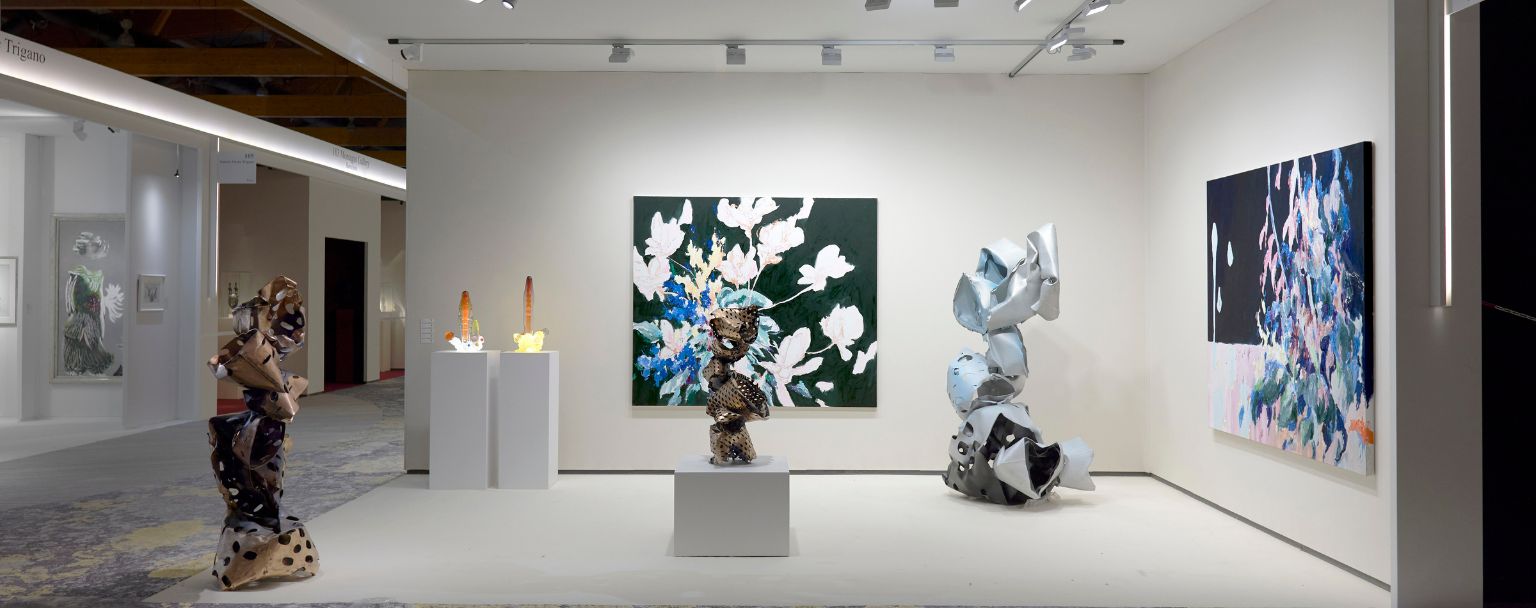
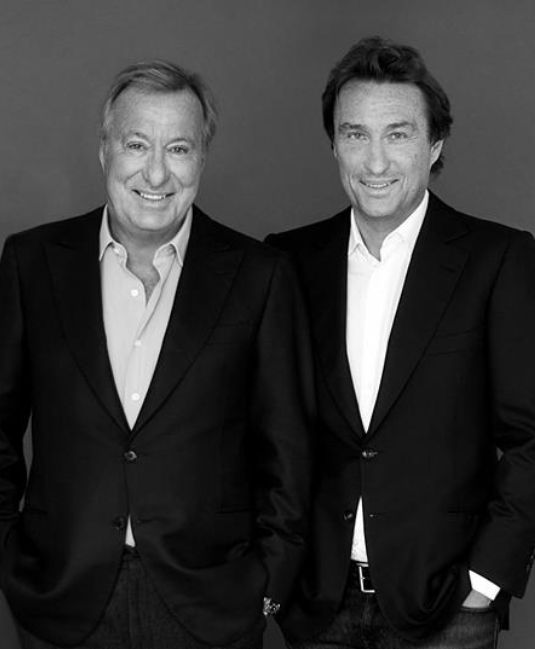
Georges and François De Jonckheere

Galerie de Jonckheere (Switzerland) – Stand 36

Famous for its Flemish and Dutch Old Masters, the Geneva-based gallery consistently draws major collectors and curators. A highlight for anyone researching European masterworks.

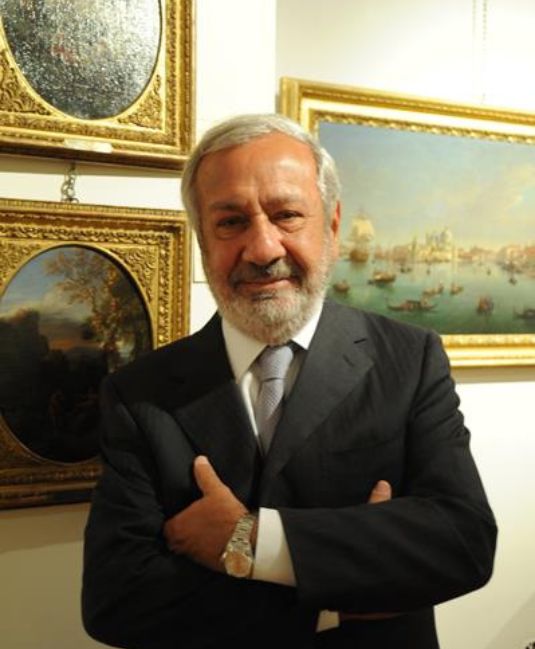
Cesare Lamronti

Lampronti Gallery (Monaco) – Stand 70

A highly anticipated newcomer. Lampronti brings an exceptional selection of Italian and European Old Masters, strengthening BRAFA’s historical offering.

Galerie Colnaghi

Colnaghi (UK/Spain/Belgium/USA) – Stand 40

As one of the world’s oldest art dealers, Colnaghi presents rare pieces ranging from archaeology to Old Masters — always one of the fair’s most visited stands.

2. Modern & Contemporary Art : International Highlights

Brafa 2025 – La Patinoire Royale Gallery

La Patinoire Royale | Valérie Bach (Brussels) – Stand 053

A major Belgian institution with a strong international identity. Expect a mix of installations, painting, modern design and major European artists.

Brafa 2025 -Christophe Gaillard Gallery  © Zooo

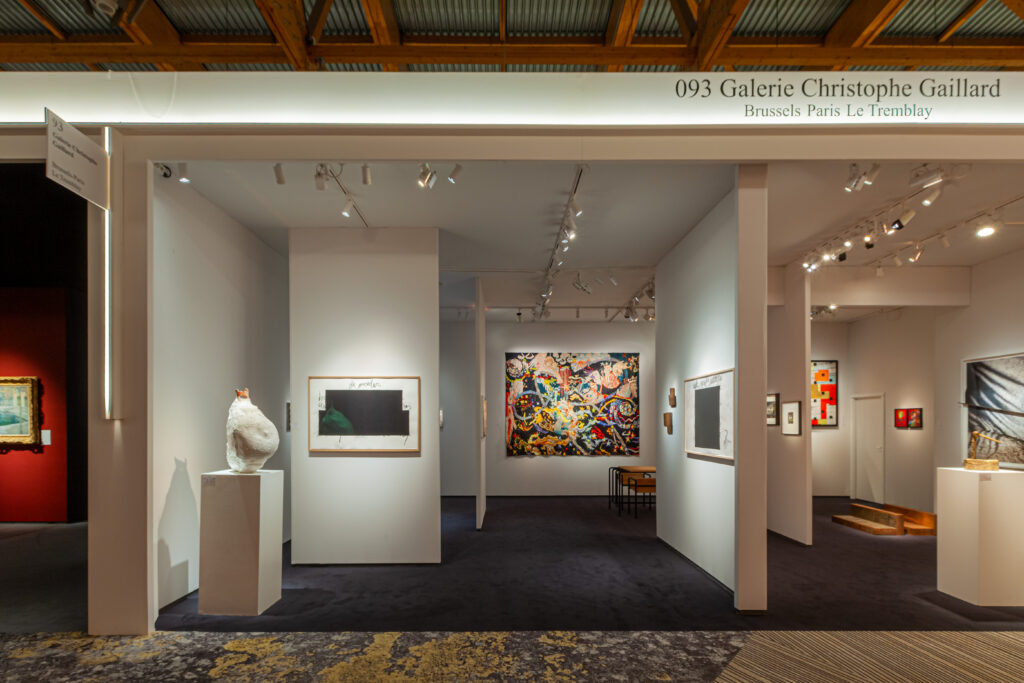
Galerie Christophe Gaillard (Paris/Brussels) – Stand 102

Known for its focus on the 1960s–1990s avant-garde, the gallery offers a powerful dialogue between historical works and contemporary creation.

MARUANI MERCIER (Brussels) – Stand 116

A leading gallery for post-war and contemporary art, emblematic of the fair’s high-level programming.

Nosbaum Reding (Luxembourg/Brussels) – Stand 141

Combining photography, installations and painting, the gallery continues to shape the contemporary scene in Brussels.

Support independent publishing! Subscribe to ART MAG and receive each issue in advance, in both print and digital format
👉 Subcribe 6 issues / 1 year
👉 Offer ART MAG

3. Rising Galleries & Newcomers to Watch

Arte-Fact Fine Art (Belgium) – Stand 132

A promising new participant specialising in 16th–18th-century Old Masters, already noticed by institutions.

Galerie Greta Meert (Brussels) – Stand 61

A major figure of post-war and conceptual art, joining BRAFA for the first time with a highly curated selection.

Mulier Mulier Gallery (Belgium) – Stand 21

Expect a sharp selection of Arte Povera, conceptual art, Pop Art and minimalism — a highlight for collectors of post-1960 movements.

Keith Haring (USA, Pennsylvania 1958-1990 New York)

Martos Gallery (New York) – Stand 128

A surprise entry from the U.S., presenting international contemporary artists, including museum-level works generating early buzz.

Studio Maisonjaune – Piero Palange (Italie, 1931-1975)

4. Design & Decorative Arts: A Renewed Vision

Maisonjaune Studio (France) – Stand 136

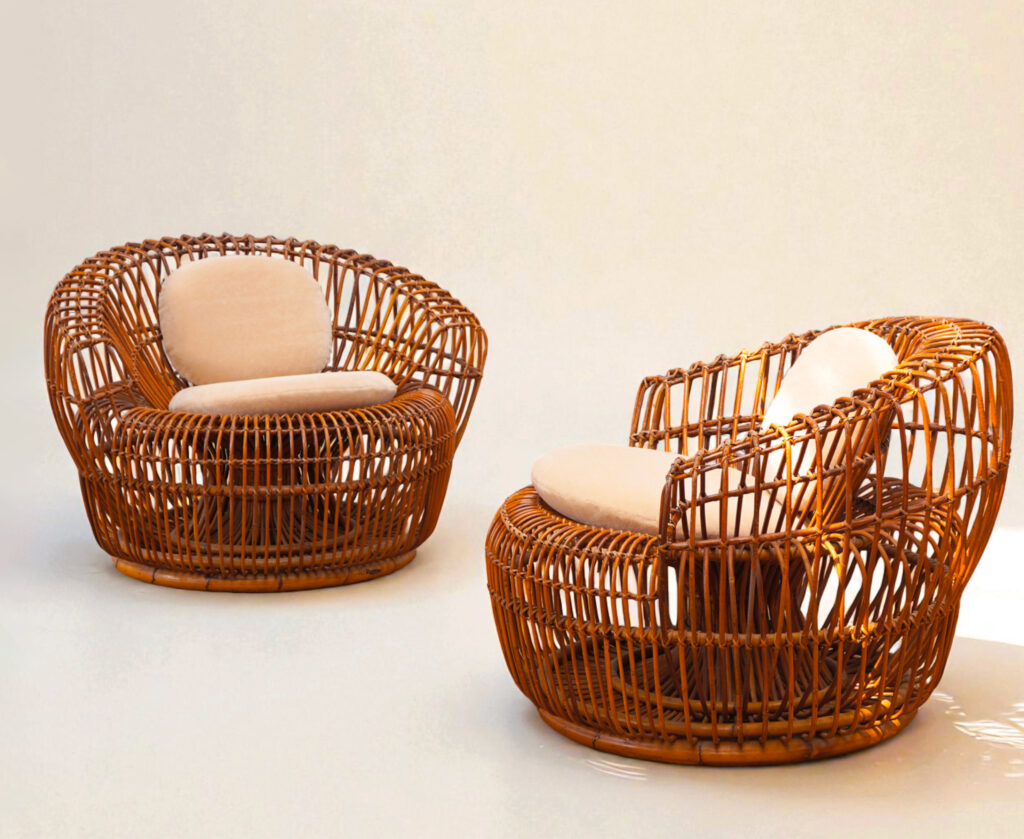
Known for its rare design pieces from the 1950s to today, and a fresh, contemporary vision.

Laurent Schaubroeck (Belgium) – Stand 146

A reference for Brazilian modernism, featuring exceptional works by Jorge Zalszupin and Sergio Rodrigues.

MassModernDesign (Netherlands) – Stand 105

A must-see for mid-century design enthusiasts, bringing together Scandinavian and Brazilian icons.

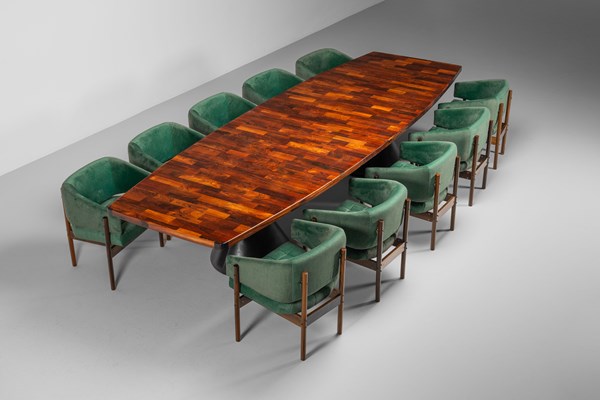
Jorge Zalszupin (Varsovie 1922-2020 São Paulo) Table Guanabara et chaises Senior, 1960

5. Guest of Honour 2026: The King Baudouin Foundation

Celebrating its 50th anniversary, the King Baudouin Foundation presents an exceptional “ephemeral museum” featuring Belgian heritage treasures: Old Masters, jewellery, modern art and design.

Its conference programme, the KBF Art Talks, positions the foundation as a key intellectual player of the fair.

Why BRAFA Art Fair 2026 Matters on the International Scene

BRAFA 2026 stands out because it masterfully blends:

  • Old Masters and contemporary artists,
  • global design and Belgian heritage,
  • museum-quality works and market innovations,
  • an intimate scale and exceptional artistic density.

In a market dominated by mega-fairs, BRAFA maintains a refined, human-sized model — a quality that collectors appreciate and that makes it one of Europe’s most respected fairs.

Support independent publishing! Subscribe to ART MAG and receive each issue in advance, in both print and digital format
👉 Subcribe 6 issues / 1 year
👉 Offer ART MAG

Read also

Categories
Art Fair - International - News

Art Fairs 2026 Calendar :all dates and major events

Art fairs play a central role in the global art market, bringing together galleries, collectors, and institutions across major international cities.

In 2026, the art fair calendar is once again packed with key events in Europe, the United States, and Asia. From Art Basel to Frieze and TEFAF, these fairs shape trends and define the market.

Below is the complete calendar of major art fairs in 2026, with dates, locations, and highlights to help you plan your year.

Art Fairs 2026 Calendar (Dates and Locations)

FairCityDates
BRAFA Art FairBrusselsJanuary 25 – February 1, 2026
Ceramic BrusselsBrusselsJanuary 21–25, 2026
Art GenèveGenevaJanuary 29 – February 1, 2026
Zona MacoMexico CityFebruary 4–8, 2026
Frieze Los AngelesLos AngelesFebruary 26 – March 1, 2026
TEFAF MaastrichtMaastrichtMarch 14–19, 2026
Art ParisParisApril 9–12, 2026
MiartMilanApril 17–19, 2026
Art BrusselsBrusselsApril 23–26, 2026
Biennale ArteVeniceMay 9 – November 22, 2026
Art BaselBaselJune 18–21, 2026
Liste Art FairBaselJune 15–21, 2026
Enter Art FairCopenhagenAugust 27–30, 2026
Frieze SeoulSeoulSeptember 2–5, 2026
Frieze LondonLondonOctober 14–18, 2026
Paris+ by Art BaselParisOctober 23–25, 2026
Paris Internationale / FIAC OnlineParisOctober 21–25, 2026
Luxembourg Art WeekLuxembourgNovember 20–22, 2026
Art Basel Miami BeachMiamiDecember 4–6, 2026

Art Fairs 2026 – Table of Contents

January 2026 – A Strong Start for the Global Art Market

BRAFA Art Fair 2026 — January 25 to February 1, 2026 — Brussels Expo

BRAFA Art Fair is one of the leading European art fairs, held annually in Brussels. It features a wide range of artworks, from antiquities to modern and contemporary art.

Art Genève 2026 — January 29 to February 1, 2026 — Geneva

A sophisticated fair bringing together contemporary art, design, and modern works in a curated and intimate atmosphere.

March 2026 – Key Art Fairs to watch

TEFAF Maastricht 2026 — March 14 to 19, 2026

Widely regarded as the world’s leading fair for fine art, antiques, and high-end design. TEFAF continues to set the benchmark for authenticity, rarity, and artistic excellence.

April 2026

Art Paris – April 9–12, 2026


Art Brussels – April 23–26, 2026


Miart Milan – April 17–19, 2026

May / June 2026 – The Heart of the Art Season

Venice Biennale 2026 — May to November 22, 2026 — Venice

The most influential event in contemporary art. National pavilions, major exhibitions, and a visionary curatorial direction make it a global meeting point for artistic innovation.

Art Basel 2026 — June 12 to 18, 2026 — Basel

The flagship fair of the international art market, where leading galleries, museum directors, and top collectors gather around major modern and contemporary artworks.

Support independent publishing! Subscribe to ART MAG and receive each issue in advance, in both print and digital format
👉 Subcribe 6 issues / 1 year

August 2026 – New Horizons in the North

Enter Art Fair 2026 — August 2026 — Copenhagen

Northern Europe’s rapidly expanding contemporary art fair, celebrated for its innovative program and its ability to spotlight new talent.

October 2026 – Major art events in Paris

Paris+ par Art Basel 2026 — October 2026

A central highlight of the international art season, bringing exceptional contemporary art to Paris and reinforcing the city’s place at the heart of the global art ecosystem.

FIAC Online & Paris Internationale — October 2026

Two complementary events showcasing experimental practices, emerging artists, and bold contemporary creation.

November / December 2026 – Ending the Year in Style

Luxembourg Art Week 2026 — November 2026

An increasingly influential fair that brings together contemporary galleries, curated sections, and a dynamic European scene.

Art Basel Miami Beach 2026 — December 2026

The essential American fair closing the year with a combination of artistic excellence, innovation, and cultural energy. A vibrant finale to the 2026 art fair calendar.

Support independent publishing! Subscribe to ART MAG and receive each issue in advance, in both print and digital format
👉 Subcribe 6 issues / 1 year

FAQ – Art Fairs 2026

What are the most important art fairs in 2026?

The most important art fairs include Art Basel, TEFAF Maastricht, Frieze London, and Art Basel Miami Beach.

When is Art Basel 2026?

Art Basel in Basel typically takes place in June.

Which art fairs take place in Europe in 2026?

Major European art fairs include TEFAF Maastricht, Art Brussels, Art Paris, and Frieze London.