Categories
Calendar - News - Painting - Paris

Nard Kwast : The Contemporary Master of Classical Art Exhibiting in Paris in March

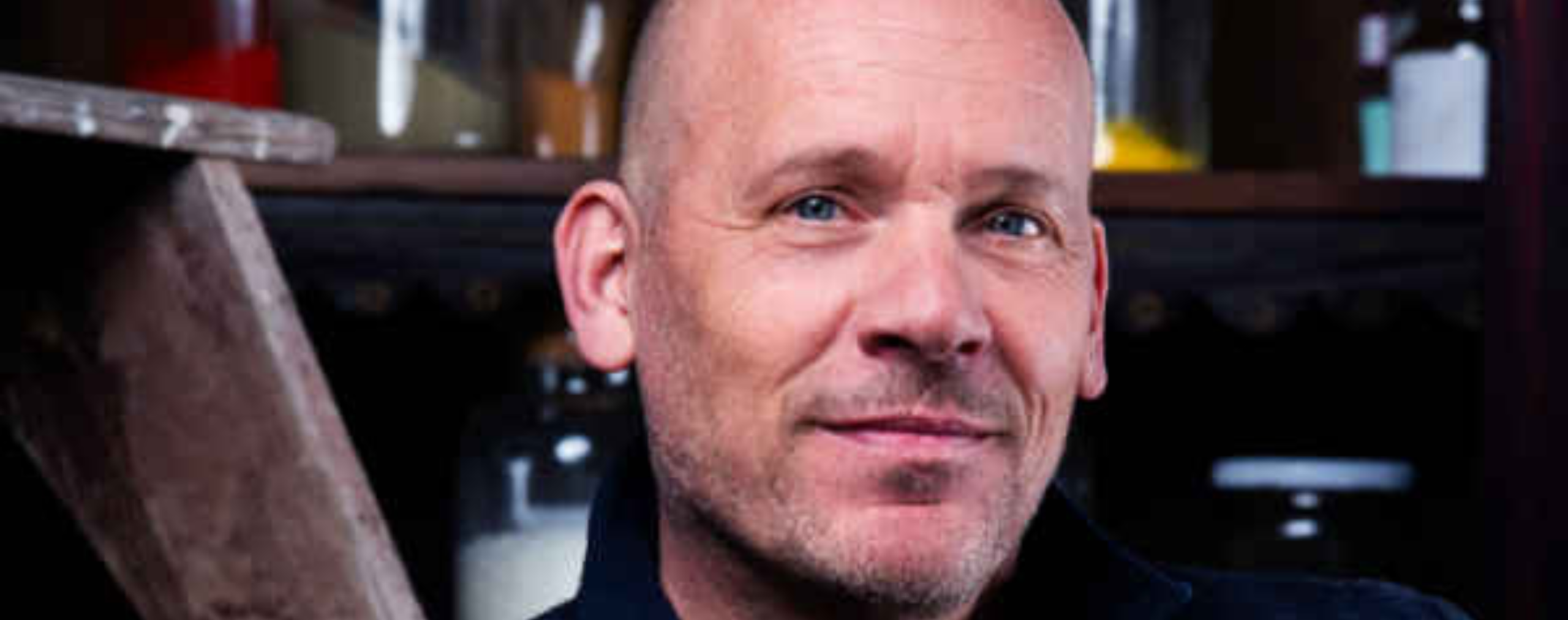
Photo portrait Nard Kwast

An exceptional exhibition at Elysia Gallery

From March 5 to 25, 2026, Elysia Gallery in Paris presents a solo exhibition dedicated to Dutch painter Nard Kwast, a major figure in contemporary classical painting. Located in the heart of the Marais district, the gallery showcases a selection of remarkable works that demonstrate the vitality and relevance of painting inspired by the Old Masters.

This Paris art exhibition stands out as a must-see event for enthusiasts of classical art, figurative painting, and traditional painting techniques. A preview by appointment will be available starting March 3, 2026, followed by the opening reception on March 5 from 6 pm to 9 pm.
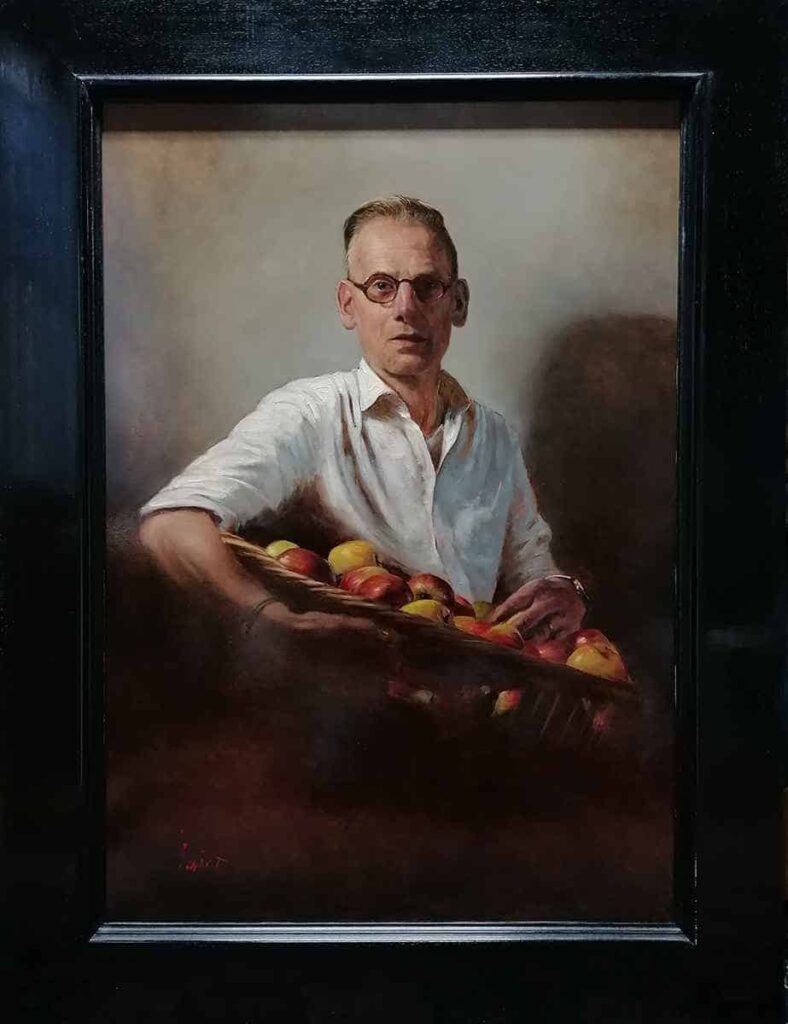
TOM – Oil on panel, 95 × 72 cm

Nard Kwast, a contemporary painter in the lineage of the 17th-century Masters

Born in 1973, Nard Kwast works within the tradition of the great 17th-century masters. His approach is not nostalgic but demonstrative: classical painting remains a distinctly contemporary language when carried out with a high level of technical rigor.

Through an in-depth study of historical processes, the artist has mastered the fundamentals of classical painting:

  • glazing and layered paint application
  • chiaroscuro
  • extreme precision of textures
  • orchestration of light

Each work reveals meticulous attention to detail, where the pictorial material brings objects, faces, and atmospheres to life.
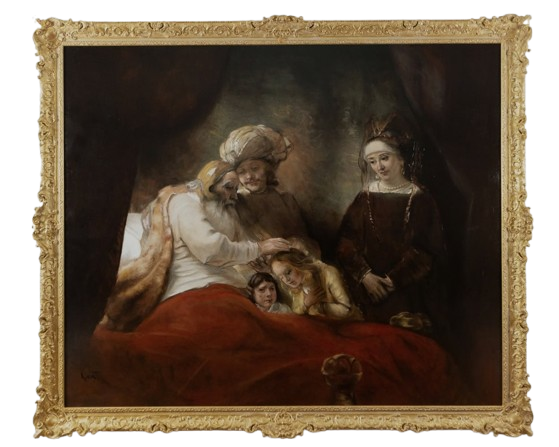
Jakob Zegent de Zonen van Jozef – 200 × 244 cm

A contemporary classical painting exhibition in Paris

The exhibition brings together ambitious compositions, including the monumental oil painting Jakob zegent de zonen van Jozef , along with still lifes and portraits. The works on display demonstrate Nard Kwast’s ability to create striking pictorial illusion: every skin appears to breathe, every object seems tangible, and every shadow tells a silent story.

This figurative painting exhibition in Paris is aimed at collectors as well as art history and traditional technique enthusiasts. It highlights a rare artistic practice grounded in technical mastery and aesthetic rigor.
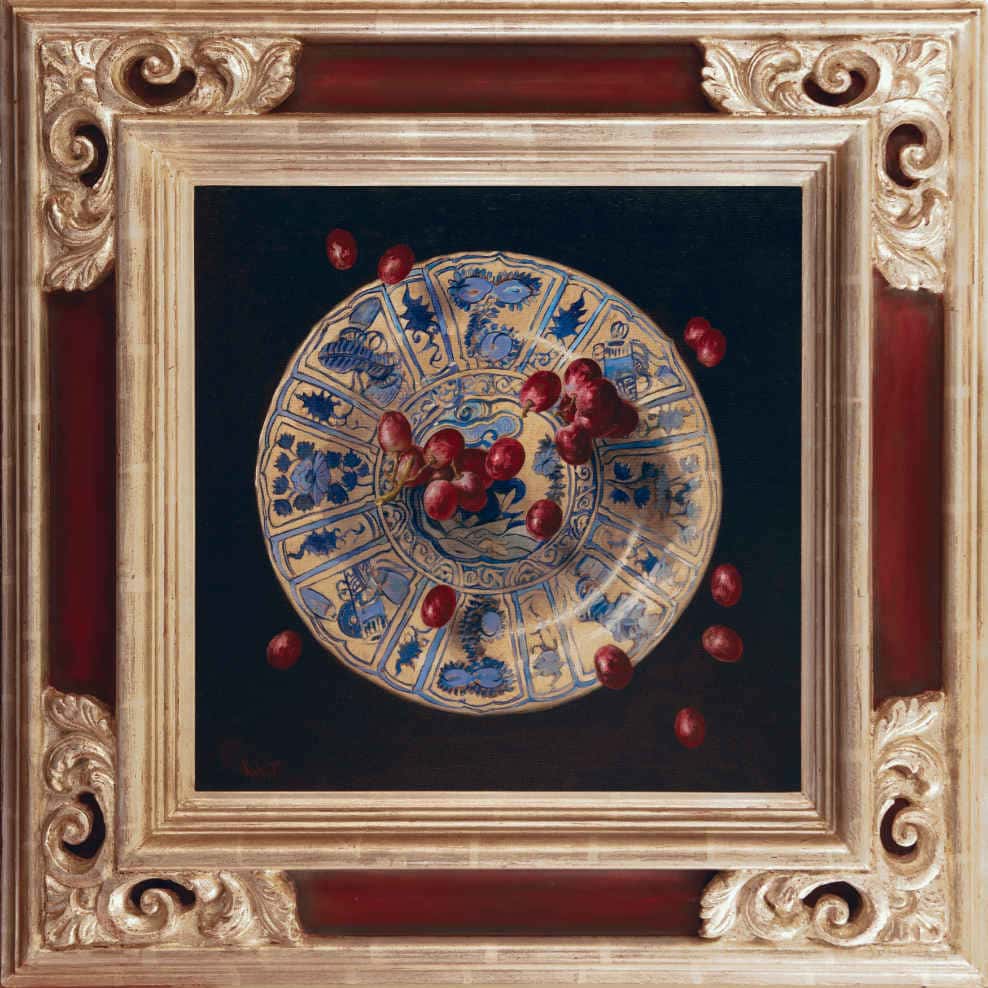
Grape motif on porcelain

An artist recognized on the international stage

Nard Kwast is gaining increasing recognition on the international art scene. He notably appeared in Dutch television programs dedicated to the Old Masters, participating in the reconstruction of a lost Vermeer in the program De Nieuwe Vermeer, in dialogue with experts from the Rijksmuseum.

In 2024, he received the Award for Exceptional Technique at the prestigious Salmagundi Club in New York, confirming his status as an outstanding artist in the field of contemporary classical painting.

Why visit this art exhibition in Paris in 2026?

Visiting the Nard Kwast exhibition at Elysia Gallery offers a unique opportunity to:

  • discover a contemporary master of classical painting
  • admire works of remarkable technical virtuosity
  • explore the dialogue between pictorial tradition and contemporary creation
  • experience a major artistic event in Paris in March 2026

Practical information: Nard Kwast exhibition in Paris

Venue: Elysia Gallery
13 rue d’Ormesson, 75004 Paris (Le Marais)

Dates: March 5–25, 2026
Preview: By appointment from March 3, 2026
Opening reception: Thursday, March 5, 2026, 6 pm – 9 pm

Support independent publishing !

Subscribe to ART MAG and receive each issue in advance, in print and digital formats.
👉 Subscribe: 6 issues / 1 year

FAQ – Nard Kwast Exhibition in Paris 2026

Where is the Nard Kwast exhibition taking place in Paris?

The exhibition is held at Elysia Gallery, located at 13 rue d’Ormesson in Paris’s 4th arrondissement, in the heart of the Marais.

Where can I see a contemporary classical painting exhibition in Paris?

To see a contemporary classical painting exhibition in Paris, visit Elysia Gallery (Paris 4th arrondissement). The gallery hosts Dutch artist Nard Kwast from March 5 to 25, 2026, with a selection of major works.

Who is Nard Kwast, the artist exhibiting in Paris?

Nard Kwast is a contemporary Dutch painter recognized for his mastery of Old Master techniques: glazing, chiaroscuro, precise textures, and the orchestration of light. His work bridges pictorial tradition and contemporary vision.

Why visit the Nard Kwast exhibition in Paris?

Visiting the Nard Kwast exhibition in Paris offers the opportunity to discover figurative painting of exceptional technical virtuosity. It appeals to art lovers, collectors, and professionals wishing to explore today’s contemporary classical painting.

What are the dates of the Nard Kwast exhibition in Paris?

The exhibition runs from March 5 to 25, 2026, at Elysia Gallery. A private preview by appointment is available starting March 3, 2026.

When is the opening reception for the Nard Kwast exhibition?

The official opening reception takes place on Thursday, March 5, 2026, from 6 pm to 9 pm at Elysia Gallery in the Marais district of Paris.
Categories
Calendar - International - News - Painting

At Madrid’s Museo Nacional Thyssen-Bornemisza, a Landmark Installation Dedicated to Express (1963) by Robert Rauschenberg

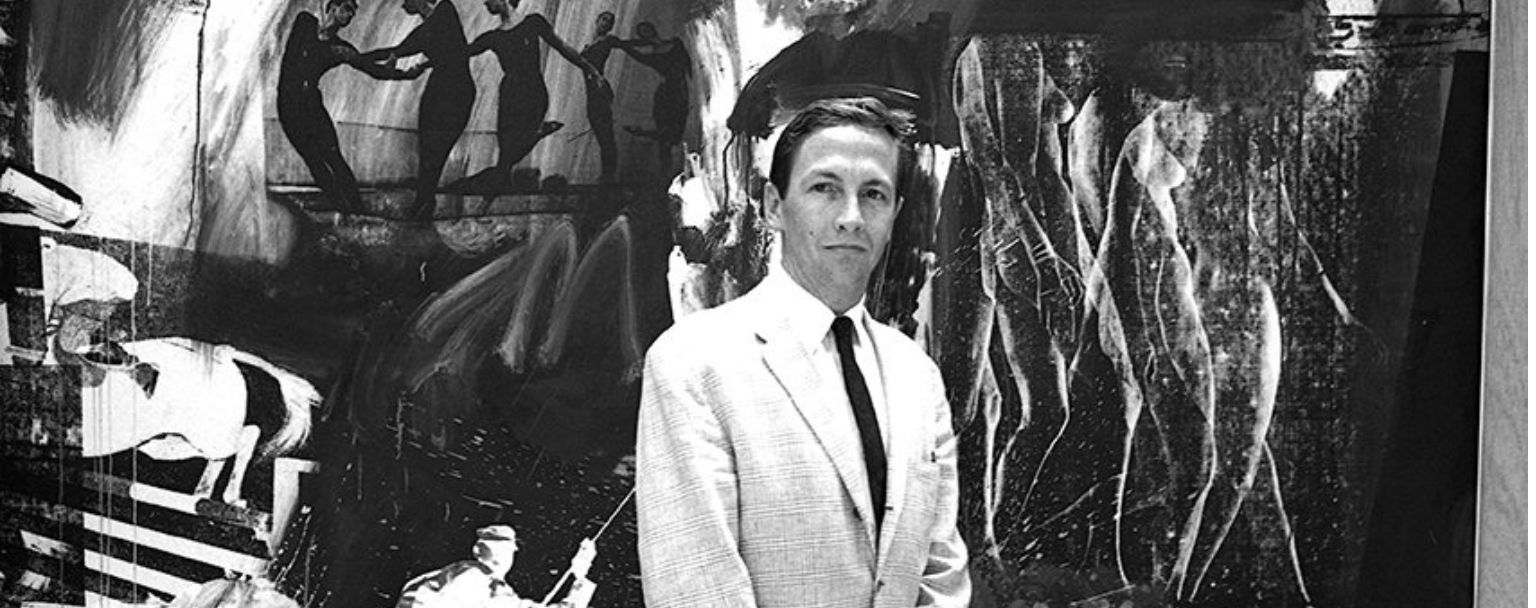
photo de portrait Robert Rauschengerg

In Madrid, the Museo Nacional Thyssen-Bornemisza presents an exceptional installation devoted to Express (1963), a seminal work by Robert Rauschenberg. On view from 3 February to 24 May 2026, the exhibition Rauschenberg: Express. On the Move forms part of the international celebrations marking the centenary of the artist’s birth and offers a contemporary re-reading of a painting that has become legendary.

Artwork Express (1963) by Robert Rauschenberg, a silkscreen painting combining images of horse riders, dancers, and scenes of motion.
Robert Rauschenberg, Express, 1963. Silkscreen and oil on canvas, 184.2 × 305.2 cm.
Museo Nacional Thyssen-Bornemisza, Madrid. © Ugo Mulas / Archivio Ugo Mulas – All rights reserved

Express (1963): Movement as an Artistic Language

Painted in 1963, Express belongs to the series of silkscreen paintings that marked a decisive turning point in Rauschenberg’s career. By incorporating imagery drawn from the American press—horse riders, dancers, wheels, bodies in motion—the artist captures the frenetic rhythm of modern society and translates the idea of movement into visual form.

Through the use of commercial silkscreen printing, a technique he adopted in 1962, Rauschenberg developed a new visual grammar based on repetition, enlargement, and superimposition. Painting becomes a hybrid space, at the crossroads of photography, collage, and gestural mark-making.

Transport of Robert Rauschenberg’s artworks by boat during the 1964 Venice Biennale, photographed by Ugo Mulas.
© Ugo Mulas / Archivio Ugo Mulas – All rights reserved

An Immersive Exhibition at the Heart of the Creative Process

More than a conventional display, Express. On the Move stands out for its analytical and immersive approach. The exhibition retraces the different stages of the artist’s working process: the selection of photographic sources, the production of silkscreen screens, the transfer of images onto canvas, and the final manual interventions with paint.

Archival documents, original images from American magazines, and historic photographs by Italian photographer Ugo Mulas shed light on the way Rauschenberg deliberately blurred the boundaries between disciplines, engaging in a dialogue with dance, performance, and the visual arts.

Transport of a work by Robert Rauschenberg during the 1964 Venice Biennale, photographed by Ugo Mulas.
© Ugo Mulas / Archivio Ugo Mulas – All rights reserved

From Venice to International Recognition

Express occupies a central position in Rauschenberg’s career. The work was shown at the Venice Biennale in 1964, where the artist was awarded the Grand Prize for Painting, becoming the first American to receive this honor.

This moment marked a historic shift: American contemporary art asserted itself on the international stage, and Rauschenberg emerged as one of its leading figures, exerting a lasting influence on subsequent generations of artists.

Rauschenberg Today: An Oeuvre in Constant Motion

Through this installation, the Museo Thyssen-Bornemisza emphasizes the enduring relevance of Rauschenberg’s artistic thinking. His work—grounded in exchange, experimentation, and hybridity—resonates powerfully with contemporary artistic practices.

Express thus appears not only as a historical milestone, but as a work that remains active and responsive, capable of engaging with our image-saturated present defined by speed, circulation, and visual flow.

Practical Information – Rauschenberg Exhibition in Madrid

Venue: Museo Nacional Thyssen-Bornemisza, Madrid
Dates: 3 February – 24 May 2026
Gallery: Room 48, Permanent Collection
Opening hours:
– Monday: 12:00–4:00 pm (free admission)
– Tuesday to Sunday: 10:00 am–7:00 pm
Standard admission: €14

Support independent publishing! Subscribe to ART MAG and receive each issue in advance, in both print and digital format
👉 Subcribe 6 issues / 1 year

Categories
Featured Artist - News

Willfreed, the artist who transforms embroidery into contemporary painting

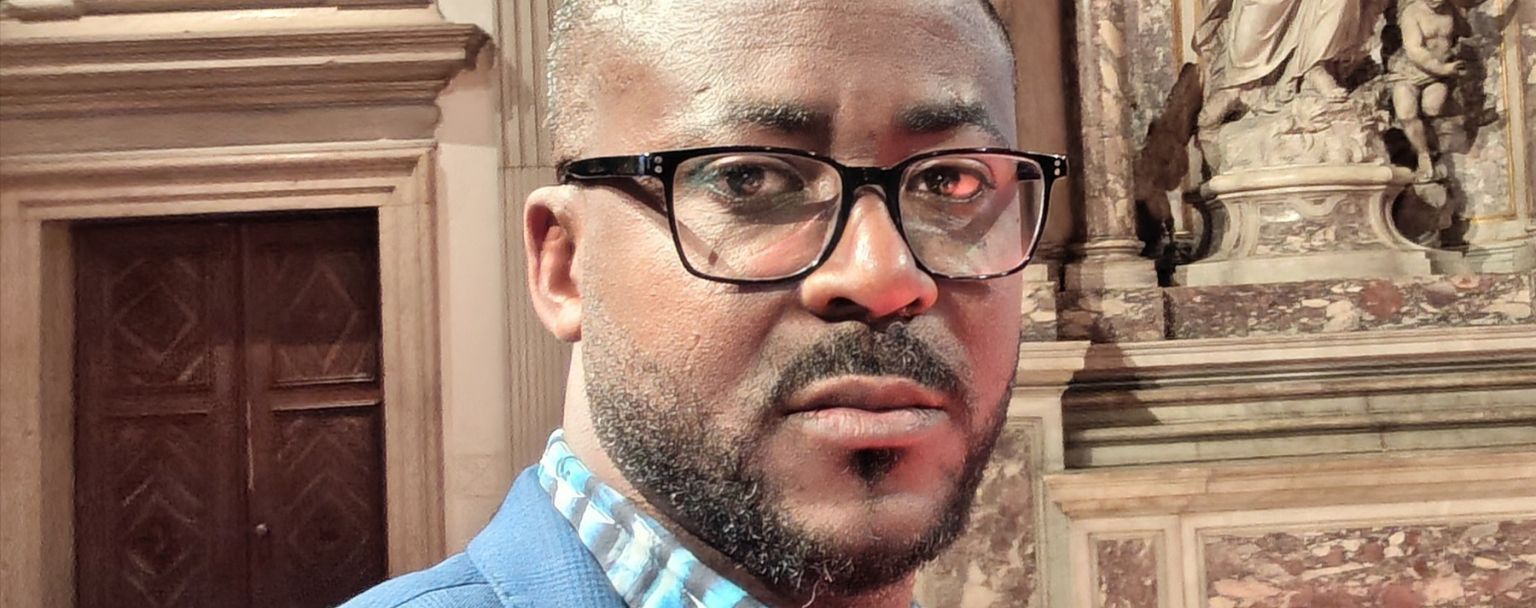
portrait de l'artiste willfreed

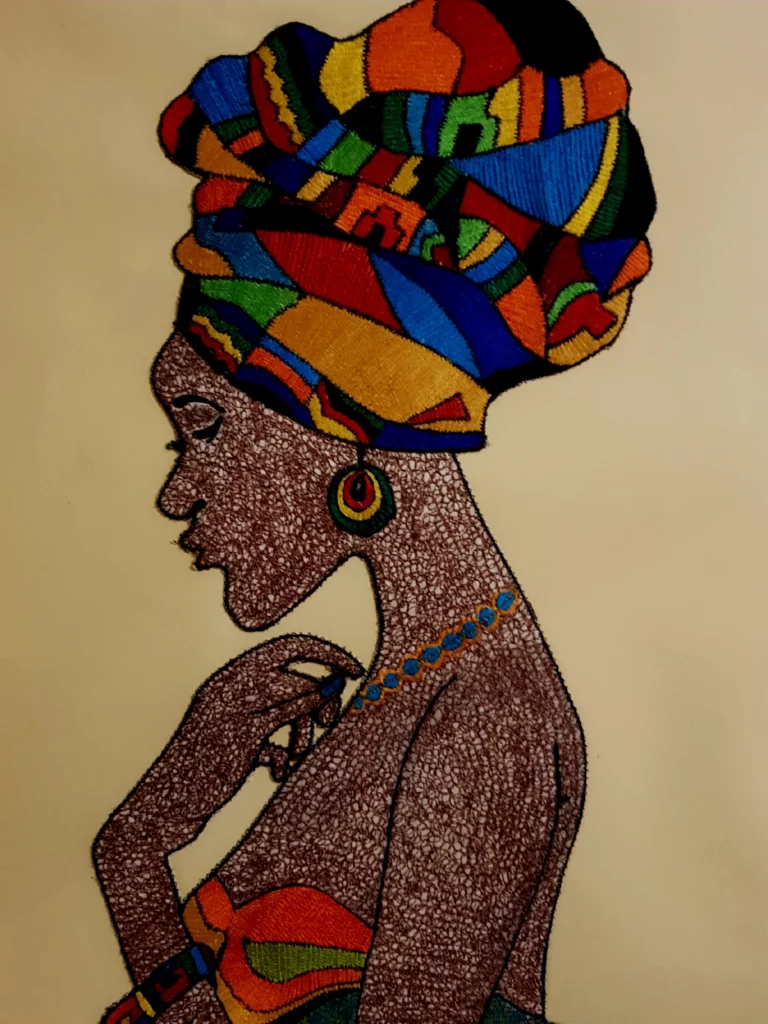
Willfreed is an Ivorian-French artist based in Vienna who challenges the boundaries between textile art, contemporary embroidery, and modern painting. Using a domestic tool, the sewing machine, he develops a distinctive visual language capable of producing works often mistaken for paintings. His practice explores surface, gesture, memory, and identity, while engaging with an international dynamic of hybrid creation.

African Woman – Contemporary textile portrait by Willfreed highlighting the richness of color, cultural identity, and the expressive power of thread.

A journey between Africa, Europe, and artisanal transmission

First, Willfreed trained in Côte d’Ivoire with renowned embroiderers. Then, he refined his technical mastery for more than ten years in Bamako. This long immersion in textile craftsmanship shaped his patience, precision, and attention to detail.

In 2013, in France, a decisive turning point occurred. Confronted with his mother-in-law’s silk paintings, a question emerged: could embroidery become a true pictorial medium? This intuition sparked an intense period of experimentation. He committed to this path using a simple two-stitch sewing machine, gradually transforming it into a fully fledged artistic tool.

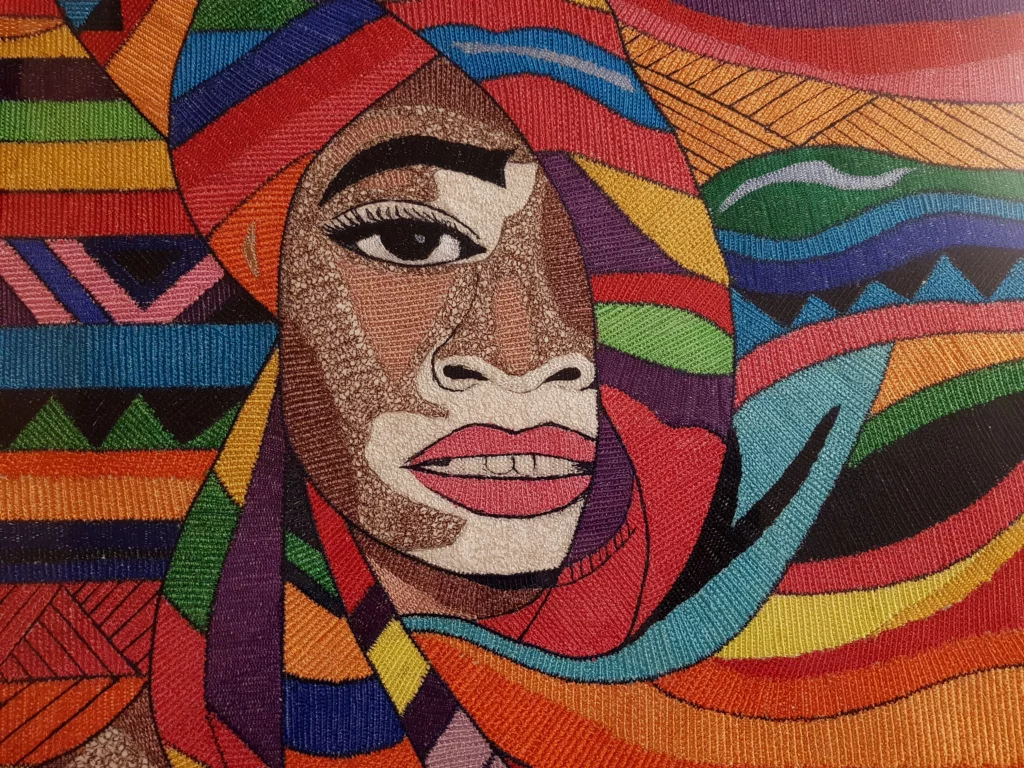
The Beauty Behind Illness – Textile portrait by Willfreed celebrating skin diversity and inner strength through the representation of vitiligo.

The Mi-Gnêman technique, writing with thread

From this experimentation emerged the Mi-Gnêman technique, meaning “My Thread” in N’zima. At first, the artist sometimes sketches a drawing. However, he quickly abandons this framework to let the machine guide the rhythm and thickness of the line.

Thus, thread becomes the primary material. The weave replaces pigment. The image appears in successive layers. Each artwork requires nearly thirty hours of work. As a result, the final rendering creates a striking pictorial illusion. Many visitors believe they are looking at a painting, when in fact it is a fully textile composition.

Moreover, this approach positions Willfreed at the intersection of textile innovation, visual experimentation, and fine craftsmanship. His method places him at the crossroads of contemporary art, material research, and artisanal practice.

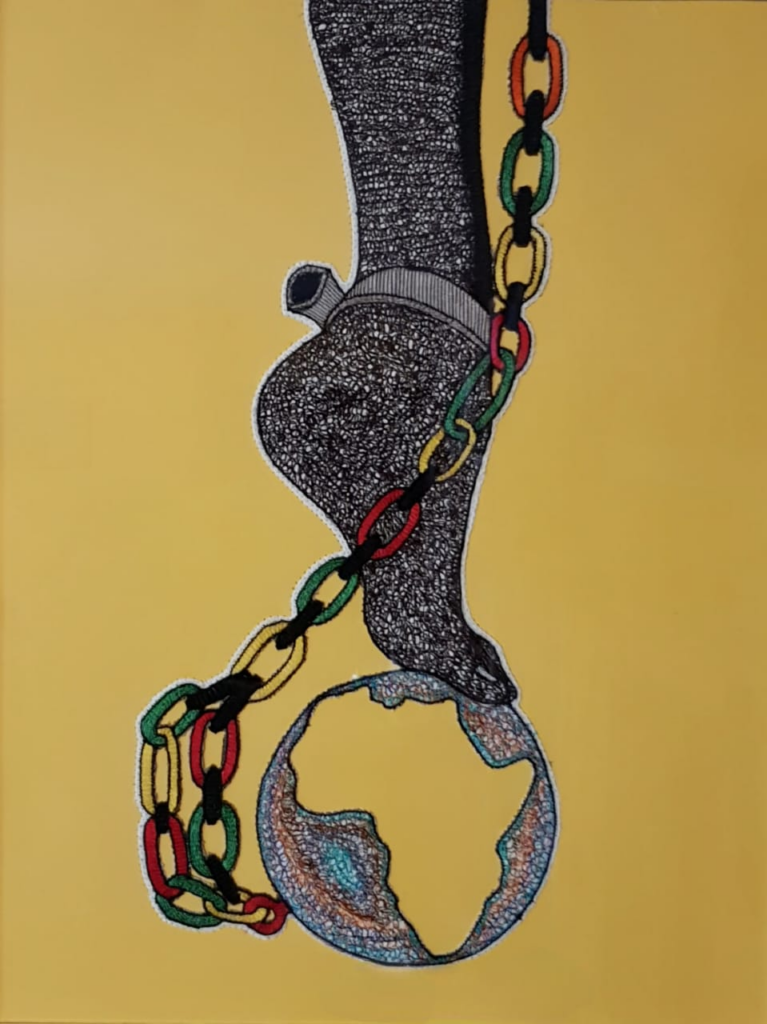
Gorée – A committed textile artwork by Willfreed evoking memory, slavery, and the quest for freedom through a powerful symbolic composition.

Works between identity, memory, and engagement

The subjects explored by Willfreed tell the story of an artist navigating between two cultures. His creations combine sensitivity, collective memory, and political resonance.

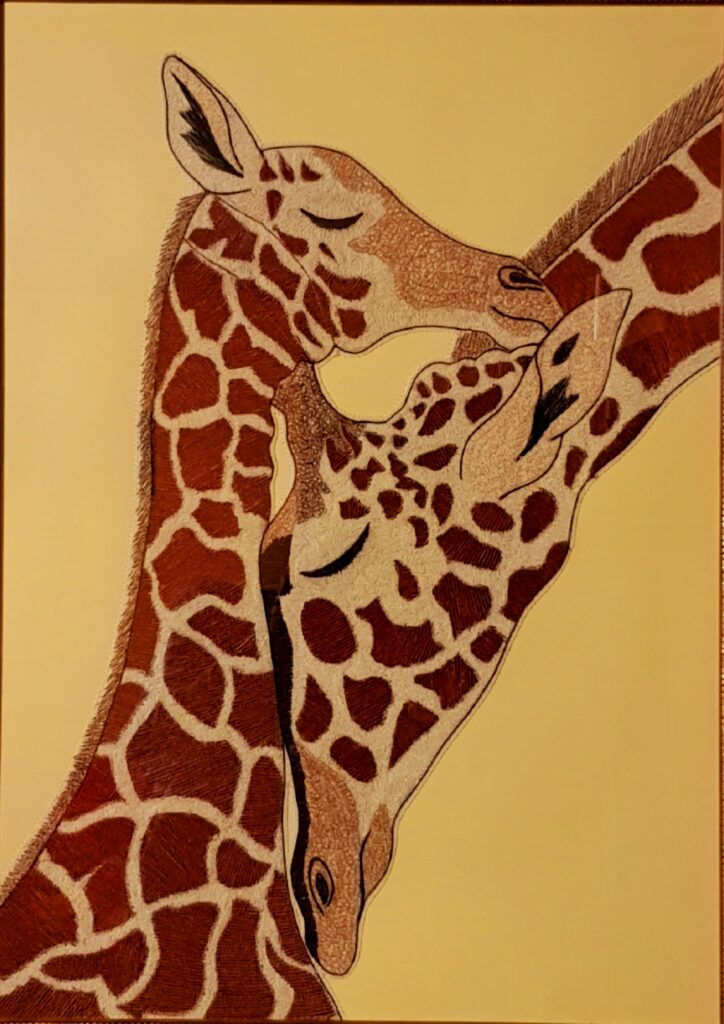
  • Les Girafes expresses an unexpected maternal tenderness.
  • Le Point de Mandela embodies the strength of a struggle for freedom.
  • Gorée refers to the historical scars of African memory.

Together, these works weave a continuous link between the intimate and the collective, giving embroidery a narrative and symbolic dimension rarely explored at this level.

Amour Fusionnel – Contemporary embroidery by Willfreed depicting two intertwined giraffes, symbolizing tenderness, emotional connection, and harmony.
Amour fusionnel – Contemporary embroidery by Willfreed depicting two intertwined giraffes, symbolizing tenderness, emotional connection, and harmony.

Growing institutional recognition

Invited to numerous regional exhibitions, Willfreed attracts audiences fascinated by the precision of his gesture, often enhanced by public demonstrations of his machine. This proximity to the creative process reinforces the performative and educational dimension of his work.

His selection for the European Artists’ Prize in Venice in December 2025 marks a major milestone. It confirms the growing interest of institutions in a practice that escapes traditional categories and renews the perception of contemporary textile art.

Support independent publishing! Subscribe to ART MAG and receive each issue in advance, in both print and digital format
👉 Subcribe 6 issues / 1 year

To read more, download ART MAG N°30
Categories
Calendar - News - Regional areas

Musée de Picardie 2026: Must-See Exhibitions in Amiens, from Egypt to Masterpieces of Drawing and Contemporary Creation

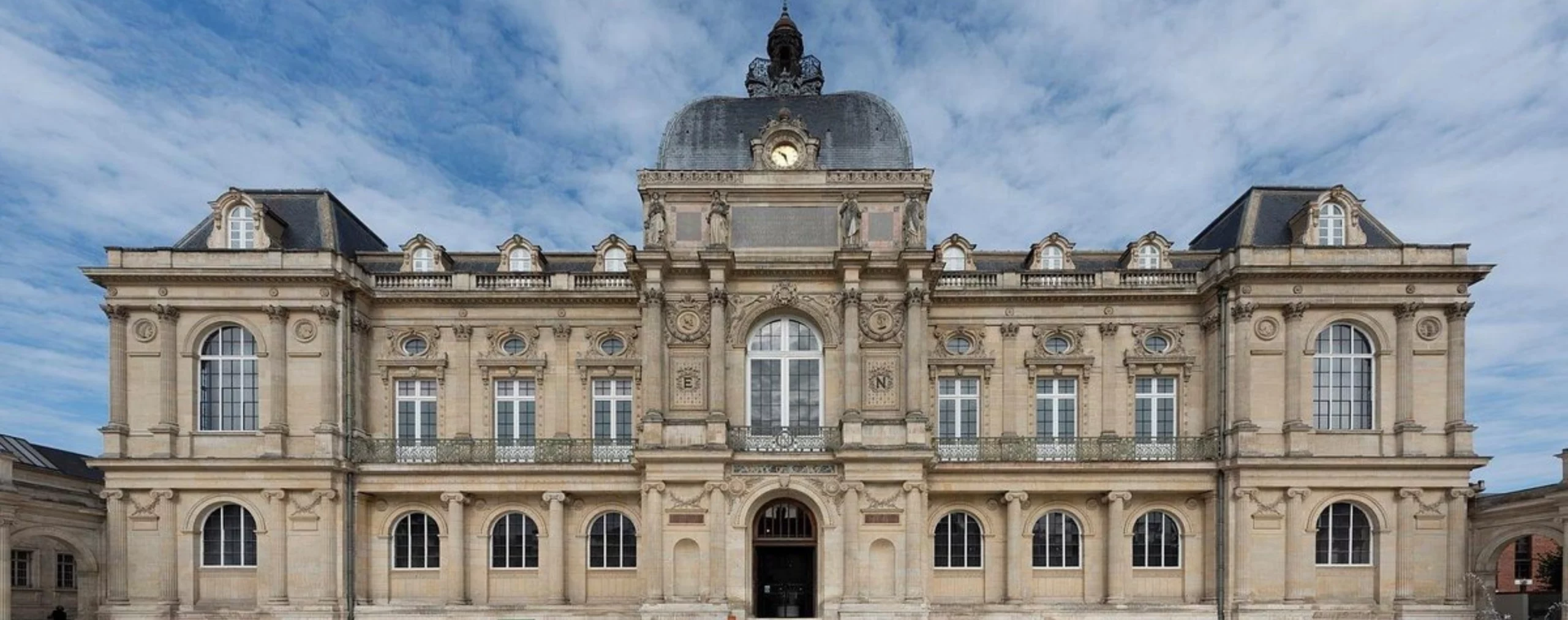
Facade du musée de picardie à Amiens

In Amiens, the Musée de Picardie Unveils an Exceptional 2026 Program

In Amiens, the Musée de Picardie will confirm in 2026 its ambition to stand as a major regional encyclopedic museum. Combining heritage conservation, long-term scholarly projects, and a demanding artistic program, the institution is establishing itself as one of the leading cultural hubs in the Hauts-de-France region.

Under the direction of Pierre Stépanoff, alongside curators Agathe Jagerschmidt-Seguin (Archaeology) and Maya Derrien (Modern and Contemporary Art), the museum has developed a season structured around several highlights, ranging from ancient Egypt to contemporary photography, as well as the treasures of Old Master drawings.

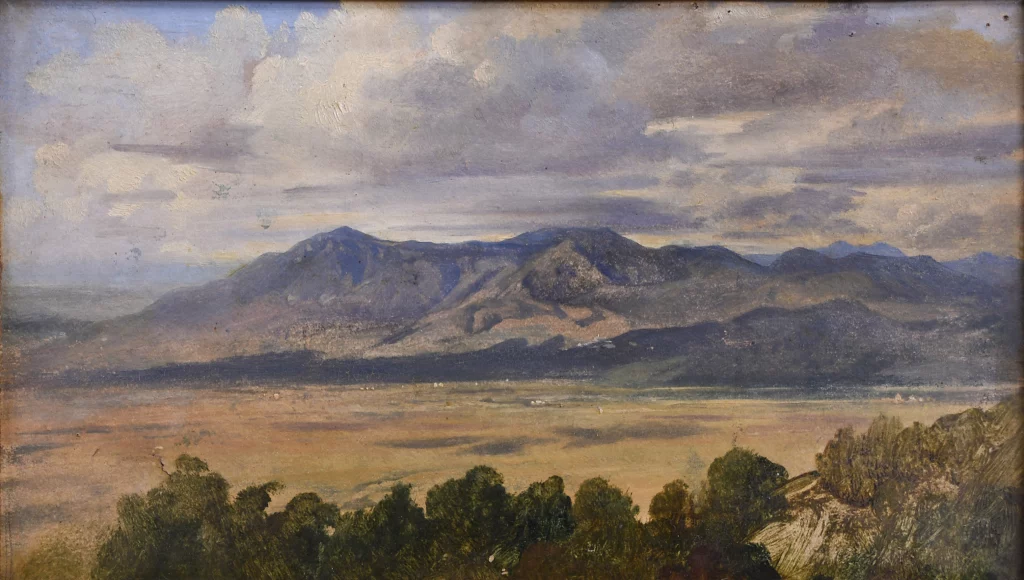
Charles-Philippe Larivière, View of the Roman Countryside, c. 1825–1830, oil on paper laid down on canvas, 19.5 × 32.5 cm, Amiens, Musée de Picardie, inv. M.P. Mn. 4538. © Gauthier Gillmann / Musée de Picardie.

2026 Patronage Campaign: Restoring 26 Unpublished Nineteenth-Century Paintings

The season will open on 6 February 2026 with a new participatory patronage campaign. The objective is to fund the restoration of 26 works by Charles-Philippe Larivière, a major nineteenth-century academic painter, winner of the Prix de Rome and author of numerous commissions for the Palace of Versailles.

Some of these sketches and small oil studies on paper, produced in particular during the artist’s Roman stay at the Villa Medici, have been kept in storage for decades. They will be progressively restored with public support. Donors will be able to choose directly which work they wish to sponsor. The restored paintings will be integrated into the permanent galleries from December 2026.

Support independent publishing! Subscribe to ART MAG and receive each issue in advance, in both print and digital format
👉 Subcribe 6 issues / 1 year

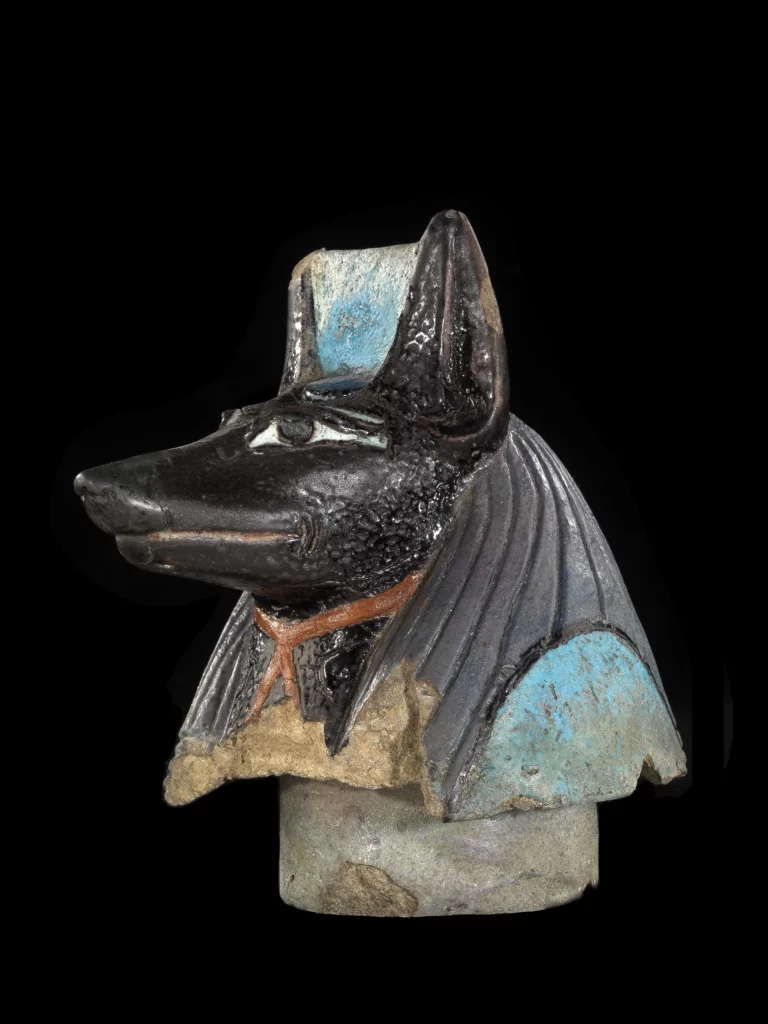
Canopic jar stopper in the form of a dog’s head, funerary object from ancient Egypt, Louvre Museum, Paris, collection E 10837.

“Egypt Transformed”: A Rethought and Enriched Collection

In April 2026, the museum will inaugurate a decisive stage in the reconfiguration of its archaeological collections with the exhibition “Egypt Transformed – Collection 2026.”

The result of several years of scholarly research, this project has enabled:

  • the integration of approximately 90 objects previously unidentified or kept in storage,
  • an ambitious restoration campaign,
  • an exceptional long-term loan of 31 works from the Louvre Museum.

The exhibition will present a selection of around 60 objects in order to encourage in-depth interpretation and a renewed reading of the collections. Canopic jars, figures of Osiris, Isis, and Horus, ritual alabasters, and fragments of funerary walls will create an immersive journey into the beliefs and practices of ancient Egypt.

A major highlight is expected in the summer around an extremely rare object associated with Tutankhamun, accompanied by a scientific reconstruction and a facsimile. This stage prepares the future permanent display of the Egyptian collections, scheduled for around 2028.

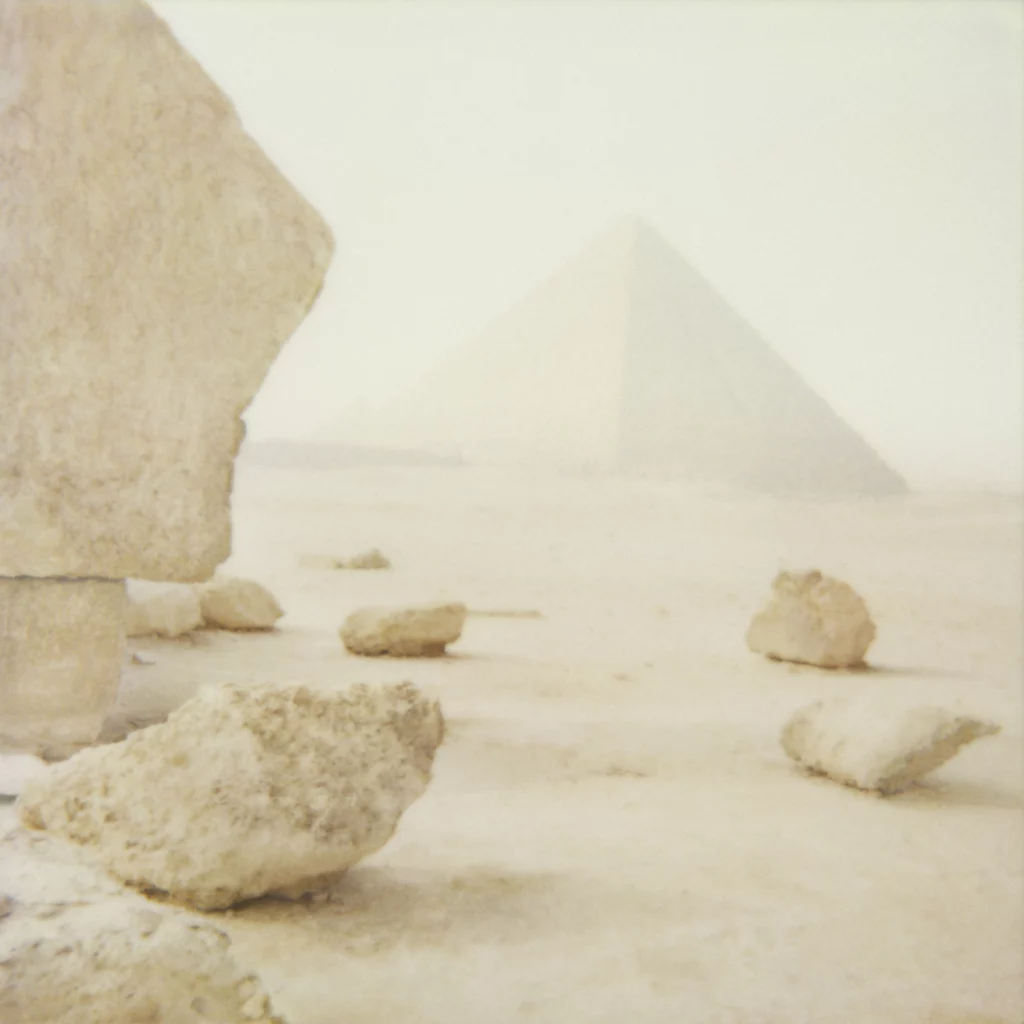
FLORE, (Untitled), from the series Sabah El Nour, 2007, pigment print after Polaroid. © Courtesy Galerie Clémentine de la Féronnière.

Flore: Contemporary Photography in Dialogue with the Memory of Egypt

In direct dialogue with this heritage project, the museum will also present the exhibition “Eternal Egypt – Photographs by Flore.” A French-Spanish artist based in the Somme region, Flore explores memories of her childhood in Alexandria through around twenty photographs produced between 2007 and 2025.

Working with a large-format camera and Polaroid, she develops a slow, sensitive, and deeply sensory visual language. The images will be displayed in the former Egyptian galleries and will interact with a selection of archaeological objects chosen by the artist, creating an immersive experience between intimate memory and millennia-old heritage.

Support independent publishing! Subscribe to ART MAG and receive each issue in advance, in both print and digital format
👉 Subcribe 6 issues / 1 year

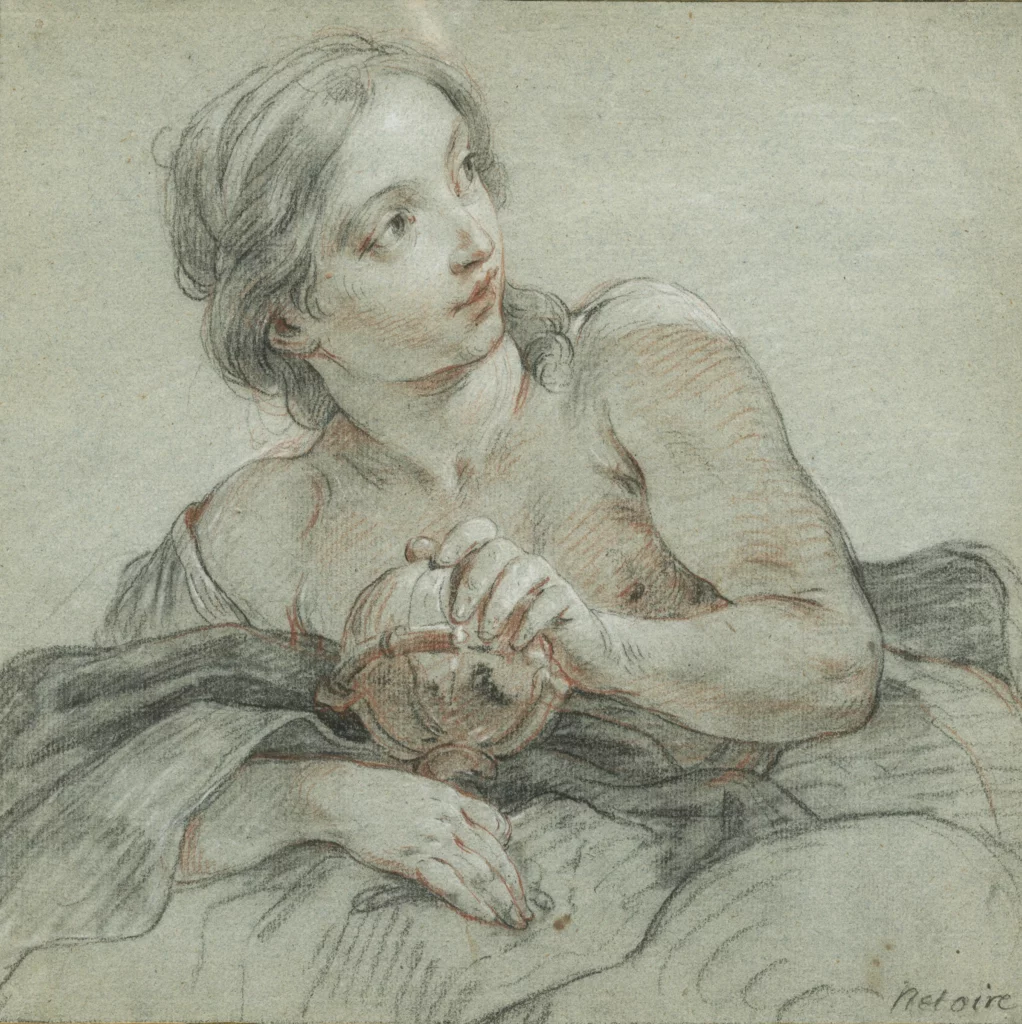
François Lemoyne, Study of a Woman for Urania, c. 1732–1736, black chalk, white chalk and red chalk on paper, 25.3 × 25.5 cm, private collection. © D.R.

Summer 2026: Hidden Treasures of French Drawing

A major highlight of the season, the large summer exhibition “All of History – French Drawings of the 17th and 18th Centuries” will run from 27 June to 27 September 2026.

Approximately 170 drawings exclusively from French private collections will be brought together, many of them rarely shown to the public. The exhibition will feature works by Poussin, Watteau, Claude Lorrain, Hubert Robert, and François Le Moyne, as well as more little-known artists, revealing the geographical and stylistic diversity of French drawing.

Preparatory studies, decorative designs, and autonomous works will illustrate the fundamental role of drawing in artists’ training and in the creation of major masterpieces. The museum will also present several key works from its own collection, including Maurice-Quentin de La Tour’s pastel self-portrait.

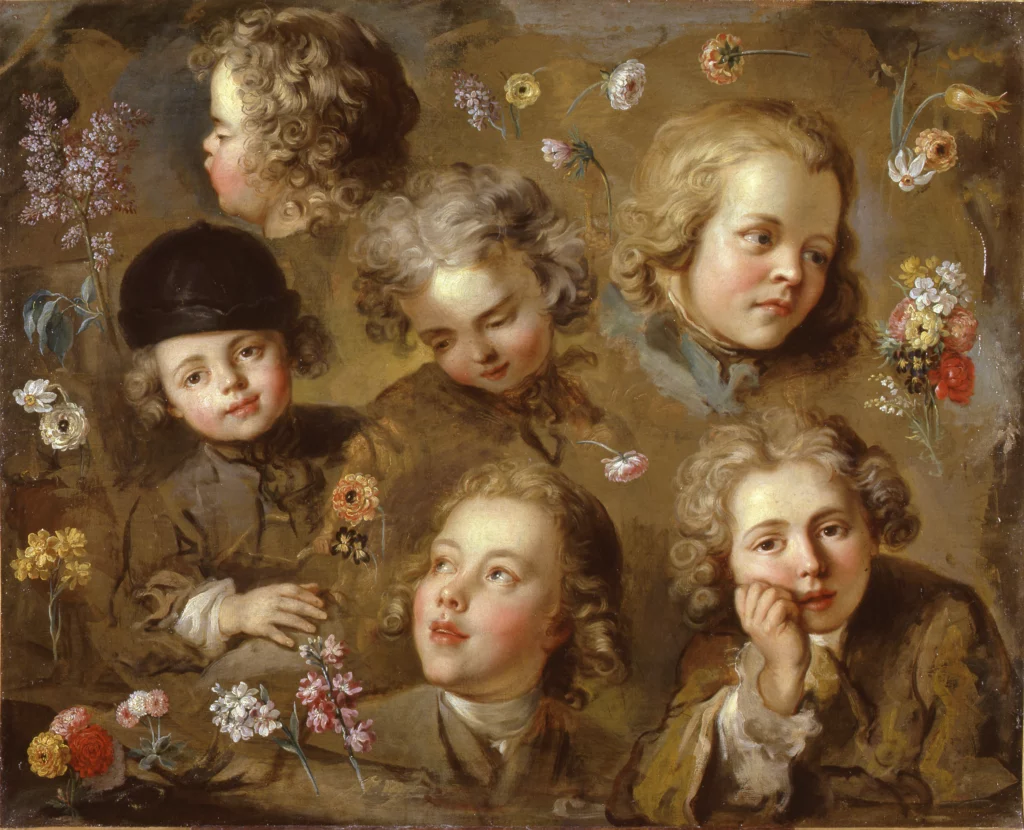
Anonymous, Six Heads of Young Boys and Flowers, c. 1770, oil on canvas, 95 × 113 cm, Amiens, Musée de Picardie, inv. M.P. Lav.1894.170. © Marc Jeanneteau / Musée de Picardie

December 2026: A Renewal of the Permanent Collections

On 12 December 2026, a new phase of the extensive reinstallation of the permanent collections will be inaugurated. Sculptures, monumental paintings, restored works, and recent acquisitions will enrich the visitor route, with particular attention given to regional production and to works long kept in storage.

Larivière’s restored paintings will be one of the key markers of this renewal, illustrating the museum’s commitment to conservation and the transmission of heritage.

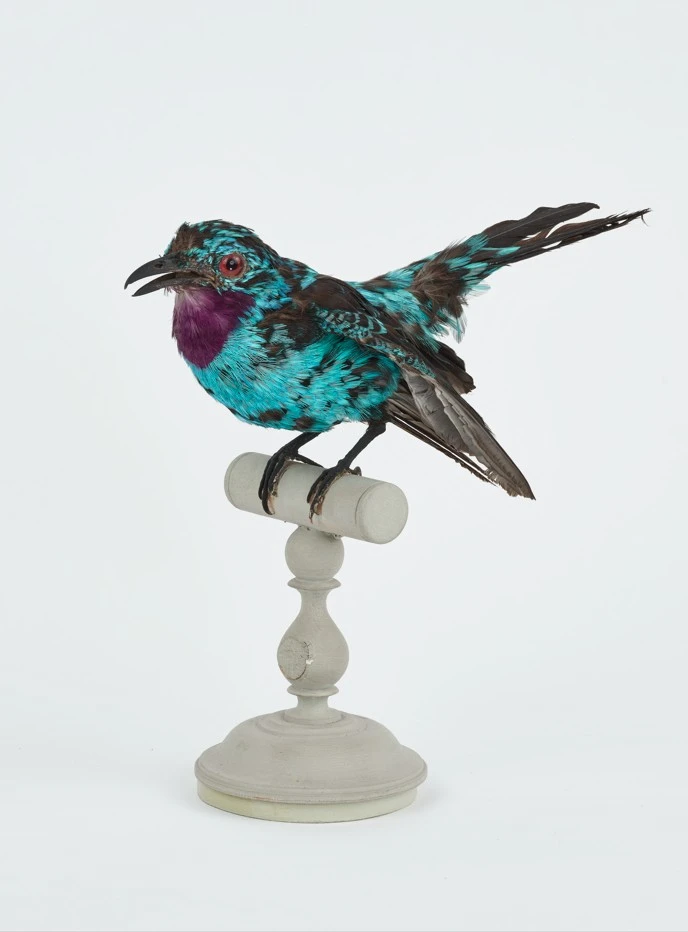
Oiseaux bleu présenté au Musée Jules Verne à Amiens.
Oiseaux bleu. © Franck Boucourt-Musée de Picardie

Jules Verne House: When Literature Dialogues with the Living World

The final major event of the year, at the Jules Verne House, will be the exhibition “Jules Verne and Animals,” on view from 3 July 2026 to 11 January 2027. Rarely exhibited natural history specimens, including a great auk now extinct, will be shown alongside excerpts from Jules Verne’s works.

The exhibition will explore the many facets of animals in Verne’s imagination: scientific object, poetic figure, fantastic character, and an early ecological concern.

Amiens: A Premium Cultural Destination in 2026

With nearly 70,000 works in its collections and a remarkably dense program, the Musée de Picardie confirms its structuring role within the French cultural landscape. Its strategy combines scholarly excellence, broad public appeal, and sustainable heritage development.

In 2026, Amiens establishes itself as an essential cultural destination for art and museum enthusiasts.

Related Articles

Support independent publishing! Subscribe to ART MAG and receive each issue in advance, in both print and digital format
👉 Subcribe 6 issues / 1 year

Categories
Art Fair - News - Paris

Art Capital at the Grand Palais : The Second Edition of Its Return Promises an Ambitious February

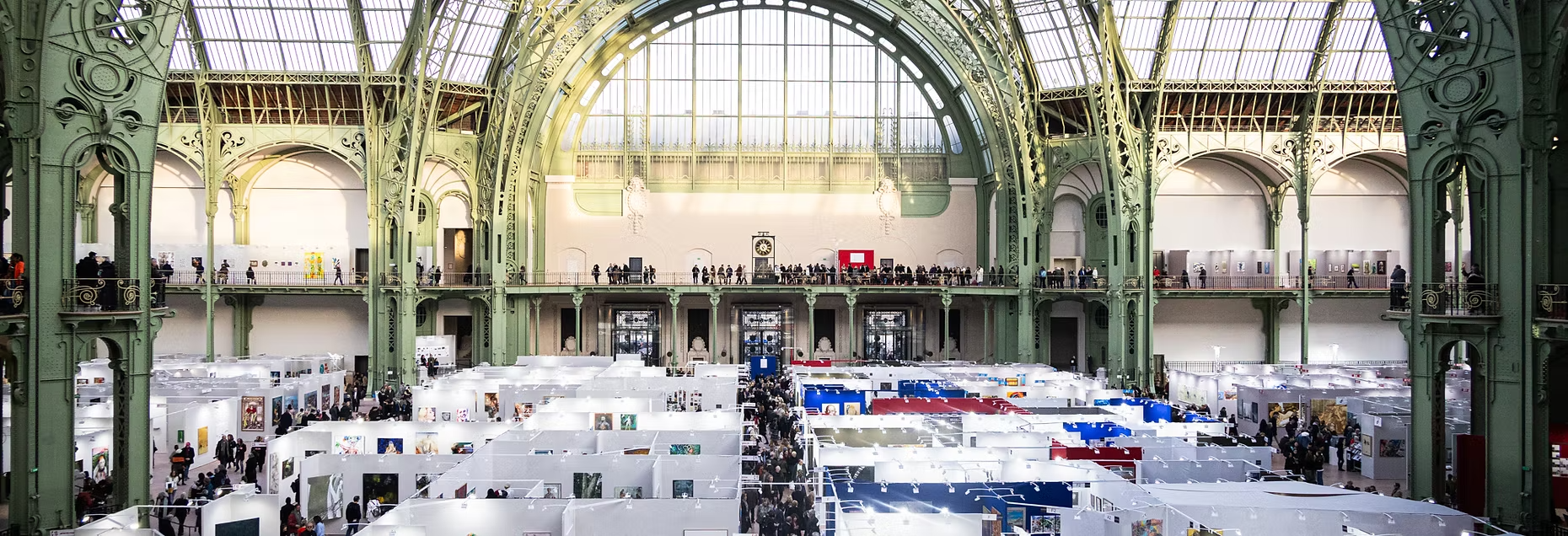
The Renovated Grand Palais, Art Capital’s Rediscovered Showcase

In 2025, marking the reopening of the Grand Palais after several years of renovation, Art Capital officially returned to its historic venue. This long-awaited comeback represented a turning point for the fair, both symbolically and in terms of attendance.

The reopening edition welcomed more than 50,000 visitors, confirming the public’s strong appetite for major art exhibitions in Paris and demonstrating the renovated Grand Palais’s capacity to host large-scale cultural events. Despite exceptionally high attendance on opening night — at times exceeding planned capacity — the overall outcome was unanimously positive and reflects the renewed attractiveness of the event.

Strong Momentum for the February Edition

Building on this success, the Art Capital team is approaching the upcoming February edition with confidence. Registrations are increasing, the engagement of artists and partners is already well underway, and logistical organization now benefits from the experience gained during the reopening.

“We have rediscovered our audience, our venue, and our ambition. All indicators are very positive for the February edition,” emphasizes Jacques Daloze, President of the Salon des Indépendants, whose remarks were collected during this interview.

Each year, nearly 3,000 artists take part in Art Capital, making it one of the most significant artistic gatherings in Europe in terms of participant numbers, with an exceptional diversity of disciplines and practices. The event also benefits from official recognition by the French Ministry of Culture, with a ministerial editorial announced in the official catalogue, further strengthening its institutional legitimacy.

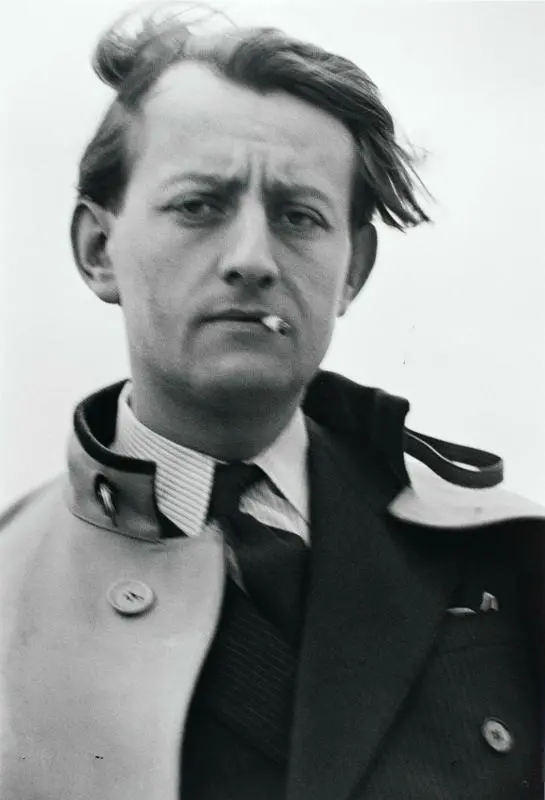
Portrait André Malraux Art capital 2026 Art Mag
André Malraux

André Malraux at the Heart of the Cultural Program

The upcoming edition will spotlight André Malraux, a major figure in artistic thought and former French Minister of Culture. A dedicated space will feature:

  • a documented biography,
  • a selection of rare drawings, Les Dyables,
  • a large, emblematic monumental portrait.

This work, created by artist Denis Gernigon, measures approximately 195 × 137 cm. It explores a subtle dialogue between shadow and light, offering a dual reading that balances inner tension with symbolic clarity. Intended to eventually join a museum institution dedicated to Malraux, the piece forms part of a strong heritage-driven approach. Known in particular for his portraits of spiritual figures — including Saint Thérèse of Lisieux — permanently displayed at Saint Peter’s Cathedral, Lisieux, Normandy. Denis Gernigon develops here an interpretation that is both contemporary and introspective.

Support independent publishing! Subscribe to ART MAG and receive each issue in advance, in both print and digital format
👉 Subcribe 6 issues / 1 year

Hyperrealist Painting and Sculpture: Highly Anticipated Highlights

Visitors will also discover a remarkable selection of large-scale hyperrealist paintings, true technical feats that sometimes require several years to complete. These works question the relationship between painting, photography, and digital imagery.

Paul Belmondo

A tribute will also be paid to sculptor Paul Belmondo, with the presentation of original sculptures, highlighting the enduring presence of a living classical tradition within contemporary creation.

The program will further incorporate an event-driven and musical dimension, with performances by guest artists — notably a Korean violinist and piano performances — enriching the visitor experience through a dialogue between visual arts and live performance.

Why Art Capital in February Is Not to Be Missed

  • One of the world’s largest contemporary art fairs by number of exhibiting artists
  • An ambitious cultural program
  • A major tribute to André Malraux
  • Monumental works in painting and sculpture
  • A key event on the Paris cultural calendar

Practical Information

📍 Venue: Grand Palais, Paris
🗓️ Dates: February 13–15, 2026
🌐 Official website: ART CAPITAL

Support independent publishing! Subscribe to ART MAG and receive each issue in advance, in both print and digital format
👉 Subcribe 6 issues / 1 year

FAQ – ART CAPITAL

Whart is Art Capital ?

Art Capital is a major art fair held at the Grand Palais in Paris, bringing together around 3,000 artists each year.


Where does Art Capital take place?

At the Grand Palais in Paris, which reopened in 2025 after several years of renovation.


When is Art Capital 2026?

From February 13 to 15, 2026.


How many artists exhibit at Art Capital?

Approximately 3,000 artists, making it one of the largest art events in Europe in terms of the number of artists.


What can visitors see at Art Capital?

Painting, sculpture, drawing, printmaking, photography, and contemporary artworks.


Can artworks be purchased?

Yes, some artworks are available for purchase directly from the artists.


Is Art Capital open to the public?

Yes, the fair is open to the general public as well as art professionals.


How can I buy a ticket?

Tickets can be purchased via the official Art Capital website or on site, subject to availability.


How long does a visit usually take?

Allow approximately 2 to 3 hours for a full visit.


How can artists apply to exhibit at Art Capital?

Artists can apply through the partner associations that organize the fair.

Categories
Calendar - News - Painting - Paris

François Malingrëy: The Body as a Theater of Contemporary Drama

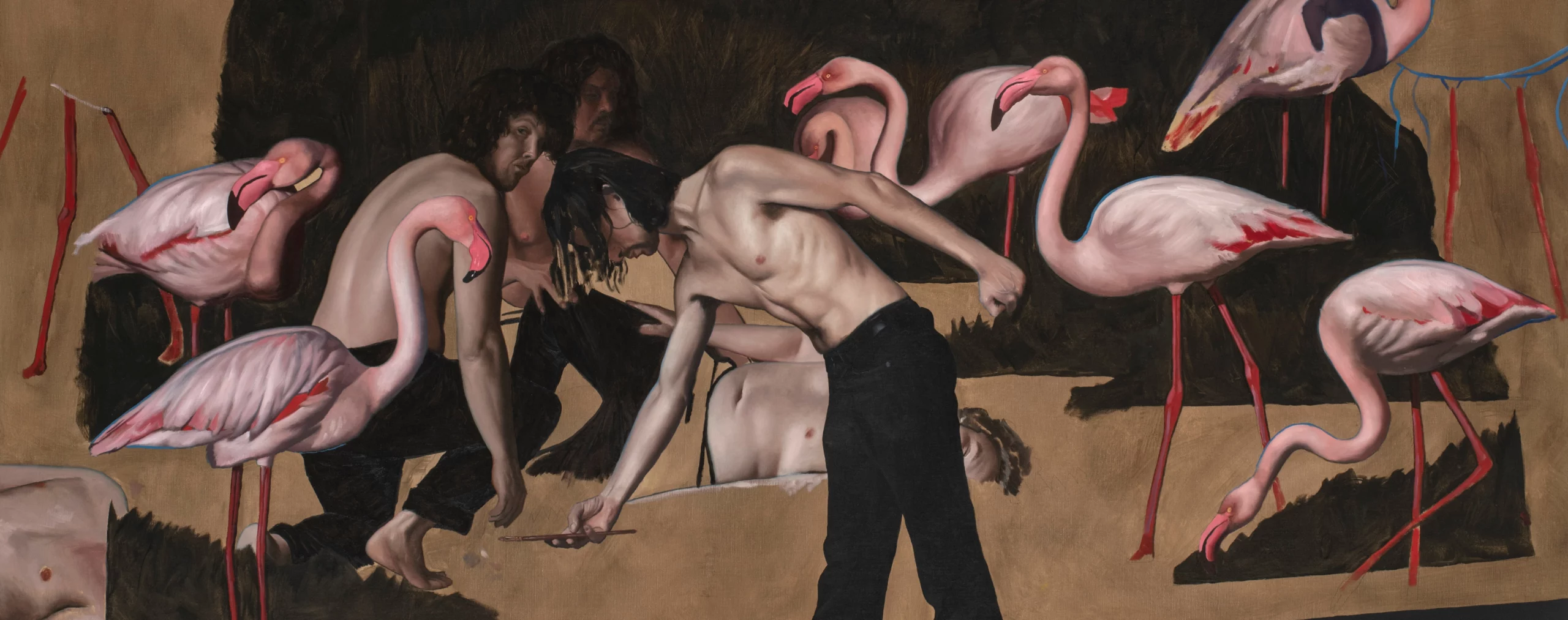
Peinture figurative contemporaine de François Malingrëy montrant des corps masculins en tension parmi des flamants roses, clair-obscur dramatique.

From February 12 to April 11, 2026, Galerie Paris-B presents its first solo exhibition dedicated to François Malingrëy. A striking immersion into contemporary figurative painting, where the body becomes the site of a drama that is at once intimate, mythological, and pictorial.

On the walls of Paris-B, bodies never pose. They fall, support one another, collide, cling. InFrançois Malingrëy’s work, painting is a silent theater in which every gesture seems suspended at the precise moment when everything might tip over. The exhibition at Paris-B brings together a group of recent paintings that confirm the singularity of an artist for whom the body is less a subject than a true dramaturgical space.

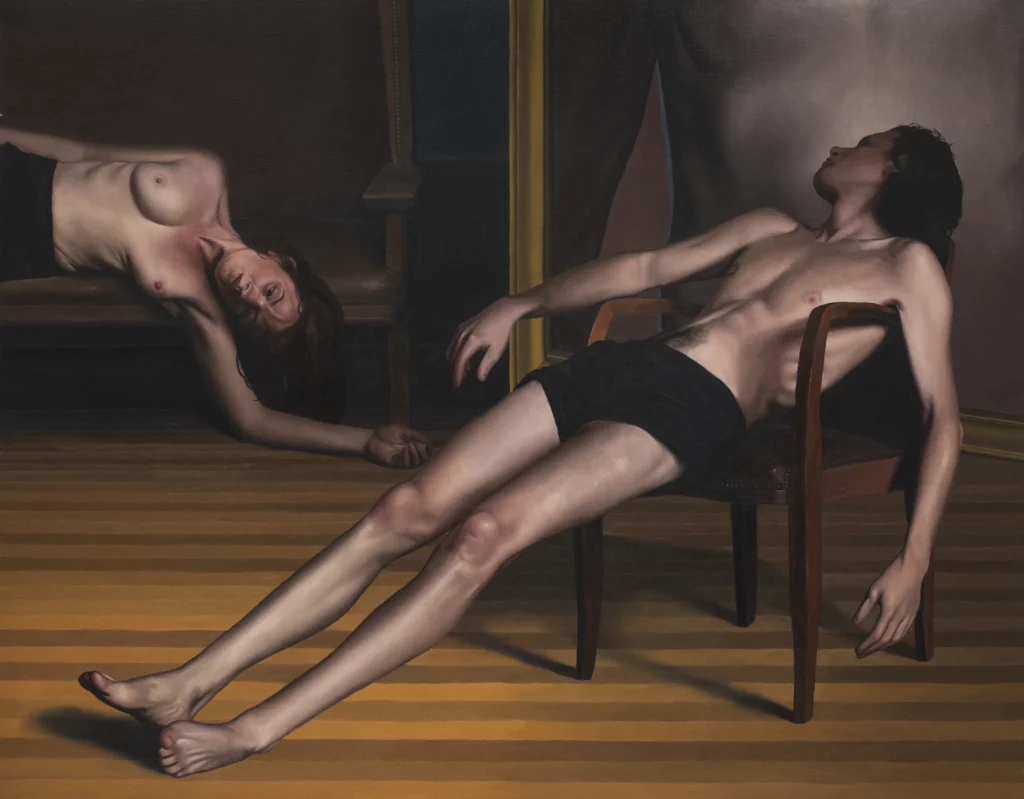
Work Les écroulés (2024) by François Malingrëy, a contemporary figurative painting depicting male bodies under tension in an interior setting.
Les écroulés, 2024, oil on canvas, 114 × 146 cThe Fallen, 2024, oil on canvas, 114 × 146 cm, © François Malingrëy, courtesy of PARIS-B

The Body as a Theater of Contemporary Drama

In a taut, almost suffocating hyperrealism, François Malingrëy places his figures within settings that appear ordinary at first glance. Yet very quickly, the everyday begins to fracture. Exposed flesh, offered torsos, absent or defiant gazes transform the scene into a space charged with archaic tensions: desire and guilt, fraternity and rivalry, tenderness and violence.

The large group compositions function like choreographic scores. Awkward lifts, struggles, falls, and ambiguous embraces form a gestural vocabulary in which everything seems restrained, on the verge of collapse. Positioned at the level of the bodies, the viewer is drawn into the painting, caught within a narrative that always partly unfolds offstage.

Support independent publishing! Subscribe to ART MAG and receive each issue in advance, in both print and digital format
👉 Subcribe 6 issues / 1 year

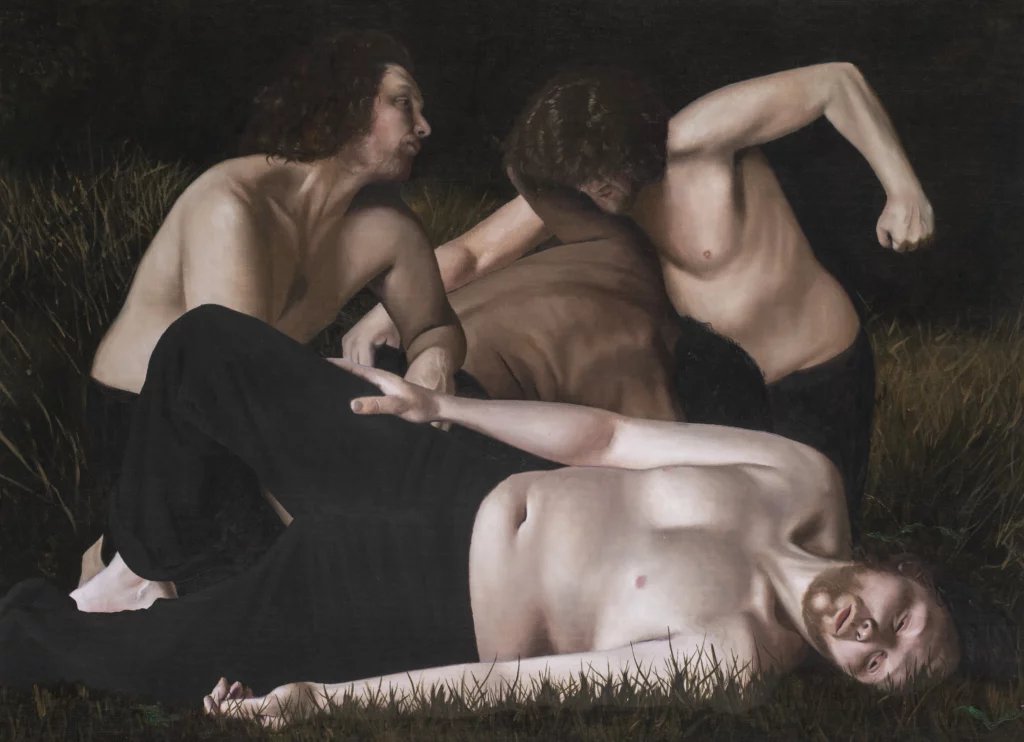
Oil on canvas by François Malingrey showing a group of nude men lying on the ground in a violent and dramatic struggle, intertwined bodies in a dark atmosphere, contemporary figurative painting, 2024.
François Malingrëy, The Effigy and the Fight, 2024, Oil on canvas, 81 × 100 cm
© François Malingrëy, courtesy of PARIS-B

A Painting Nourished by the Memory of the Masters

While François Malingrëy’s work is deeply contemporary, it constantly dialogues with the history of painting. Misty distances evoke the sfumato of the Italian Renaissance, while extended bodies, open arms, and offered torsos reactivate the gravity of Christ-like figures, from Rogier van der Weyden to Velázquez.

The light, inherited from Baroque chiaroscuro, sculpts volumes with an almost liturgical precision. Yet here, quotation is never literal. It functions as a parallel montage between ancient iconography and our present visual culture, as if the great foundational narratives were returning to haunt our contemporary scenes.

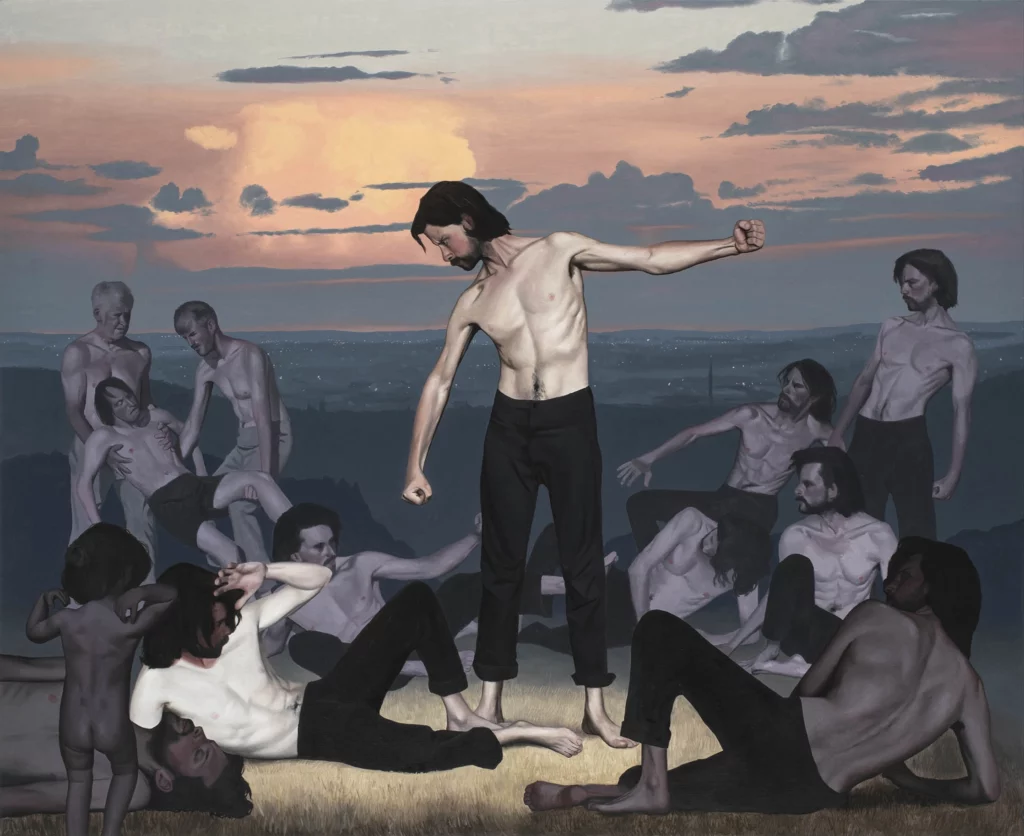
Oil on canvas by François Malingrey showing a group of nude men lying on the ground in a violent and dramatic struggle, intertwined bodies in a dark atmosphere, contemporary figurative painting, 2024.
François Malingrëy, The Fighters and the Twilight, 2024, Oil on canvas, 165 × 200 cm
© François Malingrëy, courtesy of PARIS-B

A Body of Work Between Myth, Family, and Human Tragedy

In Malingrëy’s paintings, the family often becomes the site of primordial conflict. Through a limited number of characters, replayed from canvas to canvas, the great human frescoes unfold: wounded loyalty, jealousy, attachment, and betrayal. The myth of Abel and Cain, the Passion of Christ, and figures of martyrdom surface, displaced within a naturalistic framework that renders their violence all the more unsettling.

At times, the painter’s own silhouette appears—discreet, almost tutelary. A nod to the tradition of old masters who inserted themselves into their compositions, reminding us that here a guiding consciousness is at work, organizing the light and holding the thread of the narrative.

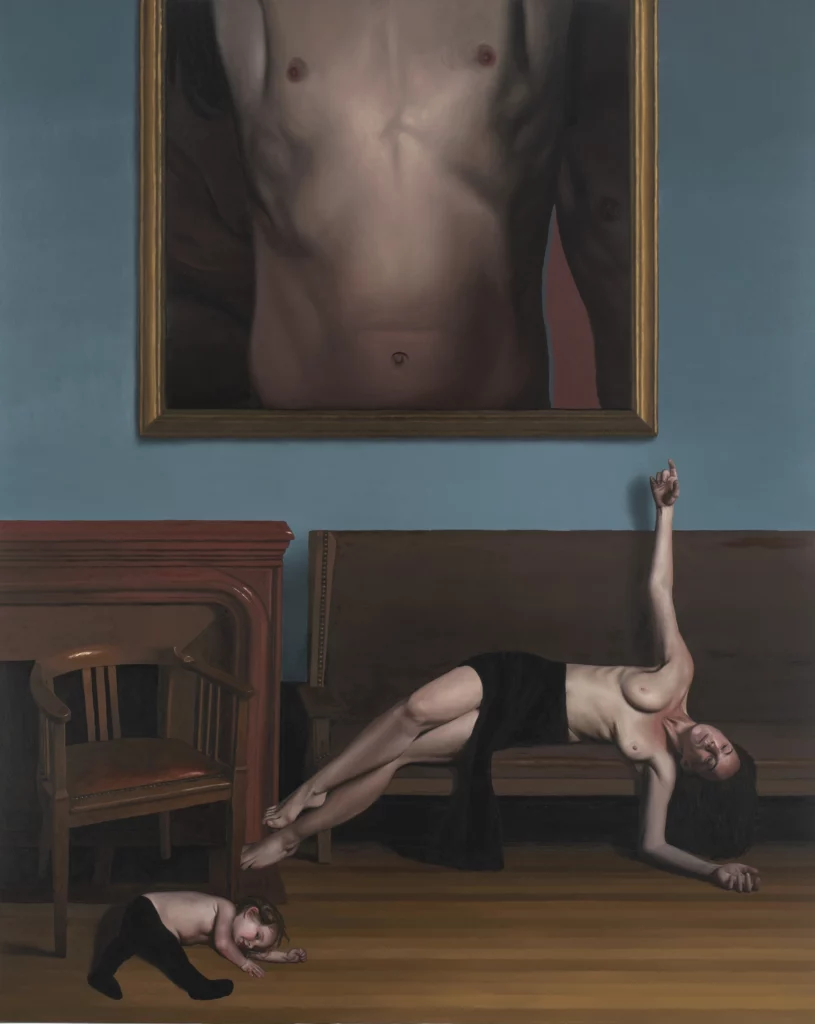
Contemporary figurative painting by François Malingrey depicting a nude woman reclining in an interior, a child on the floor, and a framed male torso painting on the wall, symbolic composition, oil on canvas, 2024.
François Malingrëy, The Child, the Reclining Figure, and the Painting, 2024, Oil on canvas, 220 × 177 cm © François Malingrëy, courtesy of PARIS-B

François Malingrëy, a Distinctive Figure in Contemporary Figurative Painting

Born in 1989 and a graduate of the Strasbourg School of Decorative Arts, François Malingrëy quickly established himself on the French and European institutional scenes. A prizewinner at the Salon de Montrouge, he has exhibited at the Palais de Tokyo, the Musée des Beaux-Arts de Nancy, and the Musée de la Chasse et de la Nature, among others.

With this first solo exhibition at Paris-B, the artist confirms a demanding and dense body of work, in which each painting functions as an open stage— a place where the present of bodies and the memory of painting overlap.

Practical Information

François Malingrëy
Galerie Paris-B
62 rue de Turbigo, 75003 Paris
February 12 – April 11, 2026
Opening reception: Thursday, February 12, 2026, 6–9 pm

Support independent publishing! Subscribe to ART MAG and receive each issue in advance, in both print and digital format
👉 Subcribe 6 issues / 1 year

FAQ François Malingrëy

Where can you see François Malingrëy’s exhibition in Paris?

François Malingrëy’s first solo exhibition at Galerie Paris-B takes place in Paris’s 3rd arrondissement, from February 12 to April 11, 2026.


Who is François Malingrëy?

François Malingrëy is a contemporary French painter born in 1989. A graduate of the Strasbourg School of Decorative Arts, he develops an intense figurative practice focused on the body, dramaturgy, and the memory of art history.


What is the main theme of the exhibition?

The exhibition explores the body as a dramaturgical space. Through figurative scenes charged with tension, François Malingrëy examines desire, violence, fraternity, and founding myths, in dialogue with historical painting.


What kind of painting does François Malingrëy practice?

François Malingrëy develops a contemporary figurative painting style marked by taut hyperrealism, a strong staging of bodies, and a dramatic use of chiaroscuro.


Why is this exhibition important?

This exhibition marks a key moment in the artist’s career. It confirms the singularity of a demanding body of work, at the intersection of contemporary narrative and pictorial memory, and stands out as a significant event on the Parisian art scene.

Categories
Art Fair - International - News

The 5 European Ceramic Fairs Not to Miss in 2026

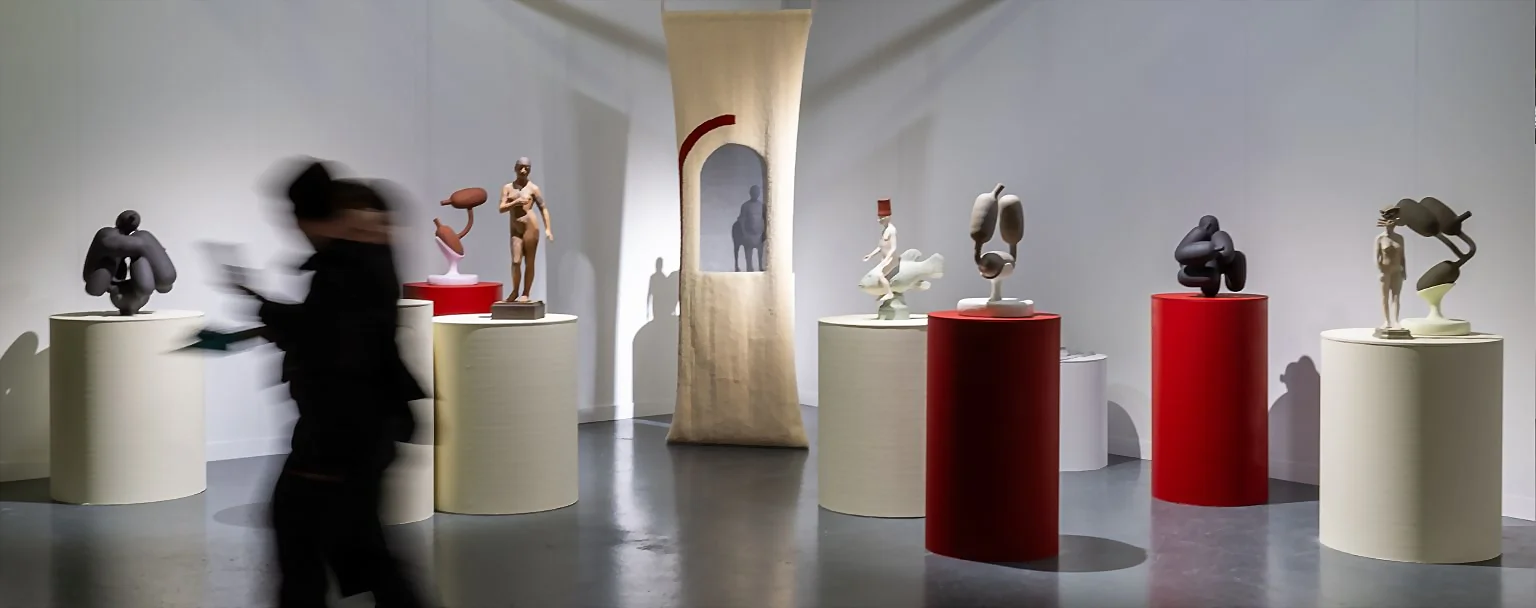
Vue d’exposition de ceramic brussels 2025 présentant des sculptures céramiques contemporaines sur socles blancs et rouges dans un espace lumineux, avec un visiteur en mouvement au premier plan.
Mickael Pijoubert

In 2026, ceramics more than ever assert themselves as one of the leading mediums in the European art market. Between international fairs, institutional biennials, and specialized salons, Europe offers a rich landscape for discovering trends, meeting artists, and identifying the most significant works of the moment. Here are the five must-see ceramic fairs in 2026, selected for their curatorial quality, international reach, and appeal to collectors.

ceramic brussels 2025 © Geoffrey Fritsch

1. Ceramic Brussels – Brussels (Belgium)

The leading contemporary ceramic fair in Europe

From January 21 to 25, 2026, ceramic brussels confirms its status as an essential meeting point for galleries, collectors, and institutions. Entirely dedicated to contemporary ceramics, the fair brings together international galleries, established artists, emerging talents, and an ambitious curatorial program, including a guest of honor, Elmar Trenkwalder, occupying nearly 300 m².

Why it is essential in 2026:

  • Selection of international galleries
  • Museum-quality exhibitions, installations, and solo shows
  • Strong momentum in the contemporary ceramic market

Further reading:

  • Ceramic Brussels 2026: the major international contemporary ceramic fair returns to Brussels in January
  • Art fairs 2026: the complete calendar of major international events

2. Argillà Italia – September 4–6, 2026 – Faenza (Italy)

The major Mediterranean gathering for ceramics

Held in Faenza, the historic capital of ceramics, Argillà Italia returns in 2026 with hundreds of European exhibitors. The fair is a crossroads of tradition, design, and contemporary creation, offering an exceptional panorama of Italian and European know-how.

Highlights for visitors:

  • Stylistic diversity and technical excellence
  • Strong presence of master artisans and designers
  • Ideal for acquiring unique pieces

Support independent publishing! Subscribe to ART MAG and receive each issue in advance, in both print and digital format
👉 Subcribe 6 issues / 1 year
👉 Offer ART MAG

3. Ceramic Art London – May 8–10, 2026 – London (United Kingdom)

The must-attend selling fair for collecting directly from artists

Ceramic Art London is one of the most respected events on the British ceramic scene. Collectors meet artists directly, ensuring transparency, provenance, and meaningful exchanges.

Why you should not miss it:

  • Highly rigorous selection of contemporary artists
  • Unique works and limited editions
  • Strong visibility of the British ceramic scene

4. Oldenburg International Ceramic Fair – August 1–2, 2026 – Oldenburg (Germany)

A German-European tradition dedicated to quality

For more than three decades, Oldenburg has hosted one of the most renowned ceramic fairs in Northern Europe. Over 100 artists present works ranging from contemporary sculpture to exceptional functional ceramics.

Why it matters:

  • Very high technical standards
  • A strong and demanding German market
  • Ideal for identifying artists before their international breakthrough

5. European Ceramic Context (ECC) – Bornholm (Denmark)

(Date to be announced)
The institutional biennial revealing future trends

On the island of Bornholm, designated a “World Craft City,” the European Ceramic Context biennial offers a major museum-oriented approach. The 2026 edition will feature exhibitions, European awards, and monumental installations.

Reasons to attend:

  • High-level curatorial vision
  • Focus on the Nordic scene, particularly innovative
  • An ideal platform for understanding future directions of the medium

An essential journey to understand contemporary ceramics in 2026

From commercial fairs to institutional biennials, ceramics are enjoying unprecedented visibility in Europe. These five events provide a comprehensive overview of current practices: sculpture, installation, design, material experimentation, and collectible works.

For professionals, collectors, and enthusiasts alike, 2026 will be a pivotal year to explore the richness of European ceramics.

Support independent publishing! Subscribe to ART MAG and receive each issue in advance, in both print and digital format
👉 Subcribe 6 issues / 1 year

FAQ – European Ceramic Fairs

Is contemporary ceramics truly a promising market in 2026?

Yes. The contemporary ceramics market continues to grow in Europe, driven by increasing interest from collectors, the medium’s entry into museums, and stronger crossovers with contemporary art and design. Specialized fairs demonstrate a lasting structuring and professionalization of the sector.

Which is the best ceramic fair in Europe for a beginner collector?

Ceramic Art London is often considered the most accessible. Direct sales from artists allow collectors to better understand artistic approaches, techniques, and the value of the works, while offering more affordable price points than strictly gallery-based fairs.

Where can one buy museum-quality contemporary ceramics?

Ceramic Brussels is the benchmark in 2026 for discovering institution-level works. The presence of international galleries, solo shows, and ambitious installations makes it a fair that closely aligns with museum standards.

Which fair should be prioritized to discover European ceramic tradition?

Argillà Italia, held in Faenza, is ideal for understanding the history and richness of European ceramic craftsmanship. It combines historical heritage, technical excellence, and contemporary creation.

Can one invest in contemporary ceramics?

Yes, provided an informed approach is adopted. Fairs such as Ceramic Brussels or the Oldenburg International Ceramic Fair make it possible to identify artists undergoing institutional recognition or prior to their international breakthrough, offering a medium- to long-term investment opportunity.

Categories
International - News - Street art

New Banksy in London: why this work speaks as much about us as it does about street art

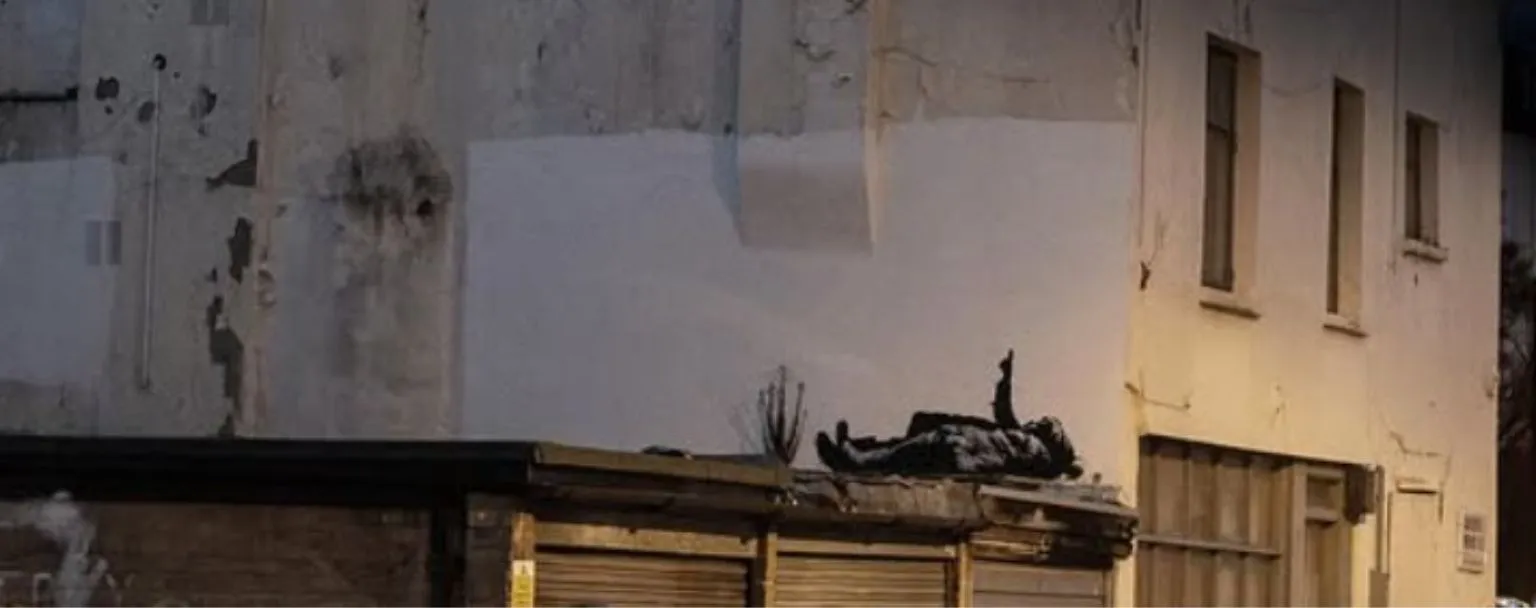
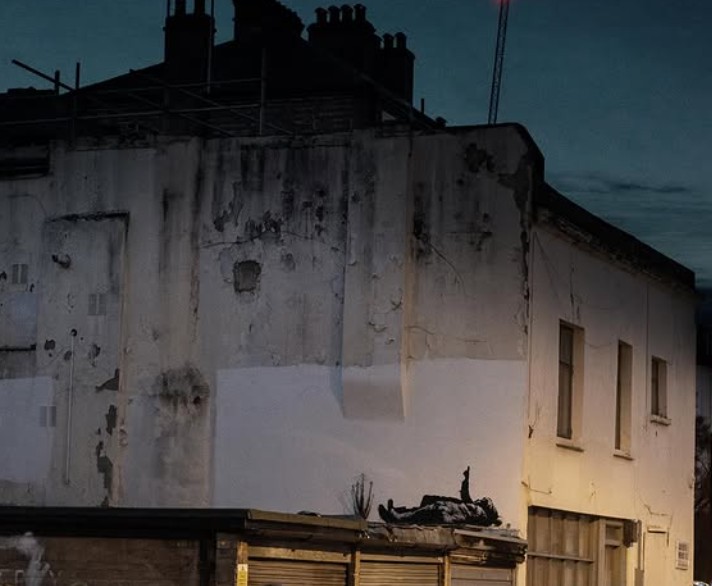
Pochoir de Banksy à Londres représentant deux enfants allongés sur un toit, l’un pointant le ciel, sur un mur urbain délabré.

A new Banksy in London, instantly recognised… and instantly accepted

In late December, a new Banksy stencil appeared on a wall in London, in the Bayswater neighbourhood. Two children lie on the roof of a garage, wrapped up in winter coats. One of them raises an arm, pointing towards the sky. A silent image, almost fragile.

Within hours, the work was photographed, shared, commented on. Banksy confirmed authorship on Instagram. The mechanism is perfectly oiled. Yet what stands out this time is not what the artist says — but how easily the image is absorbed.

Banksy made his appearance in the Bayswater area, in central London.

An image that no longer provokes, but brings people together

Banksy’s street art was long built on friction. His works forced passers-by to take a position, sometimes against their will. Here, nothing of the sort. The stencil does not shock. It does not divide. It soothes.

This image of children looking at the sky functions as a visual consensus. It can be read as a symbol of hope, a metaphor for childhood, a poetic pause in a world saturated with conflict. Everyone finds what they are looking for — without ever being contradicted.

And this is precisely where the major shift of this work lies.

Support independent publishing! Subscribe to ART MAG and receive each issue in advance, in both print and digital format
👉 Subcribe 6 issues / 1 year

Banksy in the age of “acceptable street art”

This Banksy in London does not erupt against the city; it blends into it. The wall is worn, the setting discreet, the scale modest. The work does not interrupt the urban space — it accompanies it.

This shift is revealing. Street art, once perceived as illegal and confrontational, is now expected, valued, sometimes even protected. Banksy is no longer the intruder: he has become a stabilised cultural reference.

Where his stencils were once erased, this one is photographed from every angle. The gesture is no longer risky. It is integrated.

Read More : Banksy censored in London: an artwork about freedom of expression disappears from the Royal Courts of Justice

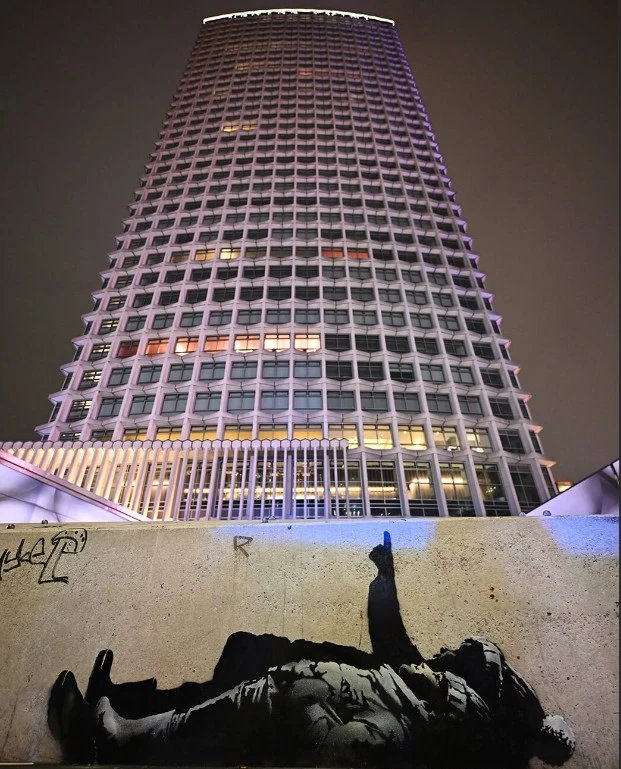
In front of the Centre Point tower — long a controversial symbol of London’s urban landscape — Banksy’s stencil plays with scale and silence.

A work designed for circulation as much as for the street

Visually, everything is controlled. The contrast is sharp, the scene readable, the emotion immediate. The work functions just as well on the street as it does on a smartphone screen.

Banksy no longer addresses only London passers-by. He speaks to a global community of digital viewers, accustomed to consuming his images via Instagram, cultural media and news feeds.

The stencil thus becomes a circulating image, designed to be seen, shared and commented on — sometimes more than actually experienced on site.

Ambiguity as a long-term strategy

Nothing in this work is explicitly political. And yet it is anything but neutral. Its ambiguity allows for every possible reading: poetic, social, symbolic. But it also prevents any direct confrontation.

Banksy seems here to favour suggestion over conflict, openness over clear positioning. This strategy allows the work to remain legible to all — but it raises an essential question:

👉 Can critical art still exist when it refuses to clearly name what it critiques?

What this Banksy says about our relationship to the world

Rather than seeing this as a simple weakening, one can read the stencil as a reflection of an era tired of radicality — an era that seeks reassurance more than disruption, accompaniment more than confrontation.

Banksy no longer necessarily precedes his time. He listens to it. He follows its contours.

But this attentive listening turns street art into a soothing mirror, where it was once a tool of disruption.

Support independent publishing! Subscribe to ART MAG and receive each issue in advance, in both print and digital format
👉 Subcribe 6 issues / 1 year

FAQ – What you need to know about the new Banksy in London

Is it really a Banksy?

Yes. The stencil that appeared in Bayswater was confirmed by Banksy himself through the publication of a photo on his official Instagram account.
However, a second, very similar stencil that appeared elsewhere in London has not been claimed.


Where exactly is the new Banksy in London?

The work is located in Bayswater, in west London, painted on the side wall of a building above a row of garages.
Another comparable stencil was spotted near the Centre Point tower, in the city centre.


Can the artwork be seen freely?

Yes. Like most of Banksy’s works, the stencil is freely visible in public space. It is not exhibited in a museum and can be seen directly on the street, as long as it has not been erased or protected.


Why does Banksy keep intervening in London?

London is:
– a major centre for street art,
– a highly mediatised city,
– a symbolic space for social and urban issues.
It is an ideal setting for reaching a global audience through a local gesture.


Why does Banksy usually announce his works on Instagram?

Instagram is currently the only official channel used by Banksy to authenticate his works.
Without a post from him, a stencil is generally not considered confirmed.

Categories
Featured Artist - International - Sculpture

Julien Magic: When Magic Becomes Contemporary Art

julien magic publié Magazine Art Mag

From urban illusion to international museums, the portrait of an artist who unsettles reality

Globally followed magician Julien Dauphin, performing under the name Julien Magic, has crossed a decisive threshold into the world of contemporary art.
Blending urban illusion, radical installations, and political surrealism, the Franco-Swedish artist transforms magic into a fully-fledged visual language. This is the portrait of a creator who makes reality waver in order to question it.

When illusion becomes a tool for thought

When a magician enters the field of contemporary art, one might expect a simple transfer of spectacle. With Julien Magic( Julien Dauphin), the opposite occurs.
Illusion ceases to be an effect and becomes a conceptual instrument.

Based between the French Riviera and Stockholm, the artist spent more than thirty years performing on stages around the world, from Hollywood to Shanghai. From the outset, however, he distanced himself from traditional magic, favoring silence over technical display and unsettling images over demonstrative tricks.

His viral videos—a headless man in the subway, a reader seated in midair, a body drifting through the city as if detached from itself—already revealed a singular visual grammar. Through these images, Julien Magic explores our capacity for wonder, but also our collective blind spots.

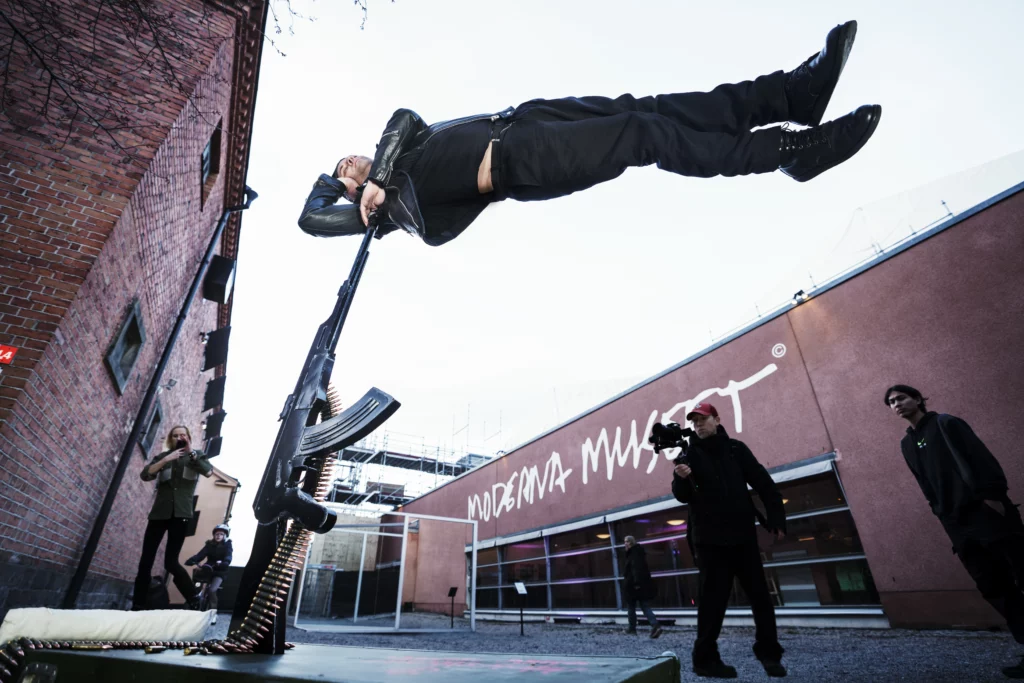
Moderna Museet (Stockholm) Photo Filip Agoo

The artistic shift: from the street to the museum

The decisive turning point came when Moderna Museet, one of Europe’s leading contemporary art institutions, invited Julien Magic to produce an installation as part of its exploration of performative and conceptual practices.

He responded with a radical gesture:
sleeping in suspension, his head resting on a Kalashnikov.

The image is both brutal and fragile. It confronts violence with surrender, innocence with war, intimacy with politics. The aesthetic shock was immediate. Audiences gathered. Cameras followed.

At that moment, the artist understood that illusion—stripped of spectacle—could become a critical tool, capable of revealing the anxieties and contradictions of our time.

A surrealism rooted in reality

In his drawings, early sculptures, and installations, Julien Magic (Julien Dauphin) develops a visual language deeply anchored in contemporary art: anonymous bodies, diverted objects, impossible situations.

Yet his surrealism is not dreamlike.
It is social and political.

He addresses climate crisis, systemic violence, and the manipulation of images. His work does not aim to deceive the viewer, but to reveal. As he states:
“Illusion is not a lie. It is a way of showing what reality prefers to hide.”

An artist of the present moment

What defines Julien Magic is his ability to move freely between worlds that seem fundamentally opposed.

  • In the streets, he confronts illusion with raw everyday life, anchoring his gestures in the unpredictability of passersby.
  • On stage, he deepens his exploration of the body and the gaze, détourning the codes of performance.
  • On social media, where he reaches more than 19 million followers, he turns platforms into real-time laboratories of perception.
  • In museums, his work gains conceptual density, asserting illusion as both a poetic and critical medium.

He belongs to a generation of artists for whom digital platforms are not a threat to artistic legitimacy, but a natural extension of vision and practice.

Toward a new chapter

His upcoming works—currently in preparation for international institutions—extend more than a decade of previously unseen sketches. They reveal an artist in full transformation, driven by a renewed urgency:
to turn wonder into a form of engagement.

Julien Magic no longer simply creates illusion.
He creates meaning.

And that may be his truest form of magic.

FAQ

Who is Julien Magic (Julien Dauphin) ?

Julien Magic is a Franco-Swedish contemporary artist known for transforming magic and illusion into a critical visual language. After more than thirty years on international stages, he now develops installations, performances, and artworks within the field of contemporary art.


Is Julien Magic (Julien Dauphin) a magician or a contemporary artist?

He is both. Julien Magic uses the tools of magic—illusion, disappearance, visual disruption—not for entertainment, but as conceptual instruments. His practice is firmly rooted in contemporary art, where illusion becomes a way to question perception, power, and reality.


What makes Julien Magic different from traditional magicians?

Unlike traditional magicians, Julien Magic avoids spectacle and technical demonstration. He favors:
– silence over explanation,
– unsettling images over virtuosity,
– reflection over surprise.
His work aligns more closely with performance art and conceptual practices than with classical magic.


What is urban illusion in Julien Magic’s work?

Urban illusion refers to interventions staged in public spaces—streets, subways, cityscapes—where illusion collides with everyday reality. These works confront passersby directly, turning the city into both stage and subject.


Has Julien Magic (Julien Dauphin) exhibited in museums?

Yes. A key turning point came when the Moderna Museet invited him to create an installation as part of its contemporary performance program. This marked his formal entry into the institutional art world.


What themes does Julien Magic explore?

His work addresses major contemporary issues, including:
– perception and the manipulation of images,
– social and political violence,
– climate anxiety,
– the limits of visibility and representation.
Illusion is used not to deceive, but to reveal hidden tensions.


Is his work connected to surrealism?

Yes, but to a realist, social form of surrealism. His works present impossible situations grounded in everyday life, producing discomfort rather than dreamlike escape.


What role do social media play in his practice?

Social media function as experimental platforms. With more than 19 million followers worldwide, Julien Magic observes how images circulate, are interpreted, and lose or gain meaning—making digital space an extension of his artistic research.


Where can Julien Magic’s work be seen today?

His work exists across multiple contexts:
– public space,
– live performance,
– digital platforms,
– and contemporary art institutions.
New projects and exhibitions are currently in development internationally.


Why is Julien Magic (Julien Dauphin) considered a contemporary artist?

Because his practice goes beyond illusion as spectacle. He uses illusion to produce meaning, challenge perception, and engage critically with the present moment—placing his work squarely within contemporary art discourse.

To read more, download ART MAG N°30
Categories
Calendar - News - Painting - Paris

Pekka Halonen at the Petit Palais: An Immersion into the Soul of Finland

pekka halonen exposition au Petit Palais article magazine Art mag
Finnish National Gallery / Aleks Talve

From 4 November 2025 to 22 February 2026, the Petit Palais – Museum of Fine Arts of the City of Paris presents the first French retrospective devoted to Pekka Halonen (1865–1933).

Entitled Pekka Halonen. A Hymn to Finland, this exceptional exhibition, organized in partnership with the Ateneum Art Museum – Finnish National Gallery (Helsinki), brings together more than 130 works from Finnish public and private collections.

👉 A rare immersion at the heart of the golden age of Finnish painting, amid snow, silence, and the quest for identity.

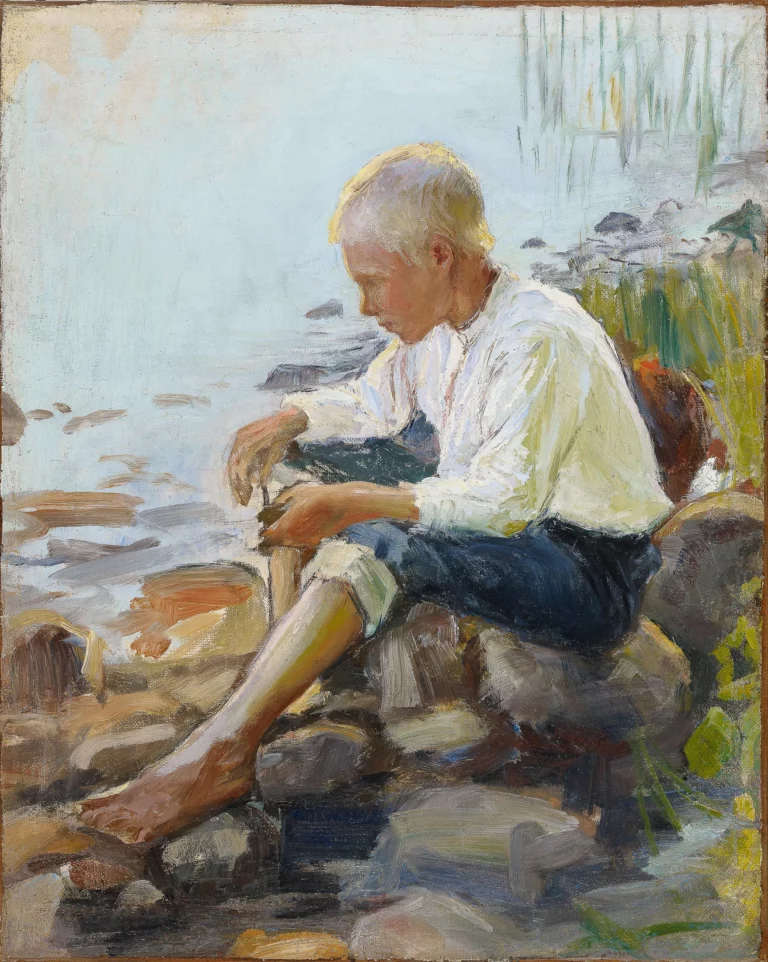
Pekka Halonen, Young Boy on the Shore, 1891–1893. Oil on canvas, 45 × 36.5 cm.
Helsinki, Ateneum Art Museum (on deposit at the Presidential Palace). © Finnish National Gallery / Hannu Pakarinen

Painting Finland: art, resistance, and modernity

At the dawn of the 20th century, Finland was under Russian rule. In this tense political context, painting became a cultural and symbolic act.

Halonen’s work is rooted in National Romanticism and Karelianism, movements that celebrate landscapes, rural traditions, and founding myths.
His participation in the Paris World’s Fair, within the Finnish pavilion, marked a turning point: painting as a manifesto of identity.

👉 Deep forests, frozen lakes, peasant scenes: each canvas becomes a fragment of collective memory.

Support independent publishing! Subscribe to ART MAG and receive each issue in advance, in both print and digital format
👉 Subcribe 6 issues / 1 year

Painting Finland, between identity and modernity

Pekka Halonen’s work belongs to the lineage of National Romanticism and Karelianism, artistic movements that exalt Finnish landscapes and traditions against a backdrop of political tension with Russian rule.

In 1900, his participation in the Paris World’s Fair, within the Finnish pavilion, took on major symbolic significance for the affirmation of Finnish national identity.

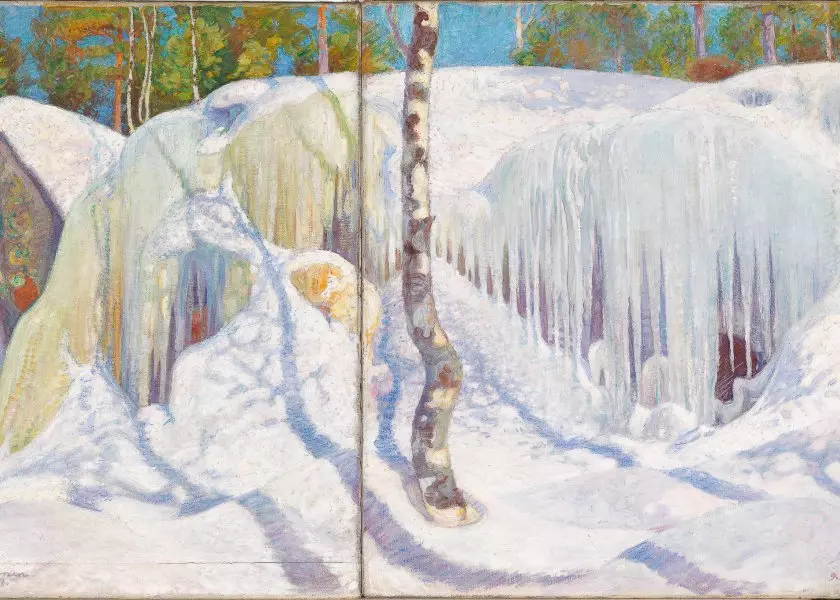
Pekka Halonen, Rocks Covered with Ice and Snow, 1911. Oil on canvas, 96 × 155.5 cm. Helsinki, Ateneum Art Museum. © Finnish National Gallery / Aleks Talve

His paintings thus became true visual manifestos, celebrating wild nature, rural life, and the cultural resistance of a people.

Pekka Halonen, Tomatoes, 1913. Oil on cardboard, 51 × 42 cm. Helsinki, Ateneum Art Museum. © Finnish National Gallery / Jenni Nurminen

Halosenniemi: living and painting in harmony with nature

Far from the bustle of Paris, Pekka Halonen chose to settle in Tuusula, on the shores of a lake. There he built Halosenniemi, his wooden house-studio, now a mythical site of Finnish culture.

In this self-sufficient environment, surrounded by his family and fellow artists, Halonen developed a philosophy of life in harmony with nature, which profoundly permeates his work.

Pekka Halonen, Winter Landscape, Myllykylä, 1896. Oil on canvas, 69 × 48 cm.
Helsinki, Ateneum Art Museum. © Finnish National Gallery / Aleks Talve

👉 Here, painting becomes an extension of everyday life, a breathing rhythm shaped by the seasons.

The painter of snow: a symphony in white

If one word were to sum up Pekka Halonen, it would be snow.

No other Finnish painter explored with such finesse:

  • the nuances of white
  • winter light
  • the silence of snow-covered landscapes

In the 1920s, some works verge on abstraction, heralding a striking modernity.

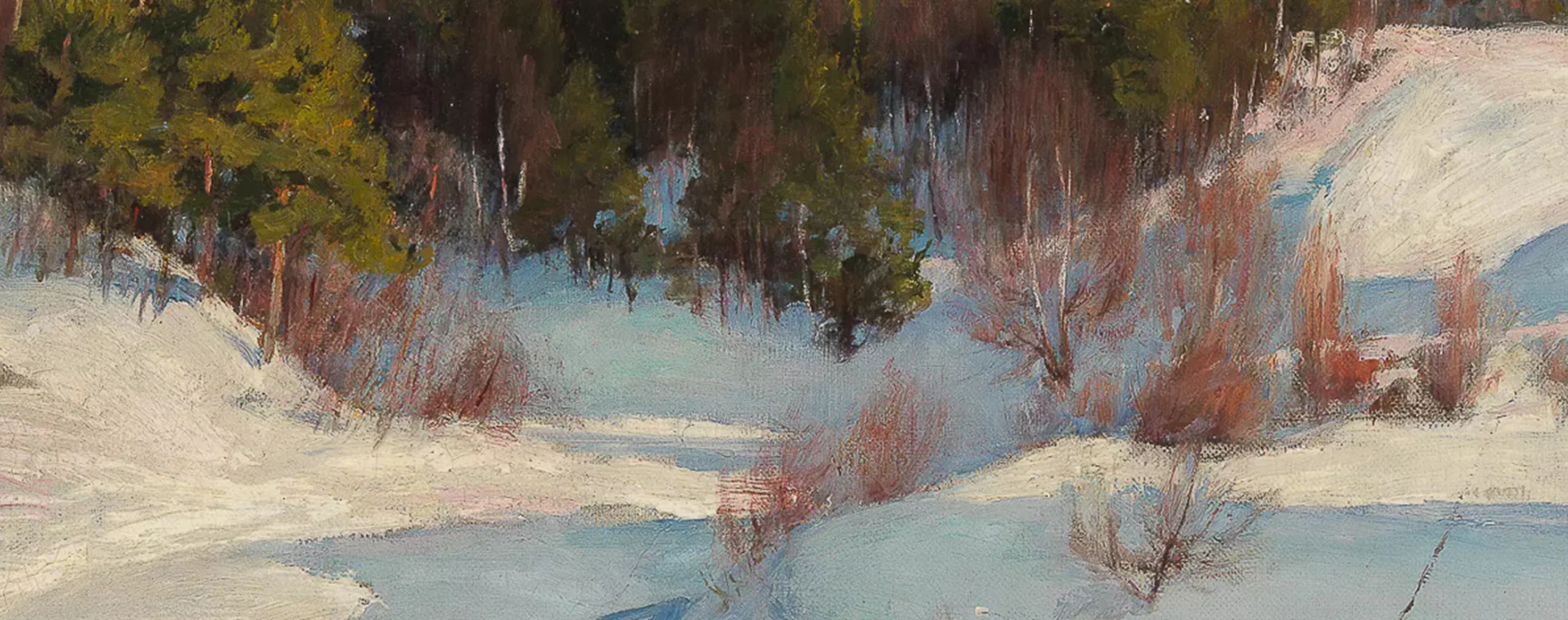
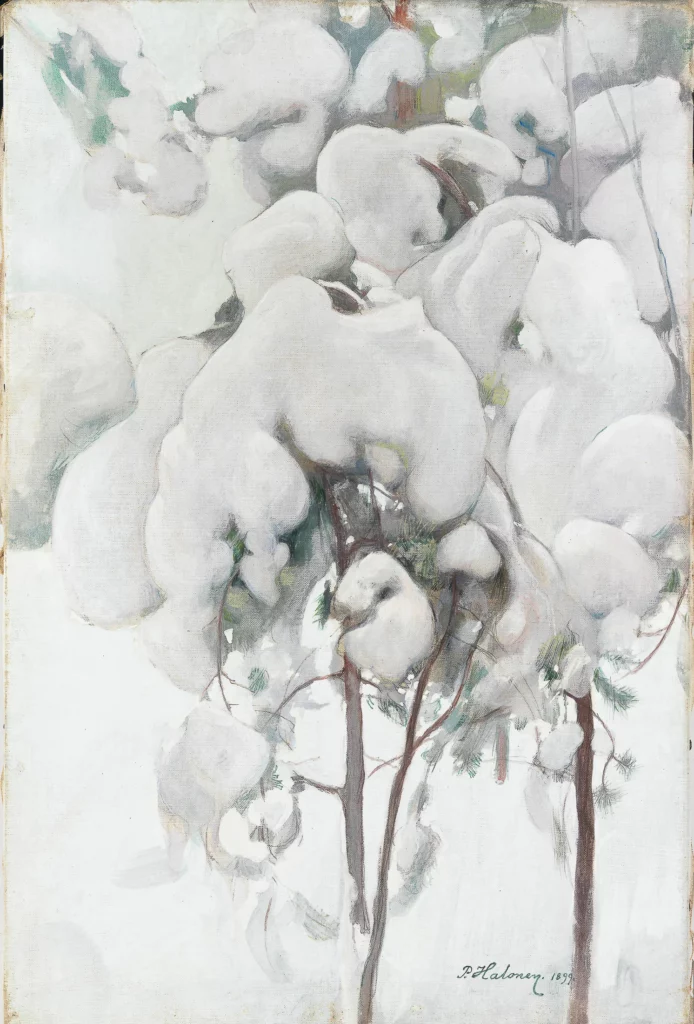
Pekka Halonen, Snow-Covered Young Pines, 1899. Tempera on canvas, 44.5 × 29.5 cm.
Helsinki, Ateneum Art Museum. © Finnish National Gallery / Yehia Eweis

🔹 The final section of the exhibition, Symphony in White Major, offers a rare contemplative experience, where the gaze slows, becoming almost meditative.

An immersive and sensory exhibition at the Petit Palais

More than a retrospective, the Petit Palais offers a truly sensory experience:

  • a refined, architecturally structured scenography
  • olfactory installations developed with dsm-firmenich
  • a meditative route inspired by Finnish nature

👉 A resolutely contemporary approach, bringing ecology, art, and perception into dialogue.

Support independent publishing! Subscribe to ART MAG and receive each issue in advance, in both print and digital format
👉 Subcribe 6 issues / 1 year