Categories
News - Women artists

Lise Terdjman — “Dearest Louise” at the Museum of Picardy (Amiens)

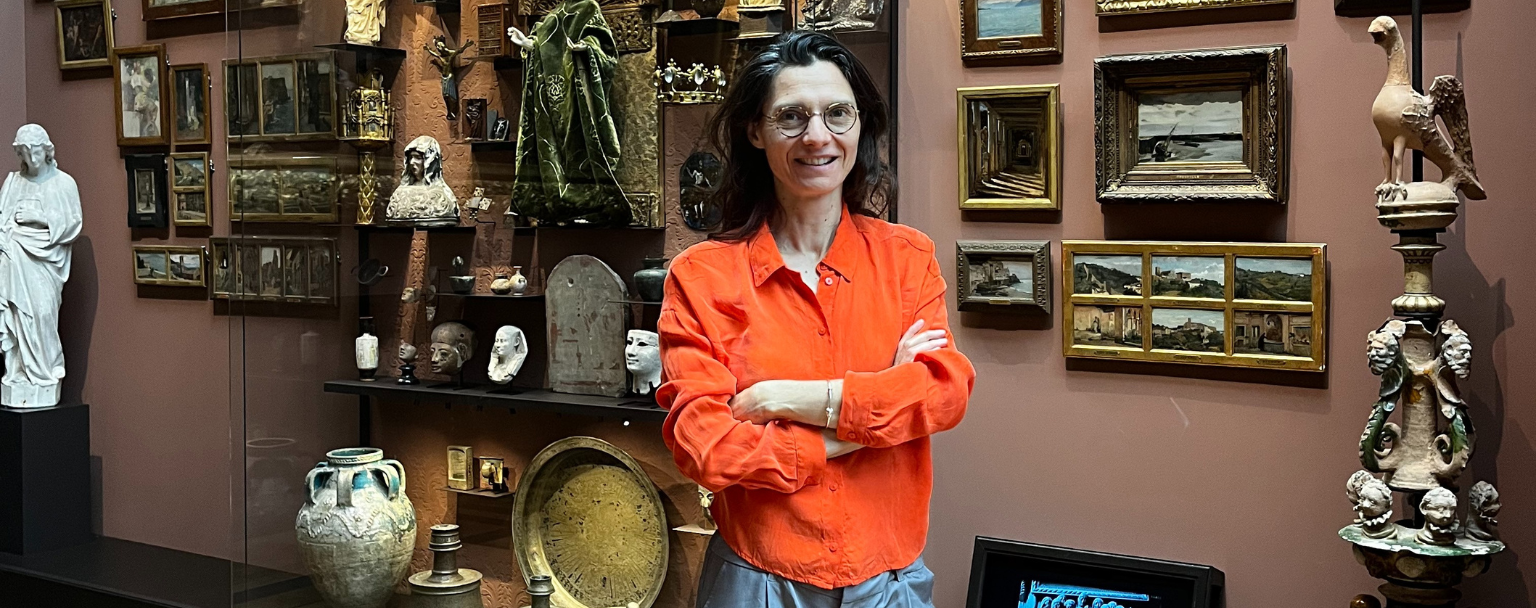
magazine Art mag ; photo de lise terjman devant le leg de Maignan Larivière au Musée de Picardie

Artist and researcher Lise Terdjman brings Louise Maignan-Larivière back to life through a journey combining drawing, ceramics, textiles, video and archives — on view from 26 August 2025 to 4 January 2026 at the Musée de Picardie in Amiens.

Why “Très chère Louise” ?

Très chère Louise, here is the dream and the fiction of your exhibition… Wherever there is a gap, there is always the possibility of fiction.” From the outset, the artist states her method: to fill the blanks of history with a poetic and critical gesture, so that Louise appears at the heart of the museum rather than at its margins.
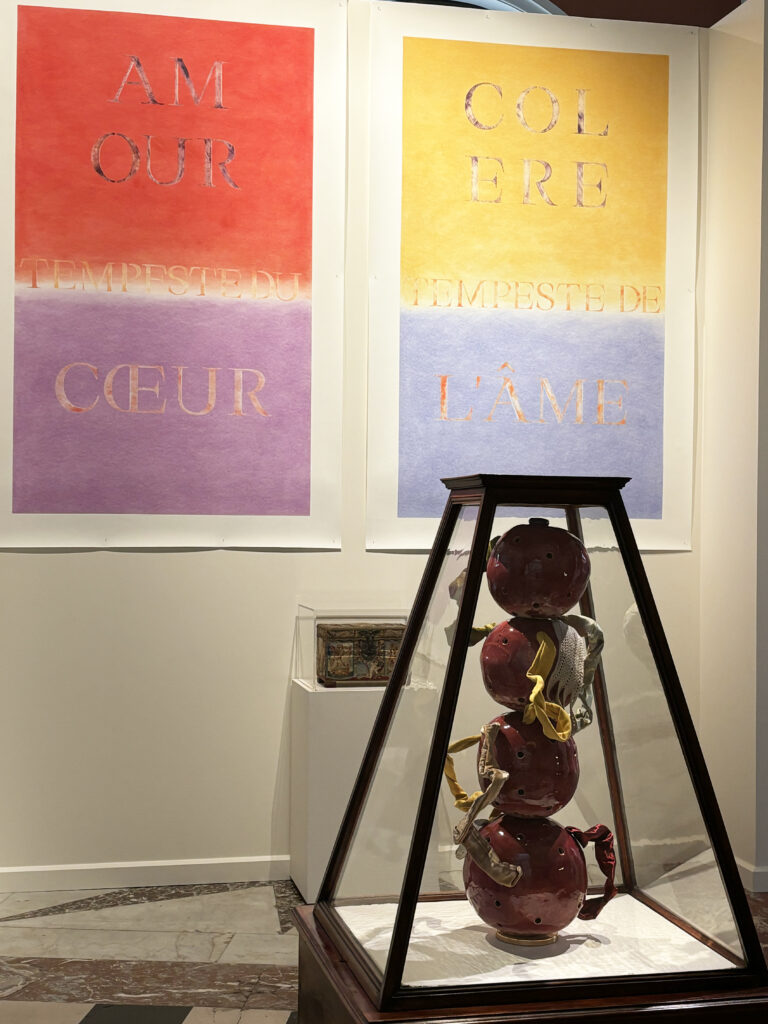
Two large typographic pastels (AM-OUR; COL-ÈRE, “Tempeste du cœur / de l’âme”) converse with the ceramic sculpture L’Énigme de Louise, bound with ribbons and shown in a pyramidal display case; in the background, an embroidered casket. Lise Terdjman’s exhibition Dearest Louise at the Musée de Picardie, Amiens (2025–2026).
AM-OUR and COL-ÈRE, L’Énigme de Louise, pastel, ceramic, Lise Terdjman © ADAGP, 2025

An embroidered casket as the catalyst

It all starts with a small embroidered casket, delicate and vividly colored, attributed to Louise Maignan-Larivière and shown at the Salon des artistes français in 1902. It bears the words: “Tempeste, bourasque, tourmente, par vertus sont faites clémentes.” This intimate fragment, turned emotional compass, inspires the large drawings AM-OUR and COL-ÈRE and nourishes the entire project.
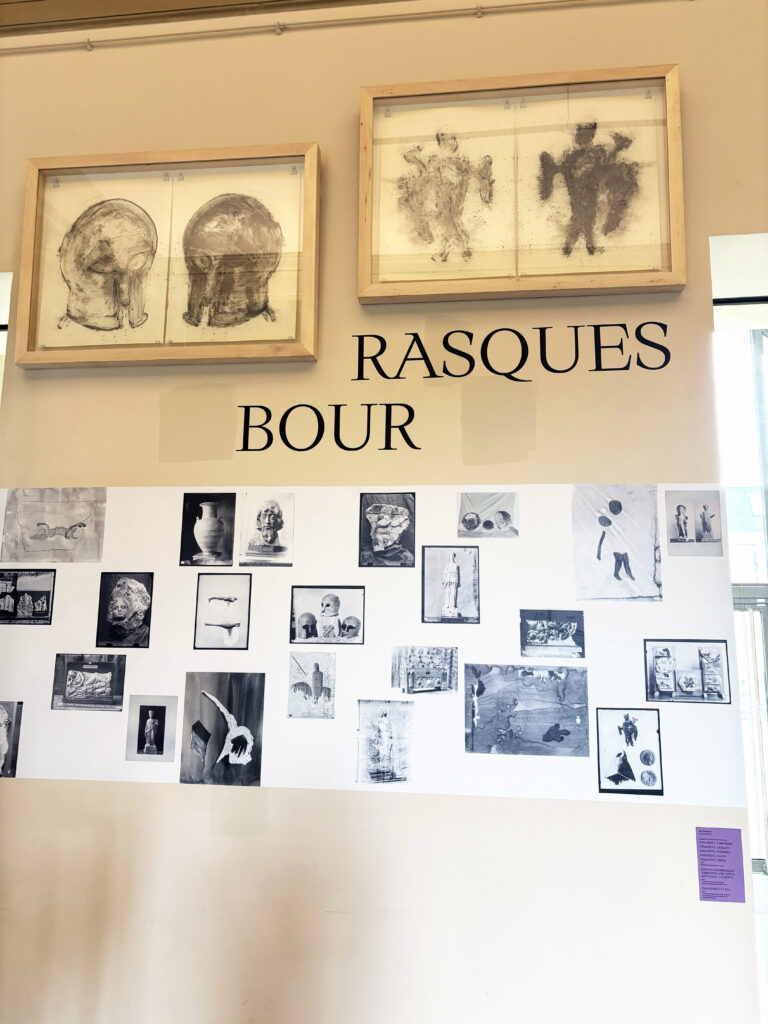
Black-and-white collage of archival images with two framed drawings of heads and figures above; partial wall typography. Exhibition Très chère Louise by Lise Terdjman, Musée de Picardie (26 Aug 2025 – 4 Jan 2026).
Hallucinating the Bequest, wall installation, © Lise Terdjman, ADAGP, 2025

A three-room itinerary, around thirty works

Drawing—“at the core of the practice,” as the artist puts it—structures an installation pathway across three rooms, with around thirty works in dialogue. The “intense, powdery” pastels—imagined echoes of Louise’s lost works—are joined by a video animating drawings and photographs, a sound piece, an image wall at the entrance, and a ceramic-and-textile sculpture, L’Énigme de Louise, suspended inside a pyramidal display case. These are “open” forms that make room for shadow, absence, and fragment.

Repairing the museum narrative

Beyond homage, the exhibition offers a critical look at museography. In the 1980s, the Maignan-Larivière collections were broken up according to an encyclopedic logic (classified by periods and disciplines), erasing the original harmony conceived by Louise. Terdjman’s project reassembles the objects “according to sensitive affinities,” breathing new life into the bequest within the museum space.

Louise as a full presence

Lise erdjman wants Louise to become familiar, “just like Albert Maignan”—not a frozen heroine, but an active presence whose spatial thinking (hanging, colors, display cases) shaped the gallery at the Musée de Picardie alongside Albert Roze, then the museum’s director.
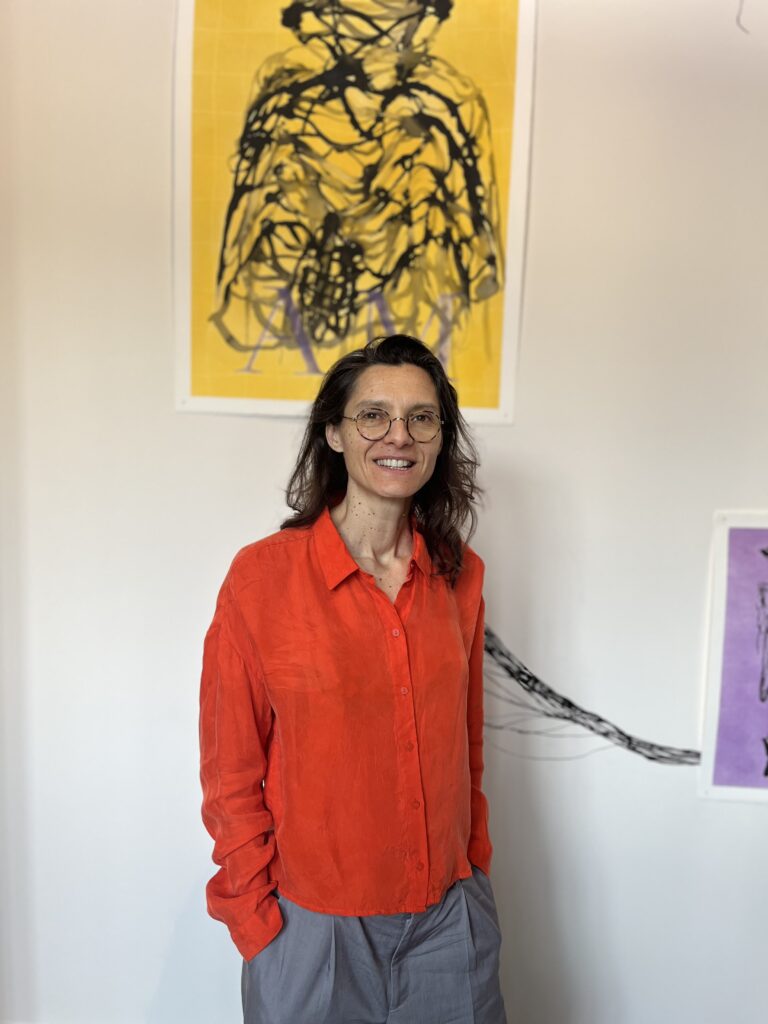
Lise Terdjman

Who is Lise Terdjman?

A visual artist trained at the Beaux-Arts de Paris and the École des Arts Décoratifs, Lise Terdjman works across disciplines (drawing, ceramics, photography, installation, archives) to explore forgotten narratives and erased female figures. She exhibits in France and internationally (Centre Pompidou, Louvre, Carlsberg Foundation, POUSH) and teaches at ESAD Reims.

Practical information

  • Dates: 26 August 2025 → 4 January 2026
  • Venue: Musée de Picardie, Amiens

FAQ

Who is Louise Maignan-Larivière?
Wife of Albert Maignan, embroiderer and draughtswoman, she played a major role in establishing the Maignan bequest and arranging the Musée de Picardie gallery (hanging, colors, display cases).

Why the title “Très chère Louise”?
The title comes from a posthumous letter addressed by Lise Terdjman to Louise, embracing the share of fiction needed to fill history’s silences.

What is the source object of the exhibition?
An embroidered casket attributed to Louise, presented in 1902 at the Salon des artistes français, whose proverb about emotions guided the creation.

What will visitors actually see?
A three-room itinerary with around thirty pieces: large drawings, a suspended ceramic piece, video, a sound work, and an image wall—open forms that leave space for the fragment.
Pour lire la suite, téléchargez ART MAG N°28
Categories
Calendar - International - Painting

Frida Kahlo at Tate Modern (London) — 25 June 2026 → 3 January 2027

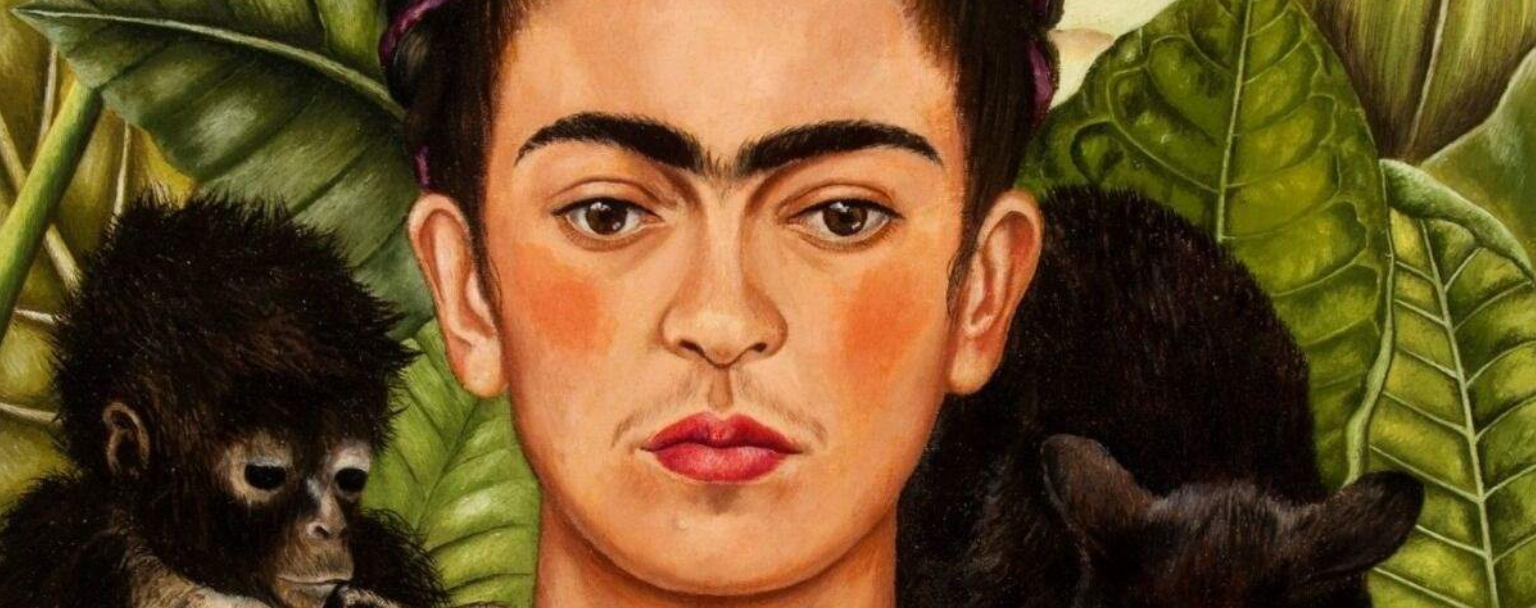
peinture de frida Kalho autoportrait exposé au tate Moderne Londre

Tate Modern presents a major event : Frida: The Making of an Icon. Over 130 works—including key paintings—plus photographs, documents and personal items illuminate how a modern artist became a global icon, shown in dialogue with 80+ artists across generations.

Why go ?

  • A critical journey through the “making” of Frida’s image: landmark paintings, photographs, documents and personal objects.
  • A wider cultural lens with works by contemporaries and artists inspired by Kahlo, mapping her lasting influence.

Practical info

  • Dates: 25 June 2026 → 3 January 2027
  • Venue: Tate Modern, Bankside, London
  • Organisers & supporters: Museum of Fine Arts, Houston, in collaboration with Tate Modern.
  • Lead Global Supporter: Bank of America, with support from John J. Studzinski, CBE, the Frida patron circle and Tate Members.

FAQ

What are the exhibition dates?
25 June 2026 to 3 January 2027.

Where is it held?
At Tate Modern, Bankside, London (UK).

What will I see?
More than 130 works by Frida Kahlo (including key paintings) plus documents, photographs and mementos from her archives, shown alongside works by 80+ artists.

Who organises and supports the show ?
Organised by the Museum of Fine Arts, Houston (MFAH) in collaboration with Tate Modern. Bank of America is Lead Global Supporter, with support from John J. Studzinski, CBE, the Frida patron circle and Tate Members.

Is this part of a tour ?
Yes. It debuts at MFAH (Houston) before travelling to London.

How do I book tickets ?
Book directly on the Tate Modern website (advance booking recommended).

Do Tate Members get benefits ?
Yes. Tate Members enjoy free, unlimited exhibition entry.

Is there a youth offer ?
Ages 16–25 can join Tate Collective for £5 tickets on many shows.

Nearest Tube stations ?
Southwark (Jubilee line) and Blackfriars.

How long should I allow for a visit ?
60–90 minutes for a first pass; up to 2 hours if you explore the archive sections in depth.

Categories
News - Painting

Gerhard Richter at Fondation Louis Vuitton (Paris): the retrospective of the year

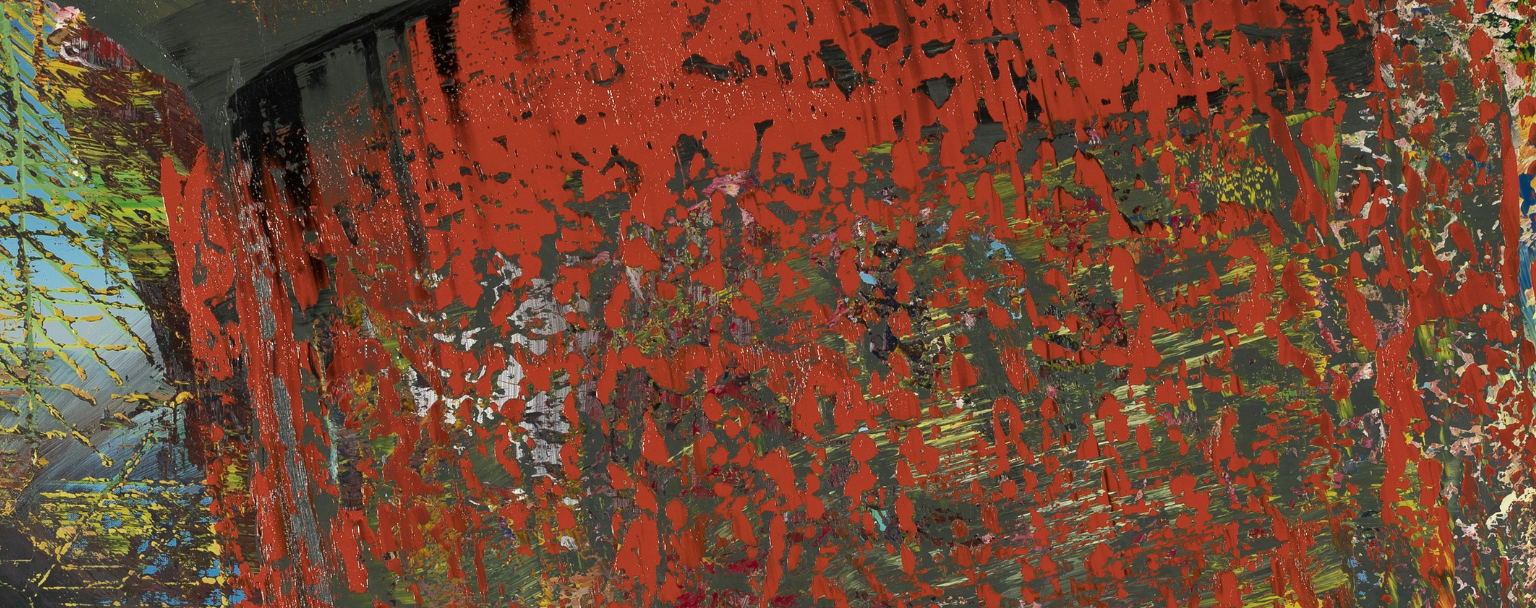
Gerhard Richter, Gudrun (1987) — abstraction rouge et gris au racloir, textures stratifiées.
Fondation Louis Vuitton, Paris Gerhard Richter 2025

From 17 October 2025 to 2 March 2026, Fondation Louis Vuitton devotes its entire building to Gerhard Richter. Bringing together 270 works (1962–2024)—oil paintings, works in glass and steel, pencil and ink drawings, watercolours and overpainted photographs—the exhibition offers the first full panorama of six decades.

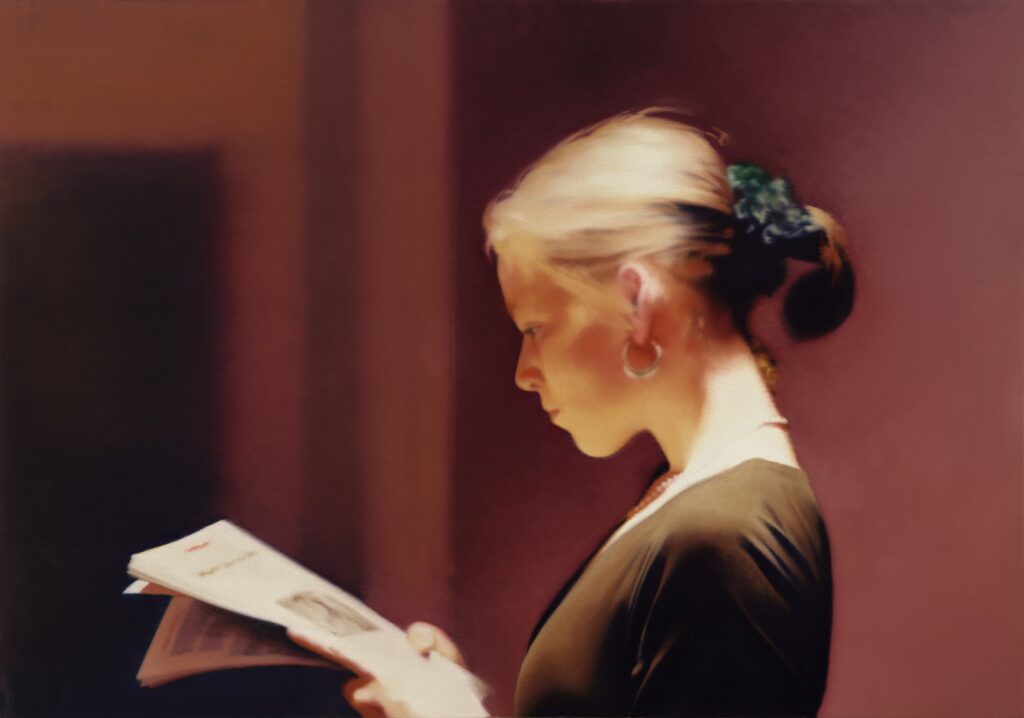
Gerhard Richter, Lesende, 1994 © Gerhard Richter 2025
Gerhard Richter, Lesende, 1994 © Gerhard Richter 2025

Why it matters ?

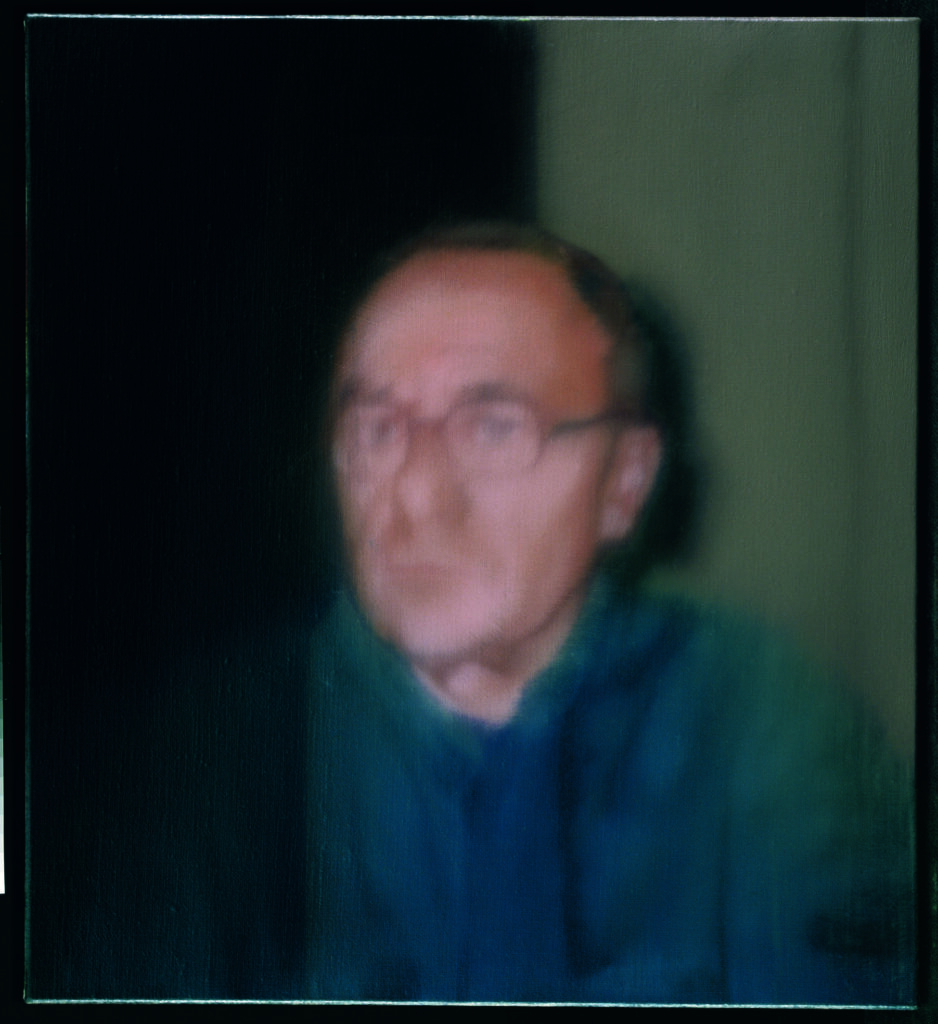
Richter’s art dismantles certainty. From photo-based paintings with signature blur to squeegee abstractions, colour charts, glass pieces and digitally generated Strip images, he has continually reprogrammed the way painting can think. The show’s scale—spanning early family portraits to late abstractions and paper works—makes it a landmark for Paris.

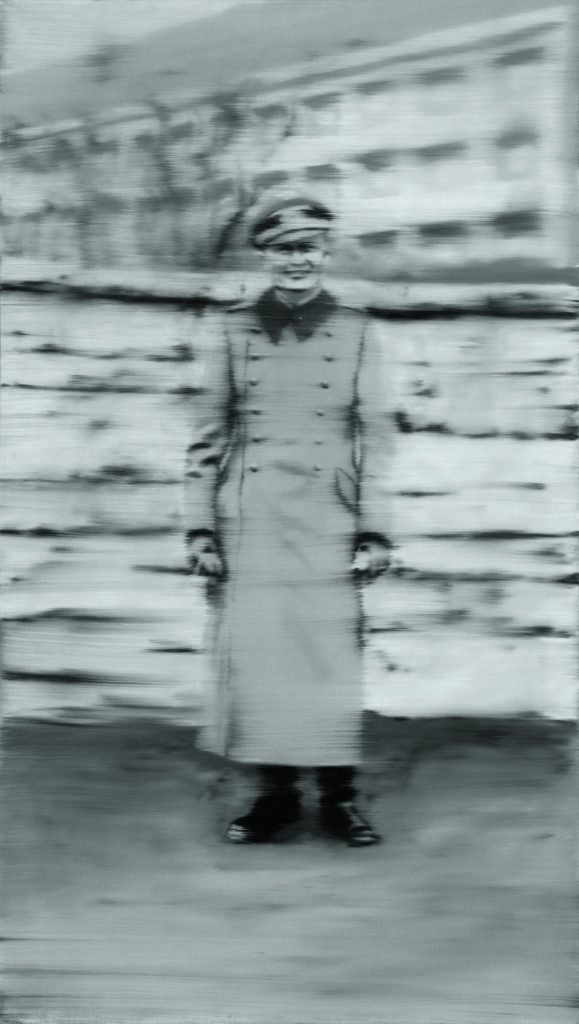
Gerhard Richter, Onkel Rudi [Uncle Rudi], 1965 (CR 85). Oil on canvas, 87 × 50 cm. Lidice Memorial Collection, Czech Republic. © Gerhard Richter 2025.

The exhibition at a glance — 6 key chapters

  1. 1962–1970 — After photographs
    Family portraits such as Onkel Rudi and press images like Bombers become unstable memories through blur; early Colour Charts and Glass Panes shift focus from motif to method.
  2. 1971–1975 — Crisis of representation
    The 48 Portraits (Venice Biennale, 1972) scrutinise the encyclopaedia of male knowledge; Grey Paintings and Vermalung (smearing/dragging) test the limits of depiction.
  3. 1976–1986 — Laboratory of abstraction
    Enlarged watercolour studies and the Strich series make the brushstroke a subject. Tension with figuration persists in works like Betty, landscapes and still lifes.
  4. 1987–1995 — The dark decade
    The cycle 18. Oktober 1977 (on the Red Army Faction—exceptionally on loan from MoMA) adopts an ethical distance; dense, sombre abstractions and Sabine mit Kind deepen the question of how images bear history.
  5. 1996–2009 — Chance and system
    From mineral Silikat to 4900 Colors, colour is distributed by combinatory rules; the Cage Paintings turn the squeegee into a musical dramaturgy of layers, erasures and reprises.
  6. 2009–2017 — Thresholds & last paintings
    Glass works and digitally generated Strip extend painting beyond the stretcher. With Birkenau (2014), photographs from Auschwitz-Birkenau are overpainted to the edge of visibility. Richter completes his final abstract canvases in 2017 and continues with drawing.
Gerhard Richter, Selbstportrait [Self-Portrait], 1996 (CR 836-1). Oil on linen, 51 × 46 cm. © Gerhard Richter 2025.

Works not to miss

  • 48 Portraits (1971–72) — a cool encyclopedia of the 20th century.
  • 18. Oktober 1977 (1988) — responsibility and distance in history painting.
  • 4900 Colors — colour as a rule-based field.
  • Cage Paintings — gravity and lyricism of the squeegee.
  • Birkenau (2014) — abstraction as an ethical veil.
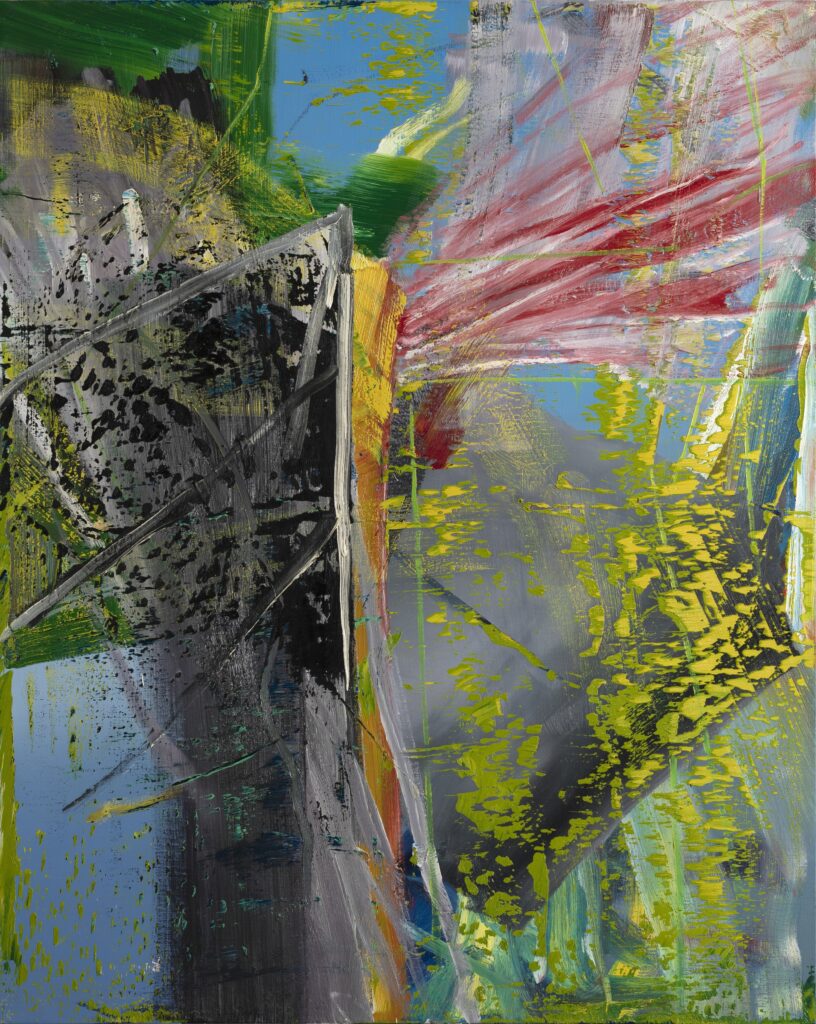
Gerhard Richter, Möhre (Carrot), 1984 — green, grey and blue squeegee abstraction with yellow and red streaks.
Gerhard Richter, Möhre [Carotte], 1984 Oil on Canva, 200 x 160 cm Fondation Louis Vuitton, Paris © Gerhard Richter 2025 

Visit info

  • Dates: 17 Oct 2025 → 2 Mar 2026
  • Venue: Fondation Louis Vuitton, 8 Avenue du Mahatma Gandhi, 75116 Paris
  • Curators: Dieter Schwarz & Nicholas Serota
  • Scope: 270 works (1962–2024)

FAQ

Who is Gerhard Richter?
A major German painter (b. 1932, Dresden), based in Cologne, whose work spans photorealism, abstraction, glass and digital processes.

What does the show cover?
Six decades: oil paintings, glass/steel works, drawings, watercolours, overpainted photographs.

Does Richter still paint?
He stopped painting in 2017; recent years focus on drawing and works on paper.

Are there exceptional loans?
Yes—18. Oktober 1977 is on loan from MoMA, New York.

Categories
International - Modern art - News - Painting

Theatre Picasso at Tate Modern (2025–2026): A Staged Encounter with the Artist as Performer

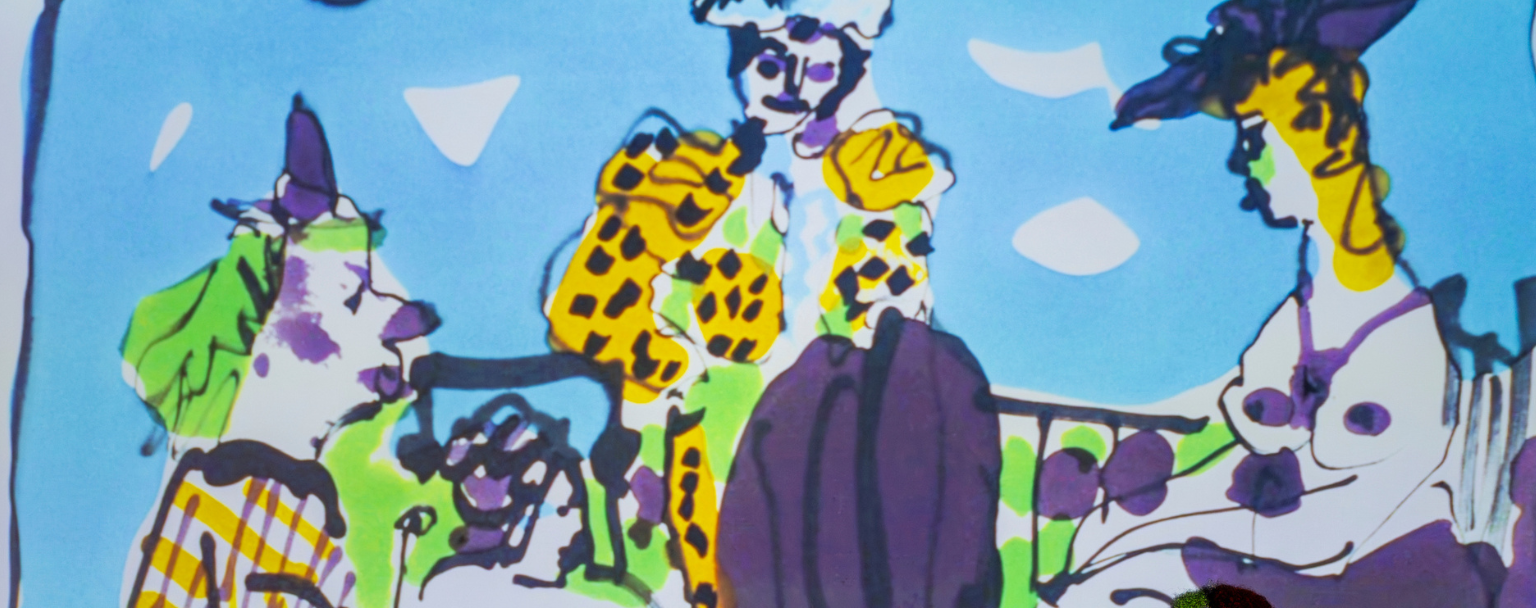
Détail coloré d’une œuvre de Pablo Picasso projetée à la Tate Modern, représentant des personnages stylisés en costumes, dans un style libre et expressif — exposition Théâtre Picasso, Londres 2025

To mark the 100th anniversary of The Three Dancers (1925), Tate Modern unveils a bold new exhibition: Theatre Picasso. Running from 15 September 2025, this immersive event explores the performative dimension of Picasso’s work, shedding light on the artist not just as a painter, but as a master of identity, drama, and presence.

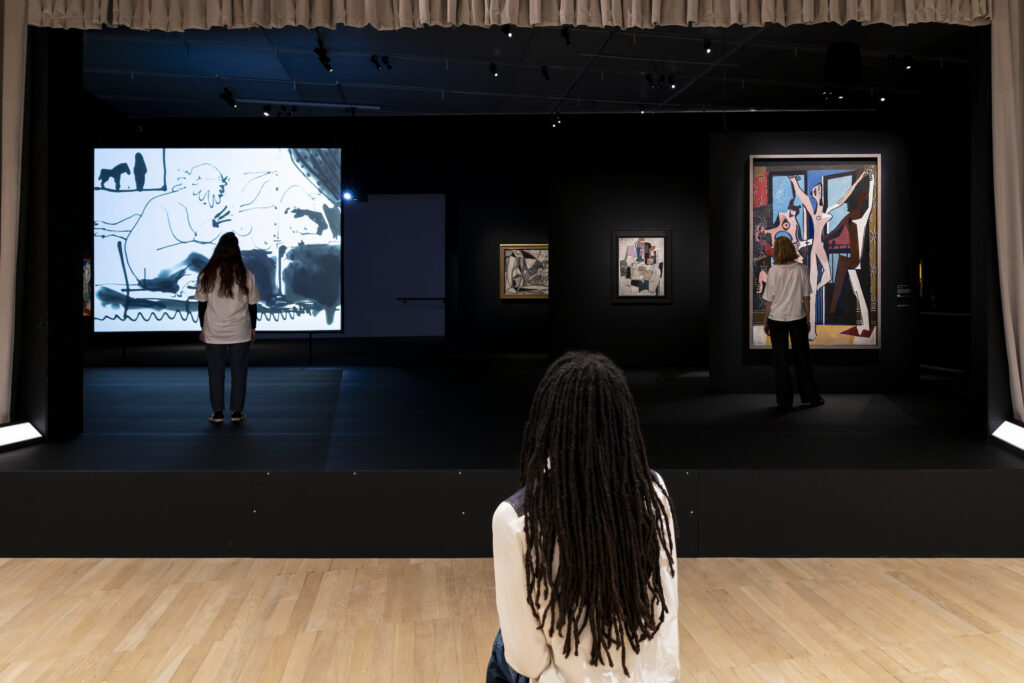
Immersive room at the Theatre Picasso exhibition, Tate Modern, featuring video projections and The Three Dancers (1925) by Picasso.
© Tate

An exhibition centred around The Three Dancers (1925)

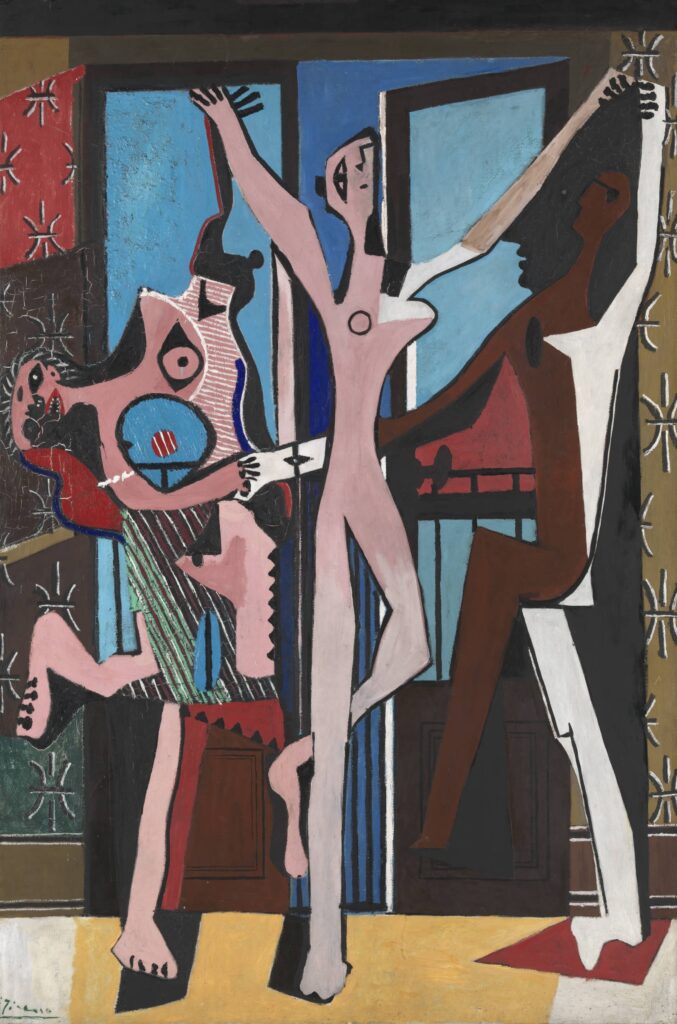
The painting The Three Dancers — a key work of Picasso’s surrealist period — sets the stage for this retrospective. More than 50 artworks (paintings, drawings, sculptures, collages, textiles) portray painting as a dramatic act, where each stroke becomes a performance.

The Three Dancers (1925) by Pablo Picasso, surrealist masterpiece featured at Theatre Picasso exhibition, Tate Modern, London 2025.
The Three Dancers (1925) Tate. © Succession Picasso DACS, London 2025

Curated by Wu Tsang and Enrique Fuenteblanca

Artist Wu Tsang and curator-writer Enrique Fuenteblanca bring a contemporary vision to the show. Their aim: to reactivate Picasso’s works through live performances, dance, flamenco, and theatrical embodiment, turning the museum into a living theatre.

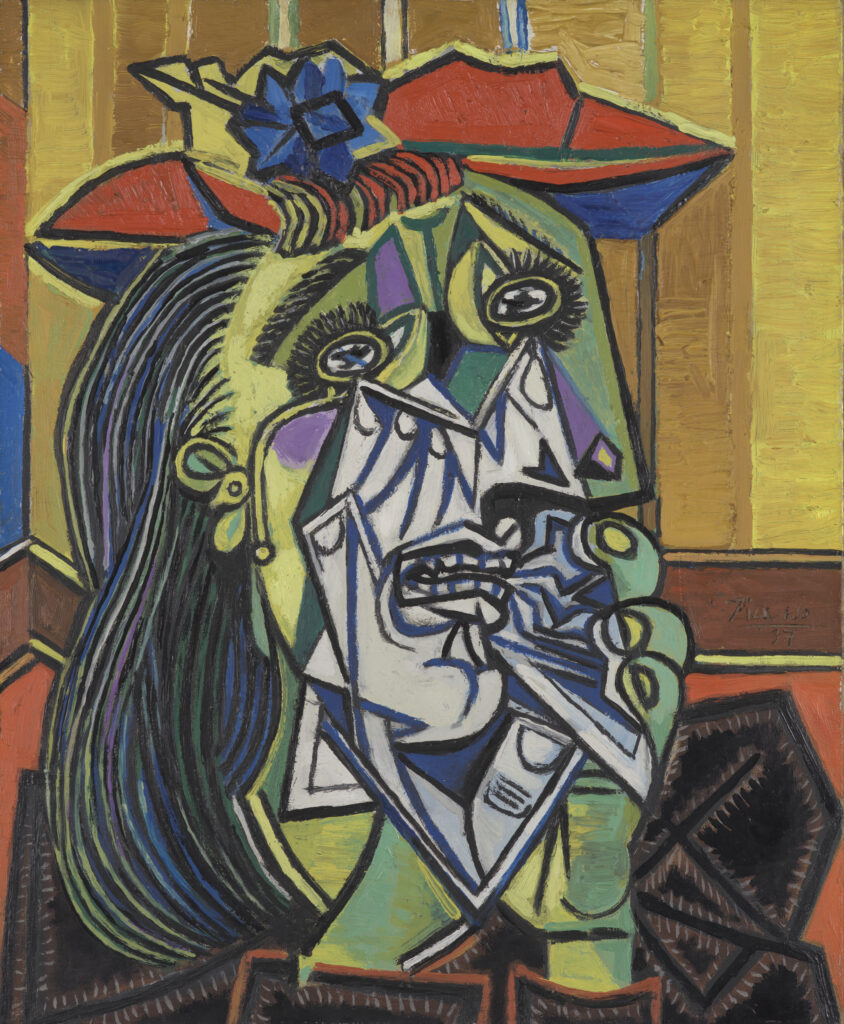
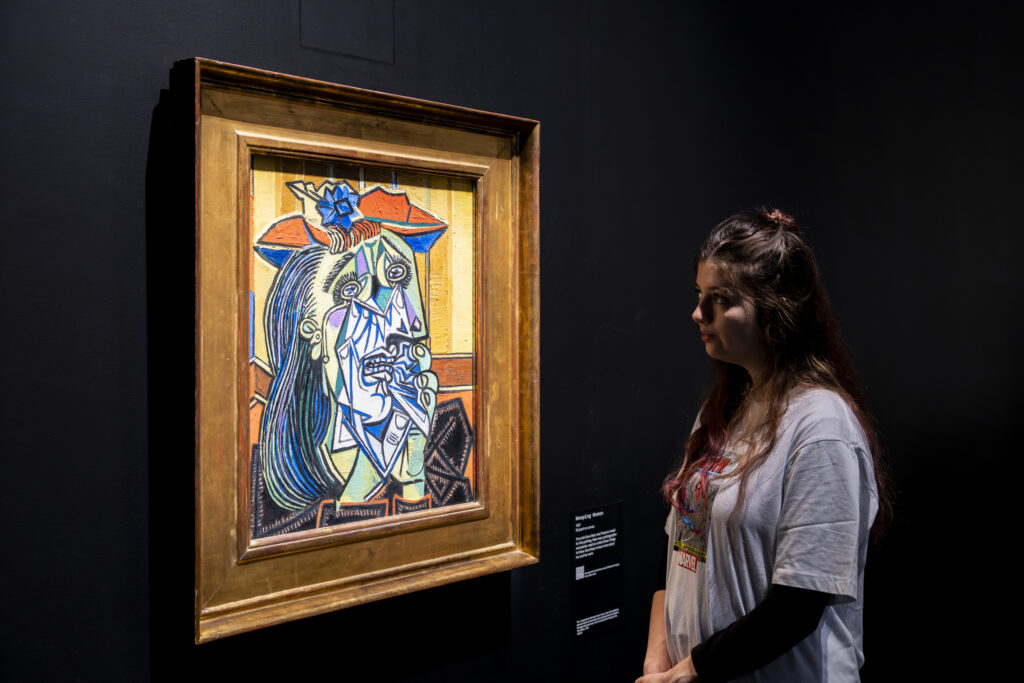
Pablo Picasso’s Weeping Woman (1937), seen at the Tate Modern during the Theatre Picasso exhibition in autumn 2025.
Weeping Woman (1937) Tate. © Succession Picasso DACS, London 2025

Picasso, the performer of his own myth

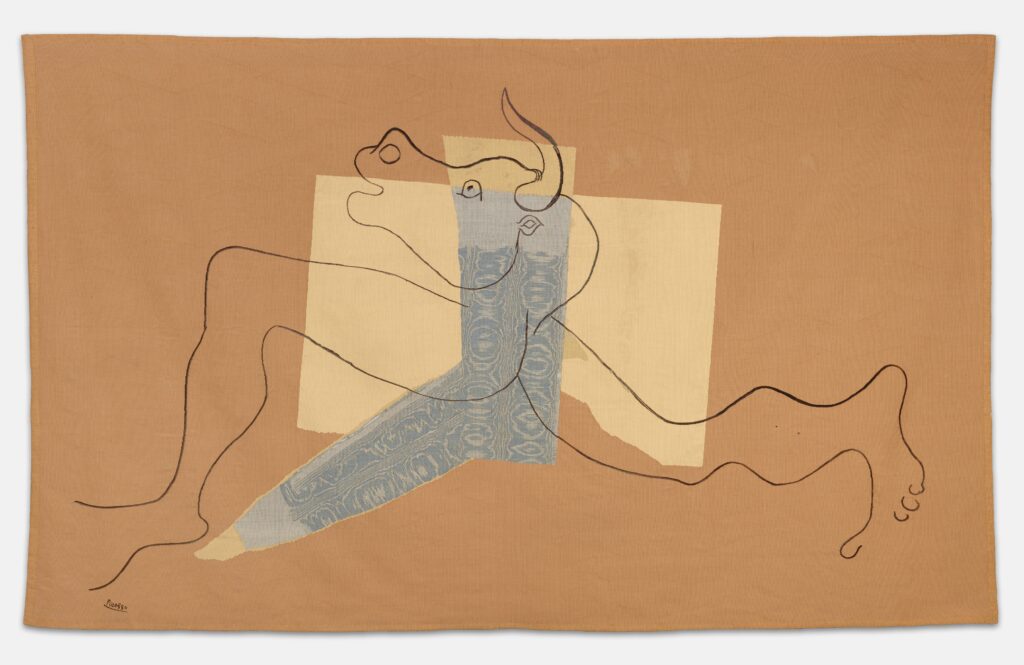
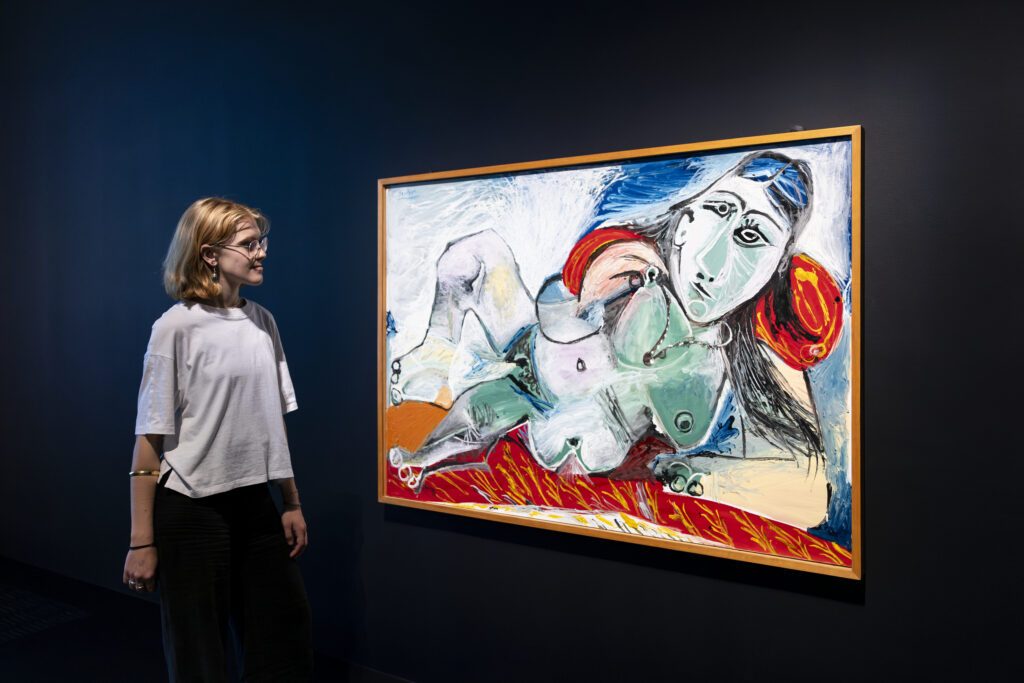
Throughout the exhibition, Picasso emerges as a self-mythologising artist, consciously building his public persona — part genius, part outsider. Works like Weeping Woman (1937), Nude Woman in Red Armchair (1932), and the Minotaur tapestry (1935, on loan from Musée Picasso Antibes) reflect this dramatic duality.

Pablo PICASSO Tapisserie

Want to see more ?
👉 Subscribe to 6 issues / 1 year
👉 Give ART MAG as a gift

A cast of outsiders and icons

Theatre Picasso offers a gallery of characters: circus performers, flamenco dancers, matadors, models. Some were close to Picasso; others symbolic. They appear in works like Girl in a Chemise (1905), Horse with a Blue Youth (1906), Corrida Scene (1960), and Acrobat (1930, from Musée Picasso Paris).

Practical information

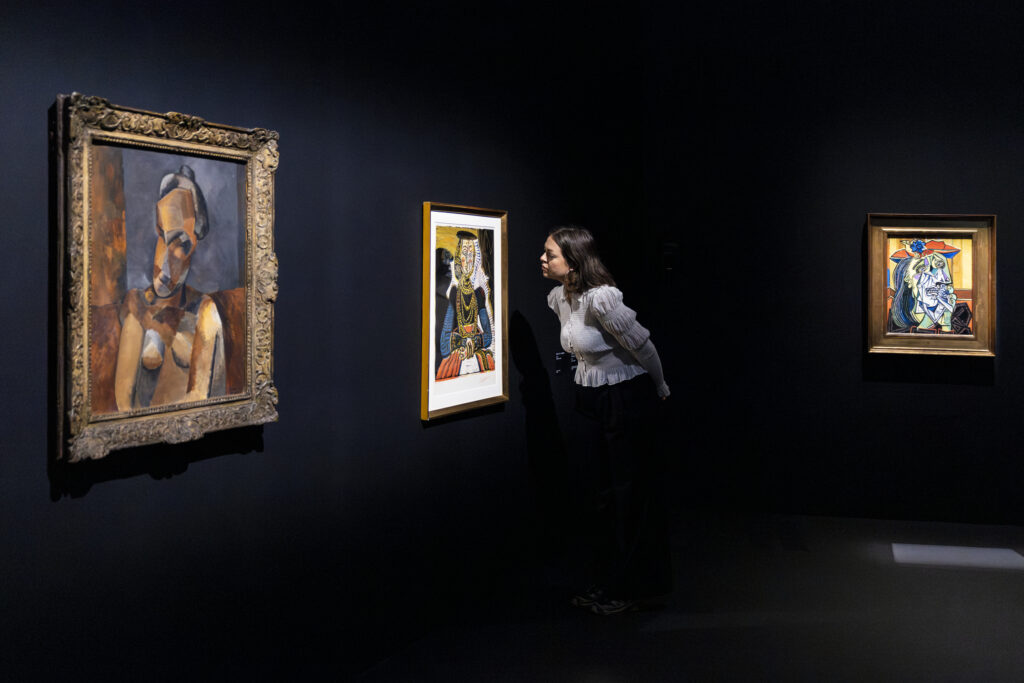
General view of the Theatre Picasso exhibition at Tate Modern: three female portraits by Pablo Picasso being observed by a visitor.

Why Theatre Picasso matters

  • A fresh reading of Picasso through the lens of performance
  • A critique of the artist as brand and spectacle
  • A cross-disciplinary experience blending visual and performing arts
  • Celebrates both the 100th anniversary of The Three Dancers and Tate Modern’s 25th birthday
Woman observing Weeping Woman (1937) by Pablo Picasso at Tate Modern during the Theatre Picasso exhibition, autumn 2025

Want to see more ?
👉 Subscribe to 6 issues / 1 year
👉 Give ART MAG as a gift

FAQ – Theatre Picasso at Tate Modern

🎨 What is the centrepiece of the exhibition?

Picasso’s The Three Dancers (1925), a surrealist masterpiece, anchors the entire show.

🕺 Will there be live performances?

Yes. Throughout the season, artists will activate the exhibition with dance, flamenco, and live installations.

📍 Where is the exhibition located?

At Tate Modern in London.

💡 Why should I visit?

To experience Picasso as performer, explore the tension between image and identity, and engage with his legacy in a bold new way.

📅 How long is it running?

From 15 September 2025 through Spring 2026.

Want to see more ?
👉 Subscribe to 6 issues / 1 year
👉 Give ART MAG as a gift

Categories
International - Modern art - News - Painting

Picasso and Klee in Madrid: 50 Masterpieces in Dialogue at the Thyssen-Bornemisza Museum

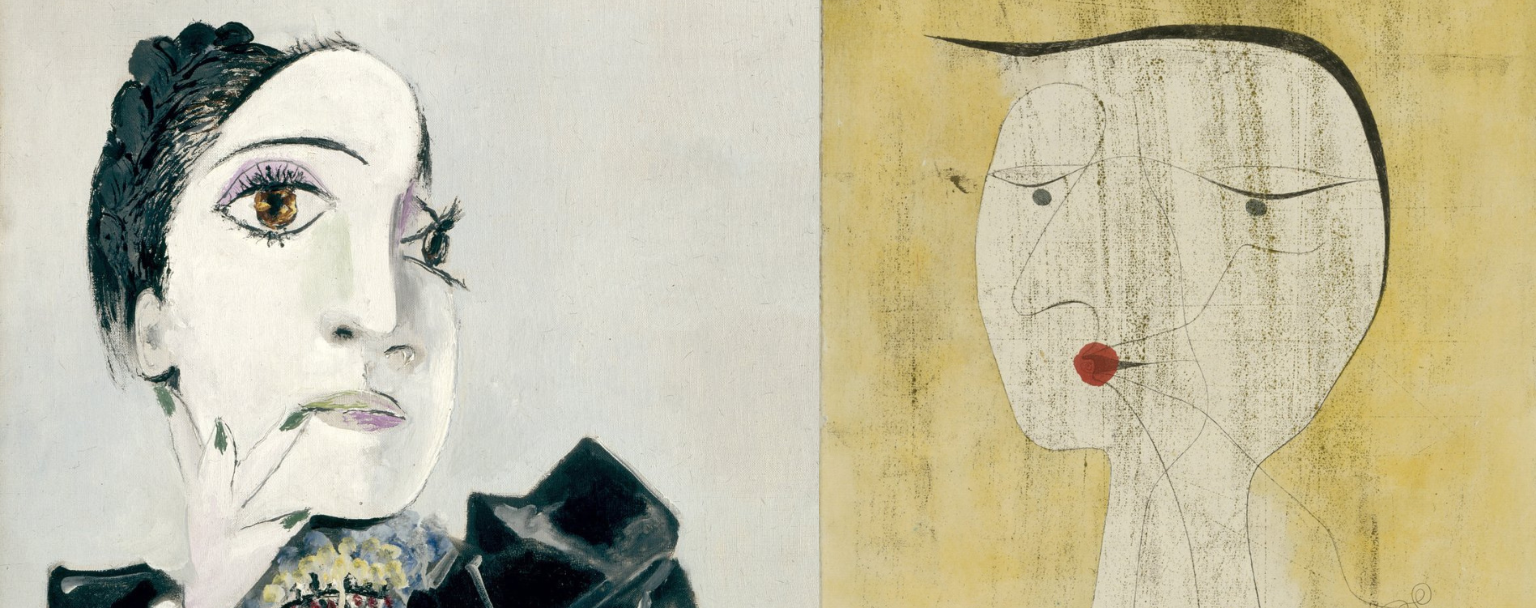
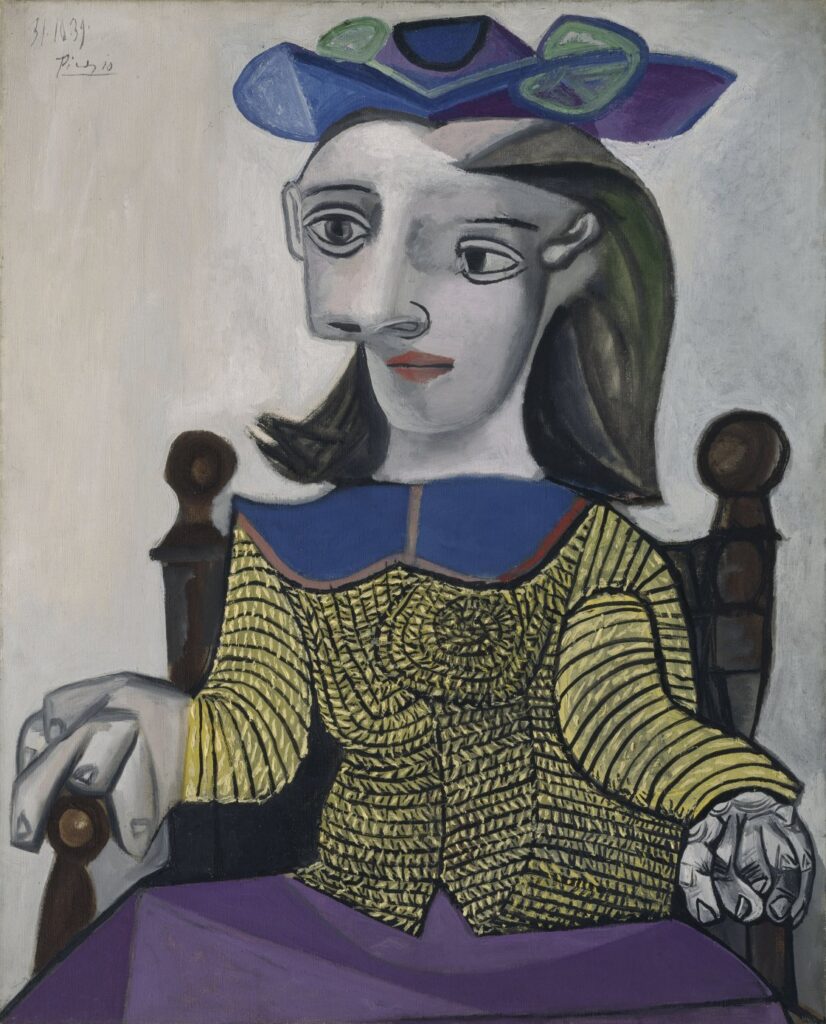
Portrait cubiste d'une femme assise en buste, vêtue d'un pull jaune à motifs graphiques, signé Picasso 1939 — huile sur toile, collection Heinz Berggruen Silhouette épurée d’un visage féminin sur fond ocre, traits noirs minimalistes et lèvres rouges — œuvre poétique et abstraite signée Paul Klee 1932

A must-see this autumn in Madrid: from October 28, 2025 to February 1, 2026, the Thyssen-Bornemisza Museum presents an exceptional exhibition featuring 50 major works by Picasso and Klee, from the renowned Heinz Berggruen Collection (Berlin).
A rare artistic dialogue between two 20th-century masters, set within an immersive journey through modern art

Cubist portrait of a seated woman wearing a patterned yellow sweater, painted by Picasso in 1939 — oil on canvas from the Heinz Berggruen Collection

An Unprecedented Dialogue Between Two Modern Masters

The exhibition “Picasso and Klee in the Heinz Berggruen Collection” brings together in Madrid fifty major works by Pablo Picasso and Paul Klee, from the prestigious collection of art dealer and philanthropist Heinz Berggruen. A rare opportunity to discover, outside Berlin, some of the most iconic pieces held by the Museum Berggruen, currently closed for renovation.

Combining poetic abstraction with radical modernity, the selected works establish a subtle visual and conceptual dialogue between two distinct yet complementary artistic visions: Picasso’s political intensity and Klee’s inner symbolism.

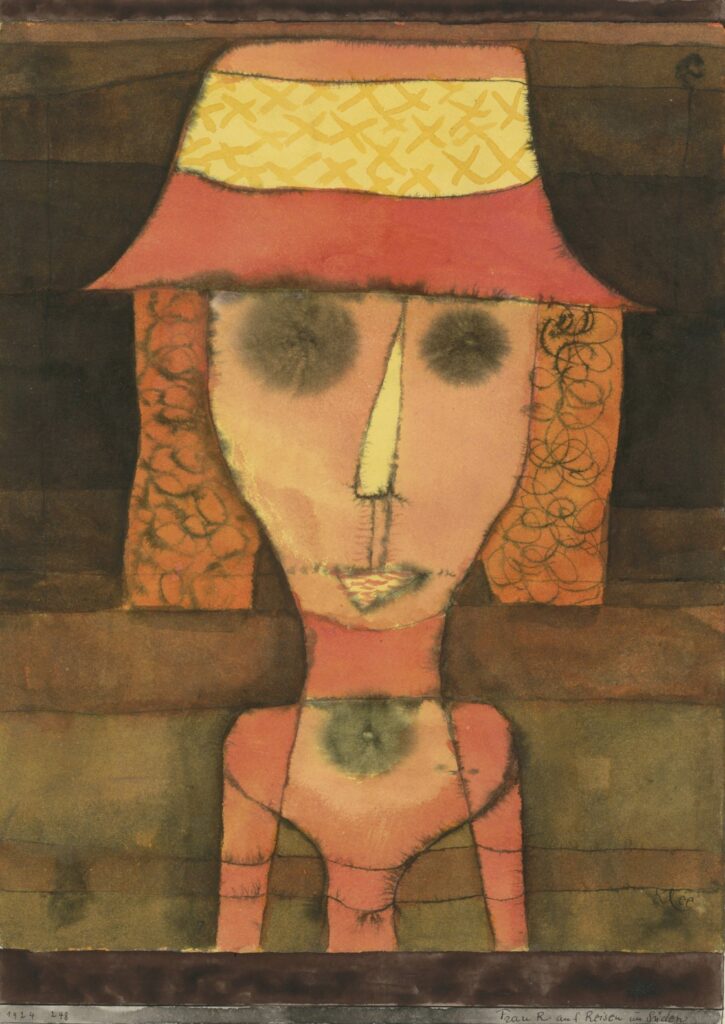
Stylized female figure with pink face, red and yellow hat, large black eyes, in a warm-toned abstract setting — watercolor by Paul Klee, 1924"

🔍 Why You Shouldn’t Miss This Exhibition

  • A legendary private collection: Built with passion over decades, Berggruen’s collection is now part of Germany’s national heritage.
  • A curated dialogue, not just a comparison: The exhibition creates a dynamic interplay of forms, emotions, and contrasts between the two artists.
  • A major European art event: After Japan and China, this stop in Madrid marks a key European milestone in the touring exhibition.
  • A tribute to the collector’s vision: Berggruen’s personal and intellectual connection with both artists shines through every room of the exhibition.

Two Modernities in Conversation

While both Picasso and Klee sought artistic freedom, their paths diverged. Picasso deconstructed reality to reflect the brutality of the world; Klee crafted symbolic, dreamlike universes. Together, they shaped a century marked by artistic and philosophical revolutions.

Cubist still life with open window overlooking the Mediterranean Sea, pastel-toned interior scene painted by Picasso in Saint-Raphaël, 1919

📸 Highlights of the Exhibition

  • Picasso’s collages and prints
  • Klee’s poetic and architectured paintings
  • An immersive scenography curated by Paloma Alarcó and Gabriel Montua

📌 Practical Information

  • 📍 Venue: Museo Nacional Thyssen-Bornemisza, Madrid
  • 🗓️ Dates: October 28, 2025 – February 1, 2026
  • 💻 Official website: museothyssen.org
  • 🎟️ Tickets: Online booking strongly recommended
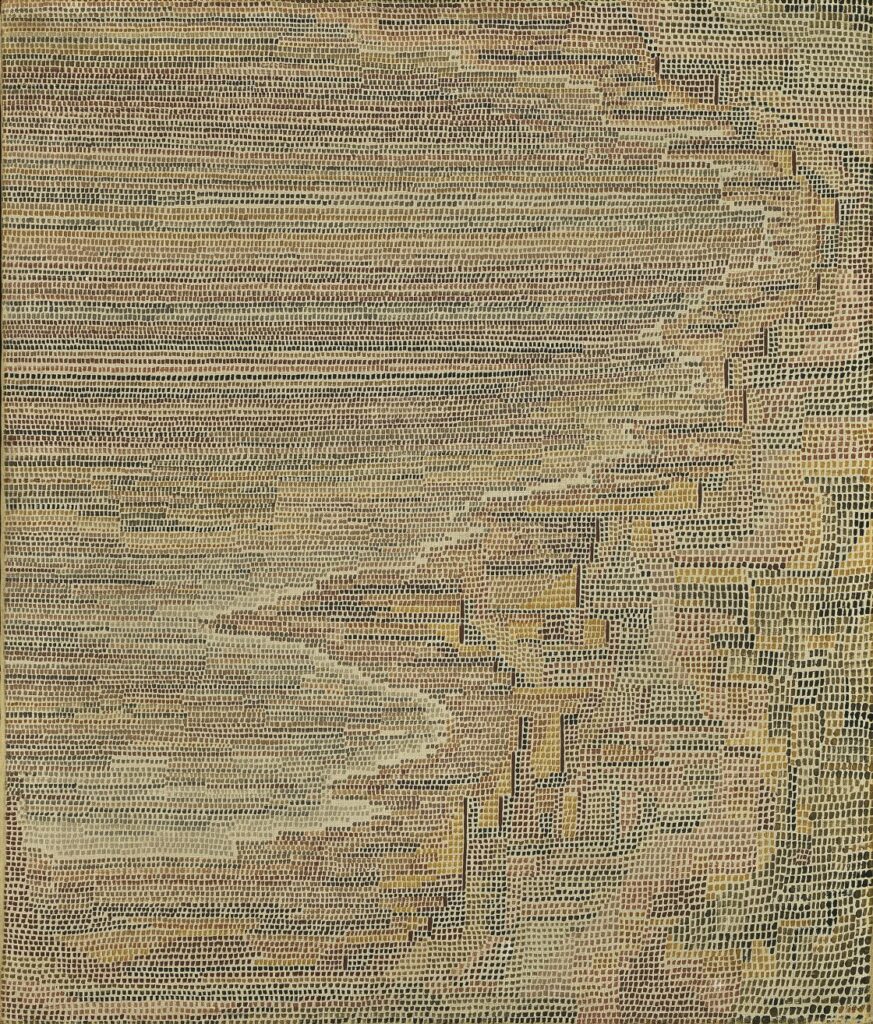
Abstract painting by Paul Klee made up of thousands of small square shapes forming wave-like geometric patterns in beige, brown and ochre tones — 1929

❓FAQ – About the Picasso / Klee Exhibition (Thyssen-Bornemisza)

🔸 Who was Heinz Berggruen?

Heinz Berggruen (1914–2007) was a major German art dealer and collector. After founding a famous gallery in Paris in 1950, he built one of the most significant collections of 20th-century art, now housed in the Museum Berggruen in Berlin.

🔸 Why Picasso and Klee?

They were Berggruen’s two favorite artists. This exhibition stages a visual and conceptual dialogue between their works, highlighting unexpected connections between form, symbolism, and emotion.

🔸 Where is this collection usually located?

The works come from the Museum Berggruen in Berlin, which is currently undergoing renovation. This traveling exhibition shares highlights of the collection worldwide.

🔸 Should I book in advance?

Yes, online booking is highly recommended, especially during holidays and peak tourist periods in Madrid.

🔸 Are there French or English tours available?

Yes, multilingual audio guides (including English and French) are available. Guided tours can also be arranged in advance.

🔸 Is the exhibition family-friendly?

Yes, the museum offers family activities and educational content tailored for children, especially through the whimsical universe of Paul Klee.

Categories
News

Cendrine Genin — “Les Intimes” in Hyères: a journey through sensitivity at LM STUDIO

Gros plan sur un tricot de laine et ses boutons — textures textiles, photographie d’intérieur, Cendrine Genin, série “Les Intimes”.

From 14 to 19 October 2025, LM STUDIO (Hyères) presents “Les Intimes” by photographer and visual artist Cendrine Genin: a series in which light, glass, mirror, and Corten steel give tangible form to the vibration of emotion.

Blue-and-white porcelain bowl and plates stacked in a cupboard — photographic still life, Cendrine Genin, Hyères.

Why this event matters ?

Programmed in in echoes with the 40th International Festival of Fashion, Photography and Accessories – Hyères (16–19 Oct.), the exhibition offers an intimate counterpoint to the festival’s tempo: a six-day experience designed more to look “at the brink of fractures” than to consume images.

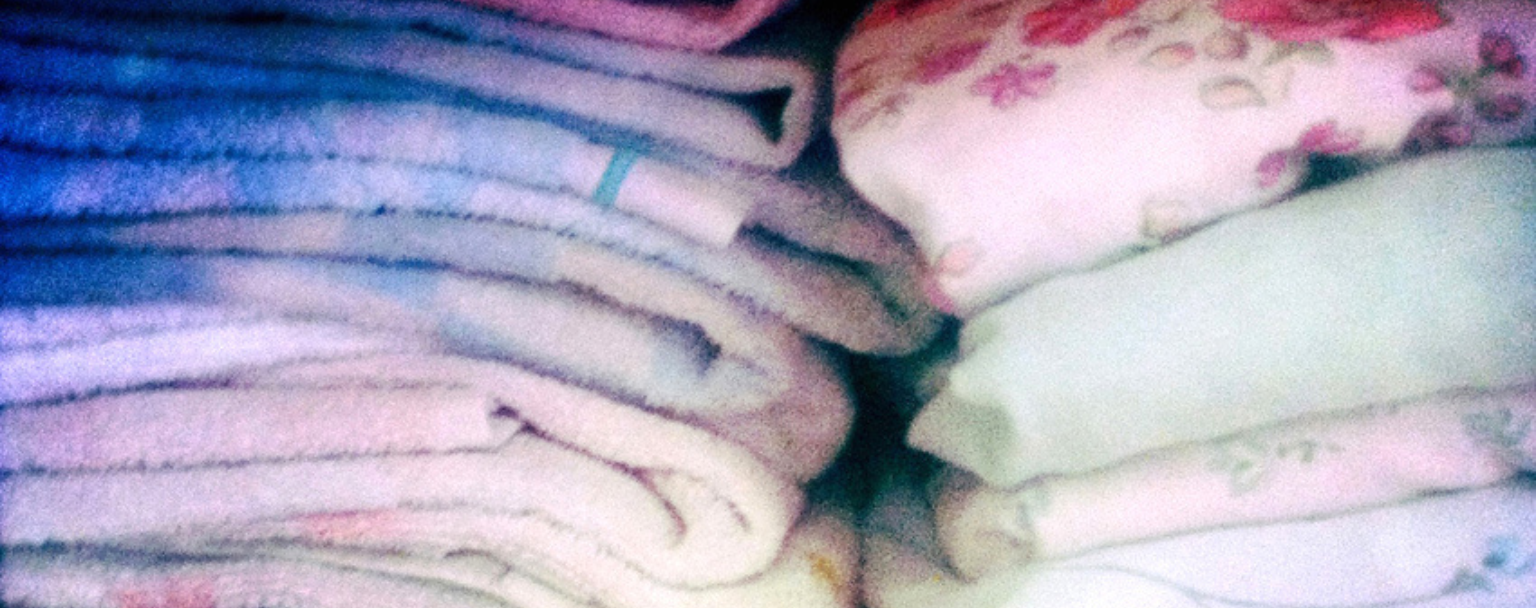
Lace and pastel fabrics folded in a drawer — domestic detail photograph, Cendrine Genin, Hyères, “Les Intimes” series.

Intimacy as a quest

For Cendrine Genin, intimacy is not withdrawal but a quest: to grasp “a thread of light, a material, a meeting of colors” in order to approach the gesture, between the visible and the invisible. The series “Les Intimes” unfolds in variations—thresholds where emotion takes shape without imposing itself.

Close-up of a wool knit and its buttons — textile textures, interior photograph, Cendrine Genin, series “Les Intimes.”

Materials & processes: when the image becomes surface

The approach is rooted in mixed techniques: photography, engraving, prints, glass and mirror, combined with raw materials (iron, Corten steel). These supports play with depth, reflection, and porosity—circulating the gaze between presence and withdrawal, and giving photography an active materiality.

Miniature bird before a gilt mirror, red curtains in the background — atmospheric photo, Cendrine Genin, Hyères, “Les Intimes.”

About the artist

Cendrine Genin is an author-photographer with a background in philosophy, trained at the Arles school and at Image Ouverte (Clarensac). Her practice explores the “fault lines of the living,” offering the viewer a space of encounter—“far enough to speak, close enough to touch.”

Portrait photo of Cendrine Genin
Photo credit: Charles yves Guyon

LM STUDIO, a jewel box in the heart of Hyères

Open since 2016, LM STUDIO (5 bis rue Portalet, Hyères) combines residency, exhibition, and local anchoring, in constant dialogue with the area’s cultural calendar. The exhibition is produced by curator Françoise Michallon, whose curating fosters fruitful encounters between artworks and places.

Practical information

Dates & hours : Tue 14 → Sat 18 Oct 2025, 11am–7pm; Sun 19 Oct, 11am–4pm. Opening : Tue 14/10, 5–9pm. Visits by appointment possible.
Venue : LM STUDIO, 5 bis rue Portalet, 83400 Hyères.
Admission : free.

FAQ

Where is the “Les Intimes” exhibition held?
At LM STUDIO, 5 bis rue Portalet, 83400 Hyères.

What are the dates and opening hours?
14–19 October 2025: Tue–Sat 11am–7pm, Sun 11am–4pm. Opening on Tuesday 14/10, 5–9pm.

Is there an entry fee?
No, admission is free.

What is the link with the Hyères Festival?
The exhibition echoes the festival (16–19 Oct 2025, Villa Noailles).

What materials and processes does the artist use?
Photography and mixed techniques, with glass, mirror, iron, and Corten steel.

Learn more:
Hyères Agenda

Categories
News

Urban Photo 2025 at Quai de la Photo (Paris): 50 Years of Urban Aesthetics

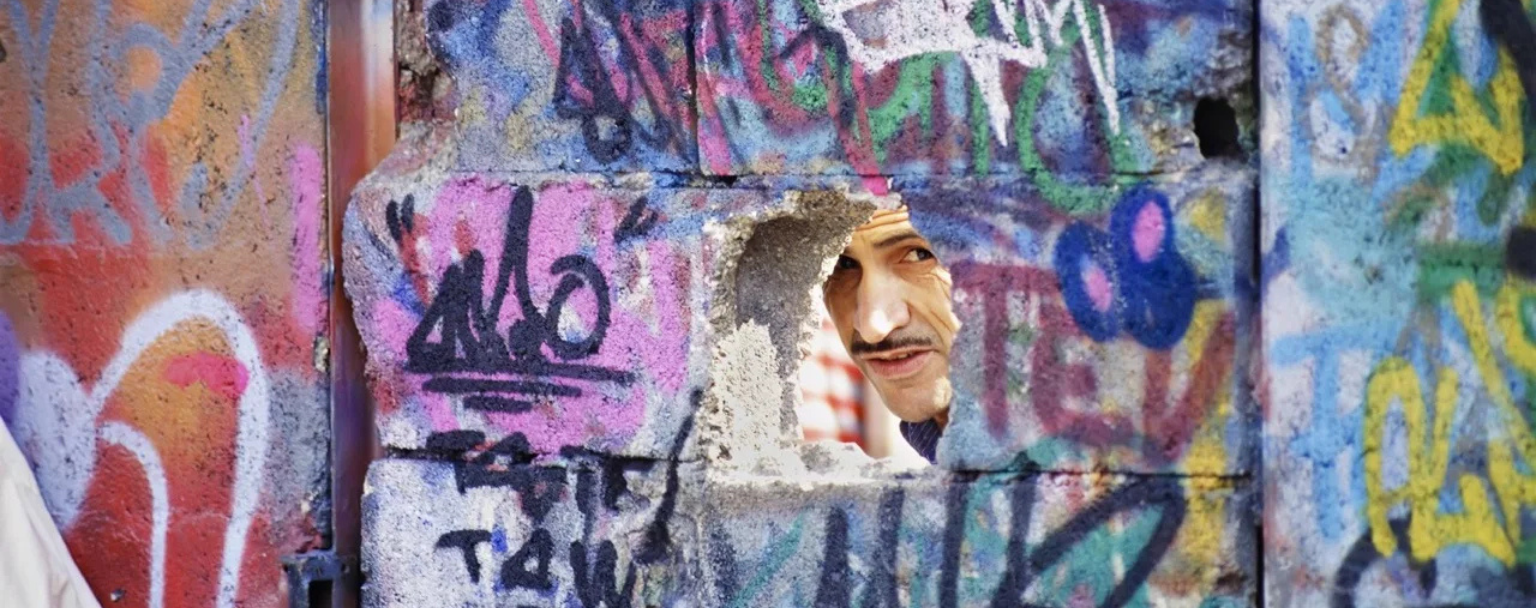
Homme regardant à travers un trou dans un mur couvert de graffitis — photographie de Gérard Guittot, Urban Photo 2025
Gérard Guittot

From 2 October to 18 December 2025, Quai de la Photo presents a major exhibition dedicated to urban cultures through four landmark perspectives: Martine Barrat, Sophie Bramly, Gérard Guittot and Little Shao. A journey across five decades where photography, cult film excerpts (in partnership with ARTE) and soundtracks speak to one another. Free admission.

Why this show is unmissable ?

  • A unique panorama: from the Bronx of the 1970s to today’s Paris and social networks, the exhibition asks a powerful question: which shaped which first—fiction or reality?
  • Four signature voices in street photography documenting the birth and rise of hip-hop and urban art.
  • Generous mediation: free guided tours (Wed→Sun) and a children’s workshop every Saturday at 1 pm.

The featured artists

Martine Barrat

Total immersion and unvarnished humanity: her work reveals the truth of her subjects at eye level, with proximity and restraint.
Rain-soaked Bronx street, run-down facades and reflections on asphalt — photograph by Martine Barrat, 1970s–80s, Urban Photo 2025

Gérard Guittot

From the nights of Stalingrad (Paris) to the first sparks of hip-hop: a visual writing of speed and darkness that has become a historical record. His archives are now preserved and shared by his daughters.

Portrait of a young woman in front of a graffiti-covered wall, Paris, 1980s — hip-hop culture, photograph by Gérard Guittot, Urban Photo 2025

Sophie Bramly

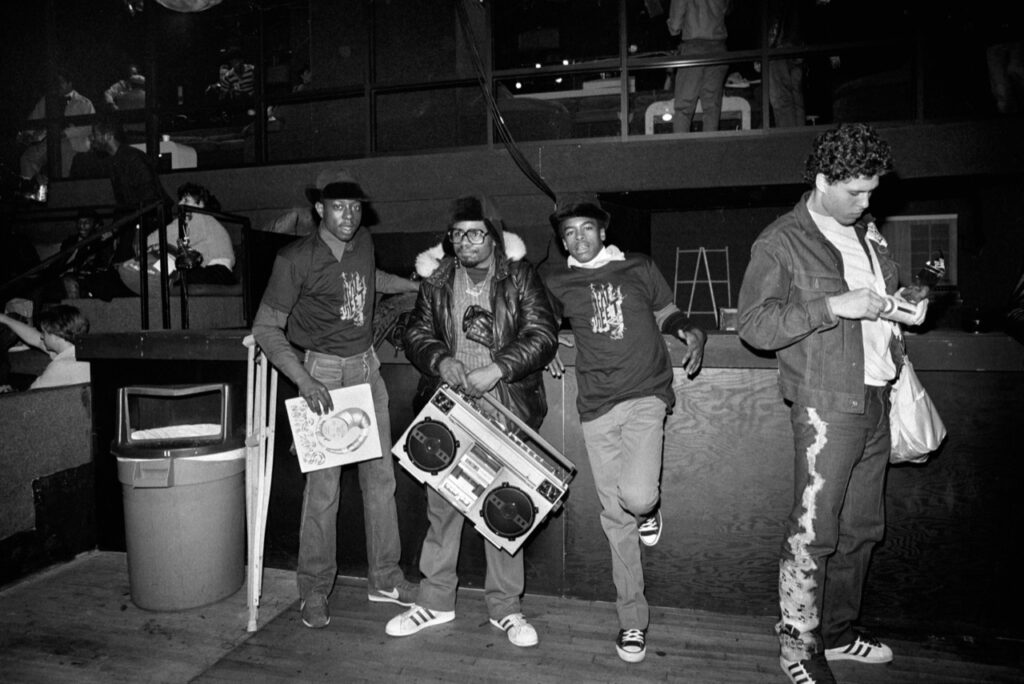
From the Bronx in the early 1980s to Europe, her trajectory ties together press, television, the internet and a recent full return to photography—always close to bodies, spaces and communities.

Youths in a club with a boombox, early hip-hop scene in New York — photograph by Sophie Bramly, Urban Photo 2025

Little Shao

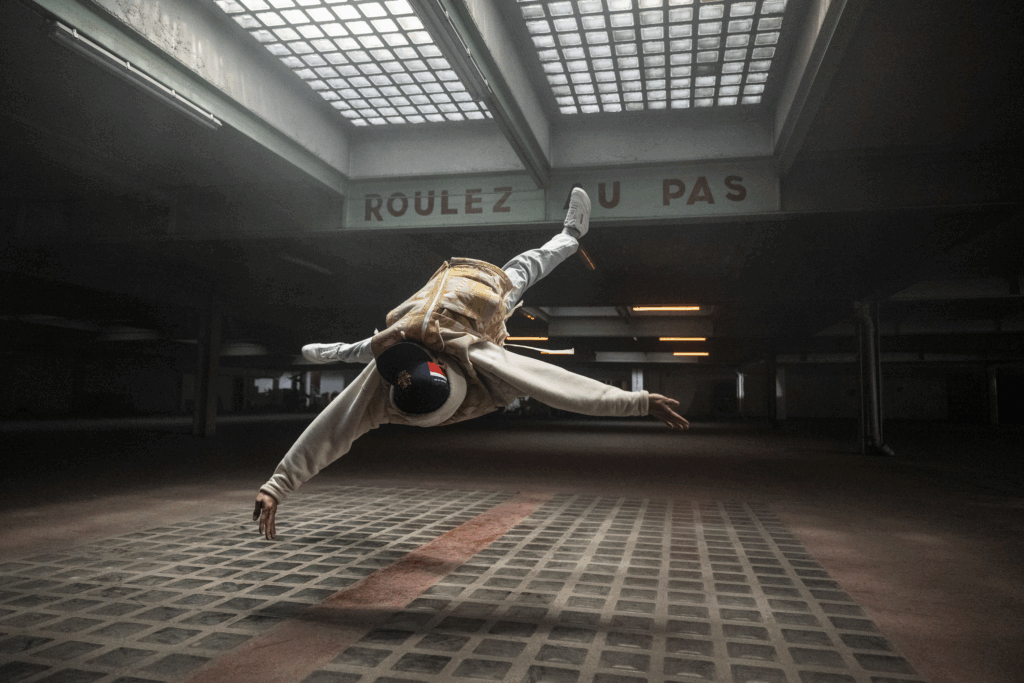
A former dancer and now a leading photographer on the global scene—accredited specialist for breaking at the Paris 2024 Olympics. His kinetic images raise the street to the level of icon.

Breaking dancer suspended mid-air in a parking garage, industrial lighting — photo by Little Shao, Urban Photo 2025 at Quai de la Photo

A multi-format scenography

Between photographic archives, film excerpts (The Warriors, Beat Street, Le Monde de demain) and soundtracks, the exhibition weaves past and present and shows how images build our urban imagination.

Practical information

  • Dates: 2 October → 18 December 2025
  • Venue: Quai de la Photo, 9 port de la Gare, 75013 Paris (barge opposite the BnF)
  • Hours: summer Mon→Sun 12:00–02:00; in winter Wed→Sun 12:00–00:00
  • Admission: Free; free guided tours (Wed→Sun); children’s workshop every Saturday at 1:00 pm
  • Opening (open to the public): Wednesday 1 October 2025, 6:30 pm

Not to miss

  • Screening of “Martha Cooper, Street Art Icon.”
  • Open photo contest (amateurs & pros) with winning images displayed at the end of the show.

FAQ

Is Urban Photo free to visit?
Yes. Admission is free, and guided tours are offered several days a week.

Is it family-friendly?
Absolutely: free guided tours from Wednesday to Sunday and a children’s workshop every Saturday at 1 pm.

Where is it?
Quai de la Photo, 9 port de la Gare, Paris 13th (on the barge at the foot of the BnF).

What are the dates and hours?
From 02/10/2025 to 18/12/2025; seasonal hours (see above).

Which artists are featured?
Martine Barrat, Sophie Bramly, Gérard Guittot, Little Shao.

Categories
News

Tracey Emin at Tate Modern, London, 2026: “A Second Life” — the landmark exhibition tracing 40 years of creation

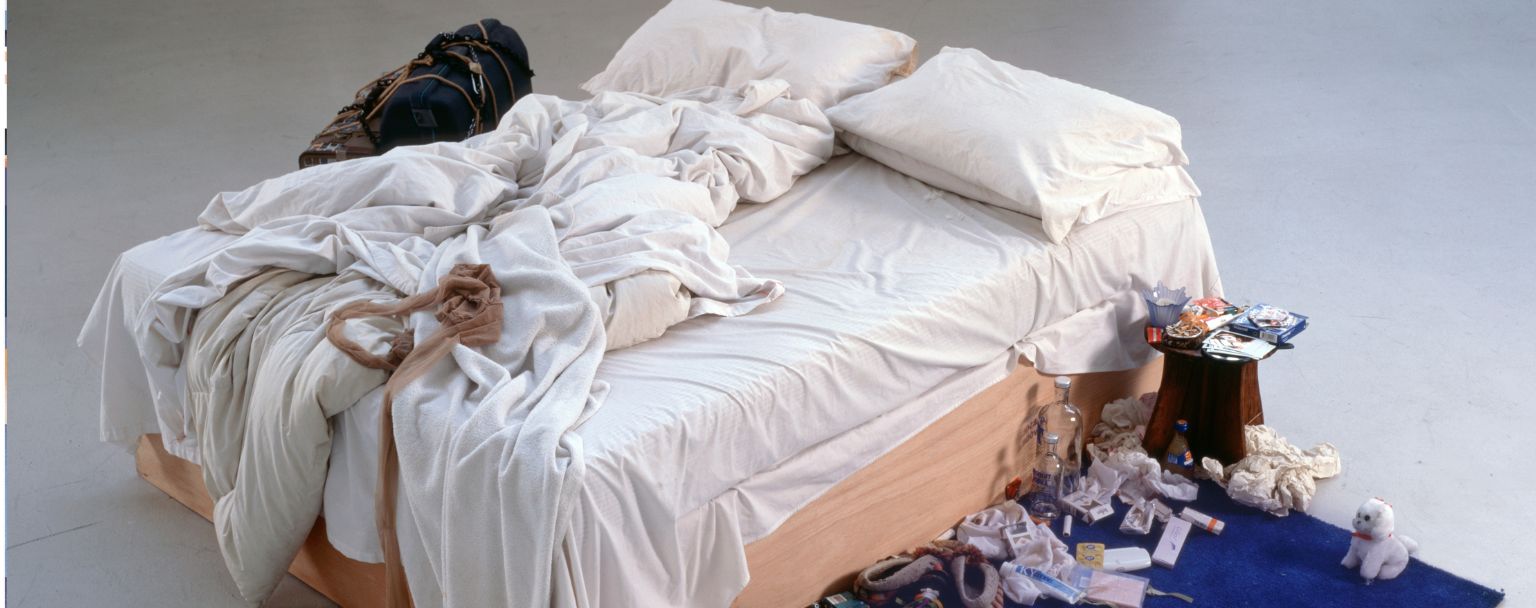
Tracey Emin Photo d'un lit et du désordre autour
Courtesy The Saatchi Gallery, London / Photograph by Prudence Cuming Associates Ltd

Tate Modern will present, from 26 February to 31 August 2026, the largest exhibition ever devoted to Tracey Emin, a leading figure in contemporary British art. More than 90 works—installations, videos, textiles, neons, paintings and bronzes—trace an intimate narrative, from confession to resilience.
The itinerary : from My Bed to post-illness rebirth

The exhibition brings together the milestones of a diary-like oeuvre, from the iconic My Bed (1998)—a key installation nominated for the Turner Prize—to the painterly “exorcismExorcism of the Last Painting I Ever Made (1996). These pivotal works structure the storyline: from a first life marked by crisis to a “second life” asserted after illness.

Tracey Emin, My Bed (1998) — iconic installation with an unmade bed and personal items, ‘A Second Life’ exhibition, Tate Modern, London 2026
My-Bed (1998) Tate Lent by The Duerckheim Collection 2015 ©Tracey-Emin

Margate, an intimate matrix

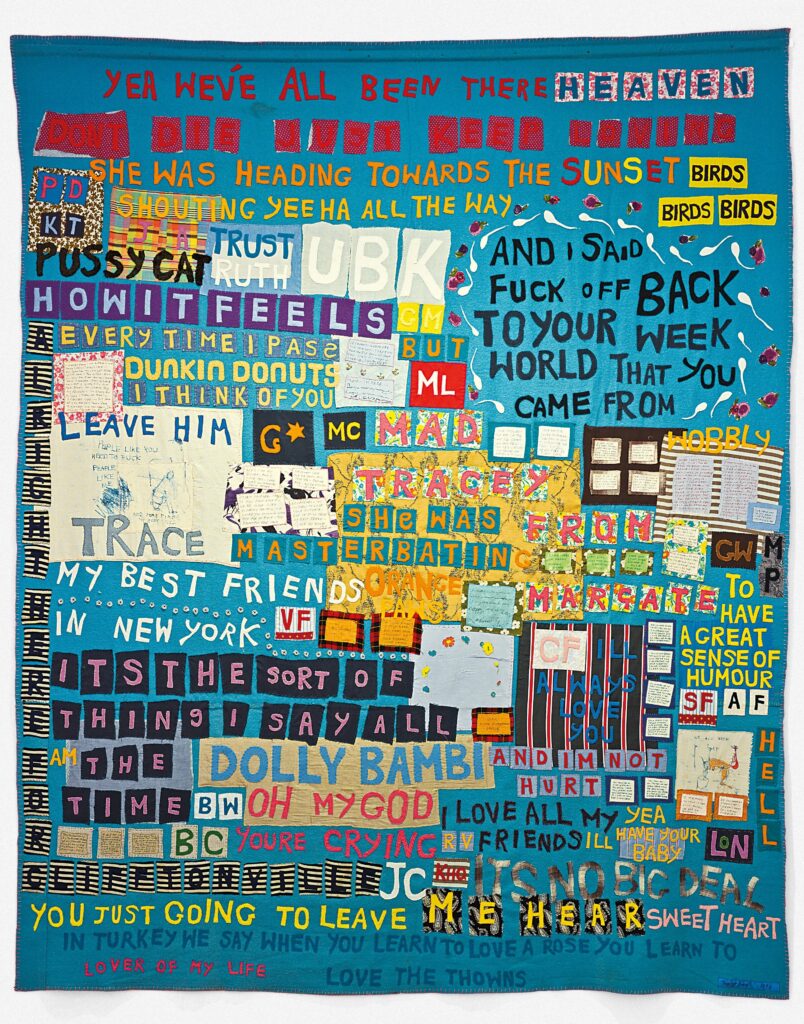
Tracey Emin, Mad Tracey from Margate: Everyone’s Been There (1997) — embroidered quilt weaving intimate narrative and memory, Tate Modern 2026
Mad Tracey from Margate. Everyone’s been there 1997 © Tracey Emin.

Works such as Mad Tracey From Margate: Everybody’s Been There (1997) and the rollercoaster It’s Not the Way I Want to Die (2005) reconfigure childhood and teenage memories from Margate—both a formative territory and the place to which the artist returned after 2016 (founding a free residency).

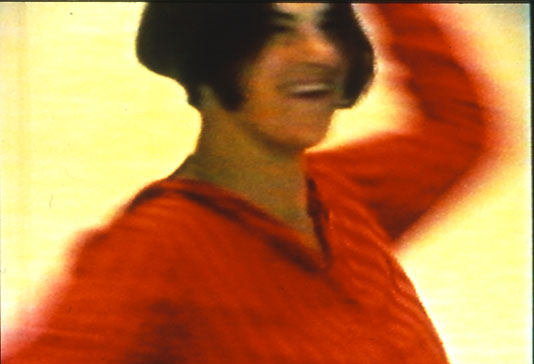
Tracey Emin, Why I Never Became a Dancer (1995) — autobiographical video set in Margate about teenage shame and liberation, Tate Modern 2026
Tracey Emin, Why I Never Became a Dancer 1995 © Tracey Emin

The body, trauma, voice

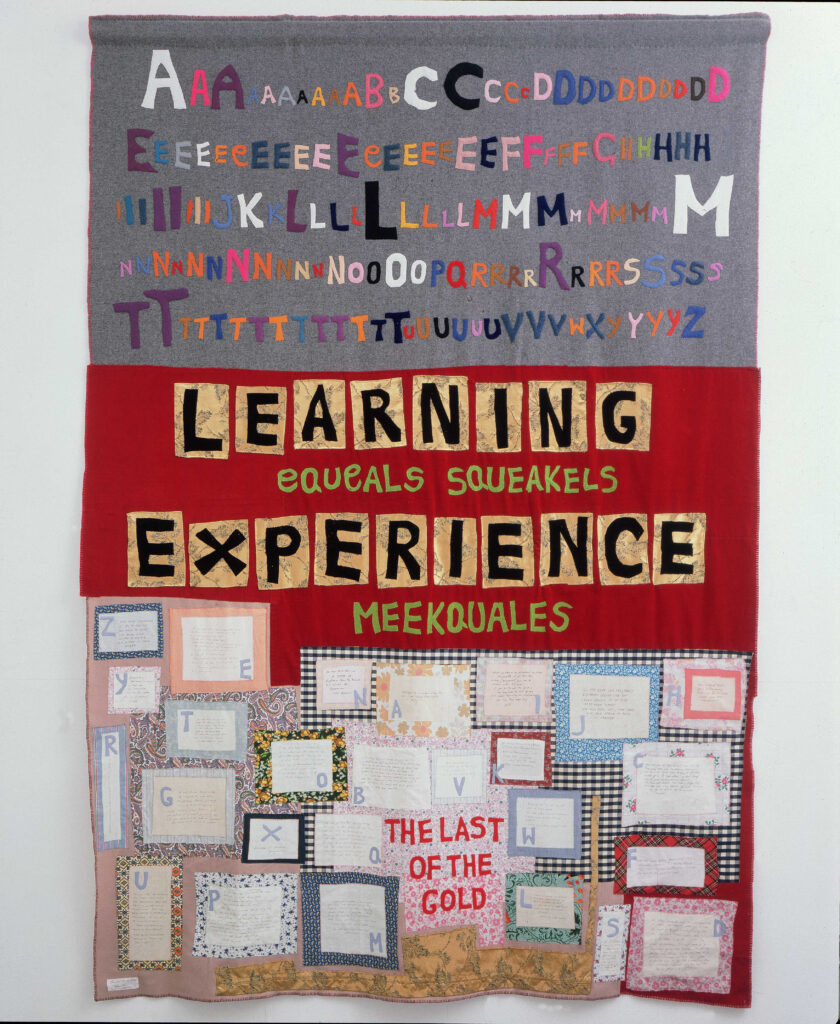
Neons (I could have Loved my Innocence, 2007), textiles (Is This a Joke, 2009) and the video How It Feels (1996) confront abortion and systemic violence, while the previously unseen quilt The Last of the Gold (2002) proposes an “A-Z of abortion”: confession becomes both resource and political act.

Tracey Emin, The Last of the Gold (2002) — quilt from the artist’s ‘A-Z of abortion,’ addressing body and trauma, ‘A Second Life’, Tate Modern 2026
Tracey Emin, The Last of the Gold 2002 © Tracey Emin

After cancer: asceticism and elevation

The bronze sculpture Ascension (2024) addresses the body after bladder-cancer surgeries; stills from an unreleased documentary show the artist’s stoma, erasing any boundary between private and public. Toward the end of the exhibition, large recent paintings carry an almost spiritual energy, shown alongside Death Mask (2002).

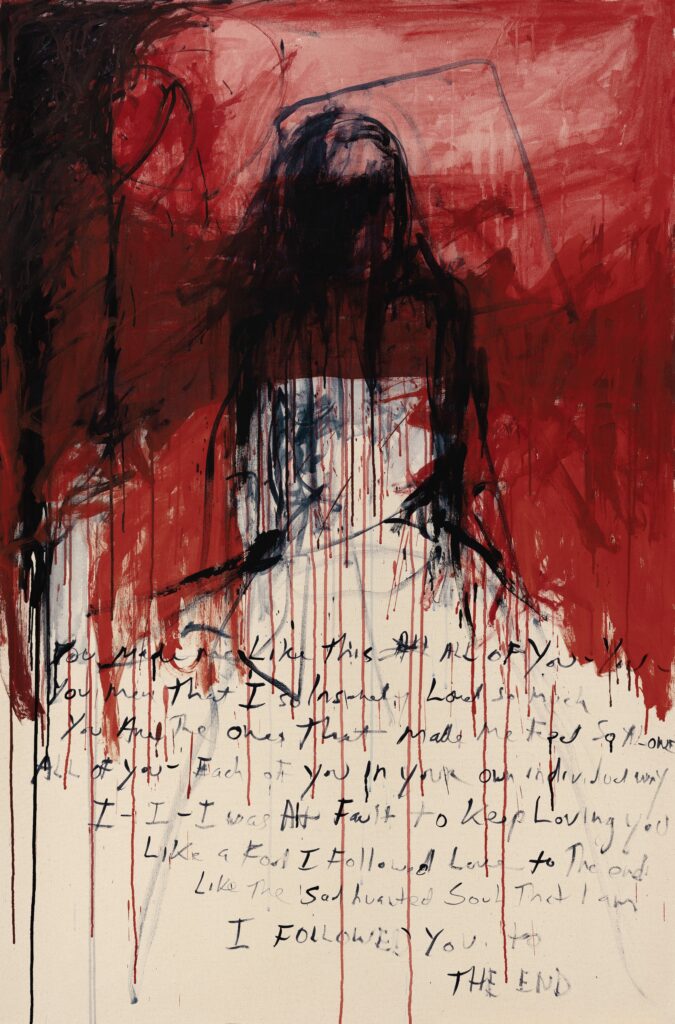
Tracey Emin, The End of Love (2024) — large red text-based painting with a figure, post-illness rebirth, ‘A Second Life’, Tate Modern 2026
The End of Love 2024 © Tracey Emin

Off-site

The monumental I Followed You Until The End (2023) will command the museum’s exterior, inviting passers-by to share in the experience.

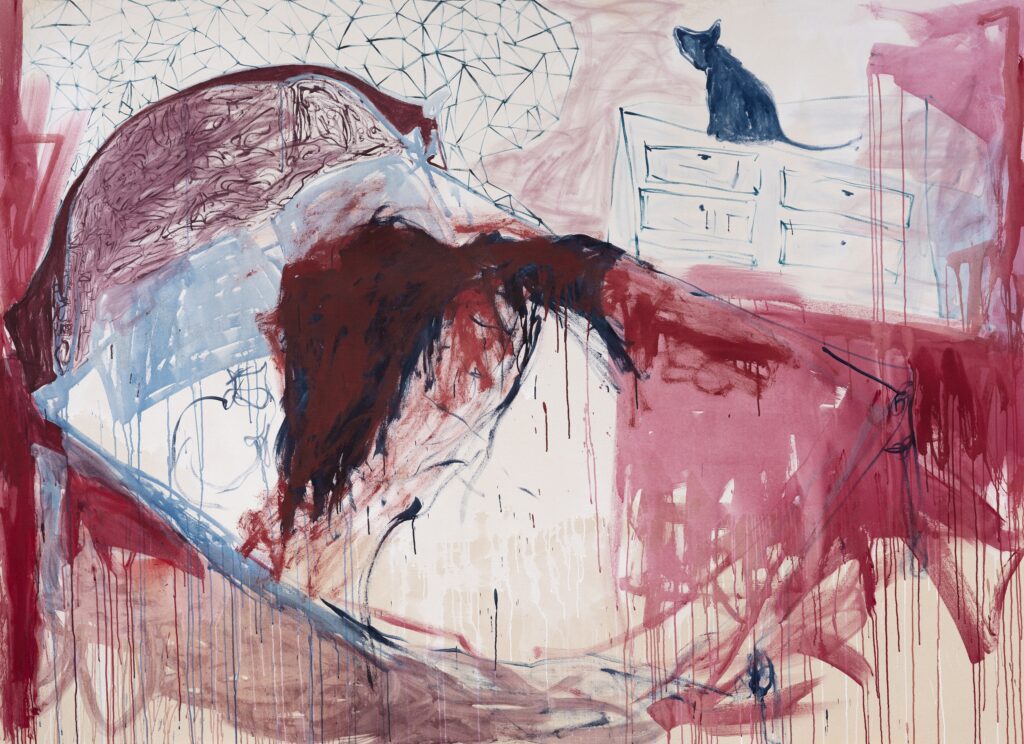
Tracey Emin, I Followed You to the End (2024) — expressionist painting with handwritten text and visceral reds, near-spiritual energy, Tate Modern 2026
I followed you to the end 2024. Yale Centre for British Art. © Tracey Emin.

Quick bio

Born in 1963, Tracey Emin lives and works in Margate (UK) and in France. She has had retrospectives and major exhibitions in Oslo, London, Paris, Vienna, Miami, Buenos Aires, Amsterdam… Her works are held in leading collections (MoMA, Centre Pompidou, Guggenheim, Tate). Made a Dame in 2024 for services to art.

FAQ

When is the exhibition Tracey Emin: A Second Life?
From 26 February to 31 August 2026 at Tate Modern (Eyal Ofer Galleries).

Which major works will be on view?
My Bed (1998), Exorcism of the Last Painting I Ever Made (1996), key neons and textiles, the video How It Feels (1996), the quilt The Last of the Gold (2002), the sculpture Ascension (2024), recent paintings, and Death Mask (2002).

Who are the curators and partners?
Maria Balshaw, Alvin Li, Jess Baxter ; the exhibition is presented in partnership with Gucci.

Is there an installation outside the museum?
Yes, the monumental sculpture I Followed You Until The End (2023).

When Painting Becomes an Inner Language

Le monde de kali Nathalie Jarsaillon

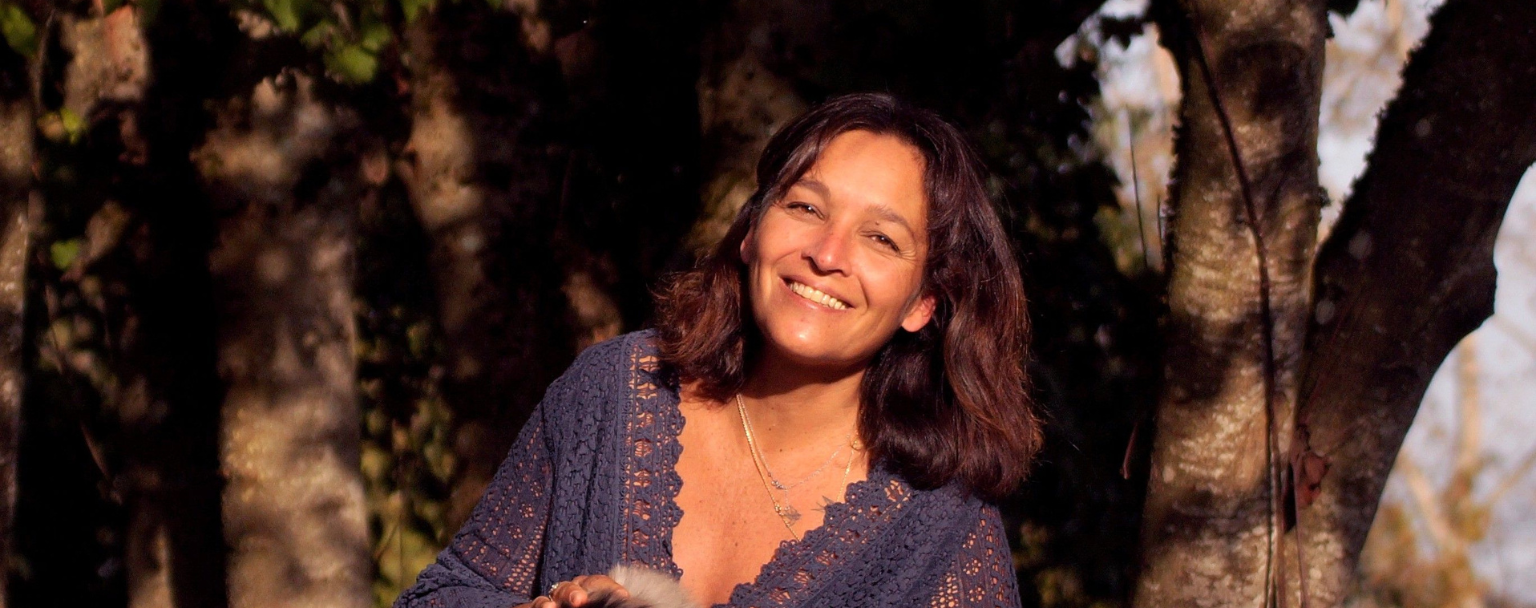
Portrait of Kali (Nathalie Jarsaillon), a self-taught artist between nature, resilience, and commitment

A self-taught artist who found refuge in painting

Kali, whose real name is Nathalie Jarsaillon, has made her mark in contemporary painting through a sincere and instinctive approach. A self-taught artist, she discovered in painting a refuge, an outlet, and a language to express what words cannot say.
Without attending art school or following any academic path, she built a body of work on her own, kept away from the public eye for many years. For her, painting became a vital breath, a path of reconstruction, and a way to connect with others.

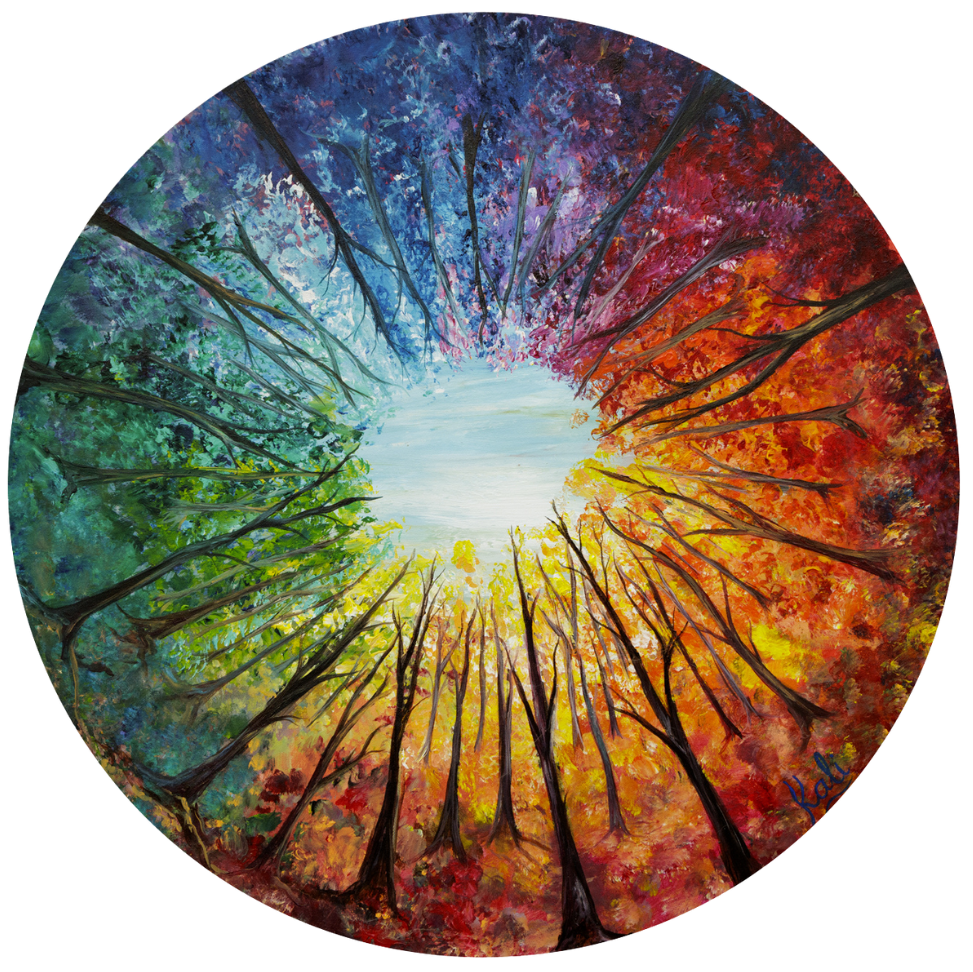
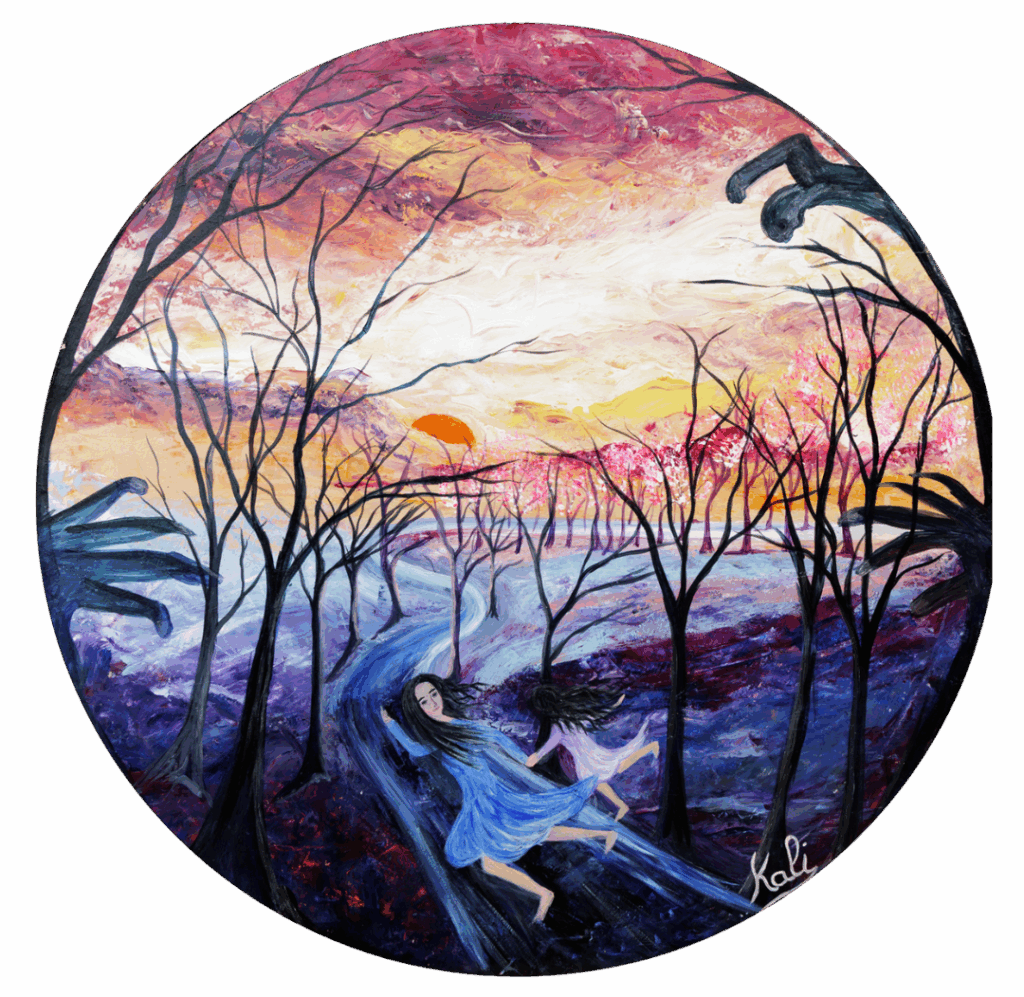
the escape – 2019 – 80 cm

The circle as an artistic signature

The singularity of her work lies in her choice of format: the circle. A universal symbol of life cycles and perpetual movement, the circle has become her artistic signature. Unlike the rigid square, the circle opens a fluid, meditative, almost sacred space.
Each circular canvas by Kali becomes a world of its own, inviting contemplation and introspection.

The Waltz of Time – 2023 – 80 cm

Between nature and commitment

Kali’s works reveal a deep connection with nature. More than just a motif, it is an essential, almost spiritual presence running through her paintings. Her art conveys both gratitude and warning: a tribute to the beauty of the world, and a reminder of its fragility.

Discover more in ART MAG (print & digital edition)

  • Exclusive series where Kali explores her most personal emotions.
  • Rarely shown works, rooted in lived experience and resilience.
  • Her vision of art as an act of freedom, beyond market trends.

👉 Full portrait available in the latest issue of ART MAG.

Pour lire la suite, téléchargez ART MAG N°28
Categories
News

Menart Fair 2025 : Contemporary Art from the MENA Region Returns to Paris with the Power of Softness

Halim Al Karim, Schizophrenia 8, 1987, tirage photographique, 140x100 cm MENART FAIR 2025
Halim Al Karim

A unique art fair dedicated to Middle Eastern and North African art

From October 25 to 27, 2025, Menart Fair celebrates its 6th edition at Galerie Joseph-Turenne in Paris. As the only European art fair exclusively dedicated to modern and contemporary art from the MENA region (Middle East & North Africa), it has become a must-attend event during Paris Art Week, attracting collectors, institutions, and art lovers from across the globe.

With around thirty galleries representing a dozen countries, the fair offers a carefully curated panorama of today’s most exciting artistic voices from the MENA region.

2025 Theme: The Apology of Softness

Following a bold 2024 edition dedicated to women artists, Menart Fair highlights in 2025 a theme both poetic and political: softness.
In times of conflict and global tension, softness emerges not as fragility but as a form of resistance, resilience, and subtle power. Through painting, sculpture, photography, and performance, the selected artists embody this paradoxical strength.

Artists and Galleries to Discover

Leily Derakhshani – Echoes on the Unseen (Azad Gallery, Iran)

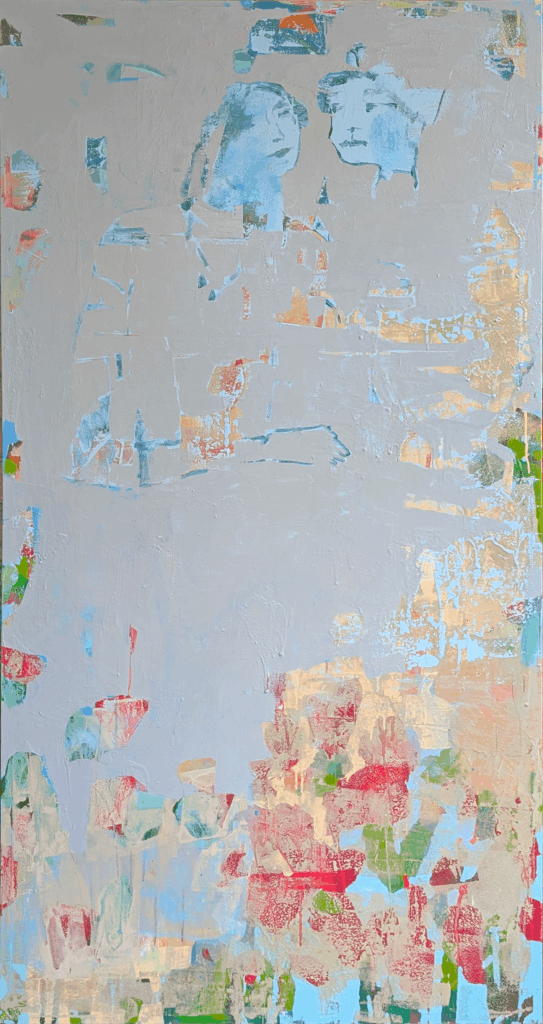
Leily Derakhshani, Echoes on the Unseen, 2025, oil on canvas, 180×90 cm

This large abstract painting unfolds in fluid, meditative shades. Softness emerges as an invisible breath, suspended between presence and erasure.

Myriam Schahabian – The Beggar and the Prince (Yvonne Hohner Contemporary, Germany)

Myriam Schahabian, The Beggar and the Prince, 2024, glazed stoneware, 20×38 cm

A glazed stoneware sculpture, the work explores human vulnerability. Softness is embodied in this embraced fragility, revealing a quiet strength.

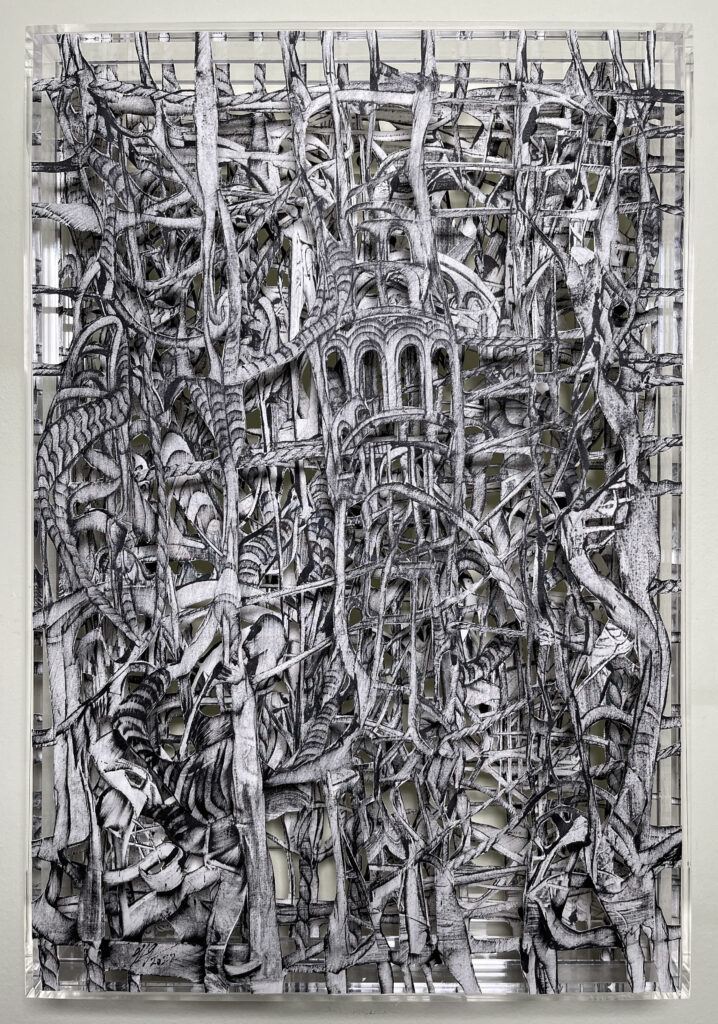
Kevork Mourad – The Woven Columns (Galerie Tanit, Lebanon/Germany)

Kevork Mourad, The Woven Columns, 2021, acrylic on cotton fabric & plexi, 48x80x9 cm, installation view, courtesy Galerie Tanit, Munich, 2022, photo credit: Sami Jo Naim

Between painting and performance, Mourad creates a fluid visual universe, rhythmical like a musical score. Here, softness is movement, gesture, and breath.

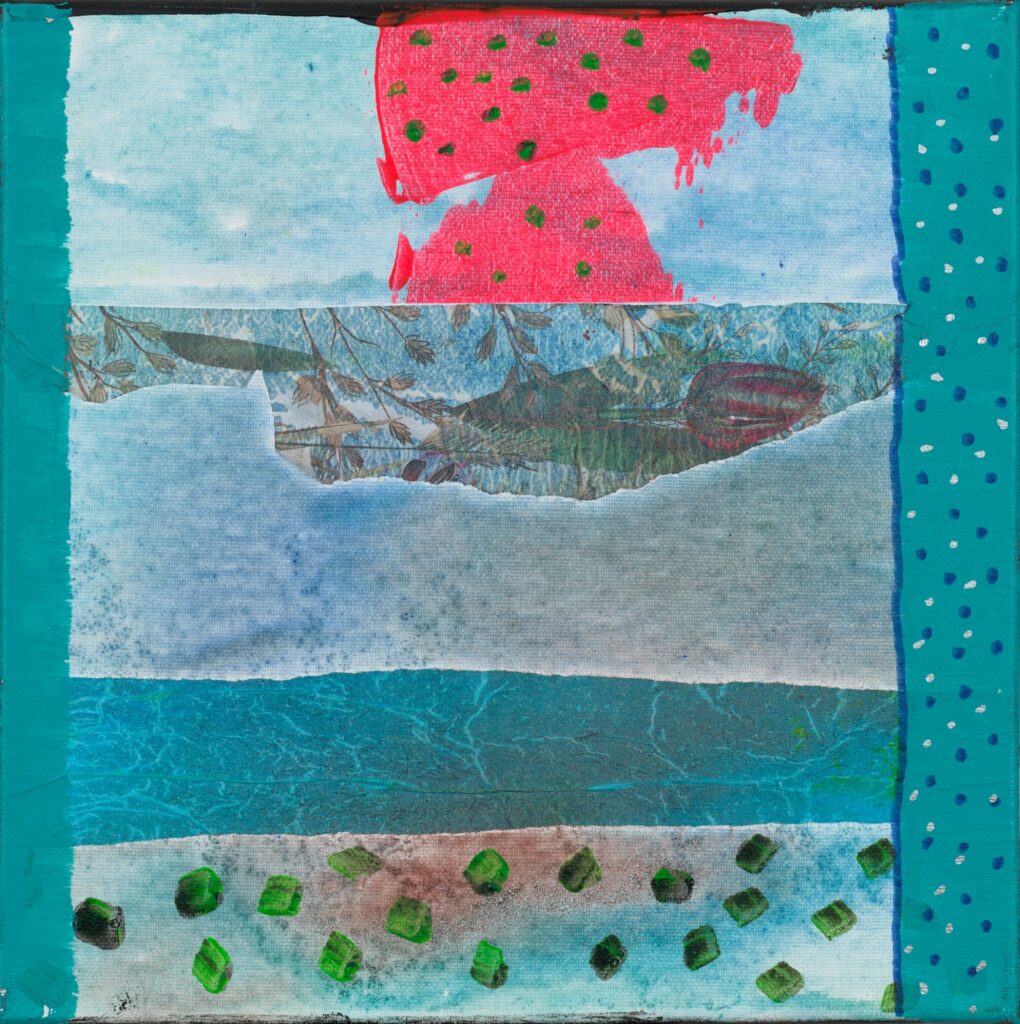
Najat Makki – Untitled (Forat Gallery, Bahrain)

Najat Makki, Untitled, 2025, mixed media on canvas, 30×30 cm

Her small-scale works in pastel colors and delicate textures convey a feminine and committed sensibility. Here, softness becomes a tool of resistance.

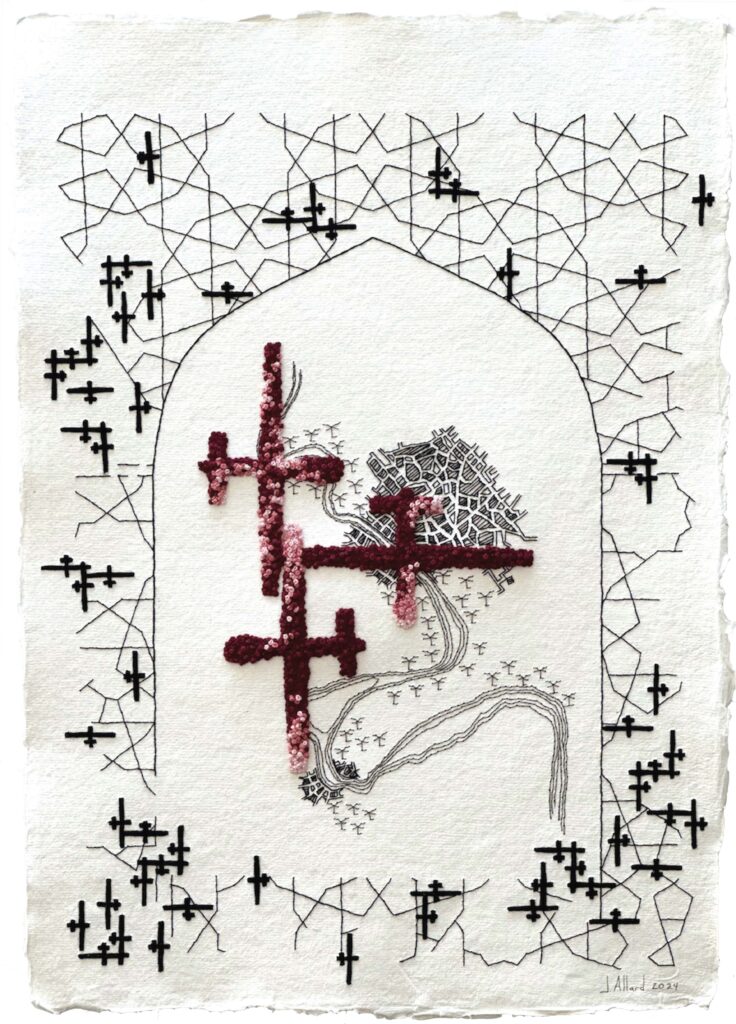
Johanne Allard – Circling Drones (Revealing Sector, Lebanon)

Johanne Allard, Circling Drones (Iraq), 2025, hand embroidery on 320 g cotton paper, 43×31 cm, edition 3/3

Her embroideries on paper, evoking war, transform pain into a reparative gesture. Softness emerges in the slow rhythm of the needle, stitching together History’s wounds.

Younès Ben Slimane – We knew how beautiful they were, these islands (Project Room, Tunisia)

Younès Ben Slimane, We knew how beautiful they were, these islands, 2022, color video with sound, 22 min. © ADAGP

A contemplative video where light and time become raw materials. Softness imposes itself as both a sensory and spiritual experience.

Emerging voices: Revealing Sector and Project Room

Beyond established names, Menart Fair continues to foster discovery:

  • The Revealing Sector showcases rising talents, such as Johanne Allard, whose embroidered sculptures reflect the scars of war.
  • The Project Room, in collaboration with Menart Friends, presents Le temps creuse même le marbre, a focus on contemporary Tunisian photography that bridges memory, archives, and social reflection.

A human-scale fair with international resonance

Unlike mega-fairs, Menart Fair maintains a human dimension that favors dialogue and meaningful encounters. More than a marketplace, it is a cultural bridge connecting Europe with the Middle East and North Africa, amplifying the voices of artists often underrepresented in the Western art scene.

📍 Practical Information

  • Dates: October 25 – 27, 2025
  • Location: Galerie Joseph-Turenne, 116 rue de Turenne, 75003 Paris
  • VIP Preview: Friday, October 24
  • Official website: menart-fair.com

FAQ – Menart Fair 2025

Q: What is Menart Fair?
Menart Fair is Europe’s only contemporary art fair exclusively dedicated to artists from the Middle East and North Africa (MENA). It brings together leading galleries, collectors, and art lovers in Paris for a unique celebration of creativity.

Q: When does Menart Fair 2025 take place?
From October 25 to 27, 2025, at the heart of Paris.

Q: What is the 2025 theme?
The 2025 edition is built around the theme “In Praise of Softness”, a curatorial thread running through exhibitions, performances, and installations.

Q: Which artists should I not miss?
Among this year’s highlights: Leily Derakhshani, Myriam Schahabian, Kevork Mourad, Najat Makki, Johanne Allard, and Younès Ben Slimane, whose works embody the fair’s theme with powerful sensitivity.

Q: Why should I visit Menart Fair?
Because Menart Fair offers more than an exhibition: it’s an immersive experience of contemporary MENA art, where visitors can discover new talents, meet galleries, and engage in a warm and accessible atmosphere.