


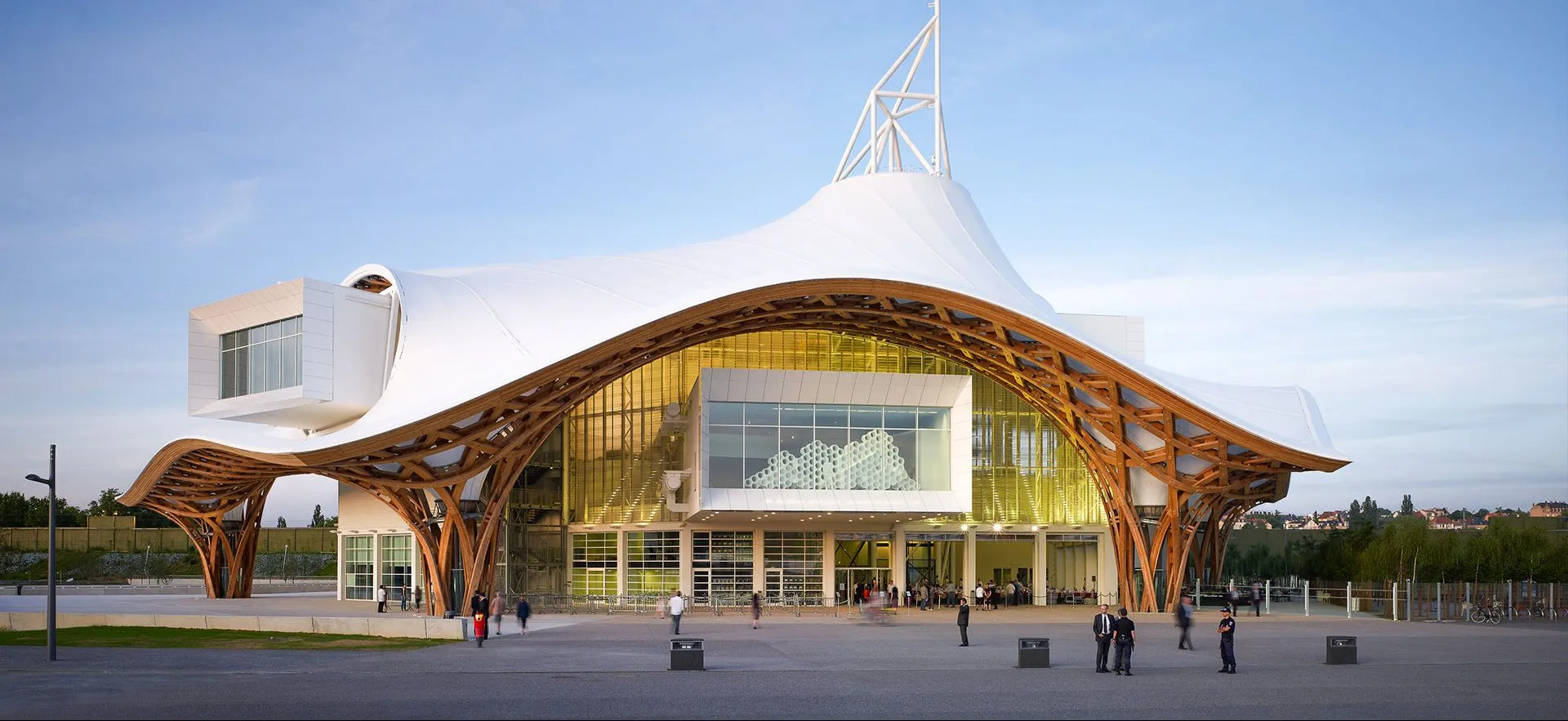
From October 31, 2026, to April 12, 2027, the Centre Pompidou-Metz will dedicate the first truly international monographic exhibition ever devoted to this singular figure of modern art to Séraphine Louis (1864–1942), known as Séraphine de Senlis.
A self-taught visionary, mystic, and unclassifiable artist, Séraphine is now seen as a profoundly contemporary artist whose work anticipates current questions about life, spirituality, and ecology.
Paintings inspired by nature and fervor
Séraphine de Senlis’ painting transforms nature into a space of power and revelation, through dense compositions in which plants appear to be animated by an inner energy.
Her works do not describe nature: they transfigure it. Each canvas becomes a telluric and supernatural territory, where color acts as a force of sublimation and prayer.
An incantatory pictorial materiality
Séraphine made her own pigments from modest materials: enamel paint, oils, varnishes, and organic pigments gleaned from her surroundings.
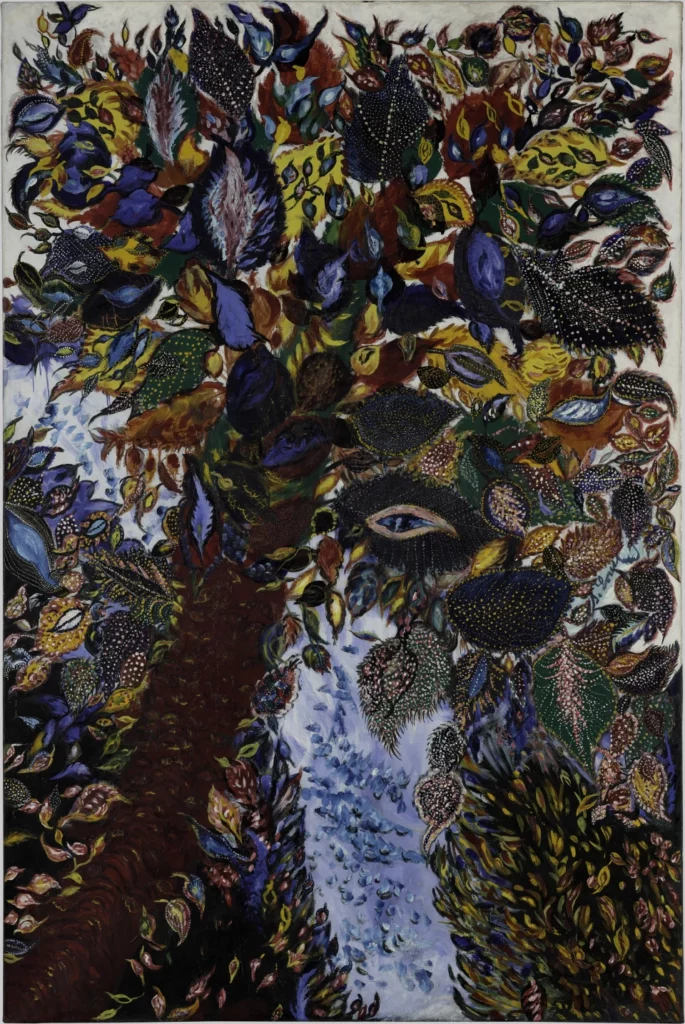
Recent analyses have revealed the complexity of these mixtures, demonstrating remarkable empirical knowledge.
This alchemy gives her paintings an intense brilliance, depth of material, and chromatic vibration that contribute to their almost incantatory dimension. Painting becomes both a physical act and a spiritual ritual.
Between Christian mysticism and visionary botany
An orphan from a modest background, Séraphine Louis developed an ardent faith at the convent that permeates all her work.
In Senlis, the proximity of the Gothic cathedral, with its stained-glass windows and luminous verticality, had a profound influence on her imagination.
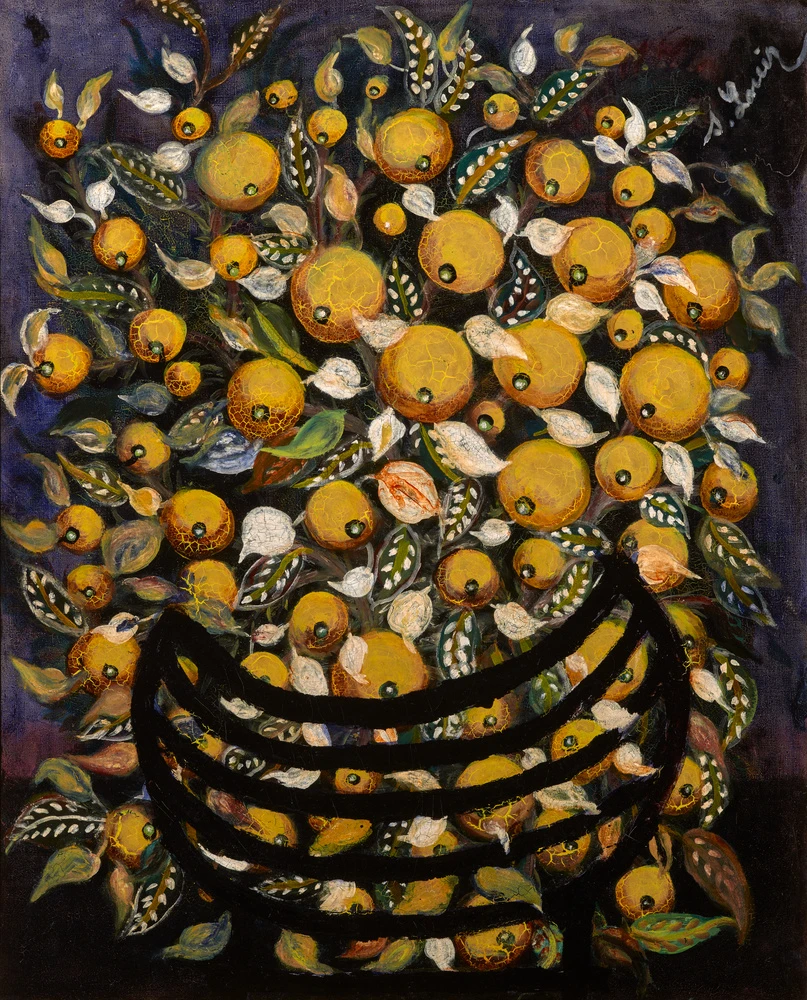
Inspired by botany, textile art, and sacred architecture, her painting establishes a constant dialogue between the material and the invisible. Nature becomes a sanctuary, a place of passage between the tangible world and the afterlife.
Late recognition and an unclassifiable body of work
Discovered in 1912 by collector Wilhelm Uhde, a supporter of Le Douanier Rousseau and Picasso, Séraphine enjoyed brief recognition in the 1920s.
She was then associated with the so-called “modern primitive” artists, of whom she remained the only woman, while escaping any real classification.
Interned from 1932 until her death in 1942, her work nevertheless continued to be exhibited.
From 1937 onwards, her paintings entered major international collections, from Paris to New York. A first monograph was devoted to her in 1945.
A major exhibition at the Centre Pompidou-Metz
The exhibition at the Centre Pompidou-Metz brings together an exceptional collection of paintings, tracing the evolution of his artistic language.
Initially fragile and floating compositions gradually give way to monumental works, animated by swirling movements, obsessive patterns, and radiant colors.
Bristling leaves, sparkling corollas, twisted branches, and shapes punctuated with strange eyes compose a supernatural botanical world, both telluric and cosmic, which continues to fascinate with its metamorphic power.
Séraphine de Senlis, an artist more relevant than ever
At a time when the links between art, ecology, and spirituality are being reexamined, Séraphine de Senlis appears as a pioneering figure.
Her work embodies an organic relationship with the world, based on attention to living things, modesty of means, and the power of the sacred.
She does not paint the world as it is, but as it vibrates, breathes, and transforms.
See also :
- Centre Pompidou-Metz 2026: The Unmissable Exhibitions Set to Define the Cultural Year
- Louise Neverlon: fragmented architectures and landscapes of memory
- Endless Sunday: Maurizio Cattelan Transforms the Centre Pompidou-Metz with a Landmark Exhibition
- Shigeru Ban: An Immersive Tribute at Centre Pompidou-Metz
- François Morellet – 100 Percent: A Landmark Retrospective
FAQ
From October 31, 2026, to April 12, 2027
At the Centre Pompidou-Metz, Gallery 2.
Because her work connects nature, spirituality, and pictorial material in a cosmic and timeless vision.
Pigments that she made herself from Ripolin paint, oils, varnish, and organic materials.
She is often associated with the “modern primitives” but her work remains fundamentally unclassifiable.