

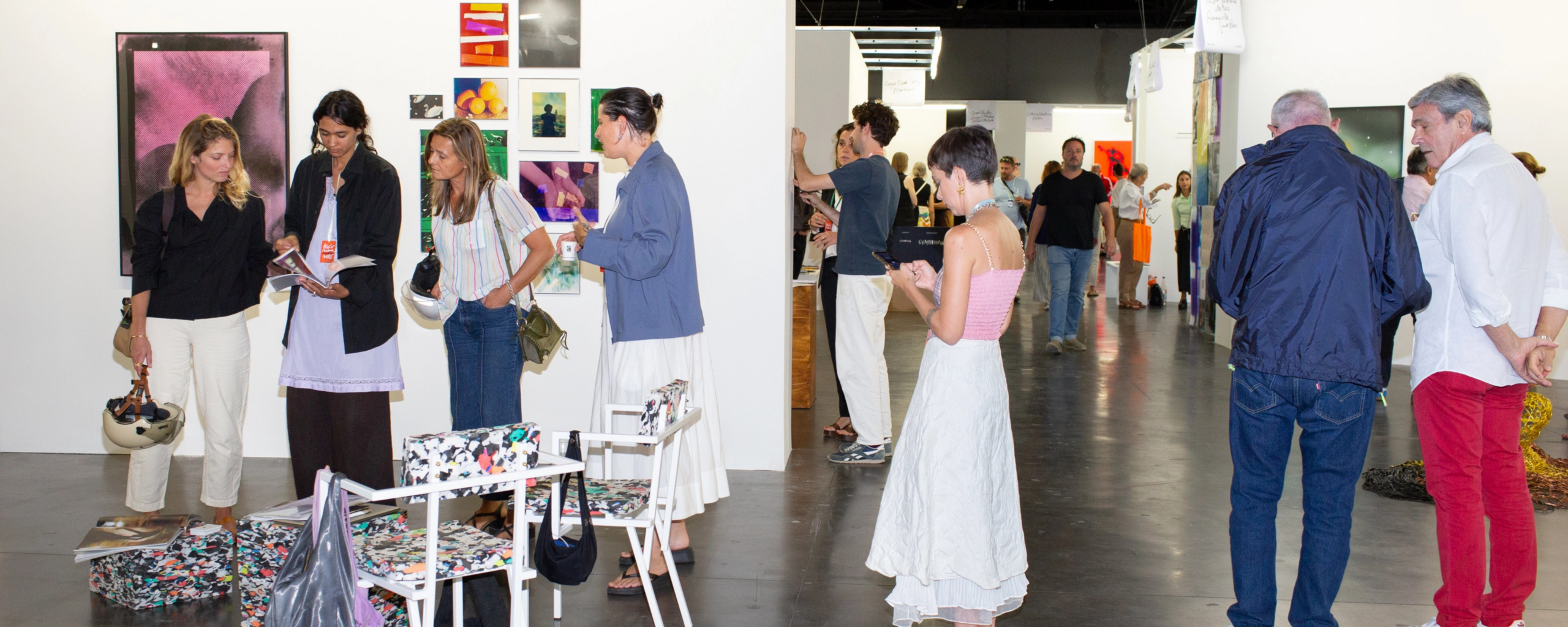
From 28 to 30 August 2026, ART-O-RAMA returns to Friche la Belle de Mai in Marseille. For this new edition, the international contemporary art fair brings together 40 galleries from 18 countries across four continents. In contrast to the scale of the major international art fairs, ART-O-RAMA champions a different model: a focused format, young galleries, curatorial projects and a strong commitment to emerging creation.
At a time when a handful of major international fairs concentrate an increasing share of the contemporary art market’s attention, ART-O-RAMA continues to cultivate a different scale from Marseille.
For its 2026 edition, the fair brings together 40 galleries across just 34 stands. Nineteen are participating for the first time and, even more significantly, more than half of the galleries taking part have opened within the past five years.
This last figure says much about the fair’s positioning. ART-O-RAMA does not focus solely on emerging artists: it also gives significant space to young galleries, essential players willing to take risks on new practices and help build the artistic careers of tomorrow.
ART-O-RAMA 2026: 40 Galleries from 18 Countries
From Copenhagen to Barcelona, Sofia to Berlin, London to Lima and Tokyo to Chicago, ART-O-RAMA 2026 presents a distinctly international geography. Paris and Marseille are represented alongside Milan, Vienna, Geneva and Sydney.
Yet the significance of this geographical diversity lies less in the number of countries represented than in the profile of the selected galleries.
For a young gallery, taking part in an international art fair can represent a decisive step. It offers an opportunity to meet new collectors, introduce artists to critics and curators, engage with other art scenes and gradually establish an international presence.
ART-O-RAMA deliberately embraces an intimate format and a rigorous selection process, while keeping galleries at the heart of the fair. Five of the stands in the 2026 edition will bring together two galleries presenting joint projects.
The fair therefore operates as a laboratory not only for artists, but also for those who choose to represent and support them.
Why ART-O-RAMA Focuses on Young Galleries
In an art market largely structured around major international fairs, establishing a presence remains a challenge for recently founded galleries. ART-O-RAMA has turned this reality into a defining choice: in 2026, more than half of the selected galleries have been operating for less than five years.
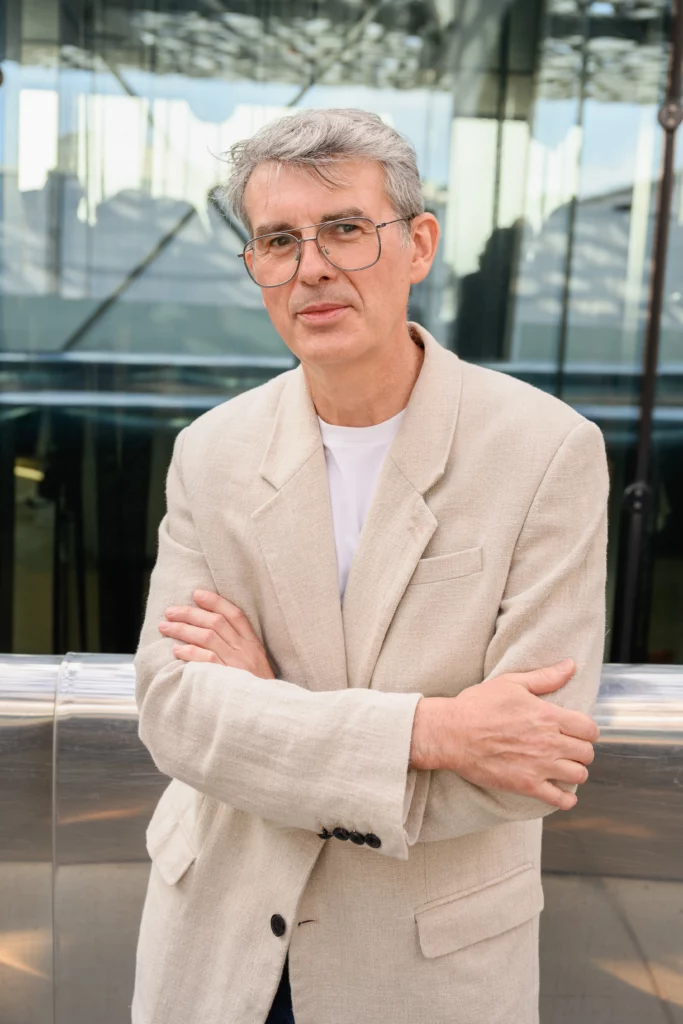
This approach reflects a vision long championed by Jérôme Pantalacci, director of ART-O-RAMA. Since its creation in 2007, the fair has grown without abandoning its deliberately focused format. While many events continually seek to increase their size and number of exhibitors, ART-O-RAMA takes a different approach: prioritising the quality of the presentations, supporting galleries and giving particular attention to curatorial projects.
Young galleries play a central role in this strategy. Often more agile, they support artists who are still relatively unknown, take greater risks and experiment with new forms of presentation. They are also an essential part of the artistic ecosystem, helping new scenes and perspectives to emerge.
ART-O-RAMA’s format encourages this dynamic. Here, the stand is conceived not simply as a sales space, but as an artistic proposition in its own right, built around an artist, a line of research or a dialogue between different practices.
This approach contributes directly to the Marseille fair’s distinctive identity: giving visibility to those shaping the art scenes of tomorrow and making the fair a place of discovery before recognition.
Support independent publishing! Subscribe to ART MAG and receive each issue in advance, in both print and digital format
👉 Subcribe 6 issues / 1 year
Artists and Works to Discover at ART-O-RAMA 2026
Several projects announced for the 2026 edition illustrate this ambition to treat the stand as an artistic space in its own right.
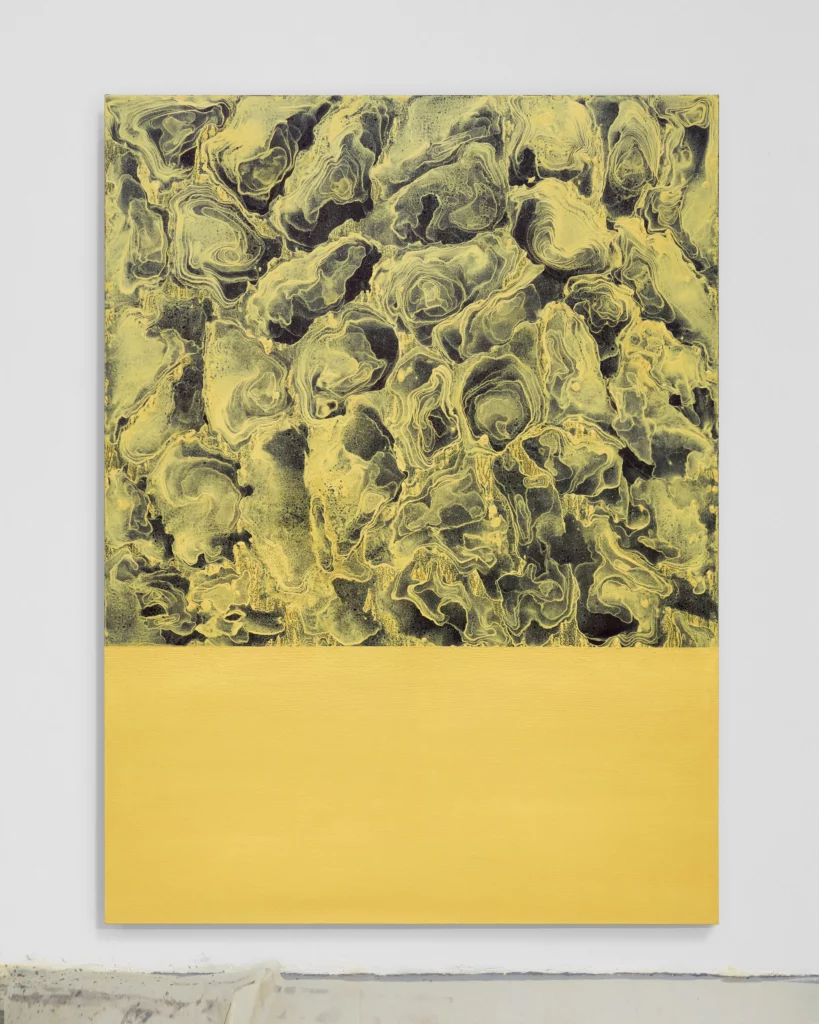
Courtesy of the artist and the gallery
With 22,48 m², Jonathan Bréchignac continues L’Éclosion du Temps, a body of research initiated during a residency in Beijing. Pollen — particularly pine pollen — becomes pigment, sculptural material, an olfactory experience and even a gustatory one. Working with this microscopic material, which can survive for millions of years, the artist explores life, memory and our perception of time.
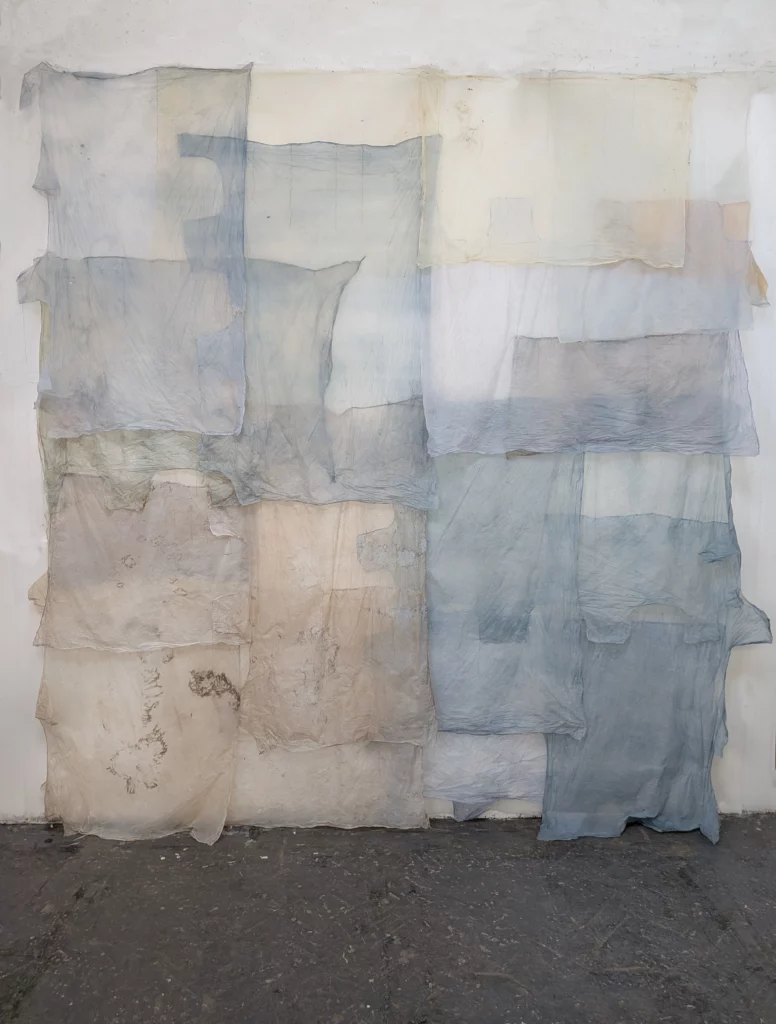
Courtesy of the artist and Cable Depot
At Cable Depot, Liz Elton works with compostable bags and pigments derived in part from waste from her own kitchen. Moving between painting and sculpture, her works address food, waste, regeneration and our relationship with the earth.
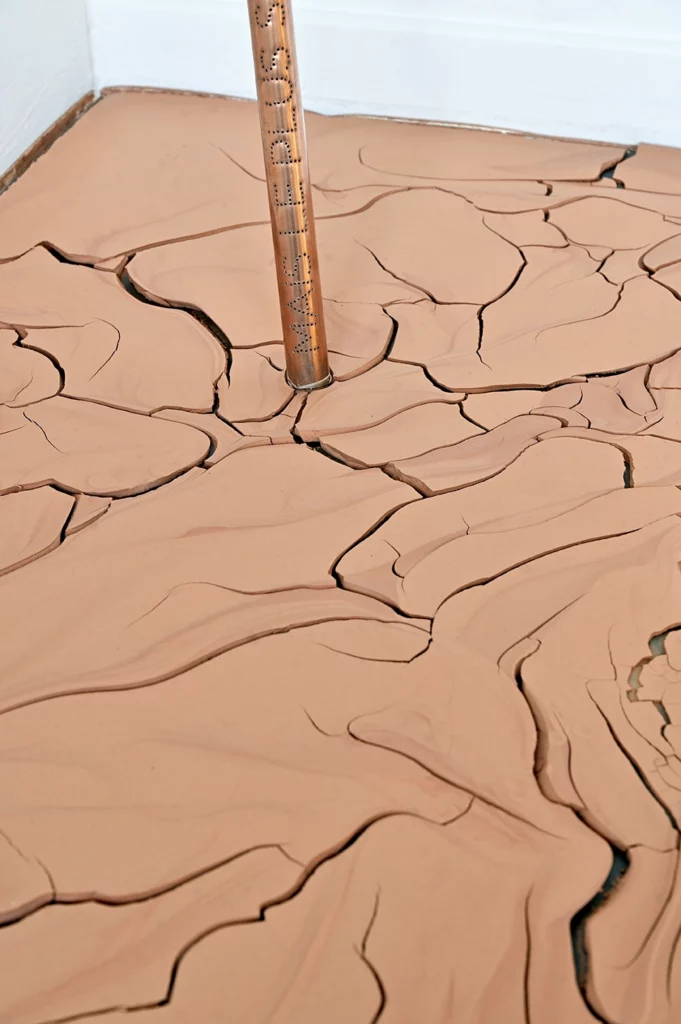
Perforated copper tubes Variable dimensions Courtesy Julia Gault ©Béatrice Cafiéri
Clara Darrason brings together Julia Gault and Amandine Guruceaga around a landscape confronted with heat, fire and water scarcity. Earthenware, copper, textiles, brass and processes of oxidation create an environment in which material transformation echoes contemporary ecological tensions.
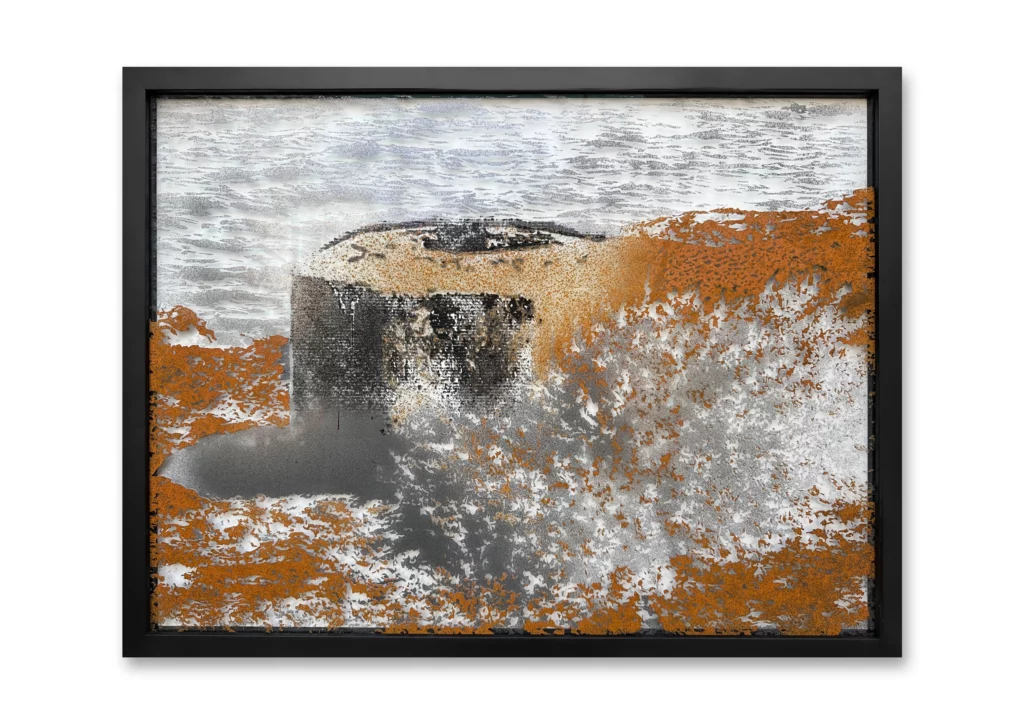
At Galerie Maubert, Nicolas Daubanes explores architecture, confinement and memory. Among the works announced is a life-size reproduction of a fountain basin from the Villa Medici, made from doors taken from cells at Baumettes Prison in Marseille, with the participation of inmates involved in a reintegration programme. Bunkers in the Calanques, military architecture and traces of resistance extend this reflection.
These projects represent very different practices, yet they share the same ambition: to make the fair stand something more than a succession of works available for sale.
Marseille and the Mediterranean at the Heart of the 2026 Edition
ART-O-RAMA also maintains a close relationship with its geographical and cultural context.
The 2026 edition coincides with the Mediterranean Season in France. Although ART-O-RAMA is not officially part of the programme, the fair welcomes galleries from countries including Spain, Italy and Cyprus, while Mediterranean issues also feature prominently in its programme of conversations and screenings.
At Friche la Belle de Mai, this Mediterranean dimension continues through several solo exhibitions. Zineb Sedira presents at the Panorama a reconfiguration of her pavilion for the 2022 Venice Biennale. Triangle-Astérides invites Mona Benyamin, while FRÆME, the organisation producing ART-O-RAMA, presents the work of Abdessamad El Montassir.
The fair therefore belongs to a cultural ecosystem extending well beyond its own exhibition spaces. Its private tours for guests, collectors and professionals connect institutions and foundations across Avignon, Arles, Marseille, Porquerolles, Saint-Paul-de-Vence and Nice.
Marseille is therefore more than simply the city hosting ART-O-RAMA: its artistic environment contributes directly to the fair’s identity.
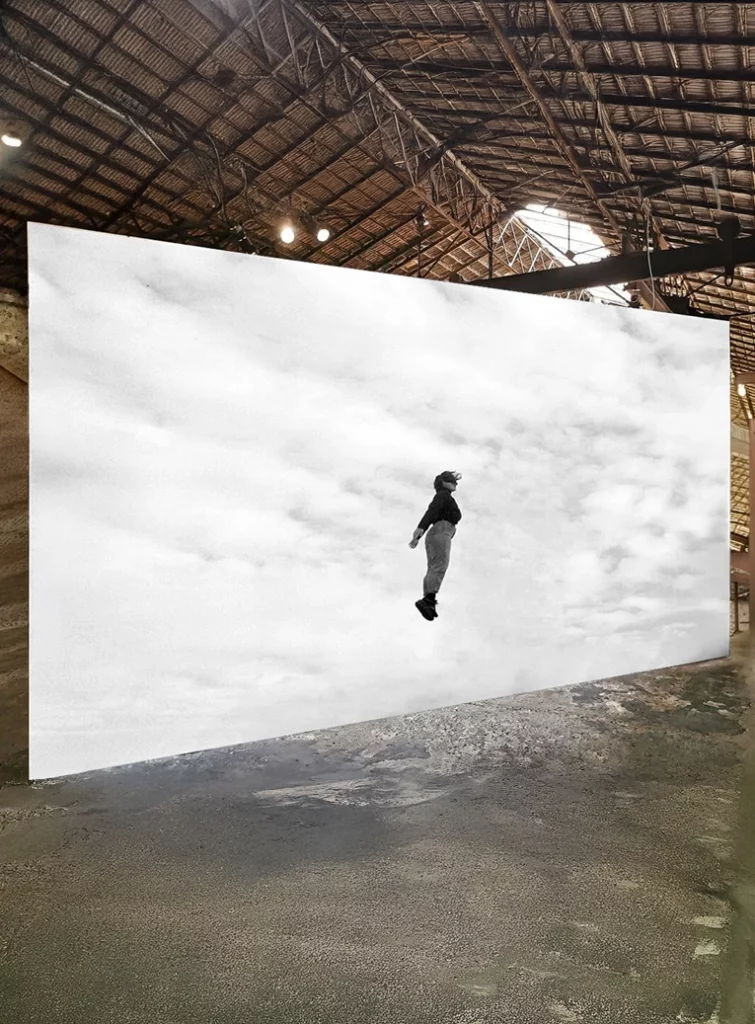
Crédit Portrait : © Robin Plus
The Prix Région Sud: A Bridge Between Art School and the Market
ART-O-RAMA’s commitment to emerging talent extends beyond the participating galleries.
The Prix Région Sud Art gives young artists who graduated within the past five years from an art school in the Provence-Alpes-Côte d’Azur region the opportunity to present their work in ART-O-RAMA’s Showroom.
Four artists are selected and supported by a curator. Their presence at the fair gives them the opportunity to meet gallery owners, critics, collectors and publishers. The winner subsequently receives a two-month residency at Moly-Sabata / Fondation Albert Gleizes, a €2,000 grant, the publication of a catalogue and a presentation at the following edition of the fair.
Since 2022, the Prix Région Sud Design has extended this approach to young designers, once again with an explicit focus on professional development.
These initiatives raise an essential question for a new generation of creators: how does an artist move from art school into professional practice and gain access to galleries and the art market?
By connecting education, exhibitions, residencies, critical discourse and the market, ART-O-RAMA plays a tangible role in creating these pathways.
ART-O-RAMA and the Major Contemporary Art Fairs
ART-O-RAMA has neither the scale nor the ambition of the world’s largest international art fairs. And that is precisely where much of its interest lies.
Its focused format gives greater visibility to individual projects, young galleries and artists who may not yet be among the most familiar names on the market.
In a sector where attention is increasingly concentrated around a limited number of international events, often favouring already established players, ART-O-RAMA chooses another position: one based on discovery, experimentation and emergence.
The objective is not to compete with the major machines of the international art market, but to preserve one of the fundamental purposes of an art fair: bringing artists, galleries, collectors and professionals together around practices that remain to be discovered.
In an increasingly concentrated art market, ART-O-RAMA reminds us that an art fair can still be a place of discovery before becoming a showcase for established certainties.
Support independent publishing! Subscribe to ART MAG and receive each issue in advance, in both print and digital format
👉 Subcribe 6 issues / 1 year
ART-O-RAMA 2026: Dates and Practical Information
ART-O-RAMA takes place from 28 to 30 August 2026.
The fair is held at Friche la Belle de Mai in Marseille, 41 rue Jobin, in Marseille’s 3rd arrondissement.
The 2026 edition brings together 40 galleries from 18 countries across four continents, presented across 34 stands.
The fair favours a focused format and gives significant space to emerging galleries and artists. In 2026, 19 galleries are participating for the first time, and more than half of the selected galleries were founded within the past five years.
Alongside contemporary art galleries, ART-O-RAMA features a publishing section, contemporary design, the Prix Région Sud, as well as a programme of conversations and screenings.
Support independent publishing! Subscribe to ART MAG and receive each issue in advance, in both print and digital format
👉 Subcribe 6 issues / 1 year