


As artificial intelligence becomes increasingly widespread in museums, two international surveys reveal a striking paradox: cultural institutions are rapidly adopting these technologies, while some visitors are growing concerned about their implications. In France, from the Palace of Versailles to the Louvre Museum, experiments are multiplying. Between innovation, scientific accuracy and transparency, museums must now define the boundaries of this transformation.
Artificial Intelligence in Museums: American Visitors Express Their Concerns
Museums are investing in artificial intelligence to modernise their practices and enhance the visitor experience. But are visitors ready to let algorithms influence the way art is presented and interpreted?
A survey by the American Alliance of Museums, whose findings were highlighted in November 2026, reveals significant reservations. Among American adults surveyed, 43% want all museum content and activities to remain under human control. Only 9% support unrestricted use of AI, including in exhibitions.
Perhaps more surprisingly, younger adults appear particularly attached to human involvement.
These findings reflect concerns that extend far beyond technology itself. Visitors worry about inaccurate interpretations, the potential disappearance of certain professions and a lack of transparency surrounding the use of artificial intelligence.
Trust in cultural institutions rests precisely on their scholarly expertise and on the responsibility of the professionals who select, study and present artworks.
UNESCO–ICOM Survey Reveals a Troubling Gap
These concerns take on particular significance in light of a second study, published in September 2026 by UNESCO and the International Council of Museums (ICOM).
Conducted among more than 400 museums across 90 countries, the survey found that 57% of participating institutions already use artificial intelligence, while 55% have no internal policy, strategy or guidelines governing its use.
Another revealing finding is that only 17% of surveyed museums provide AI training for their staff.
The adoption of these technologies is therefore advancing faster than the frameworks designed to ensure their responsible use.
Yet their applications are numerous: administration, communication, documentary research, collection management, exhibition development and visitor engagement.
The survey also highlights concerns among museum professionals regarding information accuracy, copyright and data protection.
These results do not mean that museums systematically use AI without oversight. They do, however, reveal a gap between technological adoption and institutional governance.
This raises a fundamental question: how can museums guarantee scholarly accountability when their technological practices evolve faster than the rules governing them?
How Is Artificial Intelligence Being Used in French Museums?
In France, several major cultural institutions have already developed or experimented with artificial intelligence, pursuing different objectives.
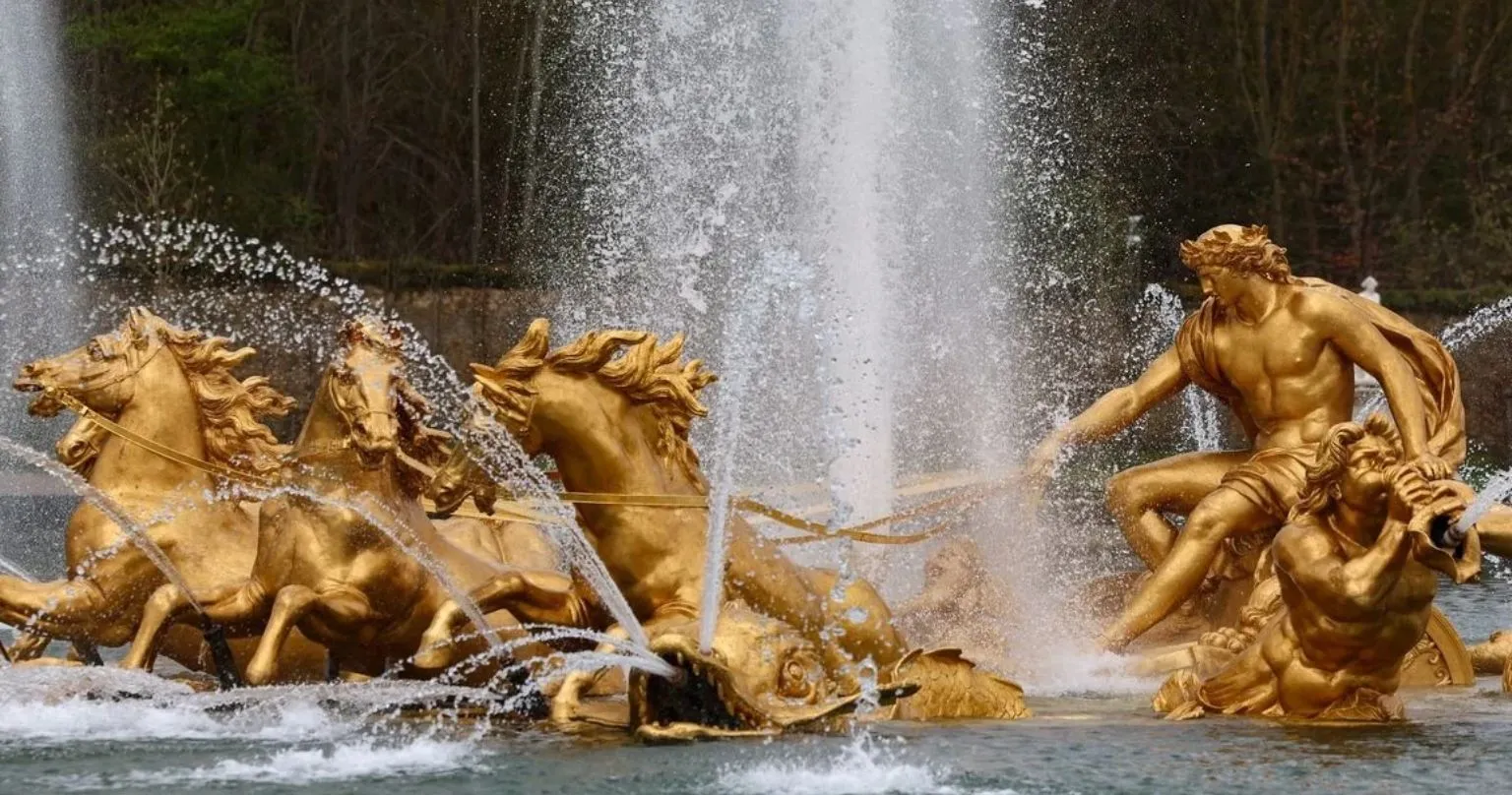
At the Palace of Versailles, an initiative launched in 2025 in collaboration with Ask Mona and OpenAI enabled visitors to engage in conversations with twenty statues and fountains throughout the gardens. The AI-generated responses drew on historical material developed with the expertise of a museum curator.
This project illustrates a new form of cultural interpretation, in which artificial intelligence facilitates access to knowledge while relying on content prepared by specialists.
At the Louvre Museum, the approach is different. AI has been tested to facilitate the processing of documentary collections, particularly within the Department of Islamic Art. The technology helps extract and structure information from archival materials, supporting research and the study of museum collections.
These examples demonstrate how artificial intelligence can be used both in direct interaction with visitors and behind the scenes in scholarly research.
However, the implications differ considerably depending on whether AI assists a curator with research or generates interpretative content directly for the public.
Scholarly Accuracy: A Fundamental Responsibility
A museum is not simply a database.
Every exhibition is the result of research, selection and interpretation. Curators establish connections between artworks, develop narratives and offer perspectives on art history.
Yet generative artificial intelligence can produce convincing texts while making factual errors, inventing references or offering interpretations that lack sufficient historical evidence.
Within an institution whose information carries scholarly authority, such errors can have serious implications for the transmission of knowledge.
AI can undoubtedly assist museum professionals. However, the validation of content, curatorial decisions and responsibility for interpretation must remain clearly identifiable.
The question is therefore not simply what technology can produce, but who guarantees the reliability of its output.
Innovation for Visitors or a Way to Cut Costs?
Artificial intelligence offers genuine opportunities to make art more accessible.
Multilingual translations, personalised tours, content tailored to different levels of knowledge and accessibility tools can help make museum collections easier to understand.
For some visitors, being able to ask questions freely through a digital interface may also encourage a deeper engagement with artworks.
However, these innovations raise an additional question: their economic implications.
In a context of budgetary constraints, automation can provide productivity gains and help institutions optimise their resources.
The risk, however, is that conversational technologies could gradually be regarded as substitutes for museum educators and cultural mediators.
Yet cultural mediation involves far more than delivering information. It requires listening, adapting explanations, encouraging discussion and helping visitors develop their own interpretations.
Artificial intelligence can enhance cultural mediation. It should not become a justification for diminishing its human dimension.

Transparency and Copyright: New Challenges for Museums
Transparency is another major concern.
According to the American survey, 45% of respondents want to be informed whenever AI is used to produce museum content. A further 36% particularly want disclosure when AI contributes to exhibitions.
This distinction suggests that visitors do not perceive every application of artificial intelligence in the same way.
Translating a label or organising archival material raises different questions from generating an interpretation of an artwork or contributing to the development of an exhibition.
Beyond transparency, there is also the issue of artists’ rights. The use of copyrighted works to train AI systems or generate new visual content raises questions about consent, attribution and compensation.
Museums must therefore be able to explain not only how they use artificial intelligence, but also what data their systems rely on and which professionals oversee the results.
Will the Future of Museums Depend on Human Intelligence?
The American and international surveys reveal two complementary realities: museums are increasingly adopting artificial intelligence, while visitors and professionals are expressing strong expectations regarding accuracy, transparency and accountability.
The challenge is not to reject a technology capable of enriching cultural experiences, but to establish clear conditions for its use.
A museum is not defined solely by the information it provides. It is a place of discovery, dialogue and the exchange of perspectives.
The real risk is not that artificial intelligence will enter museums, but that it may gradually influence their narratives and intellectual decisions without visitors being able to understand its role.
At a time when machines can generate increasingly sophisticated answers, the responsibility of museums may lie precisely in preserving what makes them unique: the human ability to question, interpret and pass on knowledge.
Frequently Asked Questions About Artificial Intelligence in Museums
The main concerns relate to the reliability of AI-generated information, the potential replacement of museum professionals, copyright issues and a lack of transparency about how these technologies are used.
The Palace of Versailles developed a conversational experience allowing visitors to interact with sculptures in its gardens. The Louvre Museum has also experimented with AI to support documentary research and the processing of archival collections.
AI can complement museum education by providing accessible and personalised information. However, it cannot fully replicate the human dimensions of cultural mediation, particularly dialogue, sensitivity and the ability to guide visitors through different interpretations.
Sources: American Alliance of Museums, AI in Museums and Community Trust, March 2026; UNESCO–ICOM, Global Survey on the Use of Artificial Intelligence in Museums, September 2026; institutional documentation from the Palace of Versailles and the Louvre Museum.