


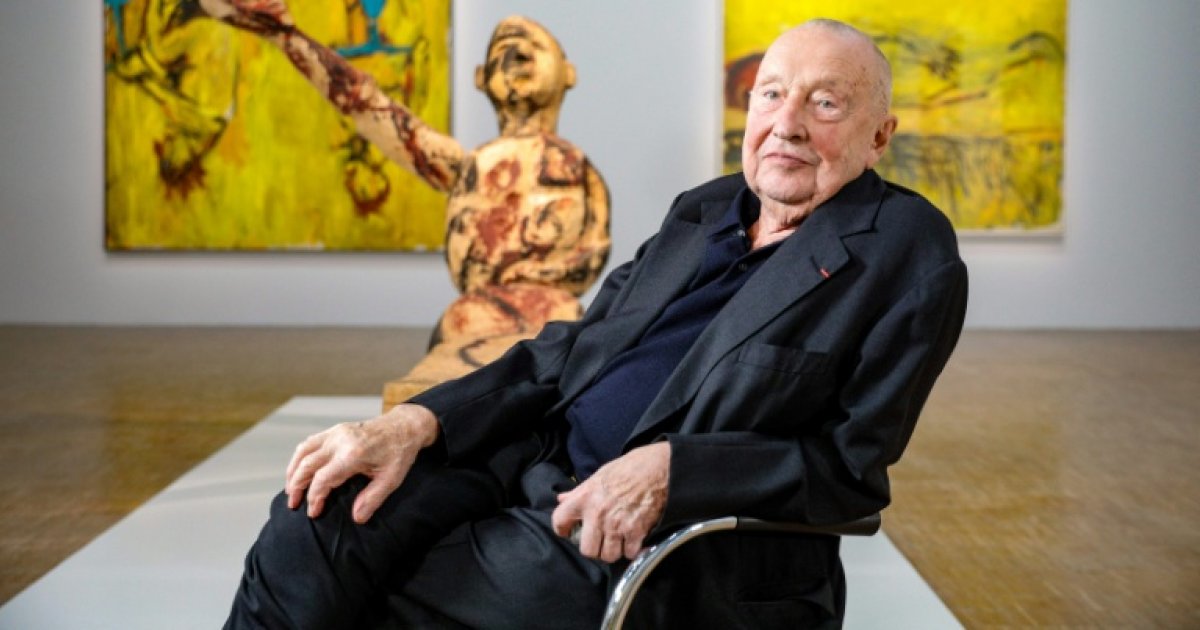
Death of Georg Baselitz: A Turning Point for Contemporary Art
The German painter and sculptor Georg Baselitz passed away on April 30, 2026, at the age of 88. A major figure in European contemporary art, he leaves behind a radical body of work that profoundly transformed postwar painting.
His death marks not only the loss of an artist, but also that of a key figure in the revival of figurative painting in the second half of the 20th century.
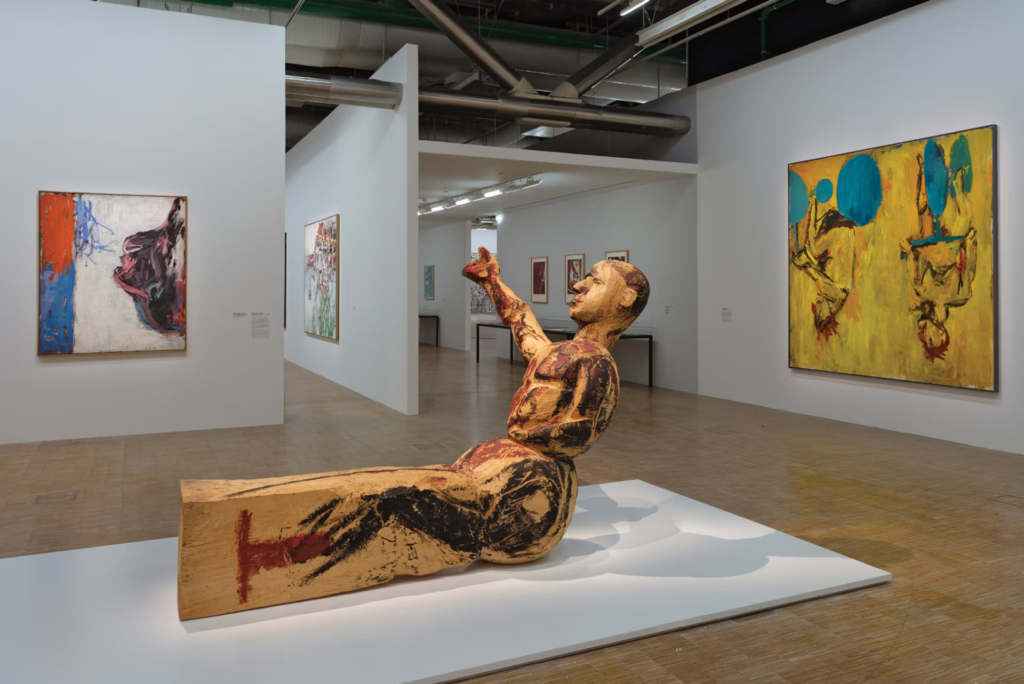
Georg Baselitz: The Biography of an Artist Born in Chaos
Born in 1938 in Saxony under the name Hans-Georg Kern, Georg Baselitz grew up in a Germany devastated by World War II.
Trained in East Germany, he was expelled from his art school for “sociopolitical immaturity”—an episode that foreshadowed his trajectory: Baselitz remained throughout his life an artist in rupture with established norms.
After settling in West Berlin, he developed in the 1960s a violent, figurative, and provocative style of painting, in direct opposition to dominant movements such as abstraction and conceptual art.
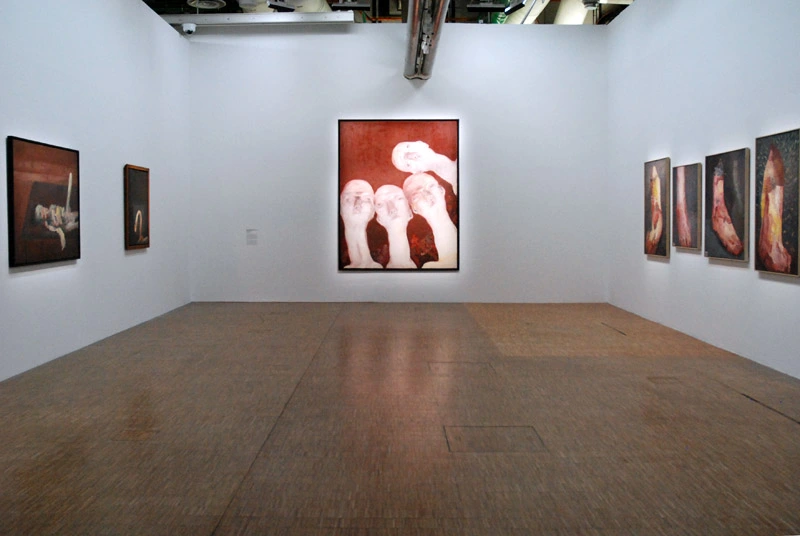
1969: The Invention of Upside-Down Paintings
In 1969, Georg Baselitz made a radical move: he began painting his subjects upside down.
This was not merely a visual provocation, but an artistic manifesto:
- to break the narrative reading of the image
- to force viewers to focus on painting itself
- to assert the primacy of gesture over subject
This inversion became his global signature and a pivotal moment in contemporary art history.
Support independent publishing! Subscribe to ART MAG and receive each issue in advance, in both print and digital format
👉 Subcribe 6 issues / 1 year
👉 Offer ART MAG
A Body of Work Between Violence, Memory, and Provocation
Associated with German Neo-Expressionism alongside Anselm Kiefer and Gerhard Richter, Baselitz developed a body of work marked by:
- the memory of Nazism and war
- the fragmentation of identity
- the violence of the body
- a raw, deliberately “imperfect” aesthetic
His sculptures—often carved with a chainsaw—extend this instinctive, almost primitive approach.
A Major Influence in Art History
The impact of Georg Baselitz extends far beyond Germany.
His works have been exhibited in leading institutions such as:
- Centre Pompidou
- Tate Modern
- Museum of Modern Art
He helped rehabilitate figurative painting at a time dominated by conceptual art, influencing several generations of artists.
Georg Baselitz and the Art Market
Baselitz was also a major figure in the international art market.
Some of his works have sold for several million euros at auction, confirming his status as a must-have artist for collectors.
This dimension reinforces his position as:
- a historical artist
- a safe investment
- a museum reference
A Still Controversial Artist
Despite his status, Georg Baselitz remained a divisive figure.
Frequent criticisms include:
- provocation deemed excessive
- repetition of the inverted motif
- controversial public statements
One question persists:
Was Baselitz a revolutionary genius or an overrated provocateur?
Paradoxically, this tension contributed to his critical and media longevity.
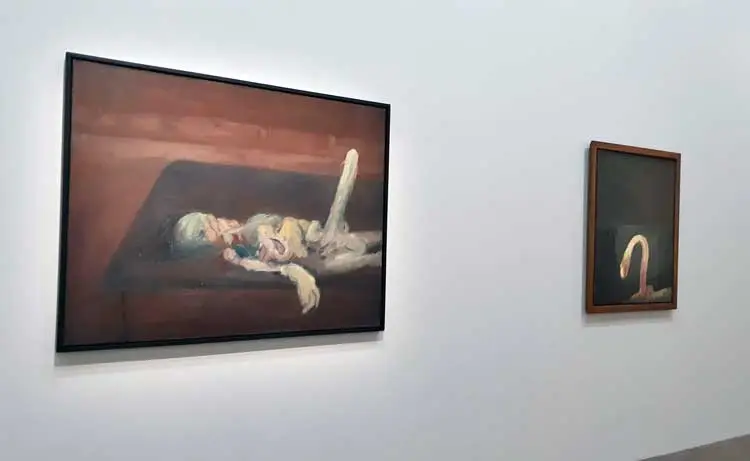
A Late Life Focused on Memory
In his later years, Baselitz continued to paint—often from a wheelchair—revisiting his earlier works.
His art became more introspective and almost meditative, focusing on:
- aging
- time
- repetition
Why Is the Death of Georg Baselitz a Major Event?
The death of Georg Baselitz marks the disappearance of a pillar of contemporary art.
By literally turning his subjects upside down, he also overturned the way we look at painting.
His artistic legacy remains essential for understanding:
- the evolution of painting after 1945
- Europe’s place in contemporary art
- the return of figuration
Support independent publishing! Subscribe to ART MAG and receive each issue in advance, in both print and digital format
👉 Subcribe 6 issues / 1 year
👉 Offer ART MAG