


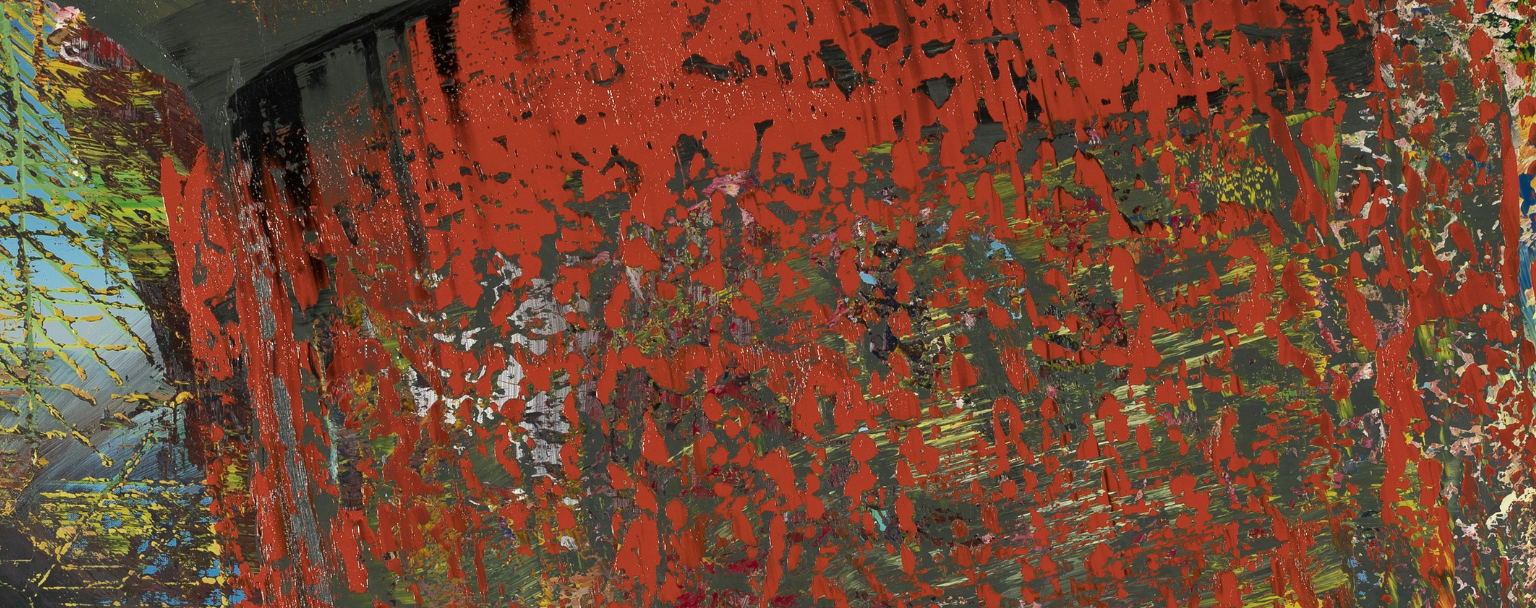
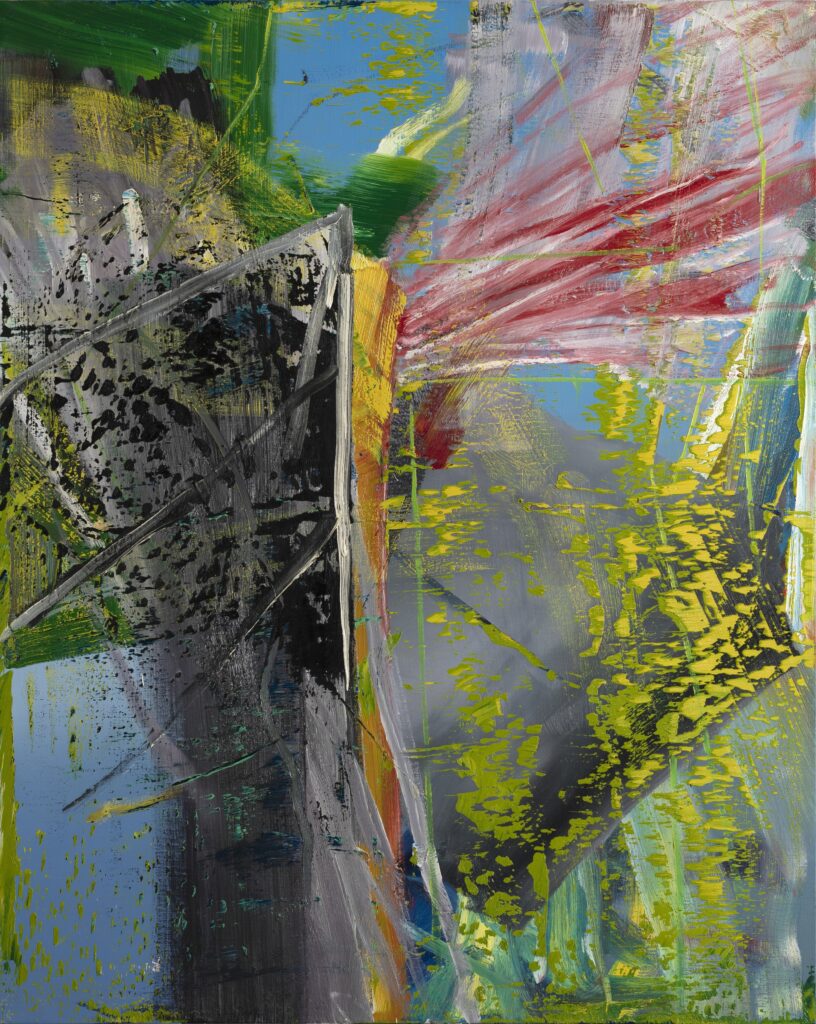
From 17 October 2025 to 2 March 2026, Fondation Louis Vuitton devotes its entire building to Gerhard Richter. Bringing together 270 works (1962–2024)—oil paintings, works in glass and steel, pencil and ink drawings, watercolours and overpainted photographs—the exhibition offers the first full panorama of six decades.
Why it matters ?
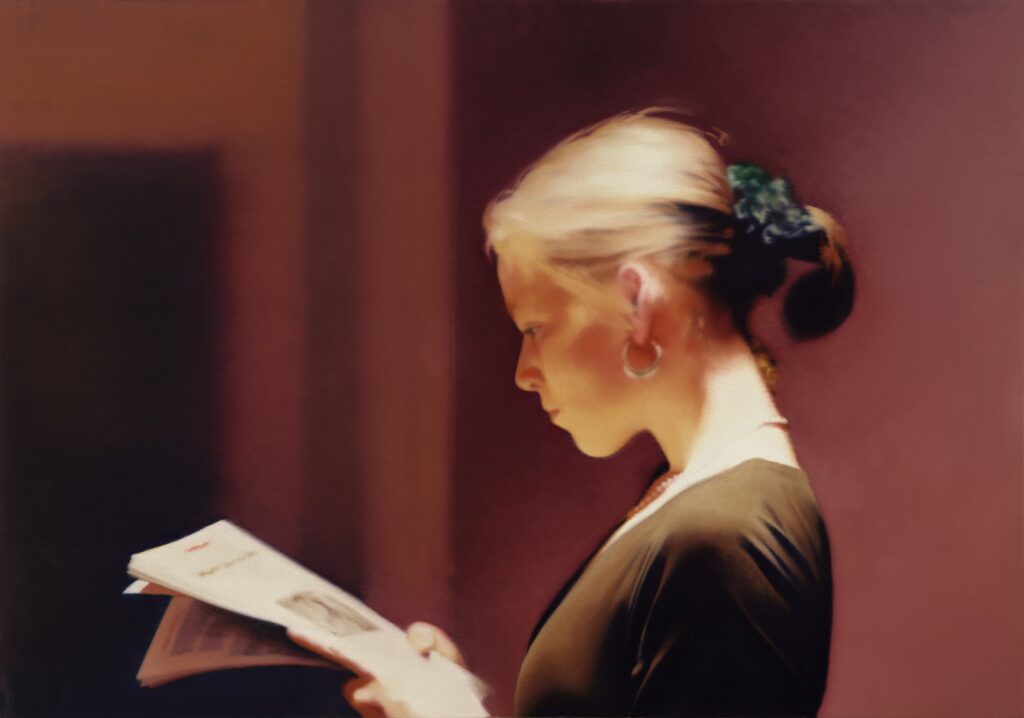
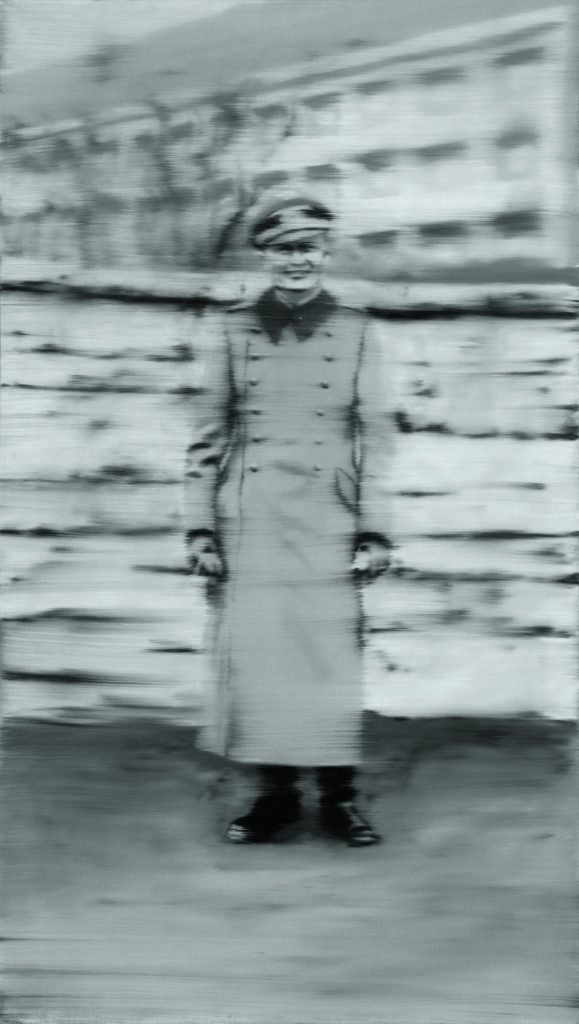
Richter’s art dismantles certainty. From photo-based paintings with signature blur to squeegee abstractions, colour charts, glass pieces and digitally generated Strip images, he has continually reprogrammed the way painting can think. The show’s scale—spanning early family portraits to late abstractions and paper works—makes it a landmark for Paris.
The exhibition at a glance — 6 key chapters
- 1962–1970 — After photographs
Family portraits such as Onkel Rudi and press images like Bombers become unstable memories through blur; early Colour Charts and Glass Panes shift focus from motif to method. - 1971–1975 — Crisis of representation
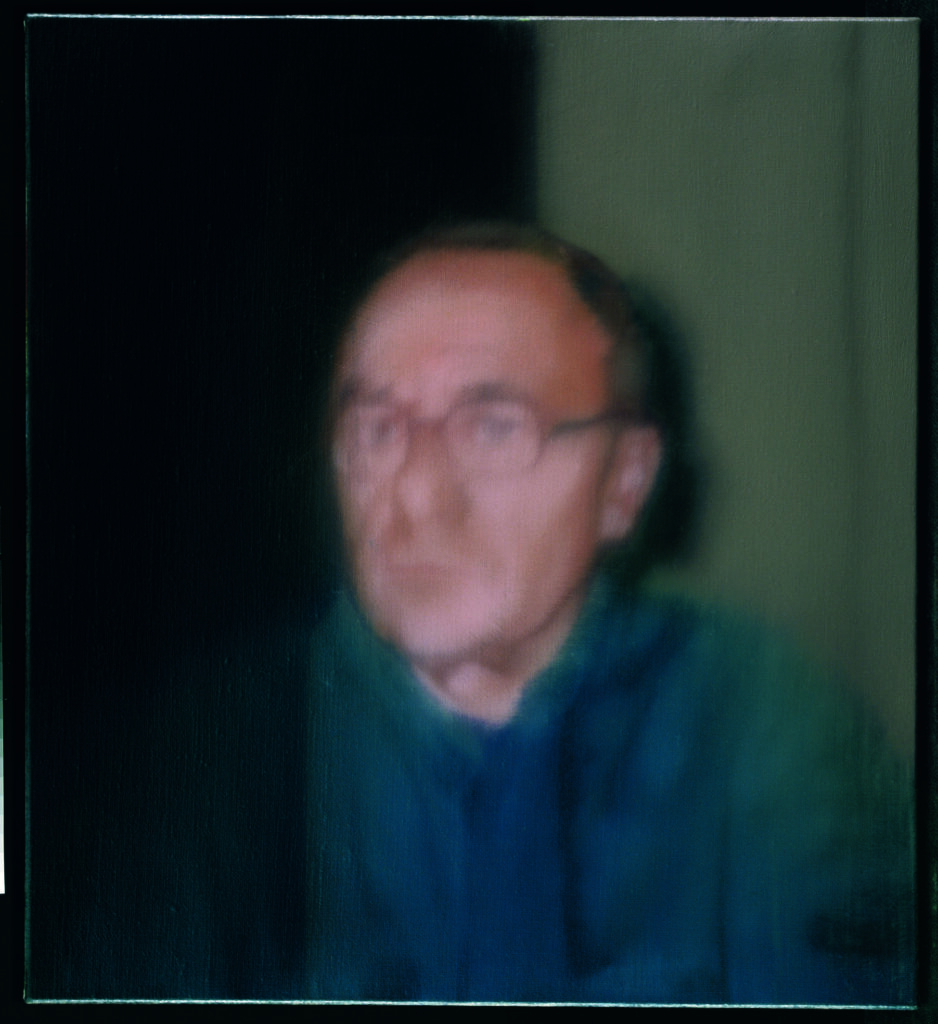
The 48 Portraits (Venice Biennale, 1972) scrutinise the encyclopaedia of male knowledge; Grey Paintings and Vermalung (smearing/dragging) test the limits of depiction. - 1976–1986 — Laboratory of abstraction
Enlarged watercolour studies and the Strich series make the brushstroke a subject. Tension with figuration persists in works like Betty, landscapes and still lifes. - 1987–1995 — The dark decade
The cycle 18. Oktober 1977 (on the Red Army Faction—exceptionally on loan from MoMA) adopts an ethical distance; dense, sombre abstractions and Sabine mit Kind deepen the question of how images bear history. - 1996–2009 — Chance and system
From mineral Silikat to 4900 Colors, colour is distributed by combinatory rules; the Cage Paintings turn the squeegee into a musical dramaturgy of layers, erasures and reprises. - 2009–2017 — Thresholds & last paintings
Glass works and digitally generated Strip extend painting beyond the stretcher. With Birkenau (2014), photographs from Auschwitz-Birkenau are overpainted to the edge of visibility. Richter completes his final abstract canvases in 2017 and continues with drawing.
Works not to miss
- 48 Portraits (1971–72) — a cool encyclopedia of the 20th century.
- 18. Oktober 1977 (1988) — responsibility and distance in history painting.
- 4900 Colors — colour as a rule-based field.
- Cage Paintings — gravity and lyricism of the squeegee.
- Birkenau (2014) — abstraction as an ethical veil.
Visit info
- Dates: 17 Oct 2025 → 2 Mar 2026
- Venue: Fondation Louis Vuitton, 8 Avenue du Mahatma Gandhi, 75116 Paris
- Curators: Dieter Schwarz & Nicholas Serota
- Scope: 270 works (1962–2024)
FAQ
Who is Gerhard Richter?
A major German painter (b. 1932, Dresden), based in Cologne, whose work spans photorealism, abstraction, glass and digital processes.
What does the show cover?
Six decades: oil paintings, glass/steel works, drawings, watercolours, overpainted photographs.
Does Richter still paint?
He stopped painting in 2017; recent years focus on drawing and works on paper.
Are there exceptional loans?
Yes—18. Oktober 1977 is on loan from MoMA, New York.