


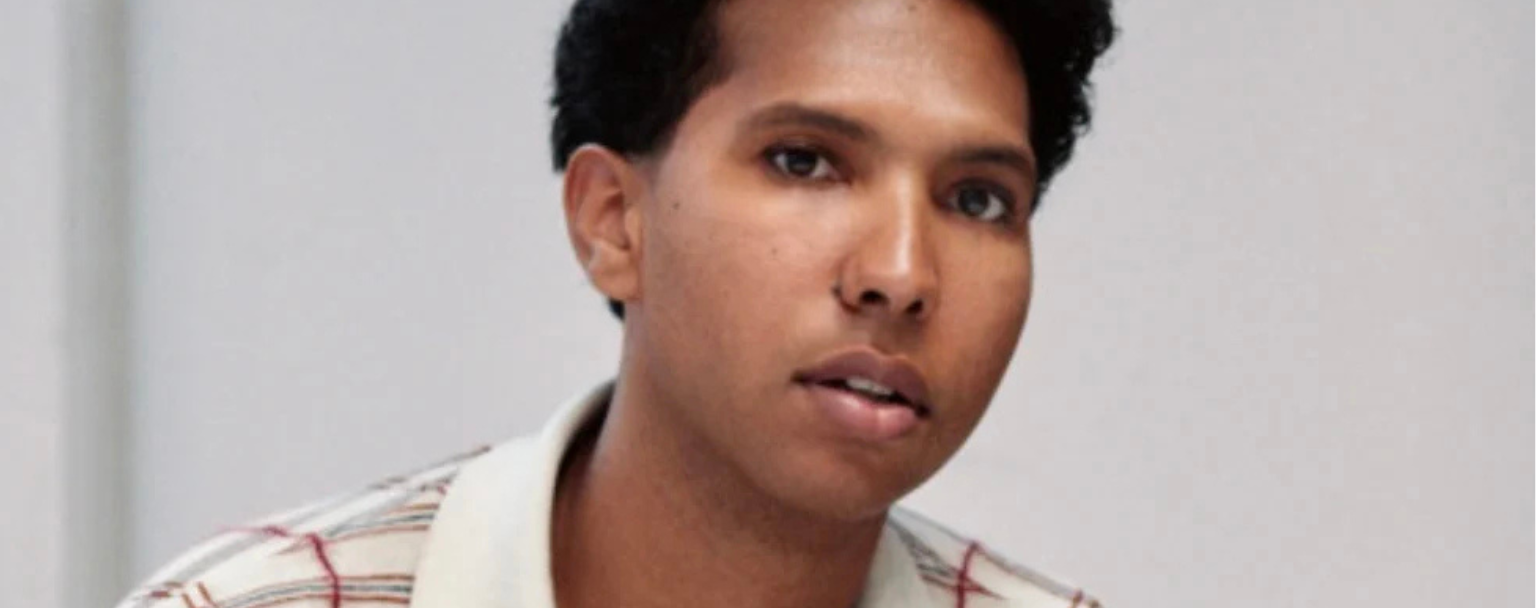
From 15 October 2025 to 25 January 2026, the Maison Européenne de la Photographie (MEP) is dedicating a major exhibition to Tyler Mitchell, the young prodigy of American photography.
Entitled Wish This Was Real, this installation brings together nearly ten years of creative work and offers a fresh perspective on the beauty, freedom and self-determination of Black communities.
Mitchell, born in Atlanta in 1995, quickly established himself as one of the most influential figures of his generation.
Après la Tisch School of the Arts, il devient célèbre en 2018 en photographiant Beyoncé pour la couverture du Vogue US, première Une signée par un photographe noir.
A decade of brilliant, political and poetic creativity
The exhibition presents a body of work combining photography, video, sculpture and textiles, reflecting Mitchell’s desire to explore new, sensitive and engaging visual worlds. The artist explains:
“I try to portray black people in a true and pure way. I hope there is an honest perspective in my photos.”
Wish This Was Real se structure en trois grands chapitres qui révèlent la cohérence et la puissance de son œuvre.
VLives / Freedoms: celebrating youth and joy
The first part of the exhibition draws inspiration from skateboard culture and the visual aesthetics of Tumblr, where Mitchell forged his first images.
Against a backdrop of racial tensions and Black Lives Matter, these photos offer bubbles of utopia, camaraderie and emancipation.
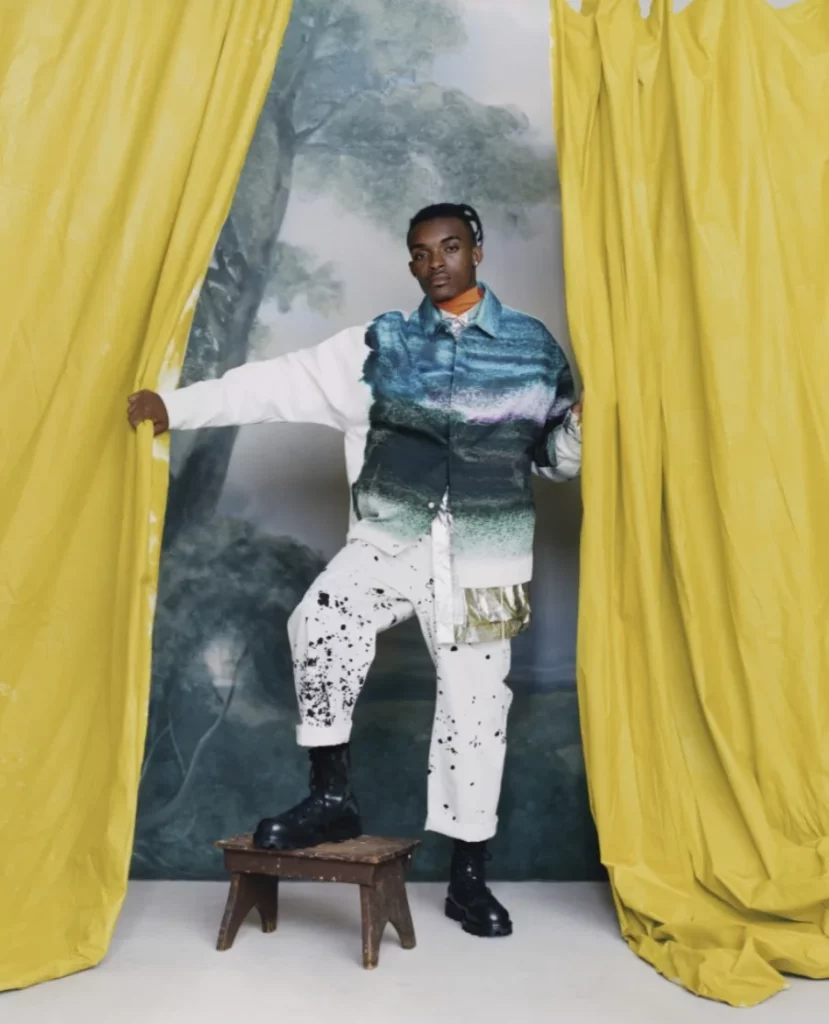
These performances are acts of resistance as much as they are celebrations. They show black youth in all their dignity, creativity and humanity, far removed from media clichés.
Postcolonial / Pastoral: a reinvention of the landscape
In this section, Mitchell revisits the codes of pastoral landscape, a tradition often idealised and disconnected from history. The artist inscribes a vivid memory of the land, made up of romanticism, injustice and reinvention.
Inspired by Toni Morrison, Seurat, Kerry James Marshall and Julie Dash, he creates scenes where black subjects finally regain a central place in nature.
Textile works complete this section, introducing a new material and memorial dimension to his practice. The fabric, suspended or stretched, becomes a poetic medium where intimate stories and collective narratives overlap.
Family/Fraternity: intimacy as gentle resistance
The final section explores the domestic sphere as a place of memory, heritage and reaffirmation of identity. Supported in 2020 by the Gordon Parks Foundation, Mitchell pays tribute to one of the great chroniclers of Black American life.
In Bedford-Stuyvesant, Brooklyn, he photographs his loved ones, celebrating family rituals, simple gestures and everyday elegance.
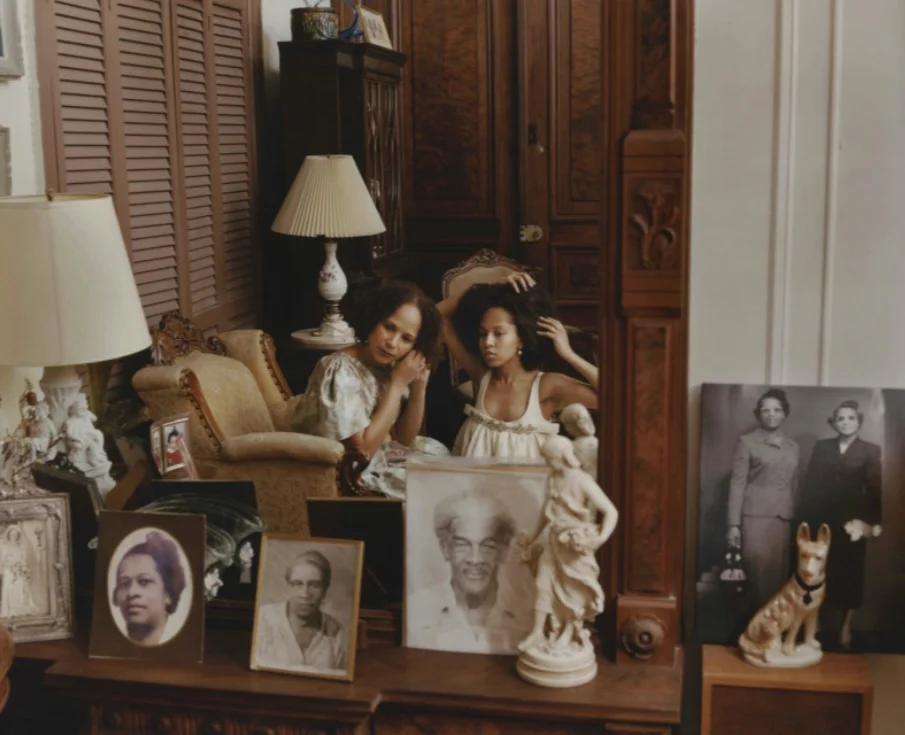
These images embody his ambition: to reinvent the visual representations of a community that has been confined to unambiguous narratives for too long.
A seductive, precise and deeply political contemporary aesthetic
With bold colours, carefully studied gestures and meticulous staging, Mitchell composes each of his images like a modern painting. His work engages in dialogue with fashion, art history and the avant-garde, while conveying a deeply contemporary sensibility.
Gentleness becomes a weapon for him, a gesture of resistance, a means of imagining alternative, possible, desirable ways of being.
see also:
- A major event: Edward Weston at the MEP in 2025
- Weston & Mitchell: a century of photographic modernity reinvented at the MEP
Support independent publishing! Subscribe to ART MAG and receive each issue in advance, in both print and digital format
👉 Subcribe 6 issues / 1 year
👉 Offer ART MAG
FAQ
Tyler Mitchell is an American artist, photographer and filmmaker born in 1995. He explores the representation of black people through poetic, political and luminous images.
It reflects Mitchell’s desire to create visual worlds where freedom, beauty and black self-determination are fully expressed.
Major themes include: youth and freedom, postcolonial landscape, family memory, intimacy, black utopia, and positive representation.
He became world famous in 2018 when he photographed Beyoncé for the cover of US Vogue, the first cover shot by a black photographer.
At the MEP, 5/7 rue de Fourcy, Paris 4th arrondissement, from 15 October 2025 to 25 January 2026.