


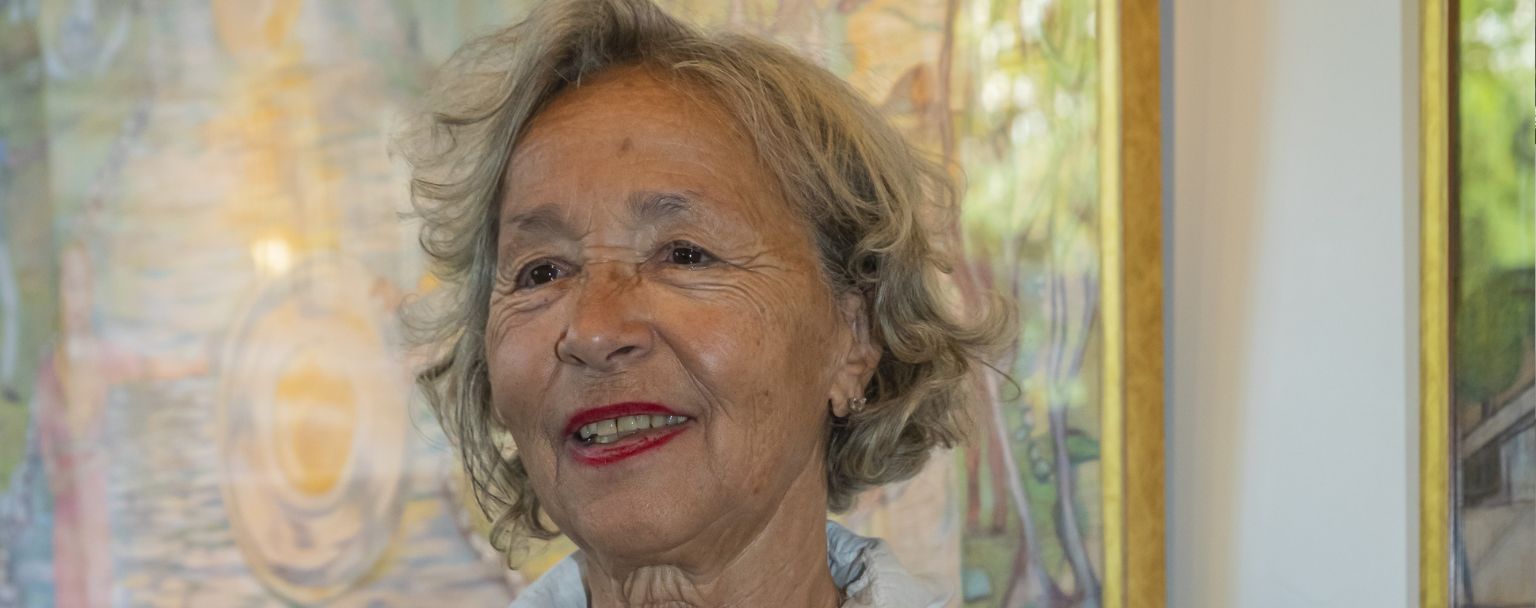
From the Image Factory to the Studio: An Art That Slows the World Down
In a landscape saturated with accelerated visual production, Mezz Zapharelli stands apart. Her work resists immediacy, opting instead for a painting practice built on precision, duration, and presence. Coming from applied image industries—fashion, television, film sets—she learned early how quickly figures are manufactured. Since the 1980s, Zapharelli has developed an ethic of slowness, where portraiture becomes a site of recalibration, alignment, and renewed attention.
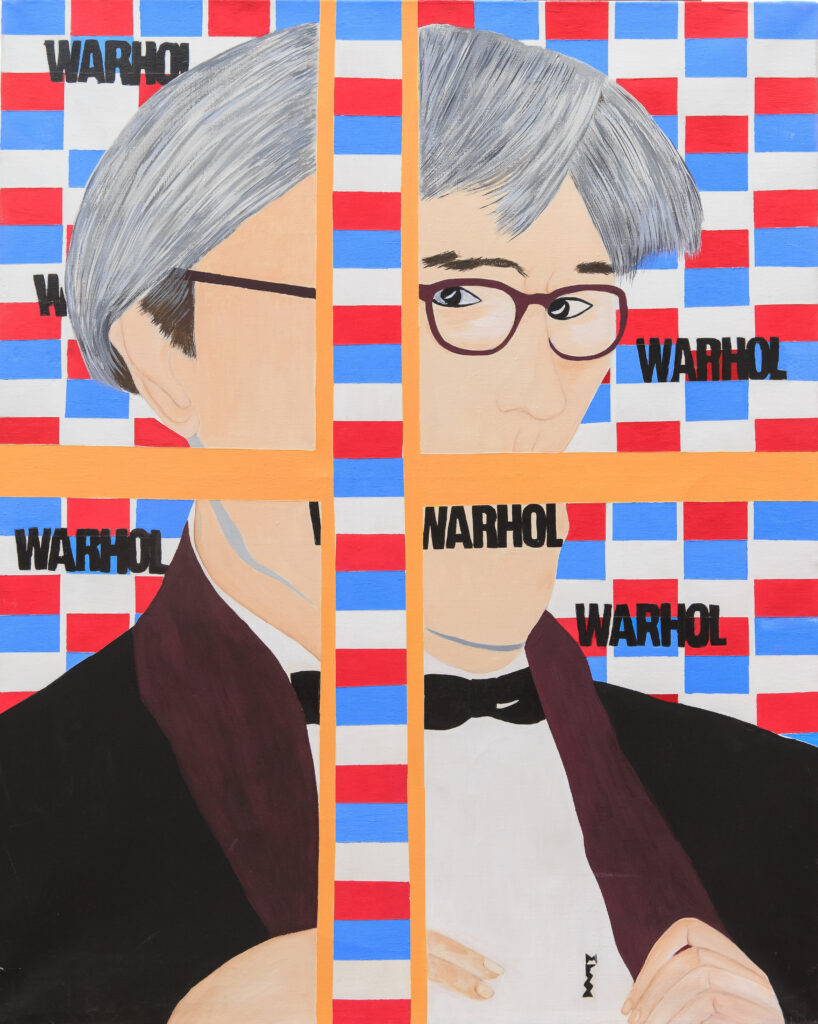
From Image-Making Industries to the Studio
Zapharelli’s path to painting begins far from traditional fine arts. A research trip to Australia opens five years of hands-on experience: television costumes, music-industry garments, film sets. Each environment teaches speed, efficiency, and the necessity of immediate visual impact.
New York intensifies this training. Invited by Andy Warhol’s office to celebrate the artist’s birthday at Studio 54, she encounters a full-scale icon-making machine—an ecosystem built on repetition, visibility, and velocity.
London and Central Saint Martins bring a turning point: the gesture must carry responsibility, the form must hold. After a decade inside the high-pressure world of image production, Zapharelli chooses a new direction: painting.
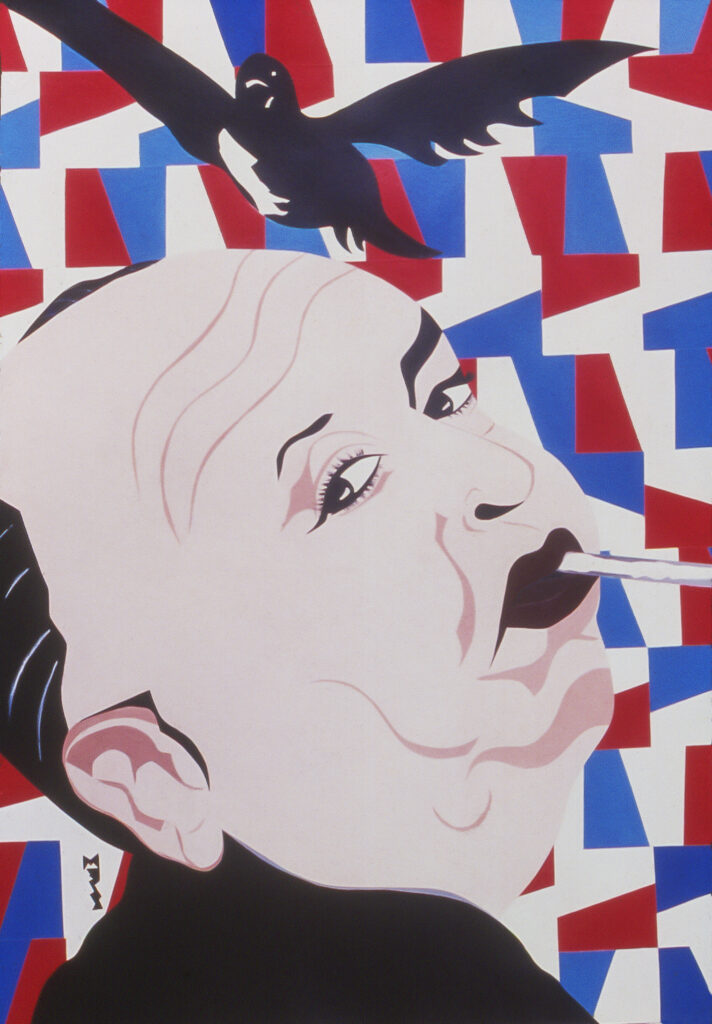
The 1980s: Portraiture as a Passage
Her first portrait series marks a deliberate exit from the visual flux. Leaving clothing—understood as a social surface—she turns toward the face, a surface of being. The formats are frontal, restrained. Execution time expands. The hand slows. The eye abandons easy effects in favor of subtle presence.
This transition is not just aesthetic; it is ethical. Painting becomes a way to unlearn speed and allow figures to emerge with depth and steadiness.
Testing the Icon: Marilyn, Hitchcock, Chanel
When Zapharelli engages hyper-mediated figures, she avoids both homage and parody. The icon is treated as resistant material. Painting exposes its seams, its silences, the pressure of light against form. Her work does not embellish; it desaturates.
These images carry the memory of her proximity to the image factory. After years of acceleration, the painting becomes a braking device—a resonant chamber where the icon can breathe again.
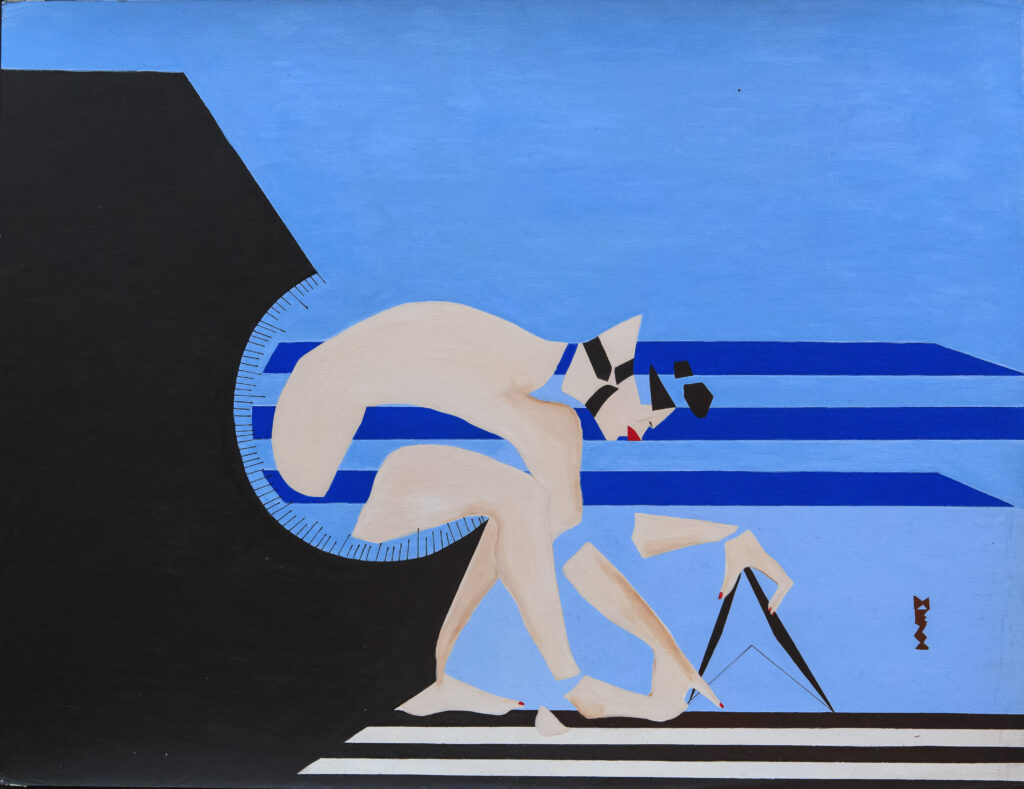
The Compass: A Politics of the Axis
A recurring, tool-like motif appears: the compass. For Zapharelli, it symbolizes the act of realigning the human figure. Far from decorative metaphor, it articulates the studio’s core ambition: to measure, orient, and restore balance to a figure worn down by media circulation.
The painting is no longer a showcase; it becomes an instrument. What matters is not stylistic signature (which shifts), but the axis—the sustained line of force that holds the work.
Lines of Force: A Coherent Artistic Trajectory
Zapharelli’s path is not a biographical romance but a coherent artistic logic born from the tension between two regimes of images:
- The image factory: costume workshops, sets, runways, repetition, speed, industrial reproduction
- Painting: slow, risky, irreversible, where each decision carries weight
One regime shapes her speed and cut; the other grants her the right to duration. It is this shift of regime—from production to contemplation—that defines the strength and integrity of her work.
Support independent publishing! Subscribe to ART MAG and receive each issue in advance, in both print and digital format
👉 Subcribe 6 issues / 1 year
👉 Offer ART MAG