


3 October 2025 – 5 April 2026 — MUba Eugène Leroy, Tourcoing
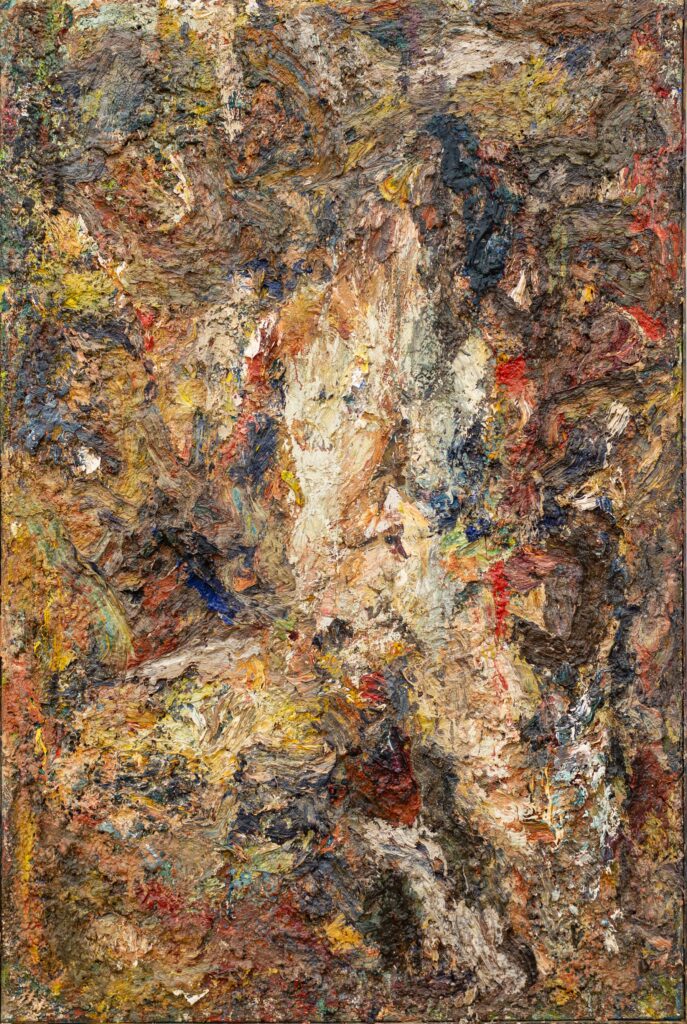
The MUba presents more than 80 works tracing the last two decades of Eugène Leroy’s career (1980–2000). It is a dense journey where colour—laid down in strata—brings forth the figure, the season, the hour: light as destiny.
Want to see more ?
👉 Subscribe to 6 issues / 1 year
👉 Give ART MAG as a gift
Why this exhibition matters
Long “outside fashion,” Leroy achieved international recognition in the 1980s–1990s (Ghent, Paris, Eindhoven, Cologne; documenta 1992; Venice Biennale 1995). Returning to these late years reveals the radicality of a painting that refuses effect in order to reach the “right image.”
Painting light rather than the motif
In the Wasquehal studio—windows to the north and south, “light in front, light behind”—model, reflection and landscape are subjected to changing illumination. Leroy seeks “the trace of lived experience” and buries anecdote: detail matters less than luminous sensation.
1990–2000: the nude, verticality, economy
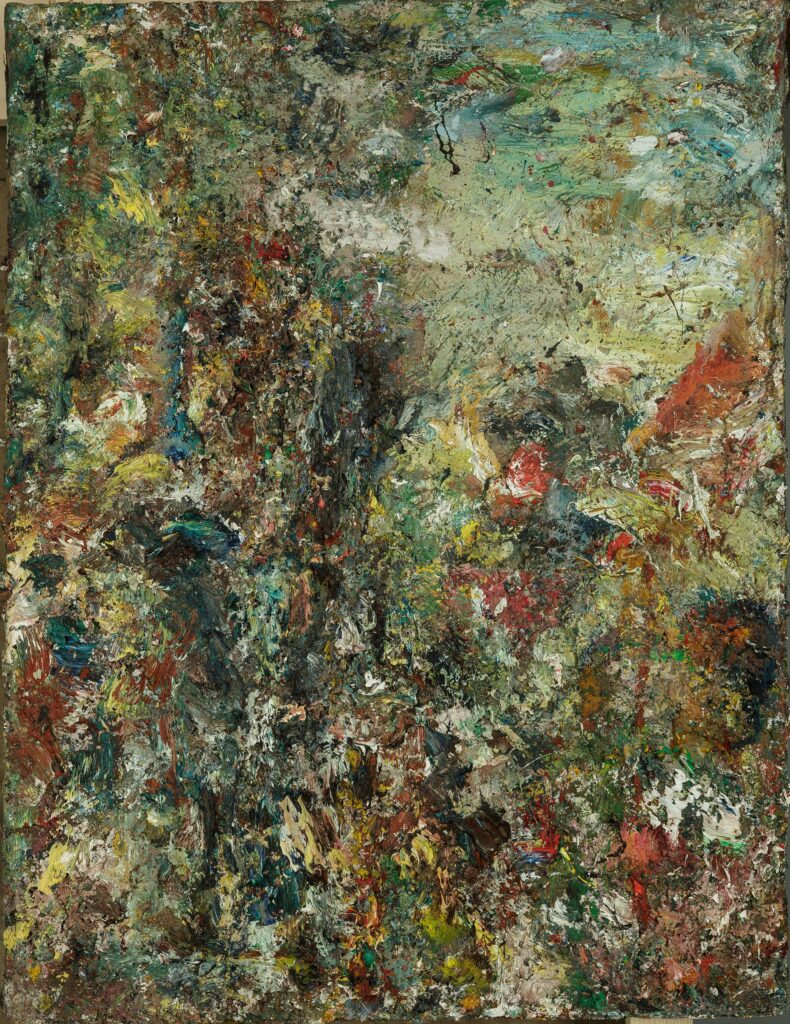
From 1990 onward, the female nude becomes the site of reduction. Formats rise; matter proliferates yet the figure grows lighter, as if spiritualised by verticality. Touches—often applied straight from the tube or with a knife—break up the polychromy and set the surface to rhythm.
Dialogues with art history: Mondrian, Poussin, Rembrandt
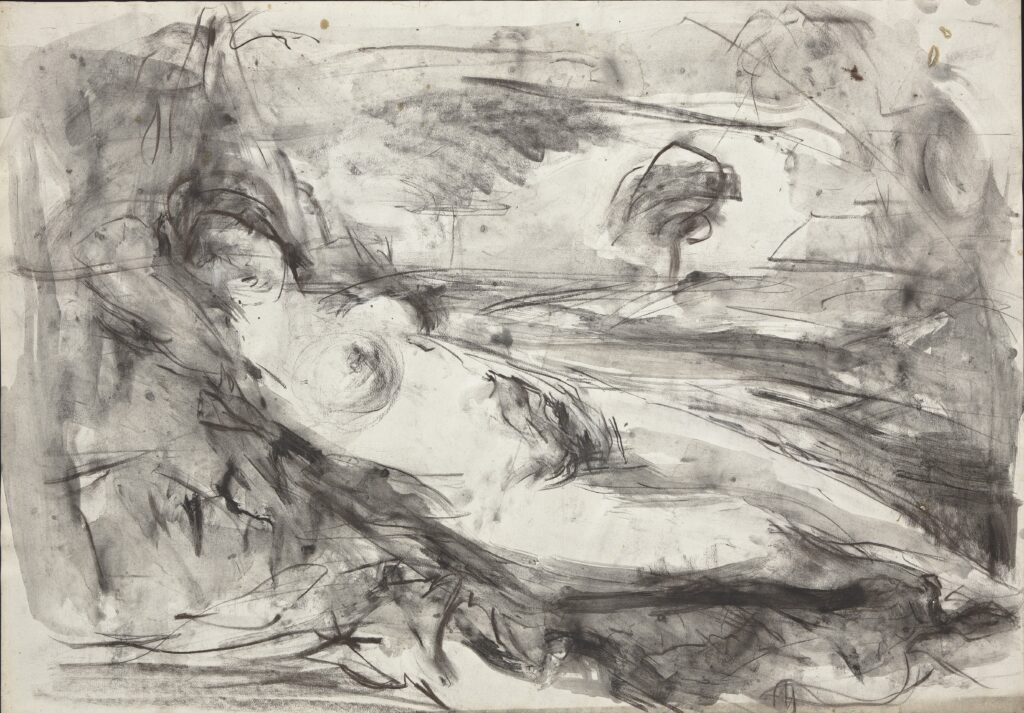
Leroy’s gaze toward Mondrian is not about grids but about the rhythm of unmixed colour areas; Poussin inspires two Seasons cycles, where painting is tuned to cosmic time; Rembrandt and Giorgione remain long-standing companions.
Drawing to “catch the gesture”
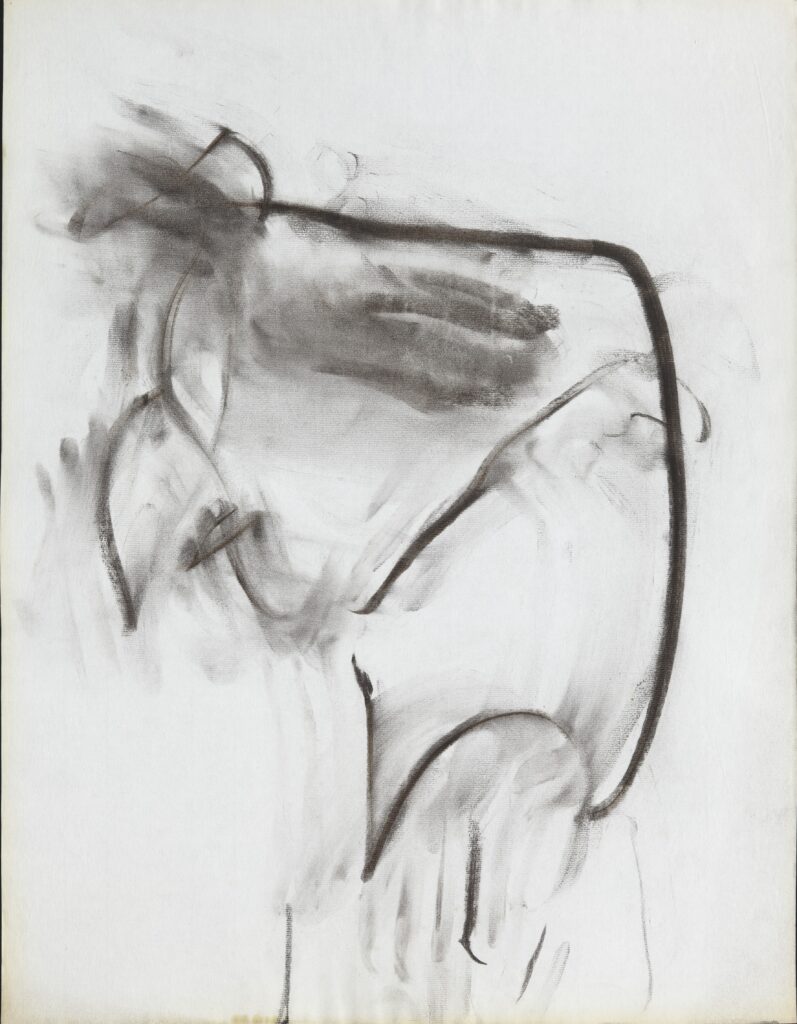
Never merely preparatory, drawing is an autonomous field: charcoal, red chalk, gouache, watercolour… The aim is to “catch” movement—sometimes without looking at the sheet—leaving reserves of white as active light.
Highlights not to miss
- Seasons cycles and canvases “indexed” to light (Done in Winter, L.M. in the Evening).
- Vertical nudes of the 1990s: “grainy” surfaces, surges of matter.
- Large 1980s gouaches and series in charcoal.

Want to see more ?
👉 Subscribe to 6 issues / 1 year
👉 Give ART MAG as a gift
Practical information
MUba Eugène Leroy, 2 rue Paul Doumer, 59200 Tourcoing
Dates: 3 October 2025 → 5 April 2026
Hours: Daily 1–6 pm (closed Tuesdays and public holidays)
FAQ
Who is Eugène Leroy?
A painter born in Tourcoing (1910) and deceased in Wasquehal (2000), he built a major body of work where the thickness of paint serves light rather than effect.
What does the MUba exhibition show?
Over 80 paintings and drawings from 1980–2000: vertical nudes, self-portraits, seasons, large gouaches and charcoals.
Which influences does Eugène Leroy claim?
Mondrian for the rhythm of pure colours; Poussin for the time of the seasons; as well as Rembrandt and Giorgione.
Why is the paint so thick?
It results from long reworking until the “right image” appears; impasto is never an end in itself.
Want to see more ?
👉 Subscribe to 6 issues / 1 year
👉 Give ART MAG as a gift