

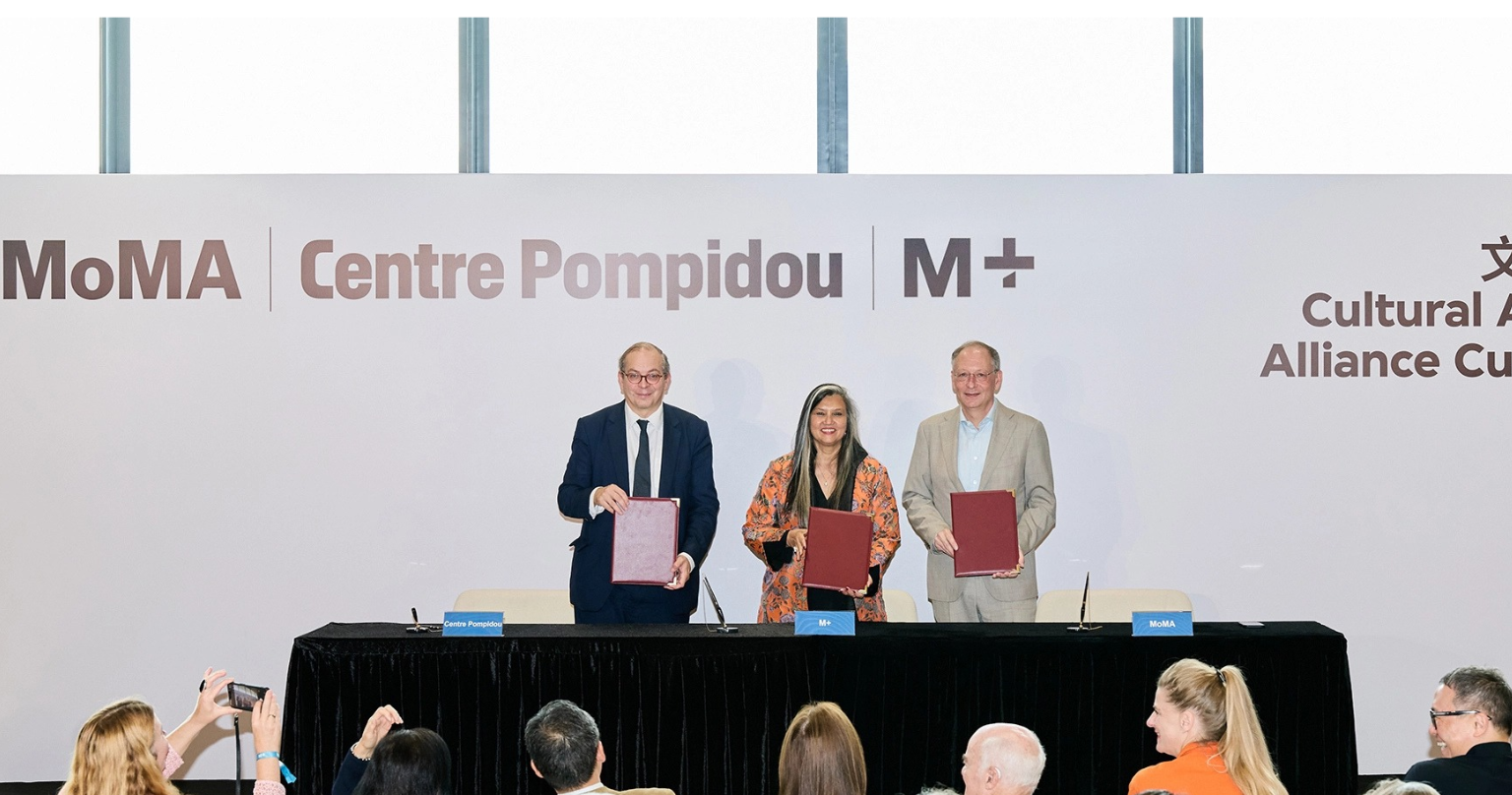
Paris, New York and Hong Kong are joining forces. On 30 October 2026, the Centre Pompidou, MoMA and M+ formalised a cultural alliance designed to bring their collections, expertise and audiences closer together. Beyond this agreement between three major institutions, a fundamental question emerges: could this collaboration reshape the way we tell the story of modern and contemporary art?
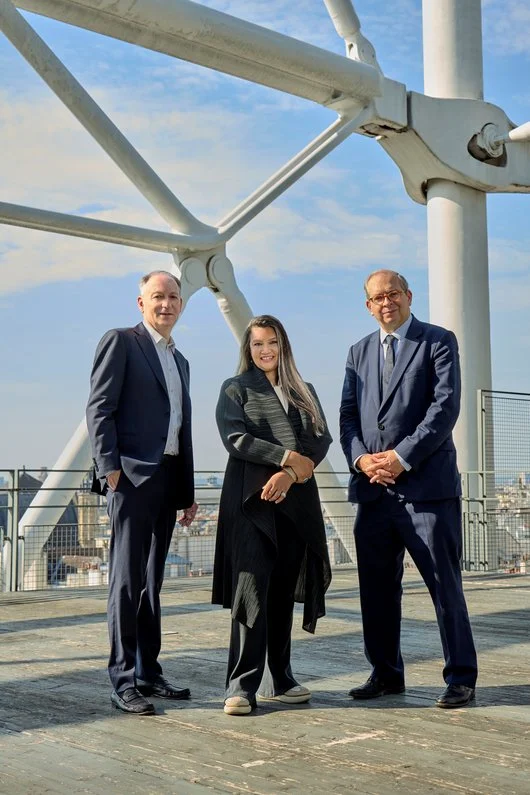
Laurent Le Bon Photo: © Centre Pompidou/Chau-Cuong Lê
Three Museums, One Global Ambition
For decades, major museums have built their reputations on the strength of their collections, their acquisitions and their ability to attract visitors. Today, their influence may increasingly depend on their capacity to collaborate.
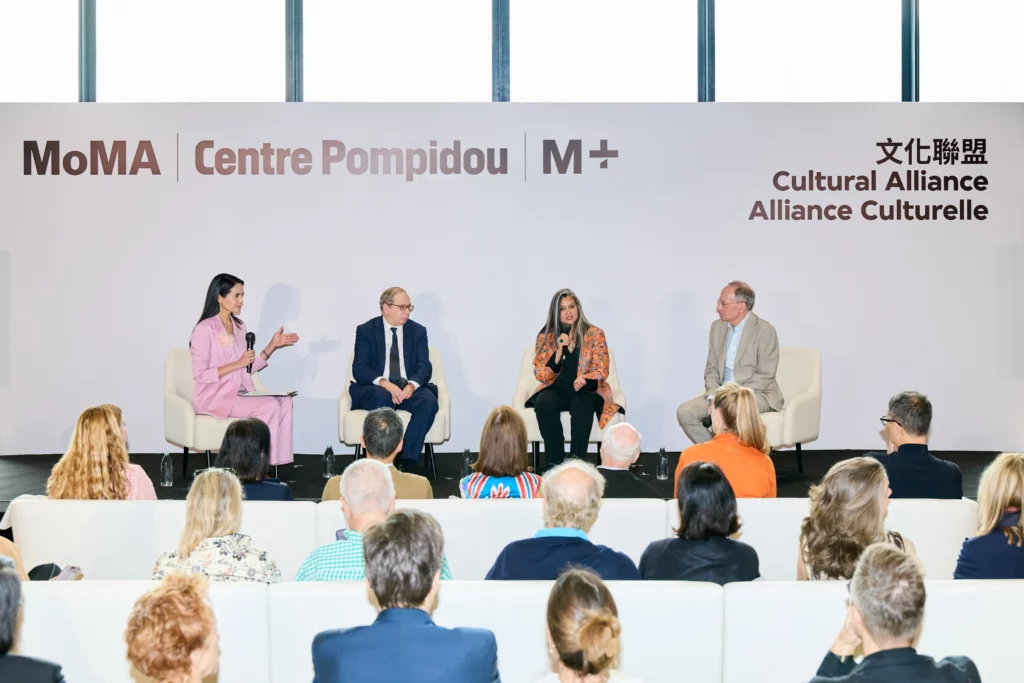
On 30 October 2026, Laurent Le Bon, President of the Centre Pompidou, Christophe Cherix, Director of the Museum of Modern Art (MoMA), and Suhanya Raffel, Museum Director of M+, signed a framework agreement in Hong Kong establishing a cultural alliance between their institutions.
The partnership encompasses joint exhibitions, long-term loans of artworks, collaborative programmes and exchanges of expertise in curatorial research and conservation.
Together, the three museums attract approximately 10 million visitors annually and reach 125 million online visitors. These considerable audiences demonstrate their potential to shape how contemporary art is seen and understood.
Yet beyond the figures lies a more fundamental issue: who decides today what deserves a place in art history?
Towards a More Inclusive Art History?
The alliance brings together three institutions with distinct identities.
Founded in 1929, MoMA played a decisive role in establishing the recognition of the avant-garde and shaping the narrative of modern art. The Centre Pompidou, inaugurated in 1977, developed a multidisciplinary approach encompassing visual arts, architecture, design and contemporary creative practices.
Opened in 2021, M+ offers a different perspective. Based in Hong Kong, this museum of twentieth- and twenty-first-century visual culture places significant emphasis on Asian artistic practices while adopting an international approach.
These complementary perspectives could encourage fresh interpretations of artistic movements and bring renewed attention to creative trajectories that have long remained on the margins of dominant Western narratives.
After all, the history of modern art was not written exclusively in Paris and New York. Artists, influences and experimental practices travelled between continents, often without receiving equal institutional recognition.
The alliance could help broaden these perspectives. Whether that ambition becomes reality will depend on future exhibition programmes and the visibility given to underrepresented artists.
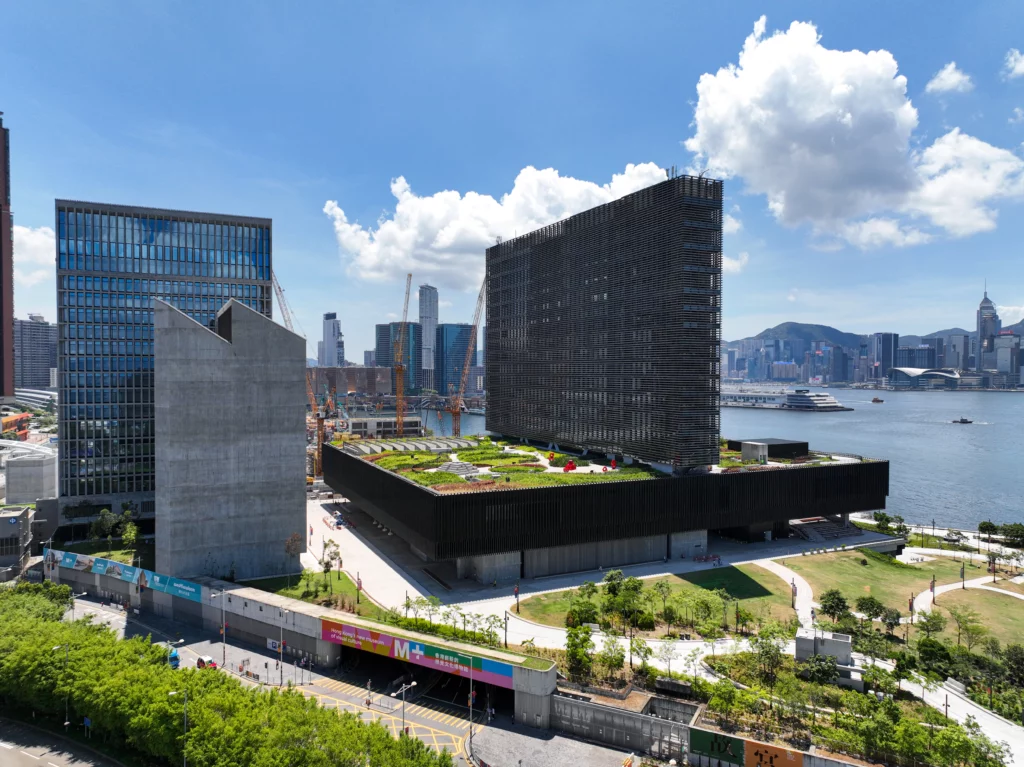
Photo: Joe Wong
Courtesy of M+, Hong Kong
Collections Set to Travel in New Ways
The first proposals give the partnership a more tangible dimension.
According to information reported by the South China Morning Post, MoMA is considering dedicating a space to the M+ collection as early as 2027. The Hong Kong museum, meanwhile, plans to incorporate works from New York and Paris into its displays.
Another possibility involves presenting digital works originally created for M+’s monumental LED façade at the Centre Pompidou Francilien in Massy, near Paris.
This example is particularly revealing. The ambition would no longer be limited to moving paintings and sculptures between institutions, but would also involve works conceived for specific technological and architectural environments.
Presenting such works in a different setting raises questions about conservation, adaptation and interpretation. How can an artist’s original intention be preserved when a work changes its environment? How can the relationship between a digital artwork and the site for which it was created be maintained?
Scientific and curatorial collaboration between museums could help address these challenges.
The details and timetable of these projects have yet to be confirmed. Their implementation will provide a clearer indication of whether the alliance moves beyond traditional forms of institutional exchange.
à Hong Kong, le 30 octobre 2026.Video: Moving Image Studio
Courtesy of M+, Hong Kong
Which Artists Will Truly Benefit?
The three museums emphasise their shared commitment to living artists. Their collaboration could strengthen the international visibility of certain works and encourage new partnerships.
For an artist, having their work presented in several major institutions can broaden recognition and invite fresh interpretations of their practice.
But an important question remains: will this increased circulation also benefit emerging artists and artistic communities that remain underrepresented?
At this stage, no specific support programme for emerging artists has been announced as part of the agreement.
The challenge is significant. International collaboration can enrich knowledge without necessarily changing the mechanisms through which artistic recognition is established.
To genuinely renew perspectives on contemporary art, institutions will also need to examine their programming choices, acquisition policies and ability to introduce audiences to artists who have yet to gain widespread visibility.
Centre Pompidou: A Strategy Beyond Beaubourg
For the Centre Pompidou, this alliance comes at a pivotal moment.
With its historic Paris building closed for major renovation, the institution is continuing its activities through the Constellation programme and numerous partnerships across France and internationally.
This international strategy is also taking shape in Brussels, where KANAL–Centre Pompidou, housed in the former Citroën garage, is scheduled to open on 28 November 2026. The project illustrates the Centre Pompidou’s expanding international presence.
KANAL–Centre Pompidou: The Former Citroën Garage Becomes a Living Museum
The collaboration with MoMA and M+ could strengthen its international presence during the renovation period while laying the foundations for longer-term cooperation.
It also illustrates an evolving understanding of the museum’s role. Institutional influence no longer depends solely on the artworks housed within museum walls, but increasingly on the ability to share knowledge, develop collaborative projects and bring collections to audiences beyond their original locations.
Yet this development raises another question: by strengthening their connections, could major institutions further concentrate their influence over the global art scene?
Collaboration — But Whose Art History?
The alliance between the Centre Pompidou, MoMA and M+ could mark a new chapter in relations between major museums.
Long-term loans, collaborative research and the exchange of different cultural perspectives offer genuine opportunities for renewal.
But the success of such a partnership cannot be measured solely by the number of artworks exchanged, exhibitions organised or visitors attracted.
It will also depend on the diversity of artists represented, the independence of curatorial decisions and the willingness of all three museums to question established narratives.
If Paris, New York and Hong Kong are now working together to shape part of their future programming, their cultural responsibility becomes all the greater.
Perhaps the question is no longer simply what major museums can achieve together, but whose version of art history they will choose to tell.
FAQ – Centre Pompidou, MoMA and M+ Cultural Alliance
The three museums have joined forces to develop joint exhibitions, facilitate long-term loans of artworks and strengthen collaboration in curatorial research, conservation and the sharing of expertise.
The cultural alliance was formalised on 30 October 2026 in Hong Kong, with the signing of a framework agreement between the three institutions.
The partnership brings together the Centre Pompidou in Paris, the Museum of Modern Art (MoMA) in New York and M+ in Hong Kong, three major institutions dedicated to modern and contemporary art and visual culture.
The partnership could increase the international visibility of artists by encouraging the circulation of artworks and new curatorial collaborations. However, its specific benefits for emerging and underrepresented artists have yet to be determined.