


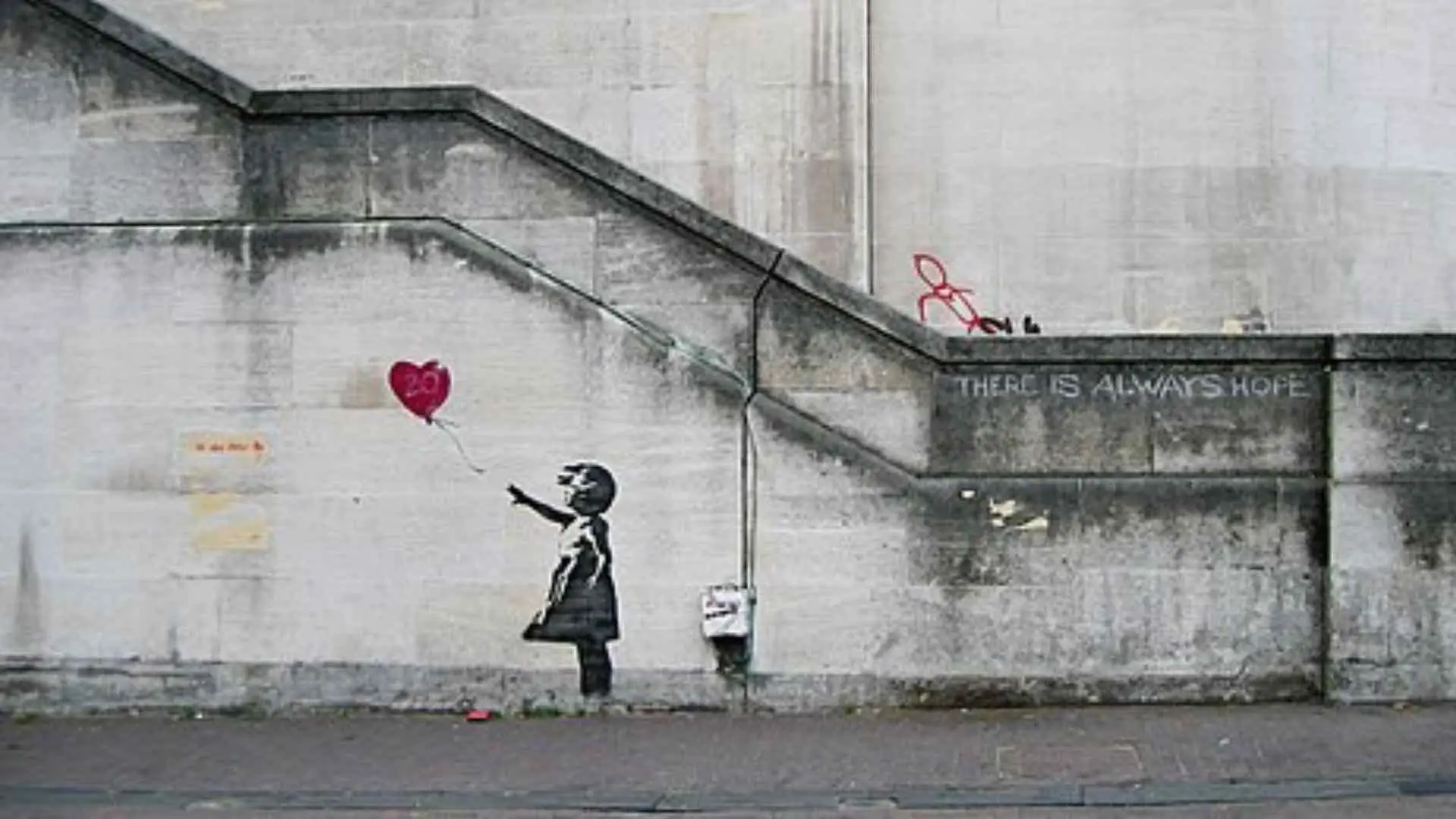
Banksy is one of the most famous contemporary artists in the world. Yet his identity has never been officially confirmed. How can an anonymous artist, whose earliest works appeared illegally on city walls, become one of the most influential figures in the global art market? The answer goes far beyond street art. Banksy has transformed the way we create, experience and, above all, assign value to works of art.
Who Is Banksy?
Banksy is a British street artist who emerged in the early 1990s, mainly in Bristol. His identity has never been officially confirmed, although several investigations have suggested that he could be Robin Gunningham. This hypothesis has been widely reported by the media but has never been verified by the artist himself.
If his identity continues to fascinate the public, it represents only one aspect of the Banksy phenomenon.
His influence goes far beyond the mystery surrounding his name. It lies above all in instantly recognisable imagery, a sharp social critique and a unique ability to transform every intervention into an international event.
To learn more about this subject, read our investigation: Banksy Unmasked? The Robin Gunningham Investigation.
Why Did Banksy Become World Famous?
Banksy’s success is the result of several factors that have profoundly transformed the contemporary art world.
An Instantly Recognisable Visual Language
Very few contemporary artists possess such an immediately identifiable visual style.
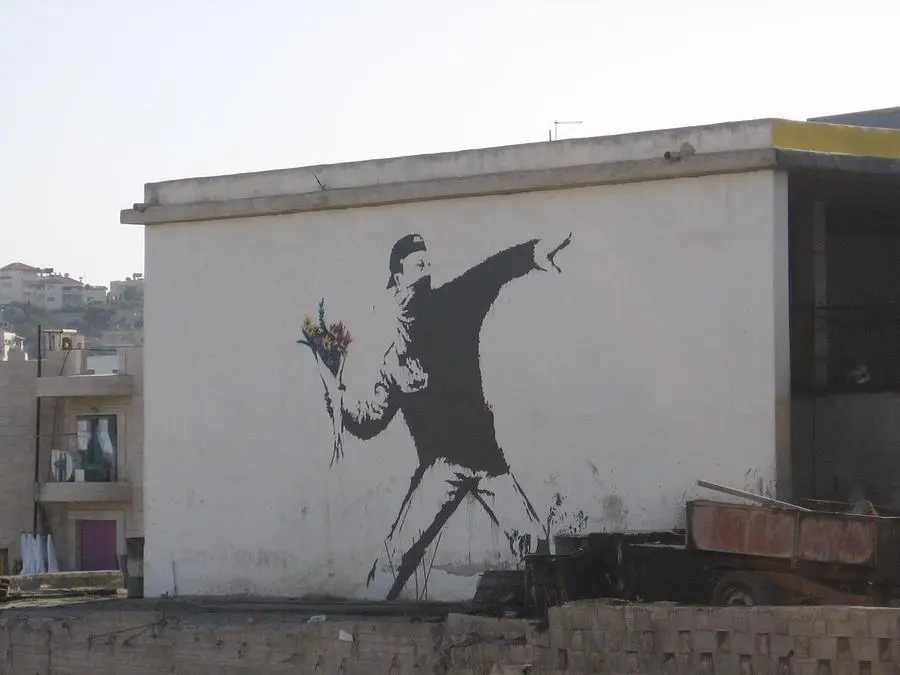
A girl holding a balloon, a protester throwing flowers, smiling policemen or mischievous rats instantly evoke Banksy, even without a signature.
This instant recognition has become a value in itself.
Universal Themes
Banksy’s works address issues that extend far beyond the art world.
War, consumerism, surveillance, migration, environmental concerns and political power are all recurring themes.
His ability to translate complex social issues into powerful visual metaphors explains why his images resonate with audiences worldwide.
A Master of Communication
Long before social media became central to our daily lives, Banksy understood that an artwork no longer existed solely on its physical support.
When a new mural appears, it is photographed, shared online, discussed in the media and analysed around the world.
The artwork continues to live long after its creation.
Banksy does not simply create images.
He creates events.
Why Are Banksy’s Works Worth Millions?
This is one of the most frequently asked questions by collectors and art lovers alike.
The answer goes far beyond artistic quality.
The value of a Banksy artwork is built upon several interconnected factors.
Scarcity
Despite the global circulation of his images, original Banksy works remain relatively rare on the market.
Demand consistently exceeds supply.
Authenticity
Since 2008, Pest Control has been the only organisation officially authorised to authenticate Banksy’s works intended for the art market.
For collectors, this certificate is essential.
Without it, an artwork can lose a significant part of its market value.
Context
With Banksy, where an artwork appears is often as important as the artwork itself.
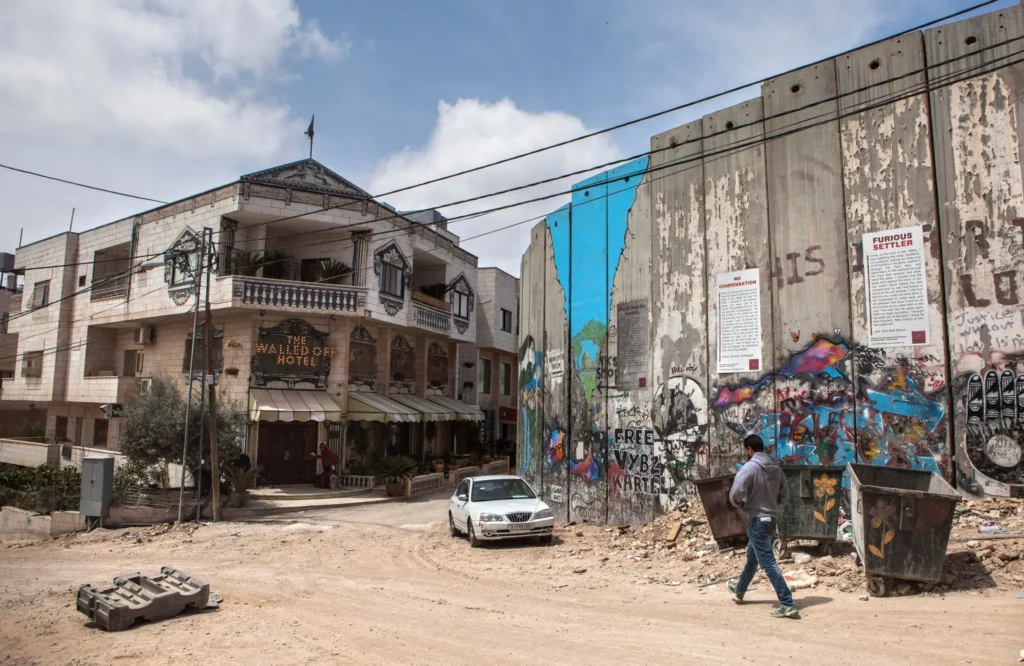
A mural painted on the separation wall in Bethlehem or in war-torn Ukraine carries a completely different meaning from one displayed inside a gallery.
Context creates value.
Storytelling
Perhaps the most important factor of all.
A Banksy artwork is never just an image.
It also tells the story of where it appeared, why it was created, how the public reacted and what eventually happened to it.
Every artwork carries its own narrative.
The 7 Factors That Explain the Value of a Banksy Artwork
| Factor | Why It Matters |
|---|---|
| Recognisable visual style | Banksy’s instantly identifiable imagery makes his work immediately recognisable around the world. |
| Rarity | Only a limited number of original works are available on the art market. |
| Authenticity | Official certification by Pest Control is essential to establish an artwork’s market value. |
| Message | His works address universal social and political issues that resonate with audiences worldwide. |
| Media exposure | Every new artwork generates extensive international media coverage. |
| Provenance | The history, location and ownership of a work significantly influence its value. |
| Global demand | Collectors, museums and institutions actively seek Banksy’s works, sustaining high market demand. |
The Day Banksy Changed Auction History
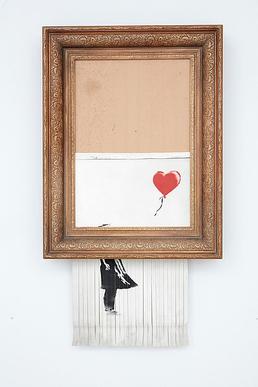
On 5 October 2018, a framed version of Girl with Balloon was sold at Sotheby’s in London.
Seconds after the auctioneer’s hammer came down, a hidden shredding mechanism built into the frame was activated. Before the stunned audience, the artwork began to destroy itself.
The scene immediately made headlines around the world.
What appeared to be the destruction of an artwork soon became the birth of a new one.
Renamed Love Is in the Bin, the piece entered art history as one of the most extraordinary moments ever witnessed at an auction. In 2021, it was resold for £18.58 million, setting a new auction record for Banksy.
The event demonstrated something remarkable.
In contemporary art, a performance can become just as valuable as the artwork itself.
Support independent publishing! Subscribe to ART MAG and receive each issue in advance, in both print and digital format
👉 Subcribe 6 issues / 1 year
👉 Offer ART MAG
Has Banksy Changed the Art Market?
The answer is yes—but perhaps not in the way many people imagine.
Banksy did not invent speculation.
He did not invent street art.
What he transformed was the way value is created.
For decades, the value of an artwork depended primarily on technical mastery, rarity and institutional recognition.
Today, other factors play an equally important role:
- the strength of the message;
- authenticity;
- the story behind the artwork;
- media exposure;
- cultural impact;
- public engagement.
In other words, an artwork is no longer valued solely for what it depicts.
It is also valued for what it inspires.
Banksy: Art, Storytelling and the Market
This is perhaps where Banksy’s greatest influence lies.
He understood earlier than most artists that a work of art could become a global cultural phenomenon.
Every new Banksy follows almost the same sequence:
- a new artwork appears;
- photographs spread across the internet;
- media outlets report the discovery;
- specialists analyse the work;
- collectors begin discussing its future;
- eventually, the artwork may enter the art market.
The artwork does not end when the paint dries.
It continues to evolve through the conversations, images and stories that surround it.
Banksy has demonstrated that, in the digital age, storytelling has become an essential component of artistic value.
Support independent publishing! Subscribe to ART MAG and receive each issue in advance, in both print and digital format
👉 Subcribe 6 issues / 1 year
👉 Offer ART MAG
What Banksy Reveals About Contemporary Art
The Banksy phenomenon goes far beyond street art.
It reflects a profound transformation in the contemporary art world.
Collectors no longer acquire only objects.
They acquire provenance.
They acquire authenticity.
They acquire cultural significance.
Above all, they acquire stories.
Banksy’s career illustrates how artistic creation, communication and the art market have become increasingly interconnected.
His works continue to challenge viewers, stimulate debate and generate worldwide attention long after they first appear.
Key Milestones in Banksy’s CareerKey Milestones in Banksy’s Career
| Year | Event |
|---|---|
| Early 1990s | Banksy begins his career on Bristol’s graffiti scene and gradually adopts the stencil technique that will become his trademark. |
| 2002 | Creation of Girl with Balloon, which would become one of the most iconic works of contemporary art. |
| 2003 | First major solo exhibition, Turf War, held in London. |
| 2005 | Banksy creates a series of murals on the Israeli West Bank barrier, bringing international attention to his politically engaged work. |
| 2009 | The exhibition Banksy vs Bristol Museum attracts nearly 300,000 visitors, marking a turning point in his institutional recognition. |
| 2010 | Release of the documentary Exit Through the Gift Shop, nominated for an Academy Award. |
| 2013 | Better Out Than In, a month-long artistic residency in New York City, transforms the city itself into an open-air exhibition. |
| 2015 | Opening of Dismaland, a satirical theme park that becomes a global cultural phenomenon. |
| 2017 | Launch of The Walled Off Hotel in Bethlehem, combining art, political engagement and an immersive visitor experience. |
| 2018 | Girl with Balloon partially self-destructs during a Sotheby’s auction and is reborn as Love Is in the Bin, creating one of the defining moments in contemporary art market history. |
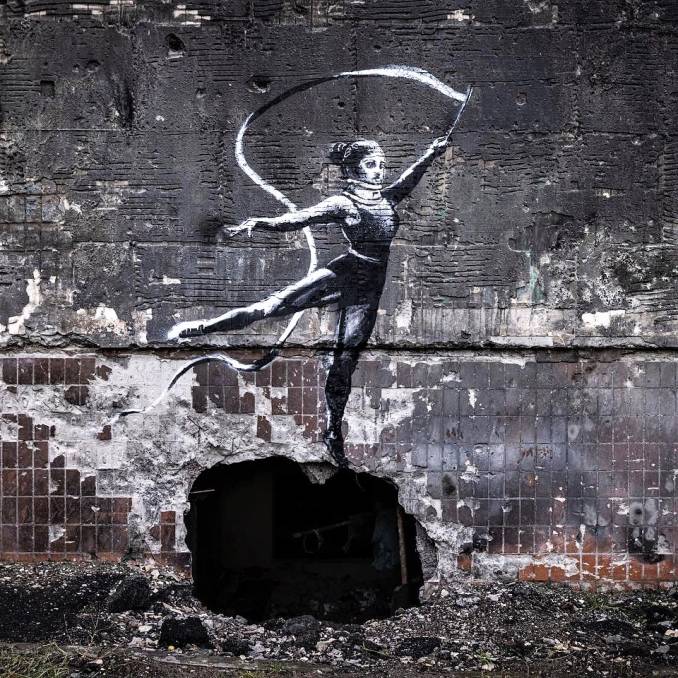
| 2022 | Banksy paints several murals in Ukraine, including the now-famous works in Borodyanka, reaffirming his engagement with current global events. |
| 2024 | The London animal series—including a goat, elephants, monkeys, a wolf, pelicans and a rhinoceros—demonstrates the continuing evolution of Banksy’s artistic language and public influence. |
More Than an Artist, a Mirror of Our Time
Banksy’s legacy is not limited to his anonymity or to the record-breaking prices achieved by his works.
His greatest contribution may be the way he has changed our understanding of artistic value.
An artwork no longer lives exclusively on a wall or inside a museum.
It lives through the people who photograph it.
Through the conversations it sparks.
Through the articles that analyse it.
Through the stories that continue to circulate long after its creation.
Banksy has not merely transformed street art.
He has helped redefine the relationship between art, communication and the market in the twenty-first century.
An artwork is no longer valued only for what it shows. It is also valued for what it inspires.
Eplore More on ART MAG International
Would you like to explore Banksy’s work in greater depth? Discover our other analyses dedicated to the artist and his influence on contemporary art.
Banksy Censored in London: When a Work About Freedom of Expression Disappears
How the removal of a Banksy artwork reignited debate about censorship, public art and freedom of expression.
Banksy Unmasked? The Robin Gunningham Investigation
Who is the man believed to be behind the world’s most famous anonymous artist?
New Banksy in London: Why This Artwork Says as Much About Us as It Does About Street Art
An in-depth analysis of one of Banksy’s latest public interventions and its broader meaning.
Banksy in London: Where to See the New Statue and What It Really Means
Discover Banksy’s latest installation in London and explore its symbolism and artistic significance.
What Is Pest Control? The Essential Guide to Authenticating Banksy Artworks
Discover why Pest Control is essential to authenticating Banksy artworks. Learn how certificates of authenticity, provenance and traceability protect collectors and secure transactions on the international art market.
Support independent publishing! Subscribe to ART MAG and receive each issue in advance, in both print and digital format
👉 Subcribe 6 issues / 1 year
👉 Offer ART MAG
FAQ
Banksy is a British street artist who emerged in the early 1990s, mainly in Bristol. Although his identity has never been officially confirmed, he is internationally recognised for his politically engaged stencil artworks addressing issues such as war, consumerism, migration, inequality and freedom.
Why does Banksy remain anonymous?
Anonymity is an essential part of Banksy’s artistic identity. It allows him to keep the focus on his work rather than on his personal life, while reinforcing the mystery that surrounds each new intervention. It also reflects the rebellious spirit of street art, where the artwork often matters more than the artist.
Why are Banksy’s artworks worth millions?
The value of a Banksy artwork is based on several factors: rarity, authenticity, artistic significance, historical context, media attention and strong international demand. Each work also carries a unique story that contributes significantly to its market value.
What is Pest Control?
Among Banksy’s best-known works are Girl with Balloon, Flower Thrower (Love Is in the Air), There Is Always Hope and Kissing Coppers. These images have become icons of both street art and contemporary art.
What is Banksy’s most expensive artwork?
Love Is in the Bin, created after the partial shredding of Girl with Balloon during a Sotheby’s auction in 2018, was resold in 2021 for £18.58 million, setting a record for the artist at auction.
Is Banksy still active?
Both. Banksy emerged from the street art movement, but his influence now extends far beyond it. His works are studied within the history of contemporary art, exhibited by major institutions and sought after by leading collectors worldwide.
Why is Banksy considered one of the most influential artists of the 21st century?
Banksy has transformed the way artworks are created, communicated and valued. By combining powerful visual imagery, social engagement and an exceptional understanding of media and public attention, he has profoundly influenced both contemporary art and the global art market.
What does Banksy reveal about today’s art market?
Banksy’s career illustrates how the value of an artwork now depends on far more than technical skill. Authenticity, storytelling, provenance, media visibility and cultural impact have become essential elements in determining artistic value in the contemporary art world.