


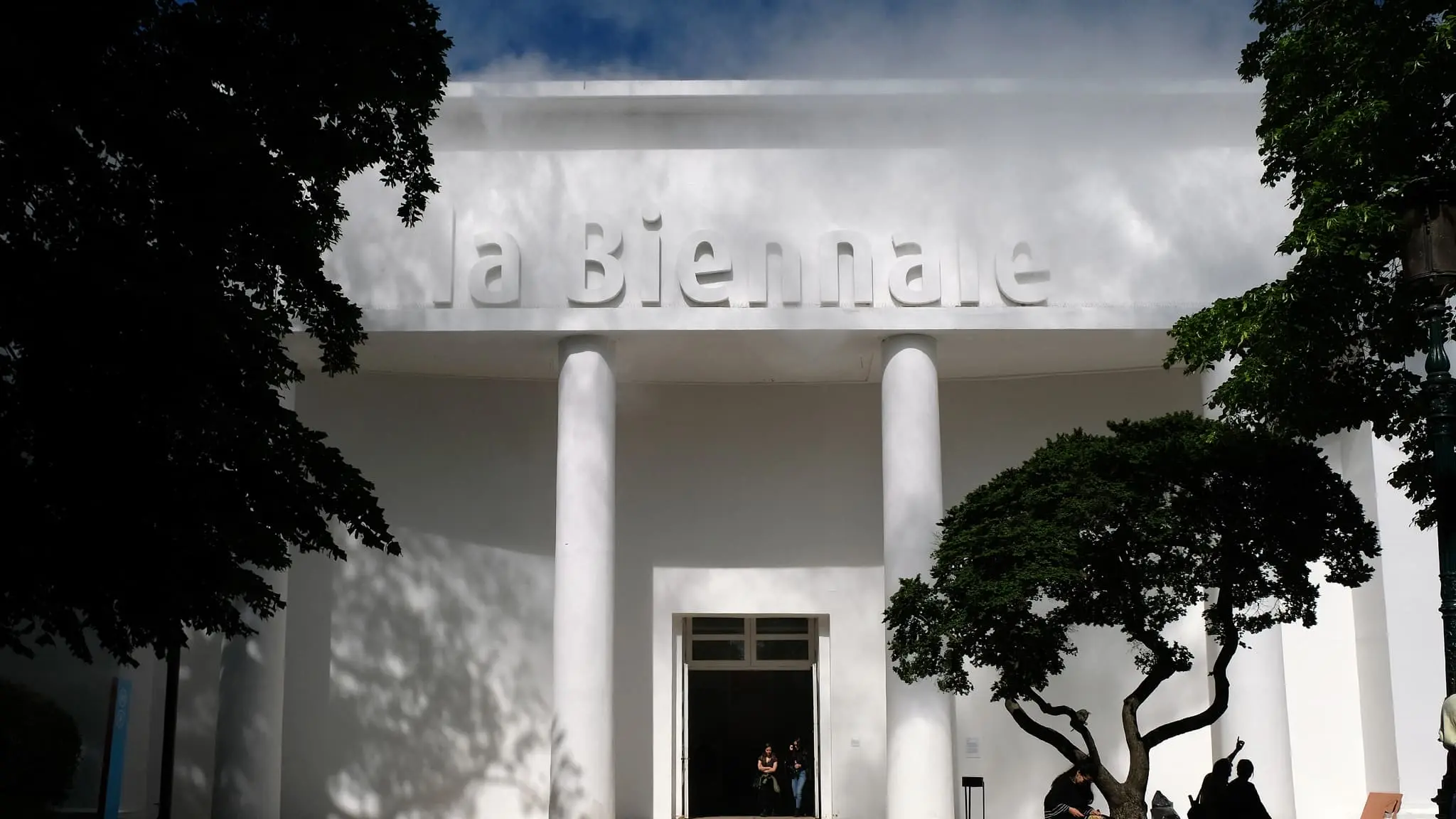
The jury resigns.
But that’s not the problem.
The problem is that no one — not even the Biennale itself — seems to understand what it has become.
In Venice, art was supposed to exist apart. A space of truce.
Today, it looks more like a system hesitating, stepping back, trying to hold an impossible position: showing without judging, welcoming without taking a stand.
Behind the controversy over Russia’s participation, it’s not just a decision that’s wavering — it’s an entire model.
This isn’t a controversy. It’s a glitch.
You could sum it up simply: political disagreement, institutional crisis, end of story.
But what’s happening in Venice is stranger than that.
👉 The system no longer works.
On one side, the Biennale allows certain countries to participate.
On the other, it decides not to evaluate their work for political reasons.
The result:
an exhibition that shows… without committing.
a jury that judges… then refuses to judge.
And eventually, a jury that walks away.
The exact moment art loses control
For years, the art world held together through a fragile balance:
👉 acting as if art stood above everything else.
Not apolitical. Just… elsewhere.
But today, that balance no longer holds.
Because:
- conflicts are immediate
- images circulate in real time
- institutions are constantly scrutinized
👉 There’s no way to “put things on hold.”
- The Russian pavilion crystallizes a question the Biennale can no longer answer:
- can you exhibit without taking a position?
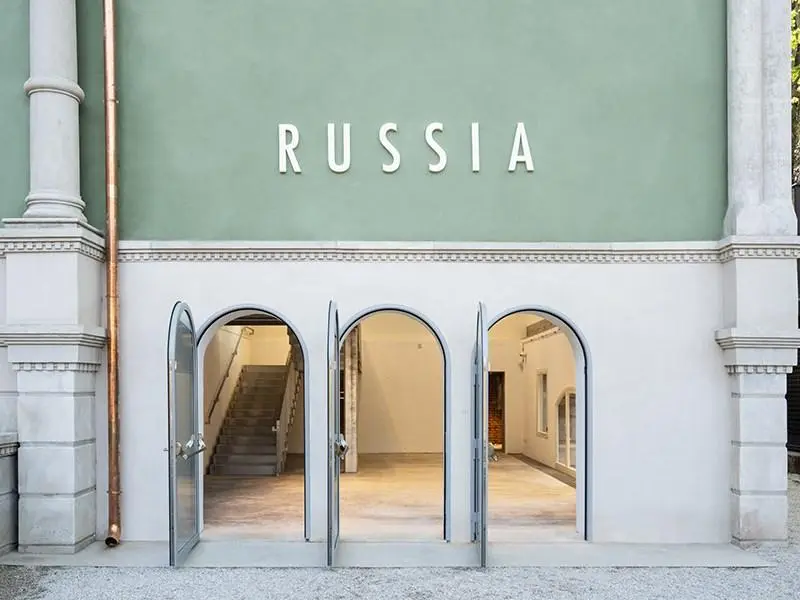
The real issue isn’t Russia
This is where most media get it wrong.
They focus on a country, a conflict, a decision.
But the problem is structural.
The Biennale is built on a simple idea: each country represents something.
Except that idea has become unmanageable.
Because today, an artist:
- is not an ambassador
- is not a spokesperson
- is not a flag
And yet, they are still treated as one.
Support independent publishing! Subscribe to ART MAG and receive each issue in advance, in both print and digital format
👉 Subcribe 6 issues / 1 year
👉 Offer ART MAG
An impossible equation
Nearly 40 Russian artists are expected to exhibit.
So what do you do?
Option A: exclude them
→ artistic injustice
Option B: include them
→ political backlash
Option C (the one chosen):
→ include them… but pretend it doesn’t matter
👉 That’s the option that breaks everything.
“A place of truce”: the wrong idea at the wrong time
The Biennale describes itself as a “place of truce in the name of art.”
But a truce requires two things:
- that conflict can be suspended
- that everyone agrees to play along
👉 Today, neither is true.
What no one says (but everyone sees)
The Biennale is no longer a center.
It has become a symbol.
And like all symbols in crisis, it reveals more than it controls.
It reveals:
- an art world dependent on states
- an inability to take a clear stance
- a constant fear of getting it wrong
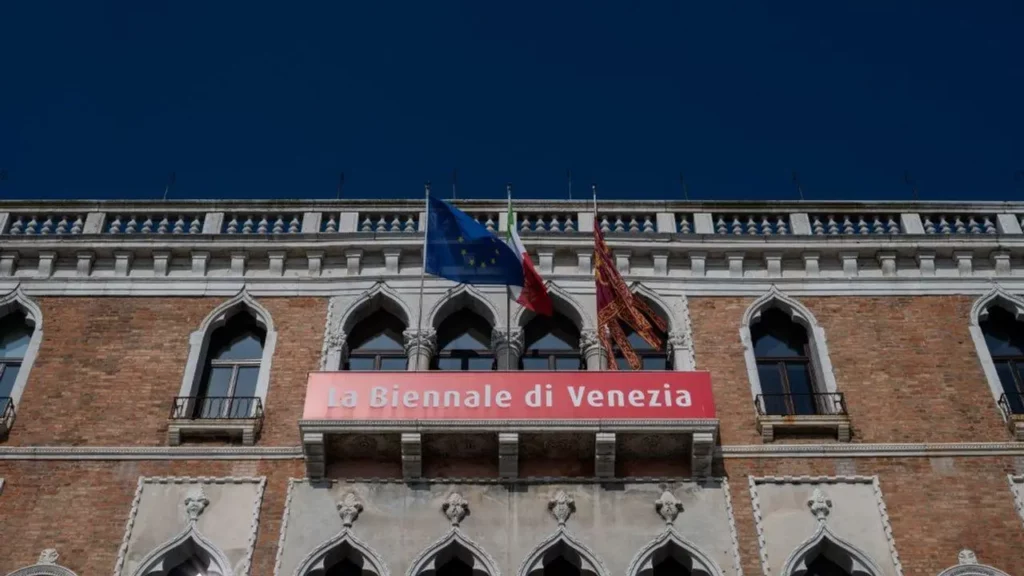
The Venice Biennale, once a symbol of global art… is now shaped by unprecedented political tensions.
Why this moment will matter
Because this isn’t an accident.
It’s a turning point.
👉 Before: we could still believe in a certain neutrality
👉 Now: every decision becomes a political signal
The real turning point
What’s at stake here isn’t programming.
It’s the very function of these large-scale exhibitions.
Is the Biennale:
- a diplomatic space?
- an artistic platform?
- or a theater of contradictions?
👉 Today, it is all three. And it no longer works.
TL;DR (and yes, it stings)
- The jury resigns → the system is inconsistent
- Art’s neutrality → an illusion that no longer holds
- The real problem → the Biennale model itself
- What we’re seeing → an institution trying to survive its own time
If you remember one thing
👉 This is not a crisis of art.
👉 It’s a crisis of how we organize art at scale.
Support independent publishing! Subscribe to ART MAG and receive each issue in advance, in both print and digital format
👉 Subcribe 6 issues / 1 year
👉 Offer ART MAG
Also read: Venice Biennale 2026: “In Minor Keys,” the most sensitive and visionary edition of the decade
Official website: Venice Biennale