


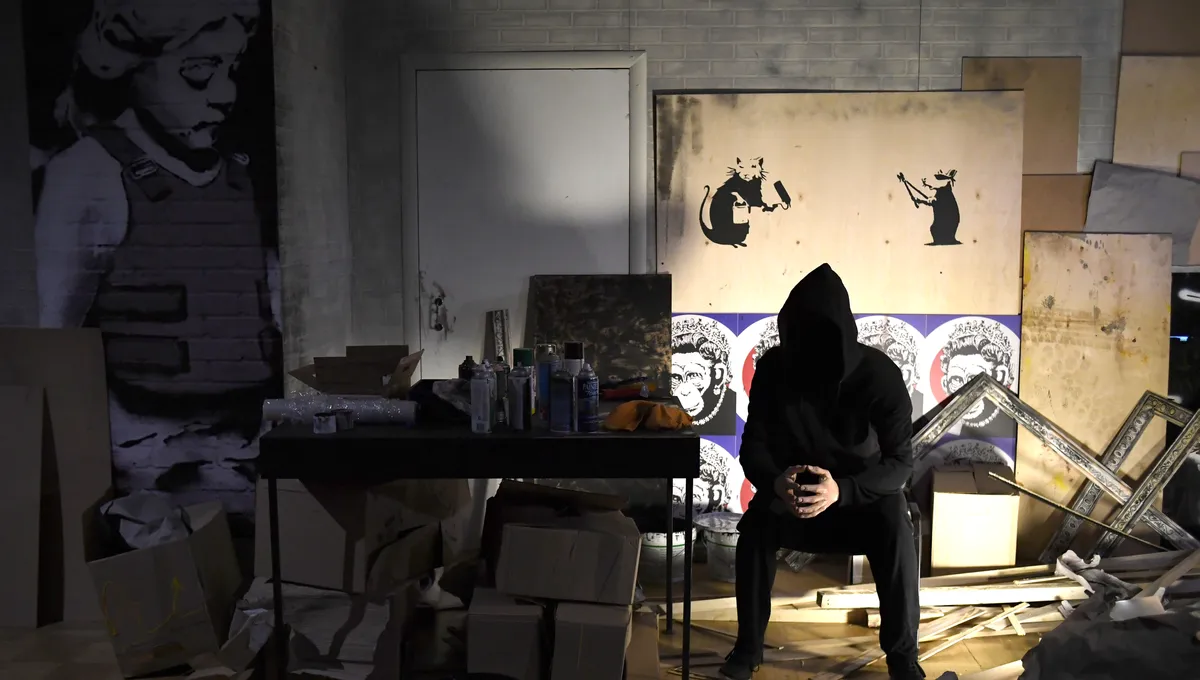
For more than two decades, Banksy has remained one of the most mysterious figures in contemporary art. His works suddenly appear on walls across the world — from London and New York to Gaza and Kyiv — yet the identity of the artist behind them has never been officially confirmed.
Now, a major investigation published on March 13, 2026 by Reuters claims to have uncovered the real person behind the pseudonym. After years of research and analysis of documents spanning more than two decades, journalists say the elusive street artist may finally have been identified.
According to the investigation, Banksy could be Robin Gunningham, a British man born in 1973 in the city of Bristol.
If confirmed, this revelation would mark a significant moment in the history of street art and could reshape how the public understands one of the most influential artists of the 21st century.
Robin Gunningham : The man allegedly behind Banksy
The name Robin Gunningham has circulated for years in discussions about Banksy’s identity. As early as the mid-2000s, journalists and researchers suggested that the Bristol-born artist might be the person behind the world-famous graffiti.
Bristol itself played a key role in the rise of modern street art and graffiti culture during the 1990s. It was also the environment in which Banksy’s distinctive stencil style first emerged.
According to the Reuters investigation, Gunningham may have taken additional steps to protect his anonymity over the years. Reports suggest that he legally adopted the name David Jones, a very common name in the United Kingdom, which would have helped obscure his identity.
Using such an ordinary name would make it much harder to trace his movements or connect him to Banksy’s public works.
A global investigation spanning over 20 years
To support the claim that Robin Gunningham may be Banksy, reporters examined a wide range of evidence including:
- police archives
- immigration records
- eyewitness accounts
- travel data
- historical media reports
Several key events appear to support the theory.
The New York incident in 2000
One of the earliest pieces of evidence dates back to September 2000 in New York City.
According to court documents cited in the investigation, police detained a man who had been caught painting graffiti on a billboard located on the roof of a building on Hudson Street.
The man reportedly identified himself as Robin Gunningham.
While this incident does not definitively prove that he is Banksy, it establishes an early connection between Gunningham and international graffiti activity.
Banksy’s murals in Ukraine in 2022
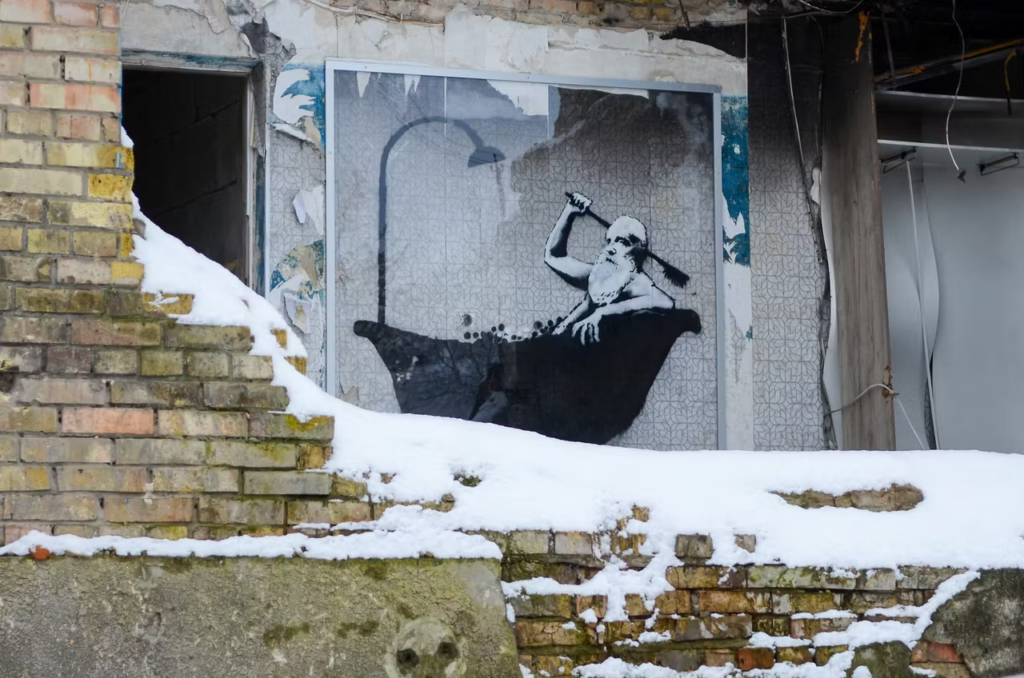
Another important clue comes from Ukraine, where several artworks attributed to Banksy appeared in late 2022 during the war with Russia.
Murals were discovered near Kyiv, including in the town of Horenka. Banksy later confirmed on social media that he was responsible for some of these works.
According to immigration records referenced in the investigation, a man named David Jones, sharing the same birth date as Robin Gunningham, crossed the Polish-Ukrainian border on October 28, 2022.
This timing coincides with the appearance of the murals.
Although the evidence is circumstantial, it strengthens the theory linking Gunningham to the famous street artist.
The Sotheby’s shredding stunt
Banksy is known not only for his politically charged art but also for his spectacular public stunts.
One of the most famous occurred in 2018, during a Sotheby’s auction in London.
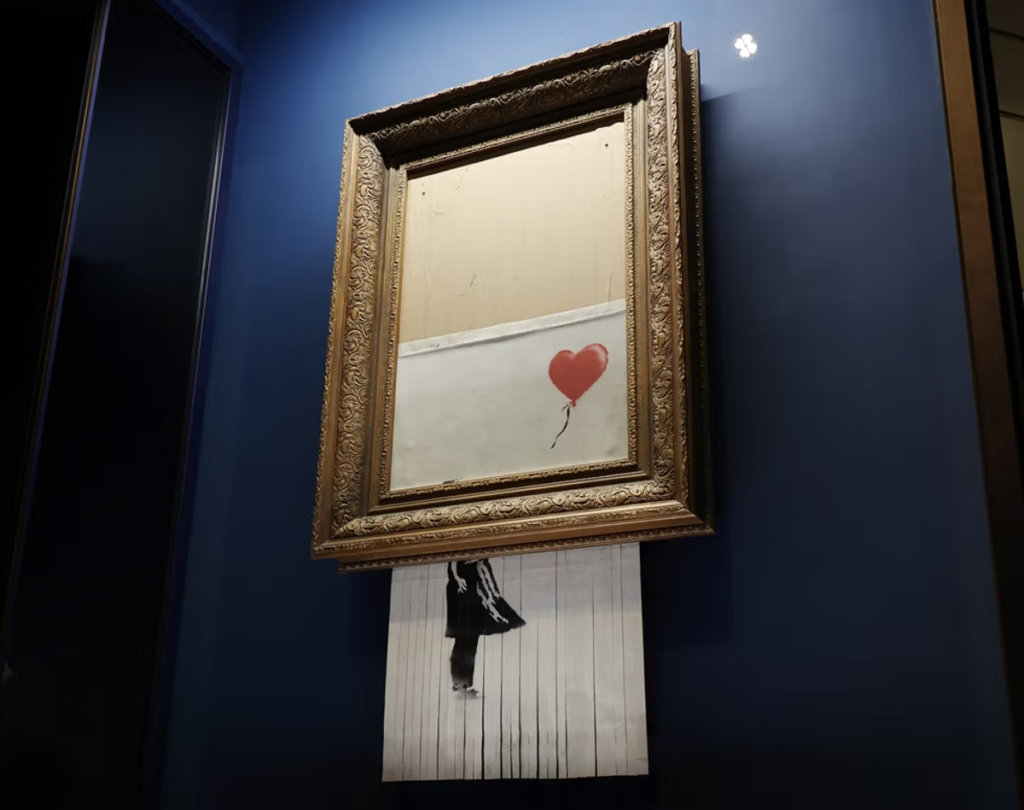
Moments after the artwork Girl With Balloon sold for more than £1 million, the painting began to self-destruct inside its frame, partially shredding itself in front of a stunned audience.
Banksy later revealed that he had secretly installed the mechanism inside the frame years earlier.
According to reports cited in the investigation, a man matching the physical description of Robin Gunningham was allegedly seen in the auction room at the time, wearing glasses that may have contained a hidden camera.
The event demonstrated Banksy’s ability to control media narratives while still preserving his anonymity.
A popular theory about Massive Attack dismissed
For years, another theory dominated speculation about Banksy’s identity.
Some observers believed the artist might actually be Robert Del Naja, the lead singer of the British band Massive Attack. This theory was partly based on the fact that Banksy artworks often appeared in cities shortly before or after Massive Attack concerts.
However, the Reuters investigation concludes that Robert Del Naja is not Banksy, although he may be a close friend or collaborator of the artist.
This finding appears to close one of the most widely discussed theories surrounding the mystery.
Banksy’s lawyer rejects the claims
Despite the detailed investigation, the identity of Banksy has never been officially confirmed.
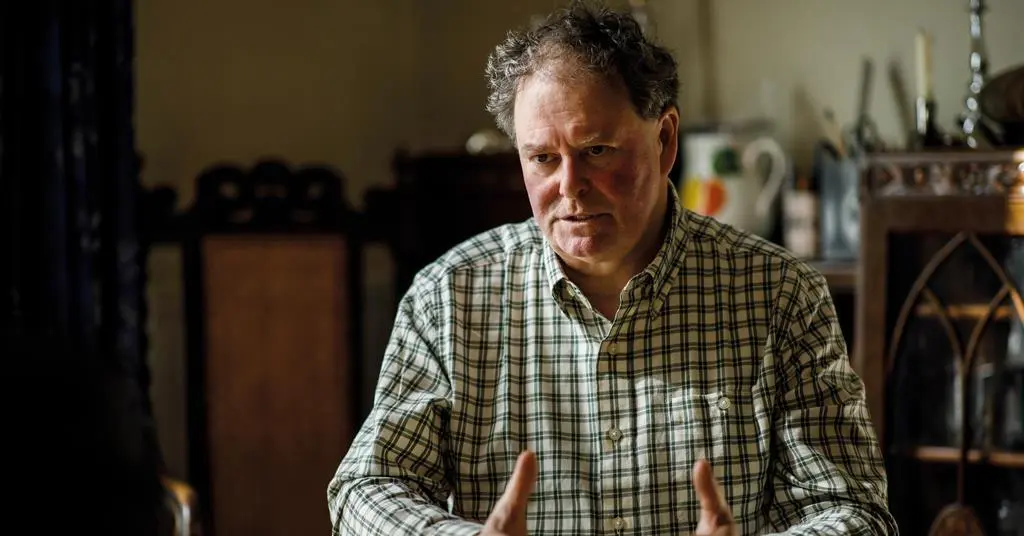
The artist’s lawyer, Mark Stephens, has strongly disputed the claims. He warned that attempts to publicly identify Banksy could put the artist at risk.
Stephens stated that Banksy already faces behavior from certain individuals that can be described as obsessive, threatening, or extremist.
Maintaining anonymity has always been essential for the artist, not only for personal safety but also because many of his works are created illegally in public spaces.
Why Banksy’s anonymity matters
Beyond the curiosity surrounding the mystery, Banksy’s anonymity is deeply connected to his artistic message.
Unlike many contemporary artists who cultivate celebrity status, Banksy has consistently avoided public recognition. By remaining anonymous, he shifted attention away from himself and toward the ideas expressed in his work.
His art frequently addresses major global issues such as:
- war
- social inequality
- capitalism
- surveillance
- migration
- political power
In many ways, Banksy’s invisibility has become part of the artwork itself.
Would revealing Banksy’s identity Change his legacy?
If Banksy’s identity were ever confirmed, it could significantly alter the way his work is perceived.
The mystery surrounding the artist has played a major role in building the legend of Banksy and amplifying the impact of his interventions in public spaces.
However, many experts argue that the power of his images and messages goes far beyond the question of who created them.
Today, Banksy’s works sell for millions of dollars at major auction houses, and his influence on global street art culture is undeniable.
Whether the artist is truly Robin Gunningham or not, Banksy remains one of the most important and provocative figures in contemporary art.
And ironically, even after decades of investigation, the mystery of Banksy continues to captivate the world.
Read more :