


A new Banksy in London, instantly recognised… and instantly accepted
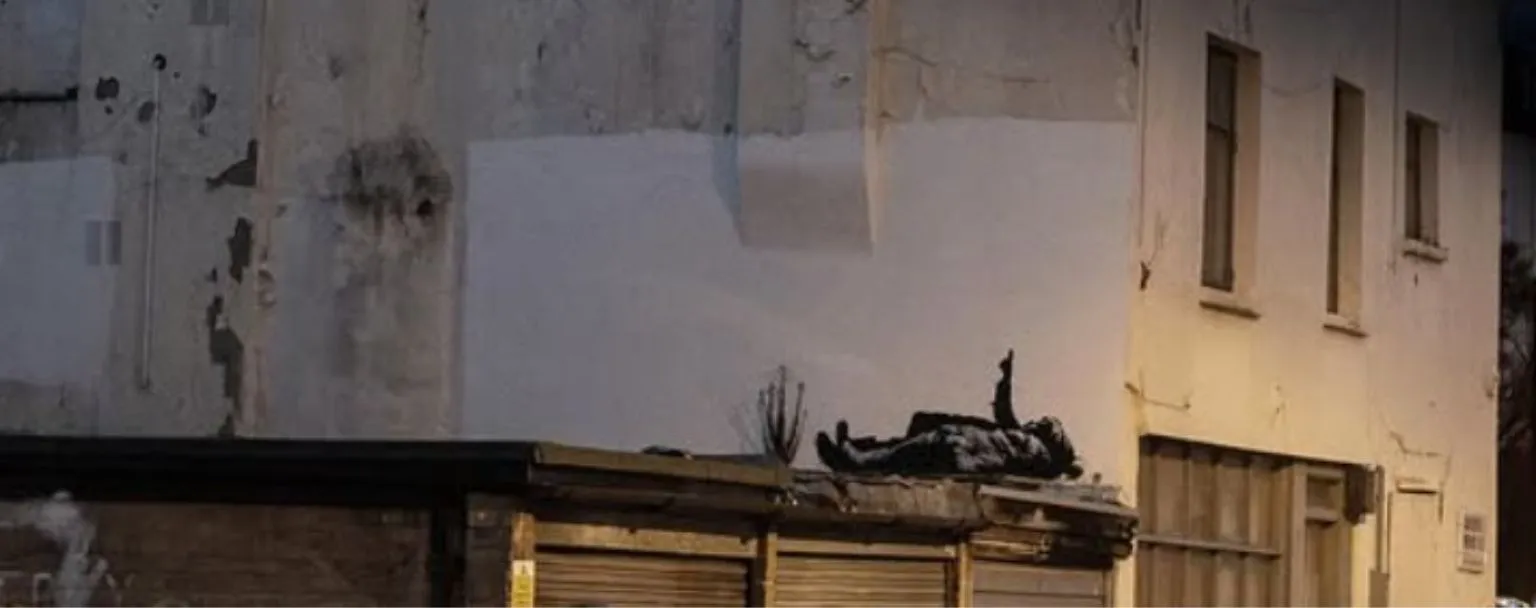
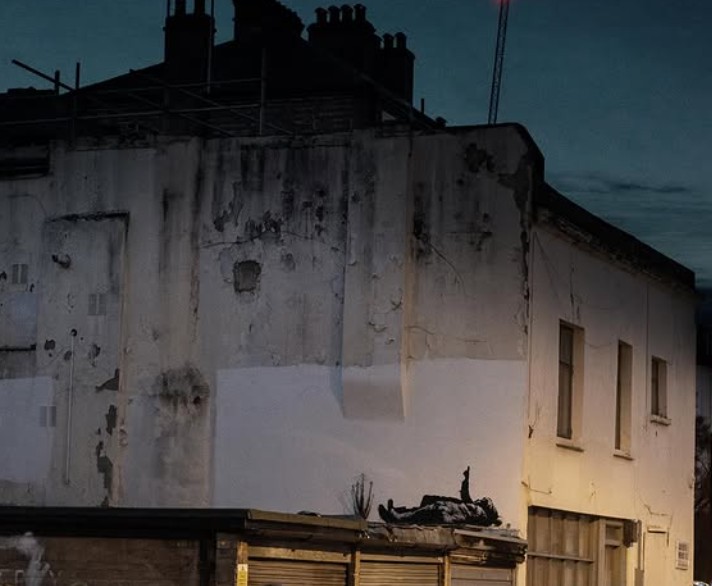
In late December, a new Banksy stencil appeared on a wall in London, in the Bayswater neighbourhood. Two children lie on the roof of a garage, wrapped up in winter coats. One of them raises an arm, pointing towards the sky. A silent image, almost fragile.
Within hours, the work was photographed, shared, commented on. Banksy confirmed authorship on Instagram. The mechanism is perfectly oiled. Yet what stands out this time is not what the artist says — but how easily the image is absorbed.
An image that no longer provokes, but brings people together
Banksy’s street art was long built on friction. His works forced passers-by to take a position, sometimes against their will. Here, nothing of the sort. The stencil does not shock. It does not divide. It soothes.
This image of children looking at the sky functions as a visual consensus. It can be read as a symbol of hope, a metaphor for childhood, a poetic pause in a world saturated with conflict. Everyone finds what they are looking for — without ever being contradicted.
And this is precisely where the major shift of this work lies.
Support independent publishing! Subscribe to ART MAG and receive each issue in advance, in both print and digital format
👉 Subcribe 6 issues / 1 year
Banksy in the age of “acceptable street art”
This Banksy in London does not erupt against the city; it blends into it. The wall is worn, the setting discreet, the scale modest. The work does not interrupt the urban space — it accompanies it.
This shift is revealing. Street art, once perceived as illegal and confrontational, is now expected, valued, sometimes even protected. Banksy is no longer the intruder: he has become a stabilised cultural reference.
Where his stencils were once erased, this one is photographed from every angle. The gesture is no longer risky. It is integrated.
A work designed for circulation as much as for the street
Visually, everything is controlled. The contrast is sharp, the scene readable, the emotion immediate. The work functions just as well on the street as it does on a smartphone screen.
Banksy no longer addresses only London passers-by. He speaks to a global community of digital viewers, accustomed to consuming his images via Instagram, cultural media and news feeds.
The stencil thus becomes a circulating image, designed to be seen, shared and commented on — sometimes more than actually experienced on site.
Ambiguity as a long-term strategy
Nothing in this work is explicitly political. And yet it is anything but neutral. Its ambiguity allows for every possible reading: poetic, social, symbolic. But it also prevents any direct confrontation.
Banksy seems here to favour suggestion over conflict, openness over clear positioning. This strategy allows the work to remain legible to all — but it raises an essential question:
👉 Can critical art still exist when it refuses to clearly name what it critiques?
What this Banksy says about our relationship to the world
Rather than seeing this as a simple weakening, one can read the stencil as a reflection of an era tired of radicality — an era that seeks reassurance more than disruption, accompaniment more than confrontation.
Banksy no longer necessarily precedes his time. He listens to it. He follows its contours.
But this attentive listening turns street art into a soothing mirror, where it was once a tool of disruption.
Support independent publishing! Subscribe to ART MAG and receive each issue in advance, in both print and digital format
👉 Subcribe 6 issues / 1 year
FAQ – What you need to know about the new Banksy in London
Yes. The stencil that appeared in Bayswater was confirmed by Banksy himself through the publication of a photo on his official Instagram account.
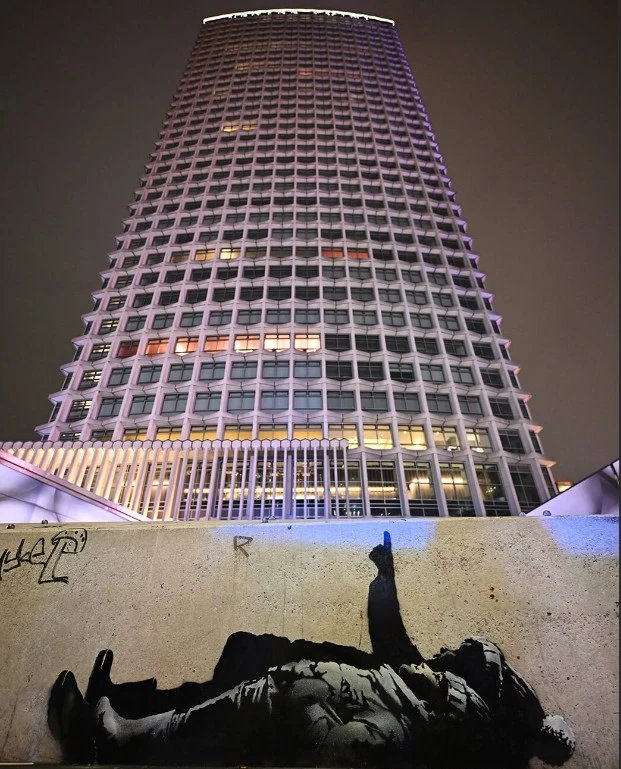
However, a second, very similar stencil that appeared elsewhere in London has not been claimed.
Where exactly is the new Banksy in London?
The work is located in Bayswater, in west London, painted on the side wall of a building above a row of garages.
Another comparable stencil was spotted near the Centre Point tower, in the city centre.
Can the artwork be seen freely?
Yes. Like most of Banksy’s works, the stencil is freely visible in public space. It is not exhibited in a museum and can be seen directly on the street, as long as it has not been erased or protected.
Why does Banksy keep intervening in London?
London is:
– a major centre for street art,
– a highly mediatised city,
– a symbolic space for social and urban issues.
It is an ideal setting for reaching a global audience through a local gesture.
Why does Banksy usually announce his works on Instagram?
Instagram is currently the only official channel used by Banksy to authenticate his works.
Without a post from him, a stencil is generally not considered confirmed.