


Why do some artworks sell for millions while others remain largely unknown? How does an artist’s value emerge? And who ultimately decides what counts in the history of art?
To understand the contemporary art market, it is not enough to focus on spectacular auction results or record-breaking sales. Behind these figures lies a complex ecosystem where economic dynamics, social networks, cultural institutions, and collectors’ strategies intersect.
The sociology and economics of the art market provide essential tools for understanding these often invisible mechanisms that shape an artist’s career and determine the value of a work of art.
The Art Market as a Structured Ecosystem
The global art market functions as a multi-layered ecosystem composed of distinct but interconnected segments.
At the top sits the market for blue-chip artworks, dominated by major international galleries and leading auction houses. Works circulating within this segment are typically created by established artists whose reputations are already secured through museum exhibitions, institutional collections, and long-standing gallery representation.
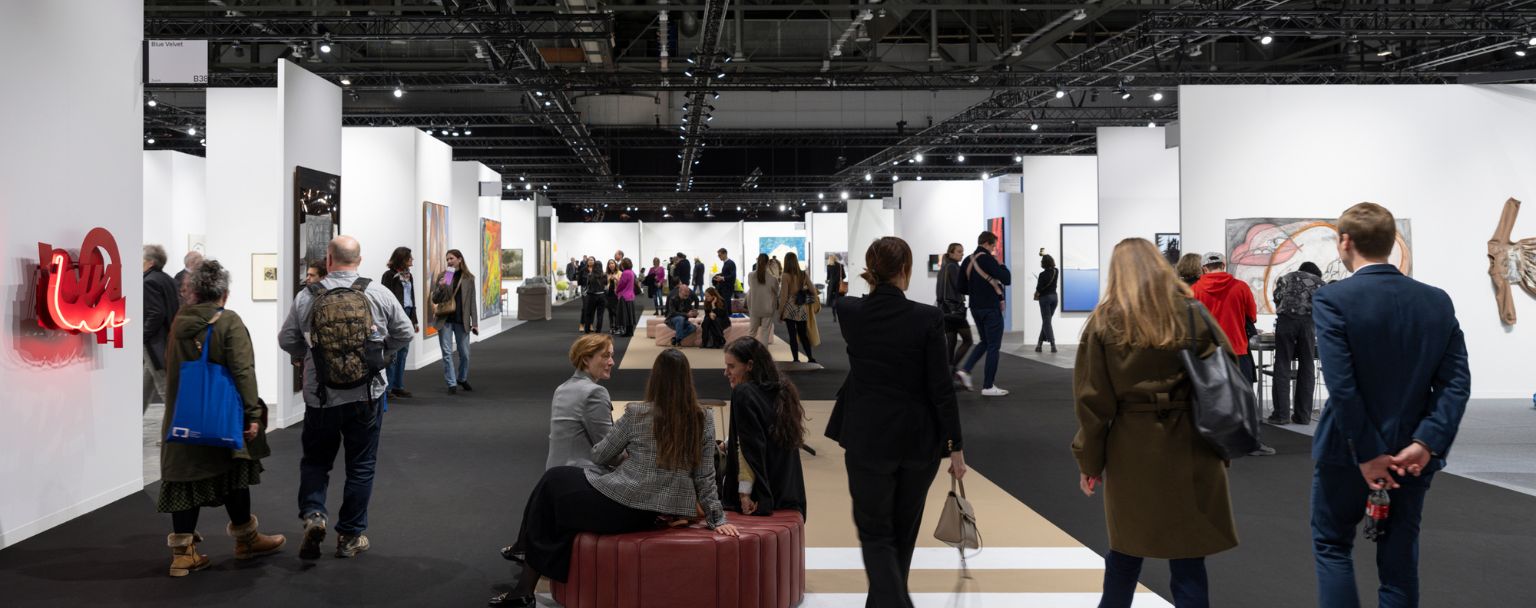
A second level consists of the network of established galleries and international art fairs. This segment plays a crucial role in shaping the careers of living artists. While prices are generally more accessible than in the blue-chip market, entry into this sphere remains highly selective and largely governed by professional networks.
Finally, the emerging market includes early-career artists, experimental galleries, and increasingly digital platforms. Although financial transactions at this level are often smaller, this segment functions as the laboratory of the art world, where new artistic practices and future market leaders often emerge.
This layered structure explains why high-profile auction results represent only a fraction of the real economic activity within the art world.
Who Really Creates an Artist’s Value ?
Contrary to common belief, the value of an artwork is not determined solely by its aesthetic quality.
Instead, value emerges through a complex network of actors who participate in the process of artistic legitimization :
- galleries
- collectors
- curators
- art critics
- cultural institutions
- international art fairs.
When an artist receives support from several of these actors simultaneously, their visibility increases significantly and their market value can evolve rapidly.
From a sociological perspective, artistic recognition is rarely the result of a single factor. Rather, it is produced through collective processes in which reputation, professional networks, and cultural context all play decisive roles.
The Central Role of Collectors
Collectors occupy a particularly influential position within the art market.
Their role extends far beyond the act of purchasing. By consistently acquiring works from specific artists, lending them to exhibitions, or supporting museums and cultural institutions, collectors actively participate in shaping artistic reputations.
Throughout the twentieth century, certain collectors played a decisive role in the recognition of major artistic movements. The American collector Peggy Guggenheim, for example, was instrumental in promoting the European avant-garde and supporting the emergence of Abstract Expressionism in the United States.
Similarly, the writer and collector Gertrude Stein helped shape the early recognition of artists such as Pablo Picasso and Henri Matisse in the Parisian avant-garde of the early twentieth century.
These examples illustrate how collectors can become key actors in the construction of art history itself.
Museums and Institutions : The Power of Cultural Legitimacy
Cultural institutions play an equally decisive role in the structure of the art market.
When an artist is exhibited in a major museum or included in a public collection, their artistic legitimacy is significantly reinforced. Institutional acquisitions often stabilize the long-term value of an artist’s work and contribute to the consolidation of their reputation.
The art market therefore operates simultaneously as an economic system and a symbolic system in which institutional recognition directly influences market valuation.
Transformations in the Contemporary Art Market
Over the past two decades, the global art market has undergone significant transformations.
Several factors have contributed to these changes:
- the rapid growth of international collectors
- the globalization of the art market
- the expansion of digital platforms
- the emergence of new generations of buyers.
Social media and online platforms now allow certain artists to reach global audiences without relying exclusively on traditional gatekeepers such as galleries or institutions. As a result, the structure of the art market continues to evolve, opening new opportunities while also creating new forms of competition.
These transformations make the sociological and economic analysis of the art market more relevant than ever.
Understanding the Market to Better Understand Art
Studying the art market does not reduce art to financial speculation. On the contrary, it provides insight into the social, cultural, and economic conditions in which artworks are created, circulated, and recognized.
Artists, collectors, galleries, curators, and institutions together form a complex ecosystem where artistic value is constantly negotiated and redefined.
Understanding these dynamics ultimately allows us to better grasp how contemporary art history itself is being written.