

Art Paris 2026: A Major Contemporary Art Fair at the Grand Palais
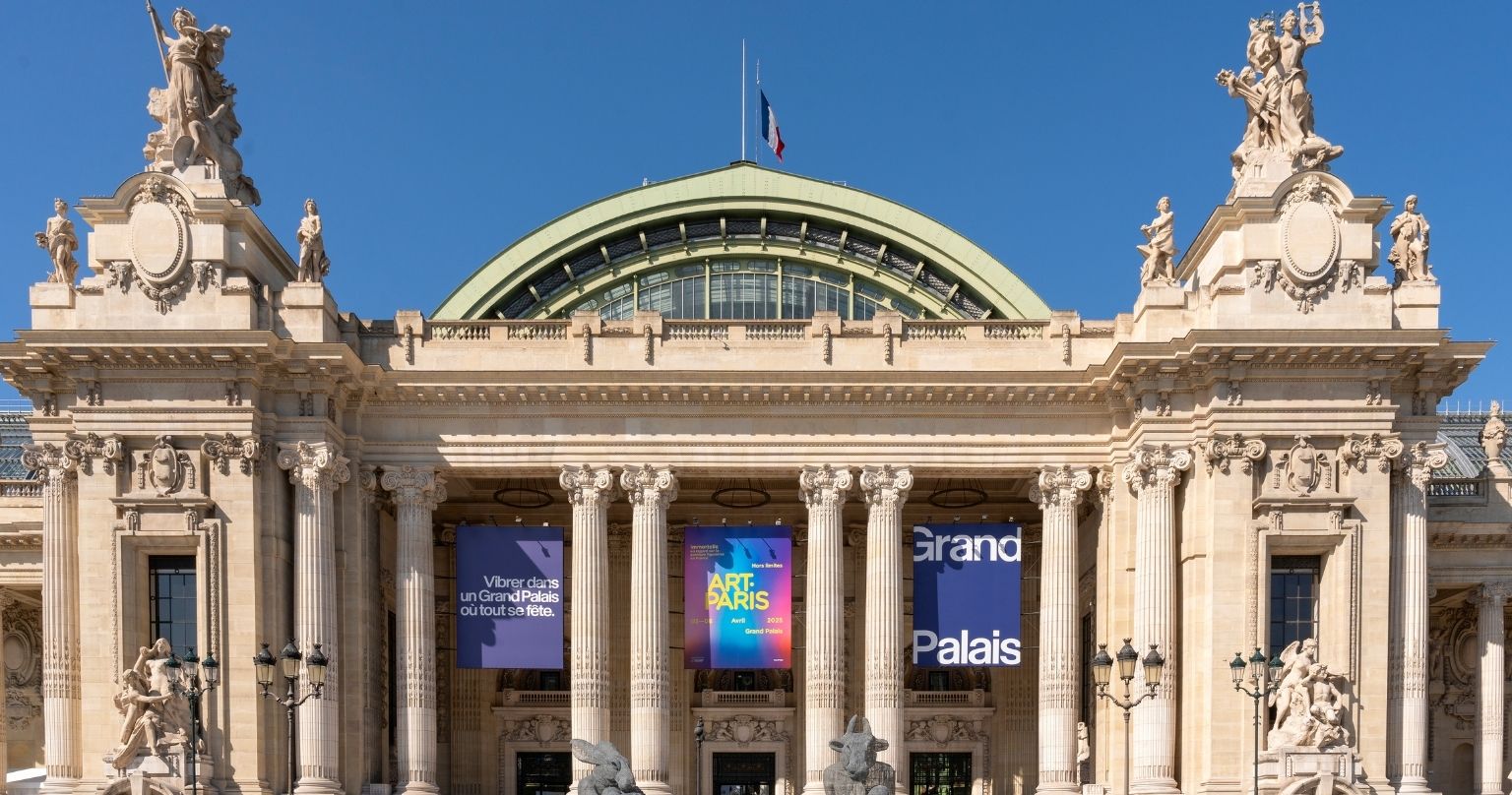
Art Paris 2026, held from April 9 to 12, 2026 at the Grand Palais, confirms its role in the contemporary art market. With nearly 170 French and international galleries, the fair offers a strategic reading of market trends, balancing local anchoring with global openness.
In an increasingly homogenized landscape, Art Paris asserts a distinctive position among European art fairs. Since its return to the Grand Palais nave, it appears to have found a spatial and strategic equilibrium, redefining its place alongside major international fairs such as Art Basel or Frieze.
The 2026 edition extends this dynamic. Largely French yet open to international participation, the selection reflects a deliberate choice: to resist the standardization of the global market while maintaining strong international appeal.
Language as Instability in Contemporary Art
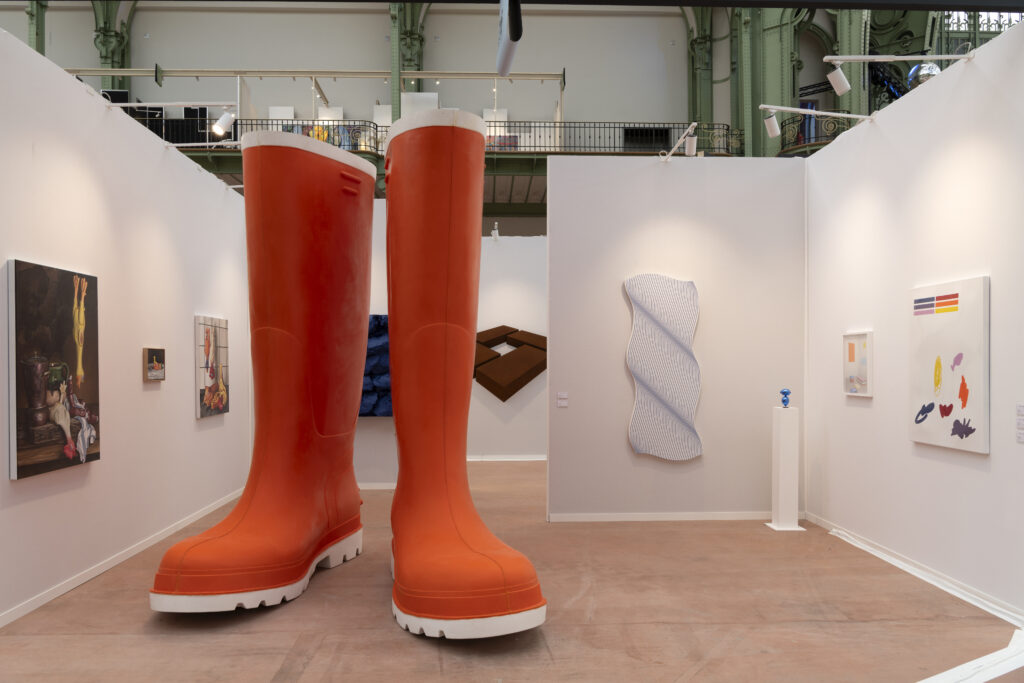
The curated section Babel – Art and Language in France goes beyond questioning the role of text in art. It highlights a broader condition: a world saturated with signs, where language no longer guarantees clarity but instead generates instability.
The artworks on display do not aim to illustrate discourse. Rather, they test its limits, fragment its structures, and shift its uses. Text becomes surface, material—even obstacle. Meanwhile, the image, far from stabilizing meaning, contributes to its dispersion.
In this context, the legacy of conceptual art is no longer a model but a starting point. What is at stake is less a critique of language than an exploration of its excess.
What Are the Contemporary Art Market Trends at Art Paris 2026?
Beyond the diversity of participating galleries, Art Paris 2026 highlights several key trends in the contemporary art market.
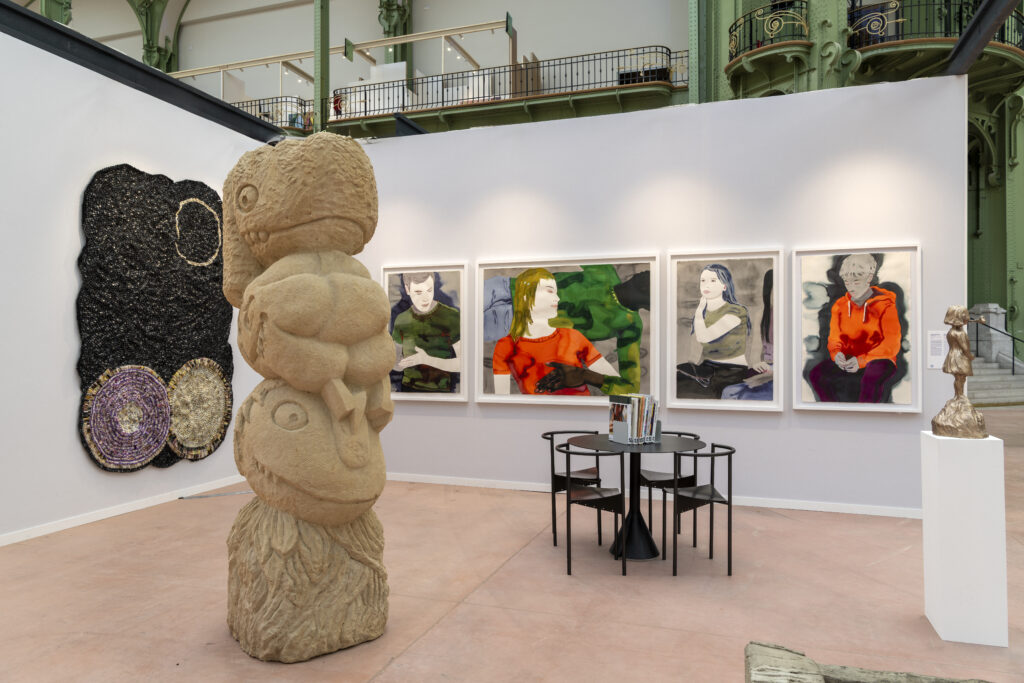
The fair reflects a transitional moment: the market appears more cautious, yet more structured. Galleries favor coherent proposals, often centered on established artists or those in a consolidation phase, while still maintaining openness toward emerging practices.
This tension between stability and exploration is one of the defining features of the 2026 edition.
Art Paris 2026: Language as a Contemporary Artistic Trend
The “Babel – Art and Language in France” section illustrates a significant evolution in contemporary practices. Language is no longer simply a tool, but an unstable material subject to fragmentation and reconfiguration.
In a context saturated with signs, artworks no longer aim to produce fixed meaning. Instead, they test its limits and reveal its tensions. Text and image jointly contribute to a dispersion of meaning.
This approach extends the legacy of conceptual practices while transforming it: rather than critiquing language, it explores its excess.
Key Themes at Art Paris 2026: Memory, Repair, and Contemporary Narratives
In contrast to this instability, another major axis emerges: that of repair.
The works presented within this framework engage with time, memory, and the fractures shaping contemporary narratives. Repair does not mean returning to an original state; rather, it involves working with alteration and making its traces visible.
This orientation reflects a broader shift in the contemporary art market, where issues related to care, transmission, and individual narratives are gaining increasing importance.
Art Paris 2026 and the Art Market: Diversity of Galleries and Economic Strategies
Art Paris 2026 does not aim to create a spectacle of scale. Instead, it constructs a controlled space of circulation where galleries, artworks, and discourses coexist without saturation.
The “Promesses” sector, dedicated to young galleries, plays a key role in this balance. It is not merely a showcase for emerging talent, but a space where new forms of visibility and economic models are tested.
In a market marked by caution—already visible in 2025—this diversity appears as a central strategic asset.
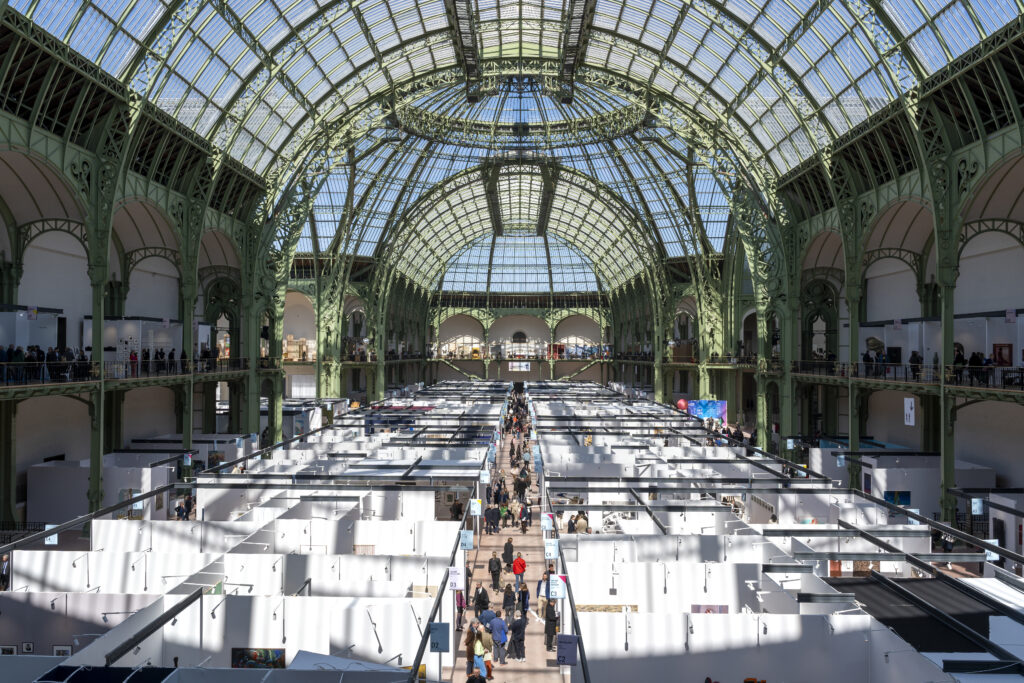
The Role of the Grand Palais in Shaping Art Paris 2026
The return to the Grand Palais goes beyond logistics. It is part of a broader reconfiguration of the Parisian art scene.
The architecture of the nave enables a fluid circulation of both viewers and artworks, avoiding the saturation effect often seen in large international fairs. It allows works to be perceived in continuity rather than juxtaposition.
Art Paris 2026 in Relation to Major International Art Fairs
Within the global landscape, Art Paris occupies an intermediate position. Less spectacular than some international fairs, it favors a more analytical and grounded approach.
This positioning offers an alternative to dominant models, often characterized by strong standardization. It also allows the fair to maintain a distinct identity centered on the French scene while remaining open internationally.
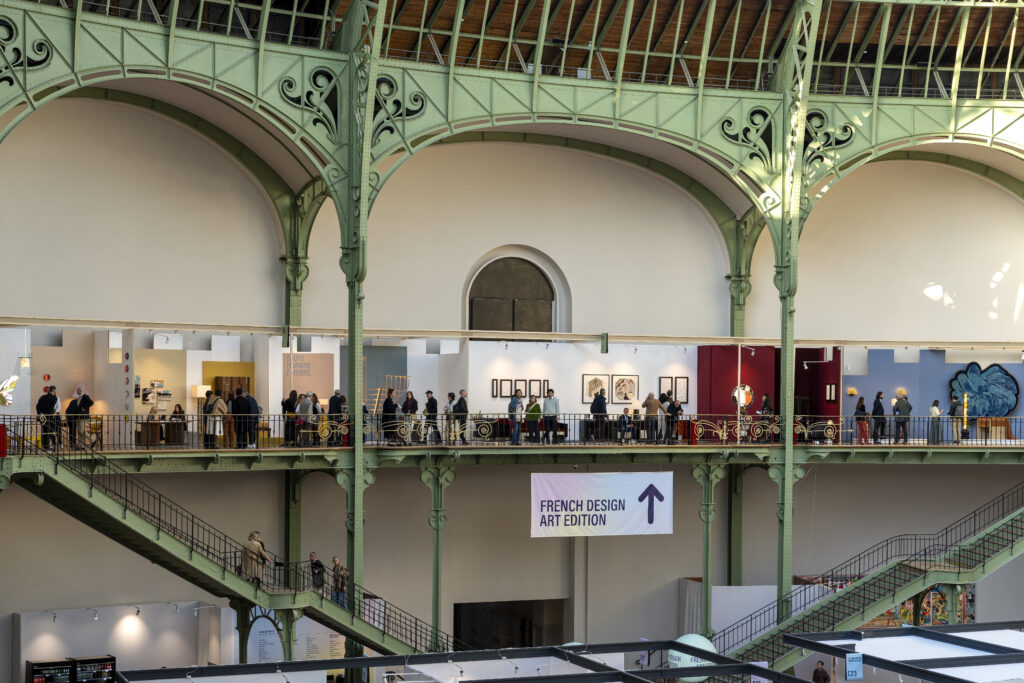
Art Paris 2026 : Key Contemporary Art Market Trends to Watch
Several key elements emerge from this edition:
- a growing presence of French galleries
- a more cautious yet structured market
- increased attention to narratives and memory
- diversification of artistic practices
- a strengthened role for emerging galleries
These trends confirm a shift toward greater nuance and complexity within the art market.
Should You Follow Art Paris 2026?
Art Paris 2026 stands as a relevant observatory of the contemporary art market. Without directly competing with major global fairs, it offers a more nuanced reading of current dynamics.
Between explorations of language, attention to traces, and diversity of practices, the fair suggests a different way of engaging with the present.
In a landscape dominated by acceleration and standardization, this attention to nuance may well be its most distinctive feature.
🔗 Useful Links
- Art Paris 2026 – Official information
- Practical information and program
FAQ ART PARIS 2026
Art Paris 2026 takes place from April 9 to April 12, 2026, at the Grand Palais in Paris. The fair brings together French and international galleries focused on modern and contemporary art.
The fair is held at the Grand Palais, an iconic venue in the Parisian art scene. Its architecture allows for a fluid circulation between booths and enhances the presentation of artworks.
Art Paris 2026 features around 170 galleries. The selection reflects both the French art scene and international participation.
The 2026 edition highlights several key trends in the contemporary art market:
a more cautious market environment
increased focus on narratives and memory
diversification of artistic practices
growing visibility of emerging galleries
Art Paris stands out as a major European art fair thanks to its distinctive positioning. It offers a balance between accessibility and curatorial rigor, while highlighting the French contemporary art scene.
Art Paris occupies an intermediate position between major global art fairs and more local events. It serves as a relevant observatory of contemporary art market trends, particularly in Europe.
Yes, Art Paris is a commercial art fair where collectors can purchase artworks directly from participating galleries. It attracts both new buyers and established collectors.
Art Paris showcases a wide range of artists, from established figures to emerging talents. The section dedicated to young galleries is particularly relevant for discovering new voices in contemporary art.