


Cathedrals Under the Scanner’s EyeHow 3D Digitization Is Transforming the Way We See Gothic Architecture
Thanks to 3D digitization, French cathedrals are now revealing information invisible to the naked eye. From Amiens to Notre-Dame de Paris, these technologies are reshaping our understanding of heritage and uncovering an architecture that is more fragile, more dynamic—and more human—than previously imagined.
Monuments Less Immutable Than They Appear
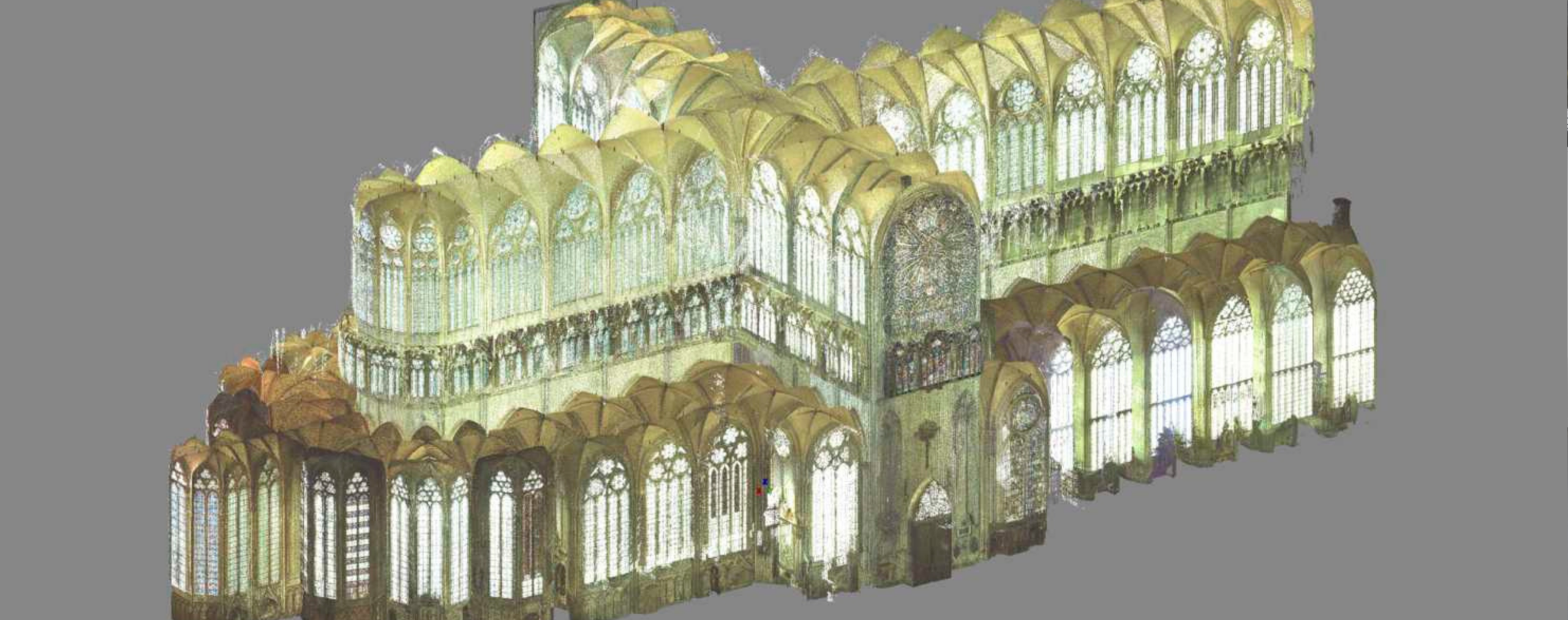
They embody permanence, verticality, and the long span of time. Yet Gothic cathedrals are far from static. For some fifteen years, 3D digitization of heritage sites has profoundly renewed the way they are observed. Laser scanning and photogrammetry now make it possible to measure these buildings with millimetric precision, revealing their structural reality: thrusts, deformations, and gradual imbalances.
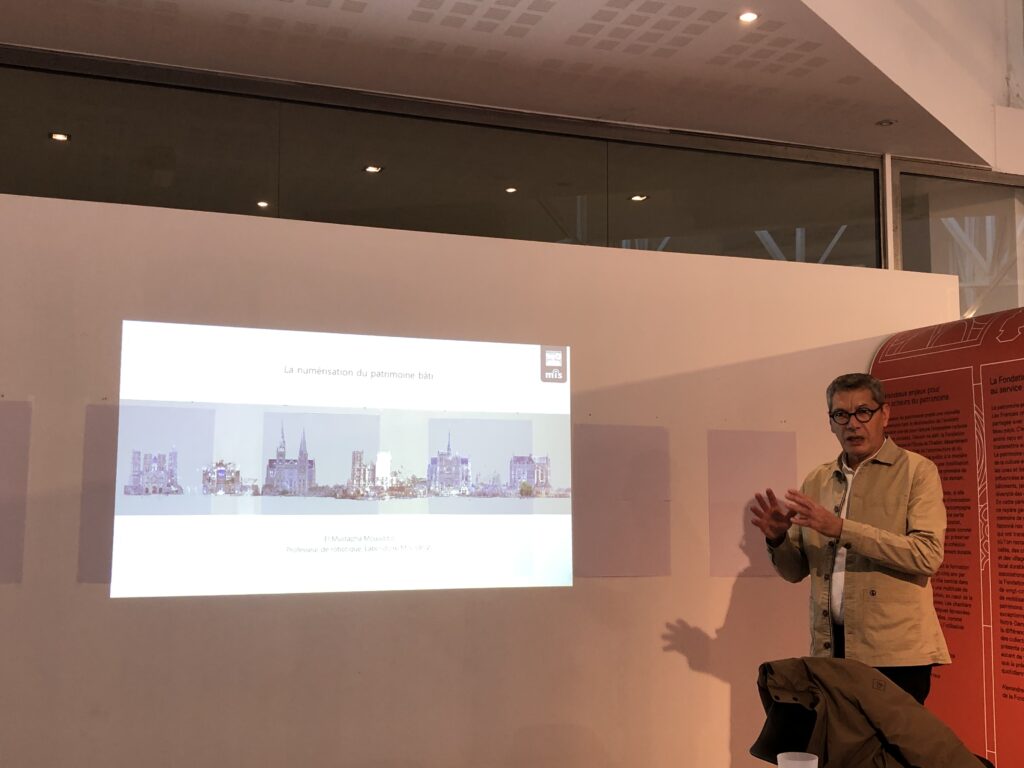
It was from this observation that the e-Cathedral program was born, led by Professor El Mustapha Mouaddib, lecturer and researcher at the University of Picardie Jules Verne, within the MIS laboratory (Modelling, Information and Systems). Launched in 2010, this long-term research project has resulted in the complete digitization of several major French cathedrals and other monuments abroad.
Support independent publishing! Subscribe to ART MAG and receive each issue in advance, in both print and digital format
👉 Subcribe 6 issues / 1 year
👉 Offer ART MAG
Seeing What the Visitor Cannot See
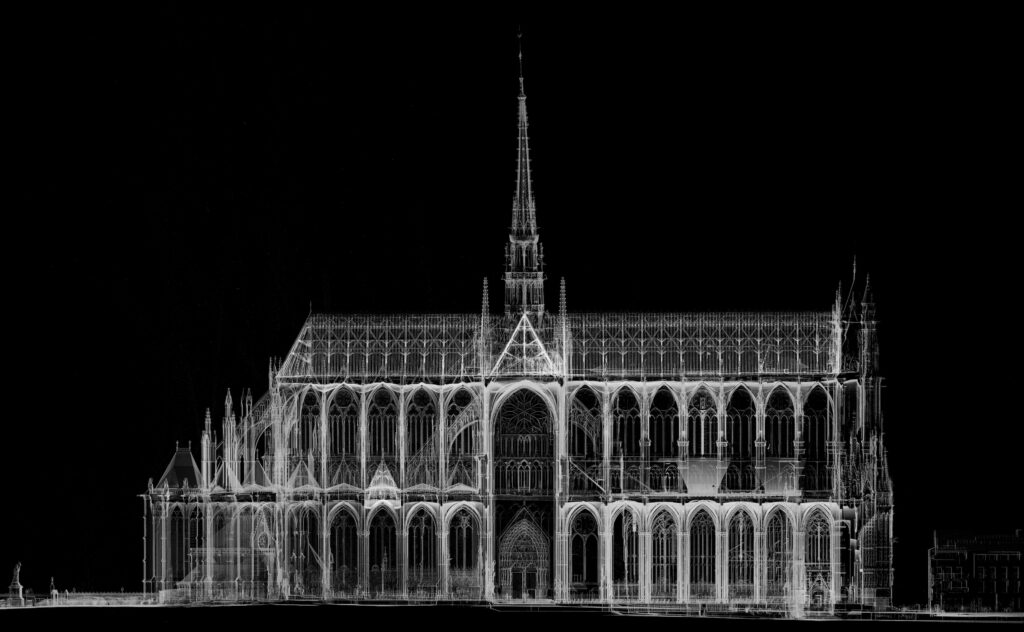
Unlike virtual reconstructions, 3D digitization is based on exact measurement of reality. The monument is captured in the form of billions of points, creating a faithful digital twin of the building at a given moment in time. Facades, interiors, attics, stairways hidden within the masonry, inaccessible roof structures—everything is recorded.
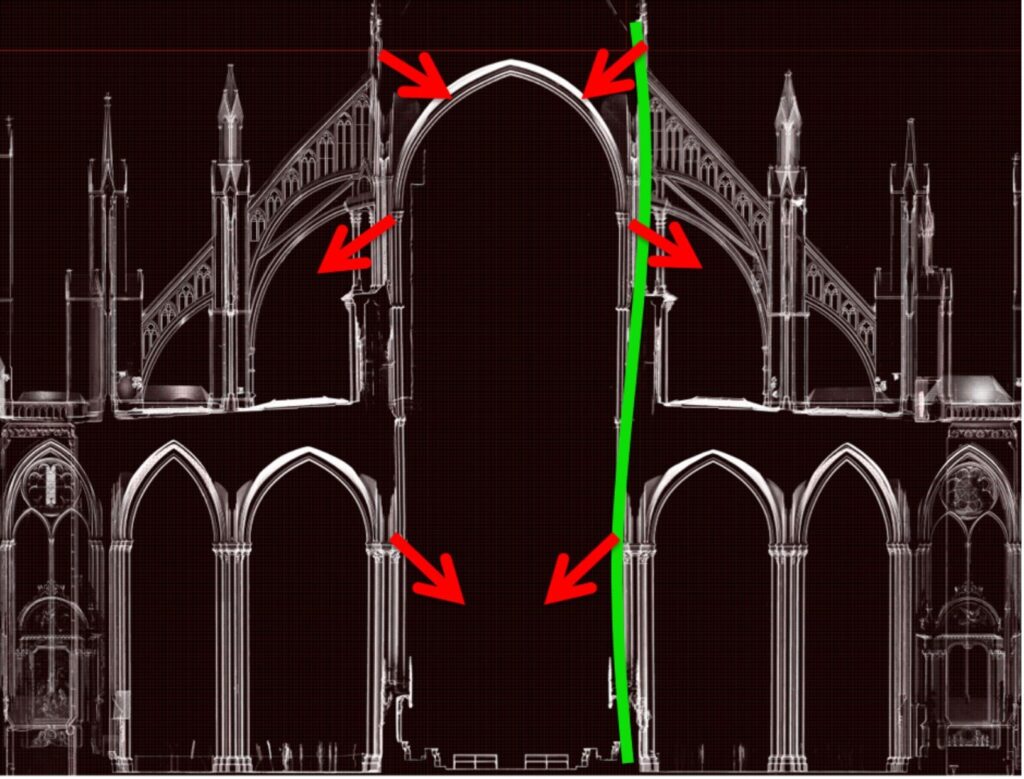
These data reveal phenomena invisible during a visit. In Amiens, certain pillars deviate by more than 20 centimetres from the vertical. Nothing exceptional for a Gothic cathedral, but an essential piece of information for understanding its structural behaviour and construction history.
When Geometry Becomes a Historical Narrative
The contribution of 3D goes far beyond conservation. The digital models produced within the e-Cathedral project make it possible to scientifically verify hypotheses long debated by architectural historians: regulating lines, proportions, medieval units of measurement.
Amiens Cathedral stands out for its remarkable geometric regularity, a sign of a rigorously applied master plan. At Notre-Dame de Paris, by contrast, variations in dimensions and misalignments tell the story of a longer, more fragmented construction process, shaped by urban and political constraints. Digital data do not freeze history; they reveal its successive adjustments.
Notre-Dame de Paris: Memory Before and After the Fire
The 2019 fire gave these surveys decisive importance. The 3D models created before the disaster became an irreplaceable scientific archive. Those produced afterward made it possible to precisely measure the deformations caused by the fire and the collapse of the roof structure.
Overlaying the “before” and “after” surveys guided restoration choices, particularly in assessing the condition of the vaults and weakened structures. The 3D digitization of Notre-Dame de Paris thus emerged as a major conservation tool—and as a safeguard memory in the face of the possible loss of the built fabric.
From Raw Data to Cultural Mediation
One essential challenge remains: making these data intelligible to the public. A point cloud, however precise, can seem abstract. The e-Cathedral project therefore included extensive mediation work: virtual tours, urban exhibitions, and interactive interfaces.
These tools offer unprecedented viewpoints—passing through a facade, observing the interior of a pillar, understanding the logic of flying buttresses—without ever replacing the physical experience of the monument. 3D does not substitute for stone; it offers a complementary, analytical, and deeply contemporary perspective.
Heritage Projected into the Future
In the face of aging materials, climate risks, and disasters, the digital preservation of heritage now appears as a necessity. It does not replace architecture, but extends its existence in other forms: scientific, educational, and cultural.
Having entered the era of the scanner, cathedrals lose none of their symbolic power. They gain a new depth: that of a heritage made legible in all its complexity, at the intersection of art, science, and collective memory.
Support independent publishing! Subscribe to ART MAG and receive each issue in advance, in both print and digital format
👉 Subcribe 6 issues / 1 year
👉 Offer ART MAG