


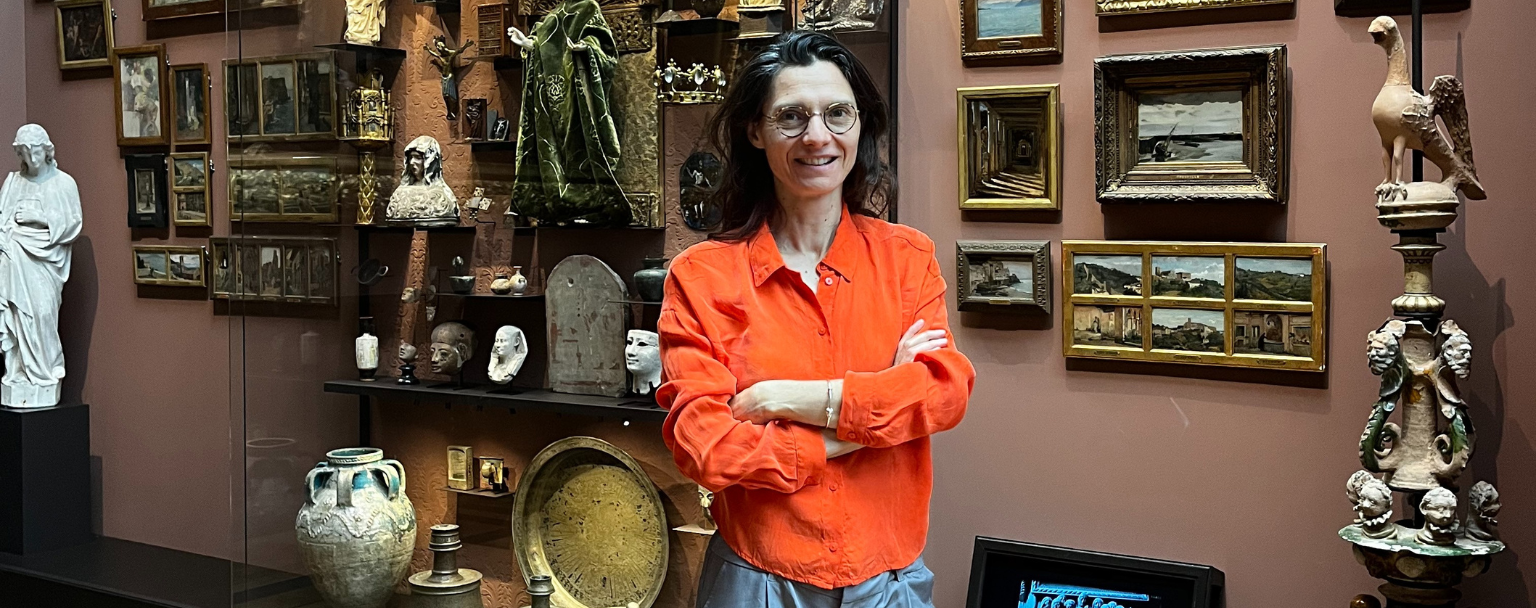
Artist and researcher Lise Terdjman brings Louise Maignan-Larivière back to life through a journey combining drawing, ceramics, textiles, video and archives — on view from 26 August 2025 to 4 January 2026 at the Musée de Picardie in Amiens.
Why “Très chère Louise” ?
“Très chère Louise, here is the dream and the fiction of your exhibition… Wherever there is a gap, there is always the possibility of fiction.” From the outset, the artist states her method: to fill the blanks of history with a poetic and critical gesture, so that Louise appears at the heart of the museum rather than at its margins.
An embroidered casket as the catalyst
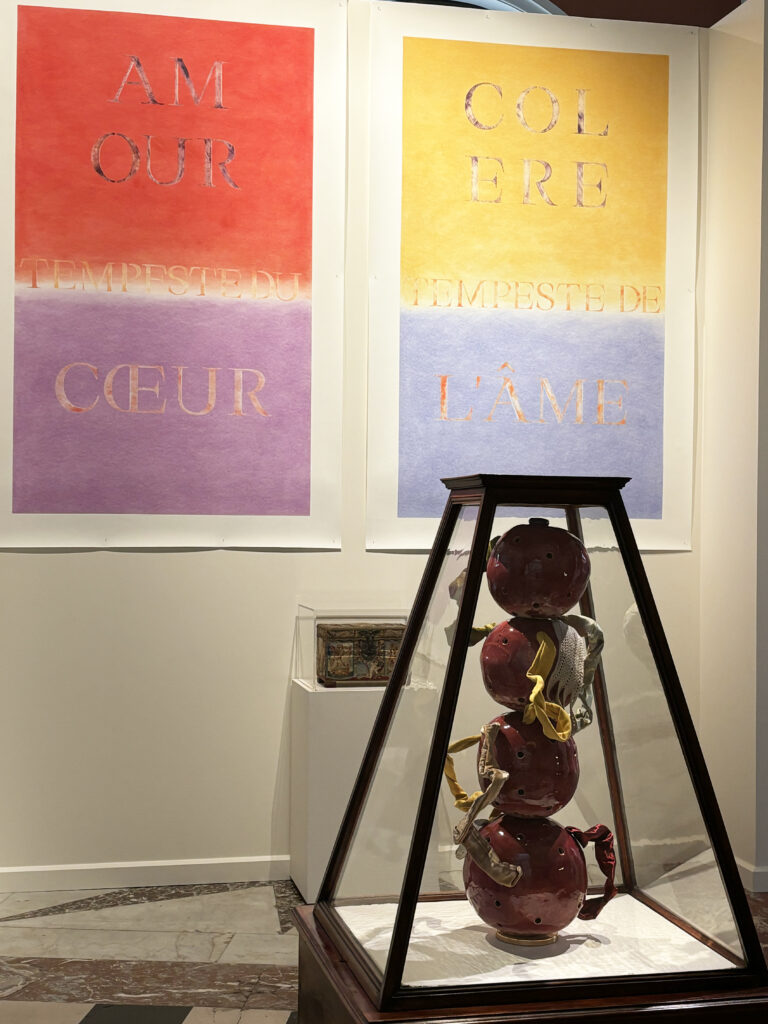
It all starts with a small embroidered casket, delicate and vividly colored, attributed to Louise Maignan-Larivière and shown at the Salon des artistes français in 1902. It bears the words: “Tempeste, bourasque, tourmente, par vertus sont faites clémentes.” This intimate fragment, turned emotional compass, inspires the large drawings AM-OUR and COL-ÈRE and nourishes the entire project.
A three-room itinerary, around thirty works
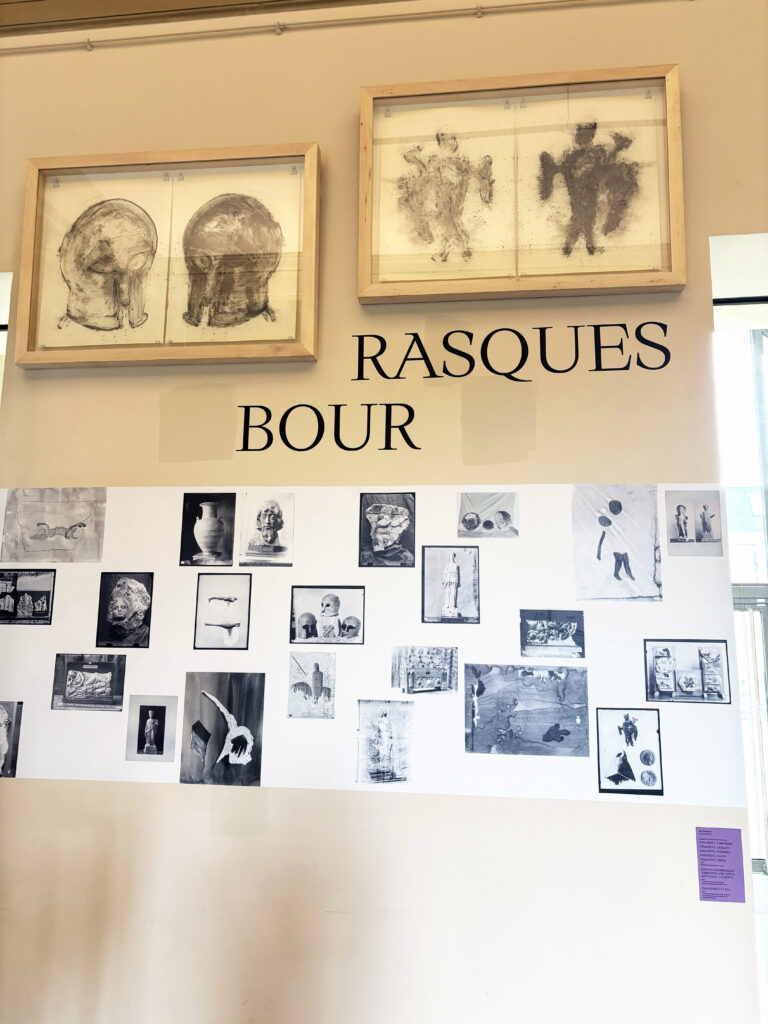
Drawing—“at the core of the practice,” as the artist puts it—structures an installation pathway across three rooms, with around thirty works in dialogue. The “intense, powdery” pastels—imagined echoes of Louise’s lost works—are joined by a video animating drawings and photographs, a sound piece, an image wall at the entrance, and a ceramic-and-textile sculpture, L’Énigme de Louise, suspended inside a pyramidal display case. These are “open” forms that make room for shadow, absence, and fragment.
Repairing the museum narrative
Beyond homage, the exhibition offers a critical look at museography. In the 1980s, the Maignan-Larivière collections were broken up according to an encyclopedic logic (classified by periods and disciplines), erasing the original harmony conceived by Louise. Terdjman’s project reassembles the objects “according to sensitive affinities,” breathing new life into the bequest within the museum space.
Louise as a full presence
Lise erdjman wants Louise to become familiar, “just like Albert Maignan”—not a frozen heroine, but an active presence whose spatial thinking (hanging, colors, display cases) shaped the gallery at the Musée de Picardie alongside Albert Roze, then the museum’s director.
Who is Lise Terdjman?
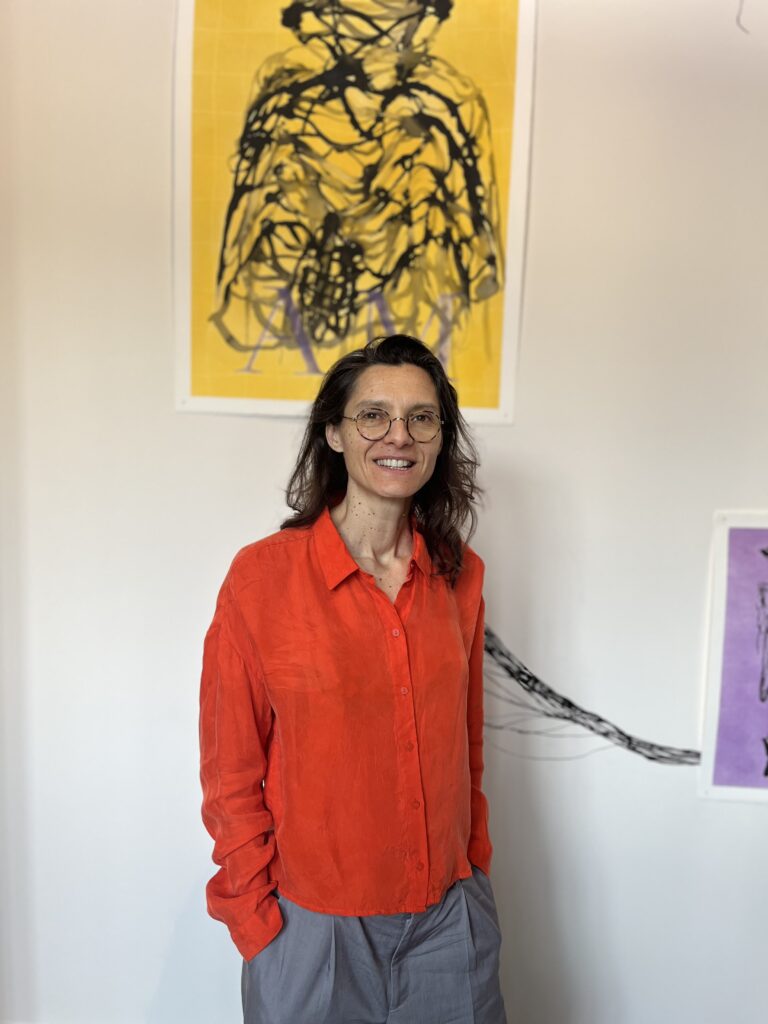
A visual artist trained at the Beaux-Arts de Paris and the École des Arts Décoratifs, Lise Terdjman works across disciplines (drawing, ceramics, photography, installation, archives) to explore forgotten narratives and erased female figures. She exhibits in France and internationally (Centre Pompidou, Louvre, Carlsberg Foundation, POUSH) and teaches at ESAD Reims.
Practical information
- Dates: 26 August 2025 → 4 January 2026
- Venue: Musée de Picardie, Amiens
FAQ
Who is Louise Maignan-Larivière?
Wife of Albert Maignan, embroiderer and draughtswoman, she played a major role in establishing the Maignan bequest and arranging the Musée de Picardie gallery (hanging, colors, display cases).
Why the title “Très chère Louise”?
The title comes from a posthumous letter addressed by Lise Terdjman to Louise, embracing the share of fiction needed to fill history’s silences.
What is the source object of the exhibition?
An embroidered casket attributed to Louise, presented in 1902 at the Salon des artistes français, whose proverb about emotions guided the creation.
What will visitors actually see?
A three-room itinerary with around thirty pieces: large drawings, a suspended ceramic piece, video, a sound work, and an image wall—open forms that leave space for the fragment.