


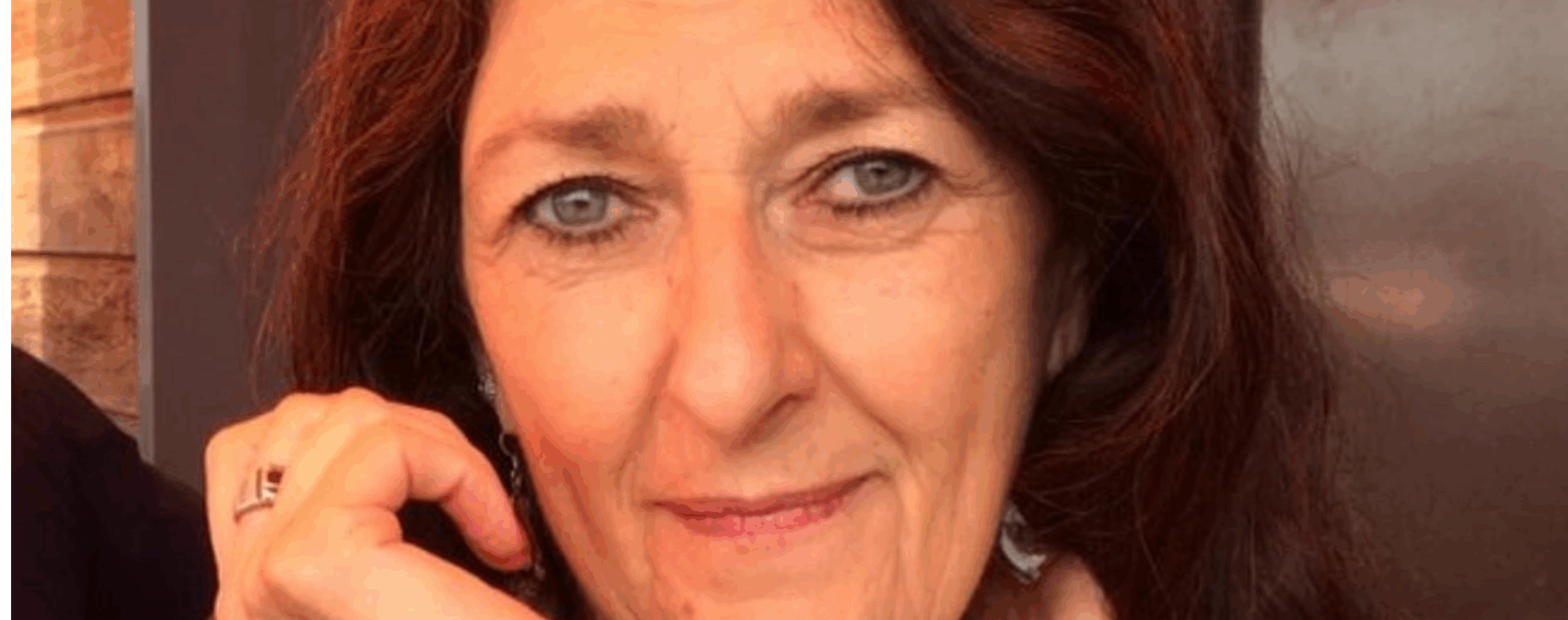
A painter who reveals traces and the invisible
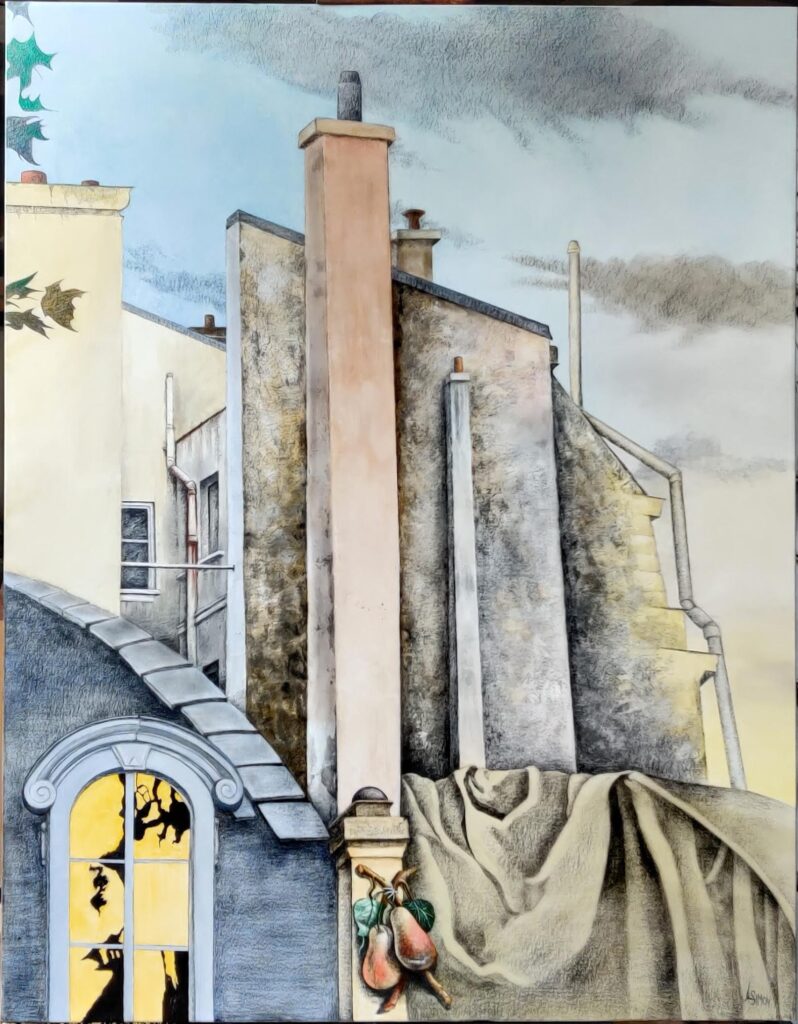
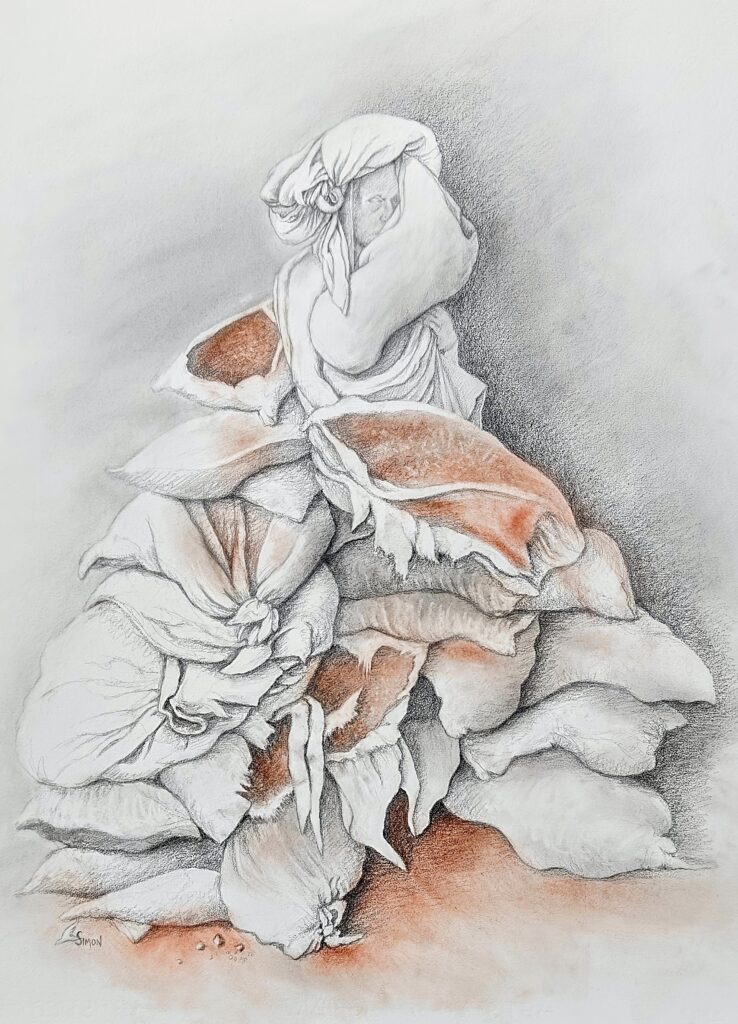
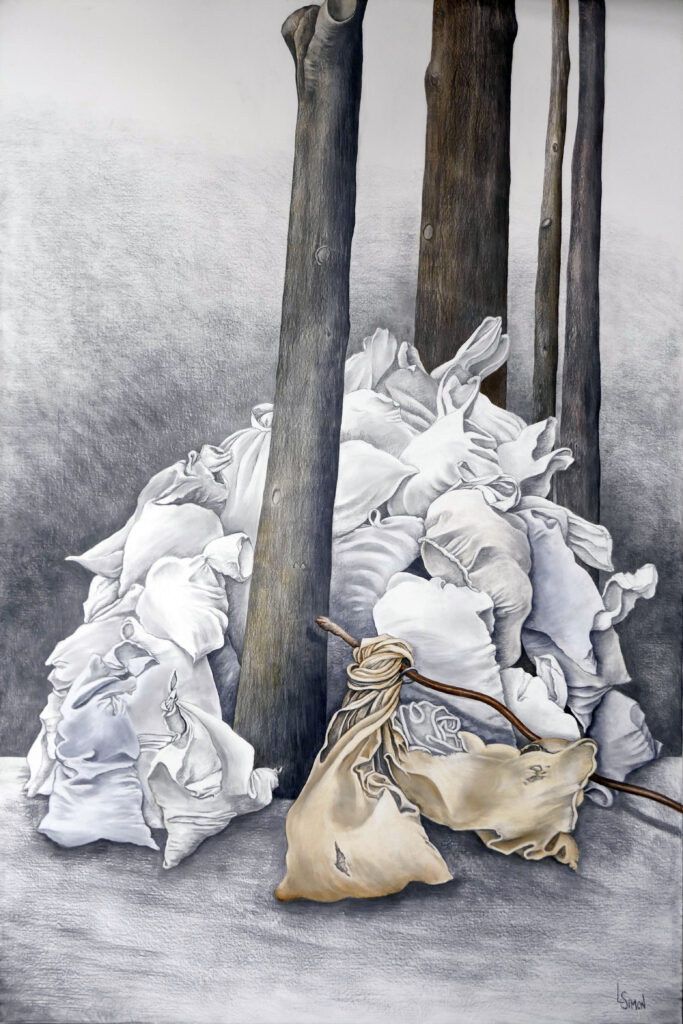
For Laurence Simon, it is not flamboyant subjects that capture the eye, but forgotten traces: knotted bags, worn scaffolding drapes, bunkers, haystacks, or rusty drums.
Her patient, sensual painting embodies a form of resistance, transforming fragments of everyday life into timeless poetry—always without depicting the human figure.
A vocation born very early
“I said I wanted to be a painter when I was five years old.”
This childhood confession illustrates Laurence Simon’s determination. Coming from a lineage of artists dating back to the 17th century, her vision was shaped by the Fine Arts, by Rome, the former Yugoslavia, Normandy, and more recently Mexico.
A painter against the grain, she rejects spectacle in favor of detail and fragments.
The beauty of the discarded
Laurence Simon’s universe often begins with fascination:
- the shine of metal,
- the strange mechanism of garbage wheels,
- the straw of hay bales,
- forgotten bags and walls eroded by time.
These discarded, ordinary objects become universal archetypes in her work: a drum turns into a still life, a drape into an allegory, a haystack into an installation.
She does not reproduce—she reveals.
An art infused with ruins and memory
Her work draws from the ancient ruins of Rome, the war-scarred villages of Montenegro, Norman silos, centenary olive trees, and dreamlike Mexican landscapes.
Abandoned objects turn into pictorial poetry, while landscapes devastated by war carry a universal memory.
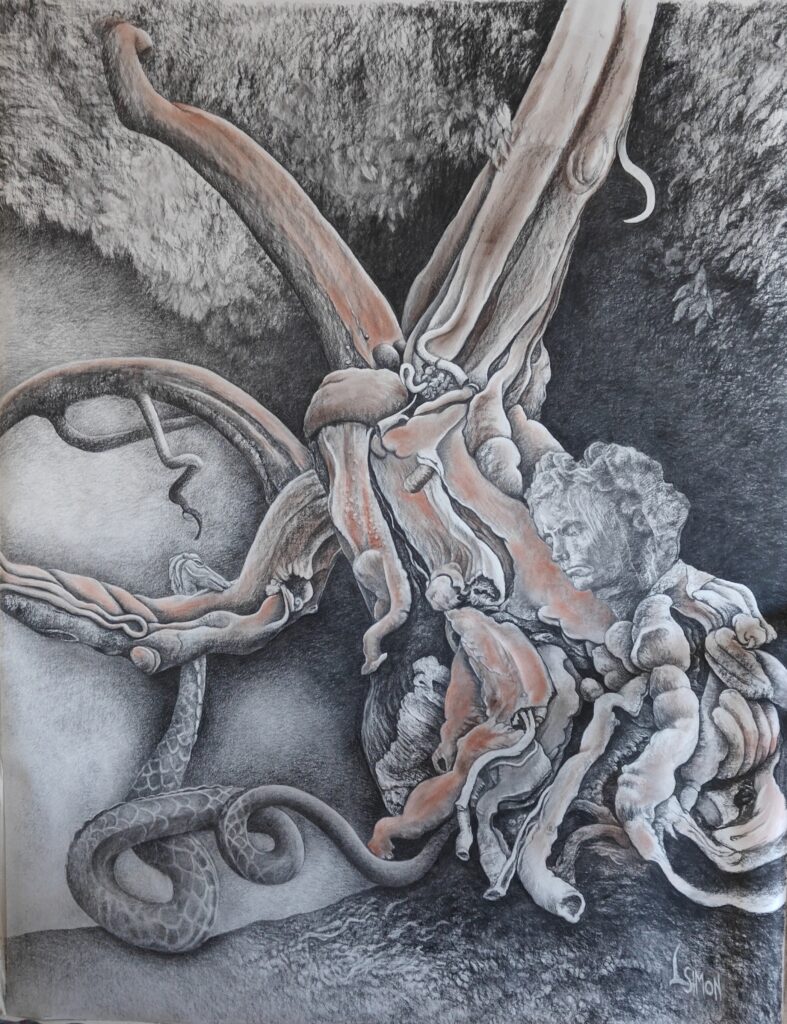
Laurence Simon openly claims the legacy of Dürer (for the drapery), of Patinir (for discreet details in his Virgins), and pays tribute to Bourdelle and Beethoven in her monumental charcoal works.
A painting of resistance and slowness
Now working between Paris and the French coast, she continues her solitary, humble yet powerful journey. Her monumental black charcoal drawings—almost musical in their depth—gather fragments of past and present.
In a world driven by speed, Laurence Simon takes the time to look. And teaches us to see.
📖 Read more in the next issue of ART MAG (print or digital)
To read more, download ART MAG N°28