


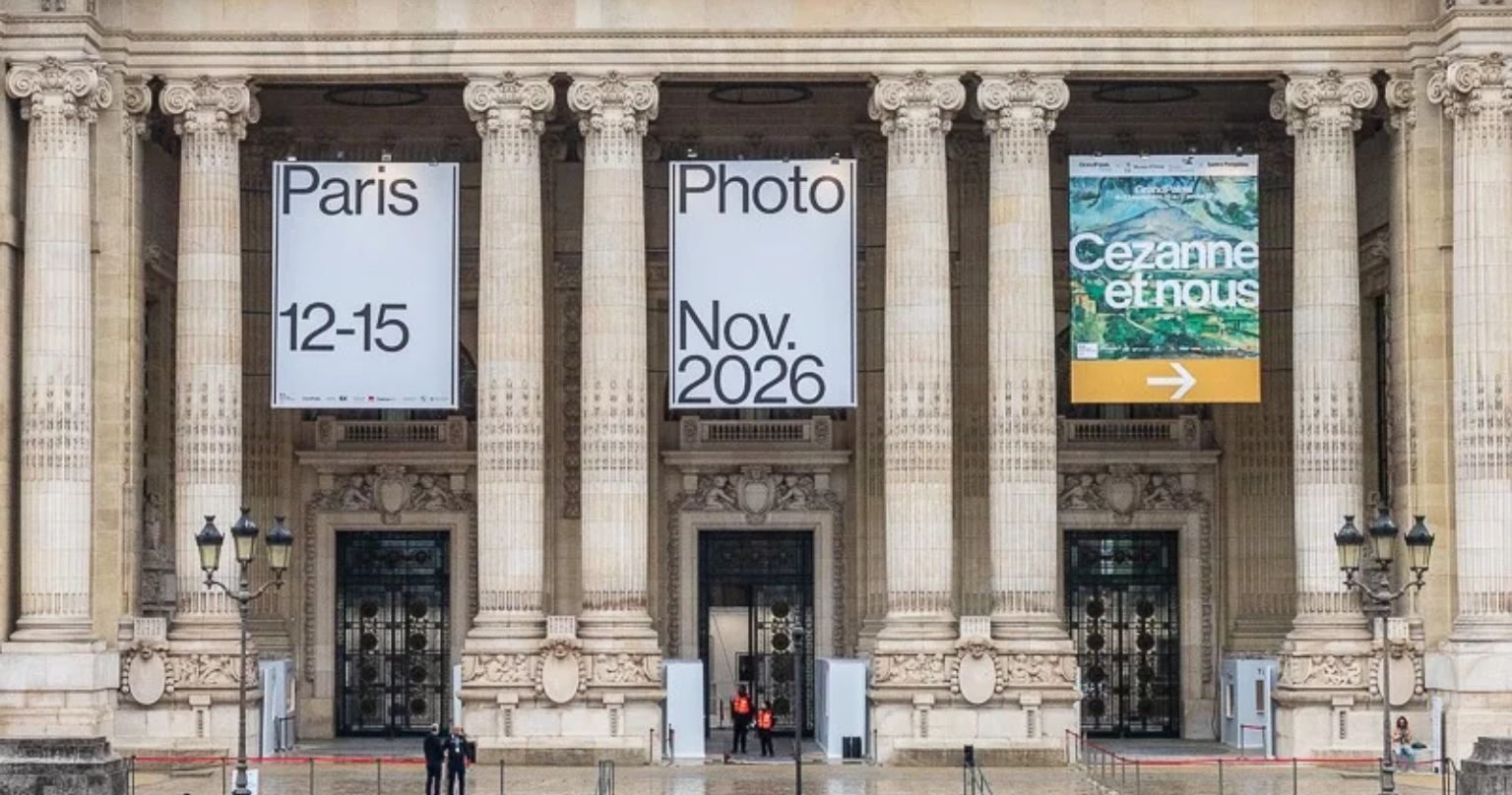
Women photographers are gaining visibility at Paris Photo. But is this progress enough to transform their position in the art market? In 2026, women account for 38% of the artists exhibited, compared with just 20% in 2018. Behind this significant increase lies a deeper question: why do women, despite their strong presence in photography education, still face obstacles to professional recognition?
Paris Photo 2026: Growing Representation of Women Photographers
From November 12 to 15, 2026, Paris Photo brought together leading figures from the international photography market at the Grand Palais in Paris.
Among the figures from this year’s edition, one stands out: 38% of the artists exhibited are women, compared with 20% in 2018. Over eight years, their representation has increased by 18 percentage points.
This development has been supported in part by Elles × Paris Photo, a programme launched in 2018 in partnership with the French Ministry of Culture to increase the visibility of women photographers.
In 2026, the curated selection, led by art historian Aldeide Delgado, founder of the Women Photographers International Archive (WOPHA), continues this initiative by highlighting artists and photographic practices that have historically received less attention.
The increase is significant, although women already accounted for 38% of the artists exhibited in 2024. The question now is how to turn this visibility into lasting recognition.
Why Are Women Photographers Still Underrepresented?
This imbalance has some of its roots in the history of photography itself.
Although women have contributed to the development of photography since the 19th century, their work has long occupied a more limited place in historical narratives, collections and major exhibitions.
Yet these inequalities are not confined to the past.
In 2023, the French Ministry of Culture highlighted a striking contrast: while women accounted for more than half of photography students, they represented only 20% to 23% of professionals around the age of 40.
This gap raises questions about the conditions that shape artistic careers. Access to commissions, gallery representation, professional networks, financial stability and the challenges of balancing personal life with artistic practice are all factors that can influence career development.
A photographer’s recognition therefore depends not only on artistic talent, but also on the opportunities available to develop and promote their work.
Being Exhibited Does Not Necessarily Mean Being Collected
Visibility at an international art fair represents an important opportunity. It facilitates encounters with collectors, galleries and institutions.
However, greater representation in exhibitions does not necessarily translate into a comparable increase in acquisitions or sales.
Data on public collections illustrate this distinction. According to the French Ministry of Culture, works by women photographers accounted for an average of 14% of public photography acquisitions between 2010 and 2017. This proportion reached 39% in 2022.
These figures, drawn from different periods, indicate a shift in acquisition policies. However, they do not establish a steady year-on-year increase, nor can they be taken as evidence of a similar trend in the private market.
What share of photography sales currently goes to women artists? How are the prices of their works evolving? Is their presence in private collections increasing at the same pace as their representation at art fairs?
These are questions that exhibition statistics alone cannot answer.
From Visibility to Recognition: The Real Challenge
The progress observed at Paris Photo reflects changing perspectives and a growing commitment to achieving a more balanced representation of women in photography.
Yet artistic recognition is built over time. It depends on sustained gallery support, acquisitions by collectors, institutional exhibitions and the opportunities artists have to pursue their careers.
The ART MAG Perspective
Over eight years, Paris Photo has almost doubled the representation of women photographers. This is an important step forward, but one that does not, in itself, measure their professional and artistic recognition.
The question is no longer simply how many women have the opportunity to exhibit their work, but how many are able to build sustainable careers, enter major collections and establish a lasting presence in the art market.
Visibility opens doors. The real challenge is ensuring that it leads to lasting careers.
Read also: Paris Photo 2026: Celebrating the Bicentenary of Photography